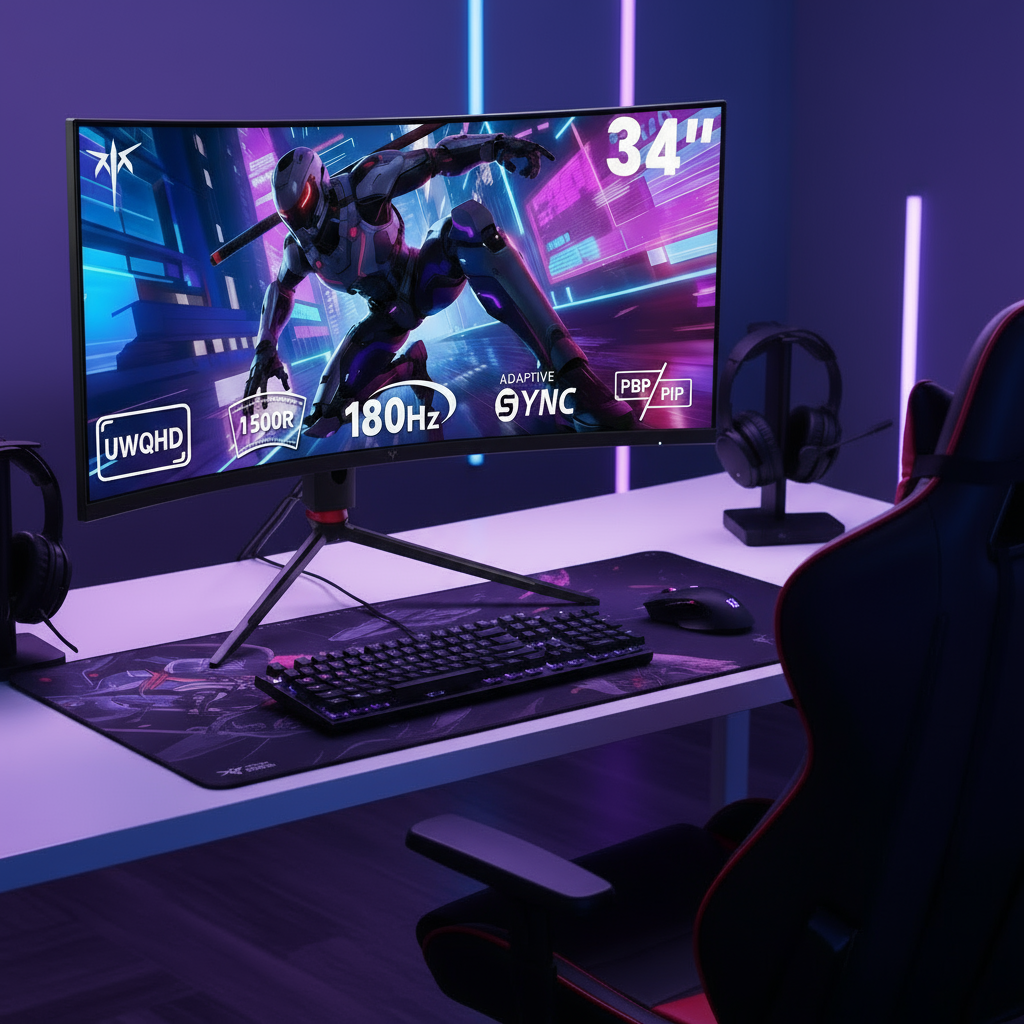


The debate between built-in monitor speakers and external sound systems often comes down to a simple choice: convenience and a clutter-free desk versus richer, more immersive audio for gaming and streaming. For many users building a Combat Station around a KTC monitor, integrated speakers deliver functional sound for everyday tasks without extra cables or cost, but external systems unlock better bass, stereo separation, and spatial feedback that can noticeably improve gameplay and content creation.

Built-in Monitor Speakers vs. External Speakers: The Convenience-to-Quality Spectrum
Modern gaming monitors from KTC emphasize high-refresh Mini-LED and OLED panels for visual excellence, yet audio frequently receives less attention. This creates a common dilemma for PC and console gamers: whether the built-in speakers in models like the H27T6 suffice or if adding external speakers justifies the added expense, space, and setup time.
The core trade-off revolves around minimalist convenience versus acoustic performance. Integrated audio eliminates the need for additional power adapters and signal cables, keeping your desk streamlined. External systems, by contrast, typically deliver wider frequency response and clearer channel separation, enhancing immersion in games and media playback.
KTC prioritizes panel performance and response times in its designs, treating speakers as a practical convenience feature rather than a primary audio solution. This approach means built-in sound works well for system alerts and casual browsing but may fall short for users seeking deep bass or precise positional audio.
Where Integrated Audio Wins: Minimalism, Portability, and Casual Use
Built-in monitor speakers shine in scenarios where simplicity and minimal footprint matter most. For clean-desk enthusiasts, integrated audio removes the visual and physical clutter of external speakers, power bricks, and extra cables, resulting in a tidy, professional-looking workspace.

Portability also favors built-in solutions. The KTC 15.6" FHD HDMI Portable Travel Monitor with Built-in Speakers〇H15F9 includes speakers that make it self-contained for travel or quick laptop pairings, avoiding the hassle of packing separate audio gear.
In everyday use, these speakers handle basic tasks effectively. They provide adequate volume for video calls, YouTube viewing, and office multitasking where high-fidelity sound is not critical. This makes integrated audio a sensible default for budget-conscious buyers or those who value all-in-one convenience over premium acoustics.
The Technical Ceiling: Why Slim Monitors Struggle with Bass and Soundstage
Slim monitor designs impose physical constraints on audio hardware. Most built-in speakers use small drivers rated around 2-5 watts, which inherently limits low-frequency reproduction. As this PCWorld analysis explains, the result is often a thin, tinny sound profile that lacks the bass thump below 200Hz essential for immersive gaming effects.
Stereo separation suffers as well. Because the drivers sit close together within the monitor chassis, they cannot create the wide soundstage needed for accurate spatial imaging in modern titles. This narrow placement compresses the audio field, reducing the sense of directionality for in-game cues like footsteps or environmental sounds.
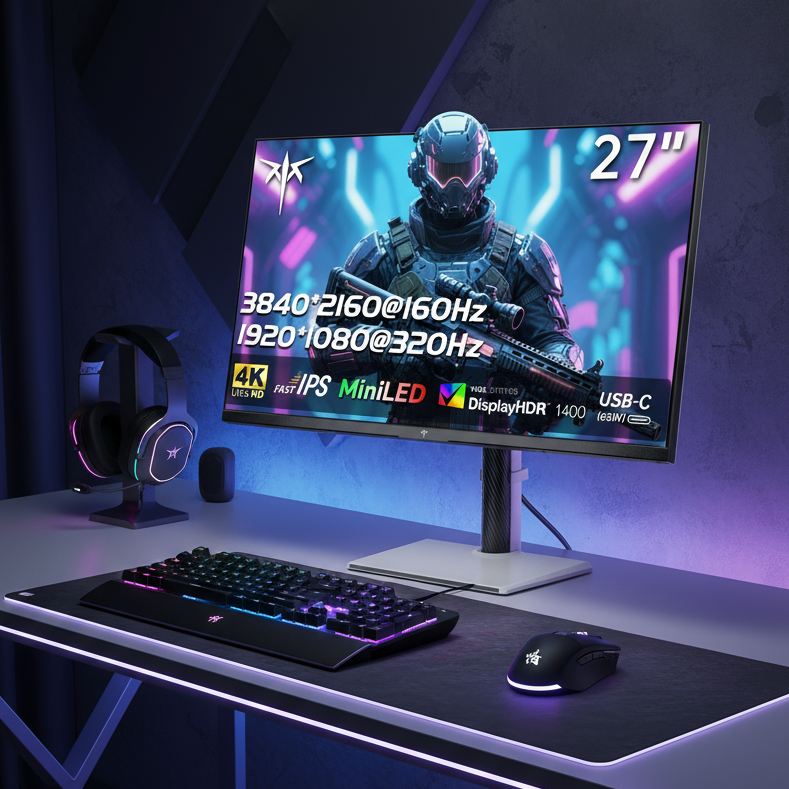
The so-called "Audio Tax" further complicates the decision. Some monitors charge a $50–$100 premium for upgraded integrated audio that still rarely reaches the 40–60Hz bass floor recommended for full-range immersion, according to audio science discussions. In many cases, opting for a high-spec monitor with baseline audio like the KTC 27" 4K 160Hz/1ms HDR400 Gaming Monitor | H27P22S and pairing it with an affordable external 2.0 system delivers superior performance for similar or lower total cost.
Audio for Gaming and Streaming: Why Immersion and Feedback Matter
Gaming performance benefits significantly from better audio. Spatial technologies such as Dolby Atmos create a three-dimensional sound field that helps players pinpoint the direction of footsteps, gunfire, and other cues more accurately than standard stereo, as detailed in Dolby's official gaming guide.
Streamers face an additional challenge with built-in speakers. When using a high-sensitivity microphone, monitor output can bleed into the mic, creating echo loops or feedback that ruin broadcast quality. Many streamers therefore prefer headphones or directional external speakers to maintain clean audio separation.
Console users encounter routing complexities with PS5 and Xbox Series X setups. As covered in our guide on How to Connect Your PS5 or Xbox Series X to a Gaming Monitor, monitor 3.5mm jacks are often unshielded and prone to EMI noise or hiss. Controller audio jacks provide a cleaner signal for headphones but may lack sufficient power for demanding gear, while HDMI extractors offer high-fidelity routing at the cost of added complexity.
Optimizing Your Desk: Cable Management vs. Acoustic Performance
External audio introduces practical frictions around cables and space. Unshielded monitor headphone jacks frequently introduce EMI noise, which users sometimes mistake for a hardware defect. Choosing speakers with physical volume controls helps mitigate HDMI-CEC sync issues that commonly affect monitor-speaker combinations.
The choice between compact 2.0 systems and fuller 2.1 setups with subwoofers depends on available desk depth. Models like the Creative Pebble series offer a compact footprint suitable for smaller stations, while subwoofer-equipped systems deliver deeper bass but require more room and create additional cable management demands.
For console gamers, routing decisions directly impact perceived quality. Using the monitor's audio output for powered speakers with volume knobs often works better than direct headphone connections, though results vary by specific monitor shielding quality.
Choosing Your Setup: The Best Audio Value for Your KTC Combat Station
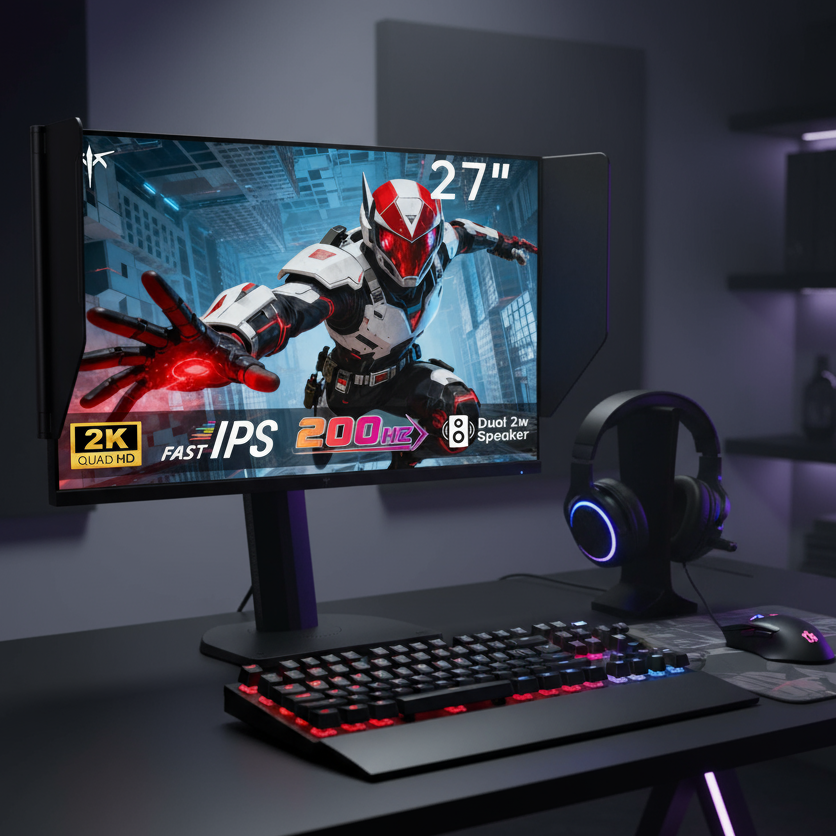
The most cost-effective path depends on your priorities and usage. For an entry-level all-in-one solution, the KTC 27" 2K 200Hz HDR400 Gaming Monitor with Speakers | H27T6 provides functional built-in audio alongside strong panel performance, making it suitable for casual gamers who prefer simplicity.
Enthusiasts seeking maximum immersion should consider a high-spec monitor without premium audio markup paired with dedicated external speakers. The H27P22S combined with a quality 2.0 or 2.1 system typically offers better overall value than monitors marketed with "enhanced" integrated sound.
A modest $30–$50 investment in compact external speakers often yields the highest return for most KTC users, delivering noticeably wider frequency range and improved clarity without dominating the desk. Ultra-compact setups or travel scenarios remain the clearest cases where built-in audio is the practical winner.
FAQs
Are built-in monitor speakers good enough for gaming? For casual play and system sounds, yes. However, competitive gamers or those wanting deep bass and precise positional audio will typically notice limitations in frequency response and soundstage, making external speakers a worthwhile upgrade for immersion.
Do external speakers improve streaming quality? Yes, particularly by reducing the risk of microphone feedback loops that occur when built-in speakers play audio near sensitive mics. External or directional solutions help maintain clean audio separation during broadcasts.
How do I avoid EMI noise with my monitor audio setup? Avoid using the monitor's 3.5mm jack for high-sensitivity headphones when possible. Consider controller audio outputs or powered speakers with their own volume controls, and check your specific monitor's shielding quality.
What is the best budget audio option for a KTC gaming monitor? Compact 2.0 desktop speakers in the $30–$50 range often provide the best balance of performance and value. They deliver wider frequency coverage than most integrated drivers while maintaining a manageable footprint.
Should I buy a monitor with speakers or add external ones later? If desk space and cable management are top priorities, choose a monitor with speakers like the H27T6 for convenience. For better sound quality, select a high-performance panel without audio features and invest separately in external speakers.
Can HDMI-CEC properly control volume between monitor and speakers? Support varies and is often unreliable for volume commands. Many users find physical knobs on speakers more dependable than relying on CEC for consistent control across devices.