The best LG StanbyME alternative is usually the one that gives you more useful mobility, clearer 4K output, and fewer app restrictions without pretending battery life is fixed. If you want one screen to move between rooms, that trade-off matters more than brand familiarity.

What a Rolling Smart Display Should Actually Solve
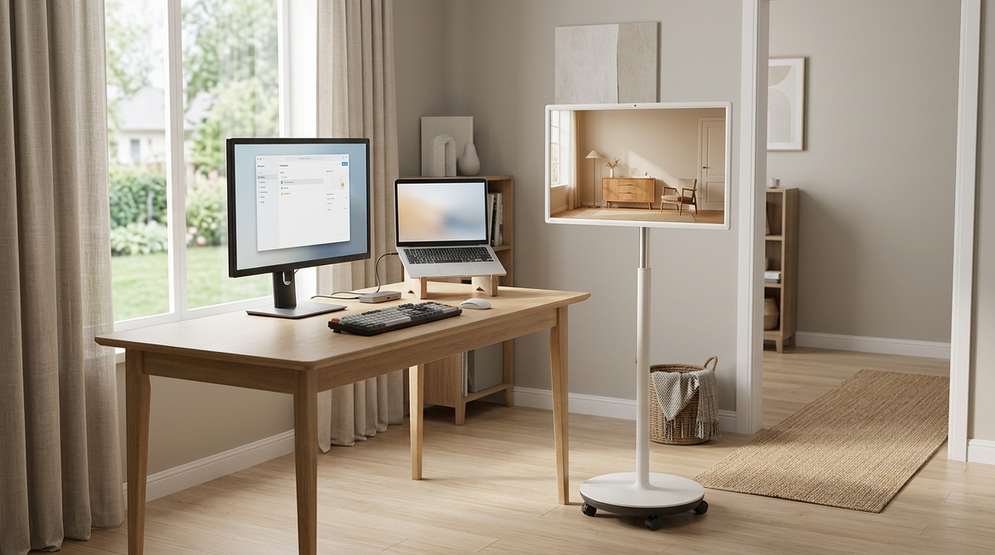
A rolling smart display makes sense when one screen needs to move between rooms without turning every room into a separate setup. For apartment living, that usually means the screen has to travel from kitchen to sofa to desk without losing the apps, inputs, or legibility you actually use.
A smart touch monitor hub is most useful when you want the display itself to be the device, not just a panel attached to another box. That is the main reason many buyers compare an LG StanbyME alternative against a tablet or a fixed monitor instead of another TV.
In practice, the first question is not brand. It is whether the screen needs to stay usable after it is rolled, tilted, and moved again the next day. If that answer is yes, battery buffer, 4K clarity, and app freedom become the real decision points.
The 2026 Buying Criteria That Matter
Battery Runtime and Charging Reality
Battery runtime should be treated as a usage-dependent buffer, not a universal promise. Android’s compatibility guidance and the product manuals both point in the same direction: brightness, volume, casting, and content can shorten a published figure fast.
That matters because many buyers picture one charge lasting the same way in every room. In real use, a screen at moderate brightness for recipes is a different load from a screen pushing streaming video at higher volume. If you want room-to-room freedom, look for published runtime plus the settings used to achieve it.
Resolution, Panel Type, and Viewing Comfort
4K matters most when the display is shared, viewed from a couch, or used for text-heavy work like recipes, video calls, and browsing. At typical apartment distances, sharper text is easier to live with than a bigger but blurrier panel.
That does not mean 4K is always the right answer. If the screen will sit close to one person and mostly play casual video, size can matter as much as sharpness. But for a rolling smart display meant to serve multiple rooms, 4K is often the safer choice.
App Access, Inputs, and Ecosystem Limits
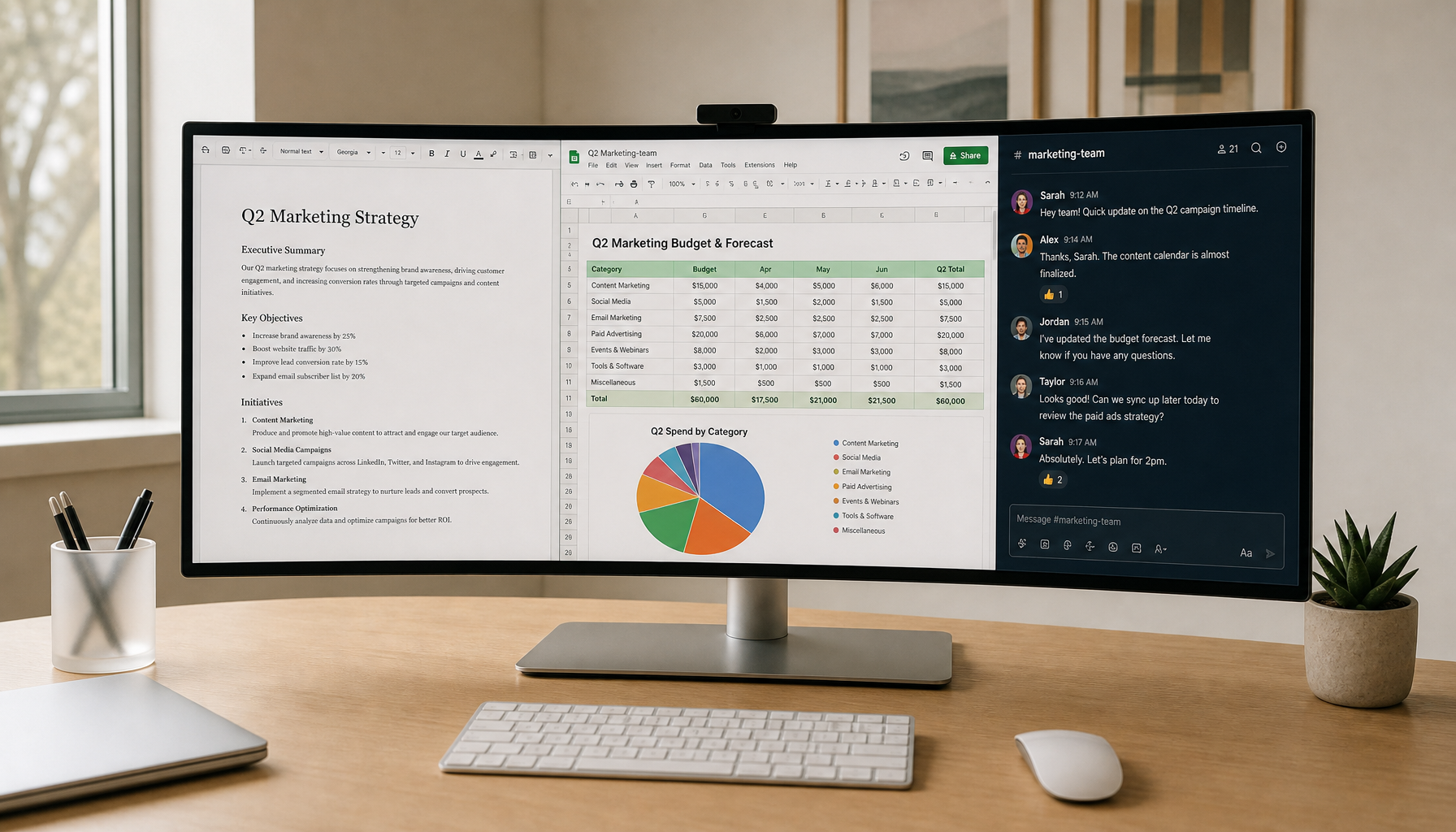
App access decides whether the screen behaves like a standalone hub or like a branded appliance. Google EDLA matters here because it supports official Google services and Play Store access on certified Android devices, which makes the platform more flexible for common streaming and productivity apps. Devices must also pass CTS and support enterprise features including updates and Play Protect.
The practical question is simple: will the display do what you want without extra workarounds? If you need a consistent app library, casting, and a familiar Android path, a locked-down ecosystem becomes a real limitation rather than a minor spec difference.
Mobility, Stand Adjustment, and Room-To-Room Use
Mobility sounds simple until you actually move the screen every day. Wheels, height adjustment, tilt, and rotation affect whether the unit feels convenient or merely portable on paper.
That is why a true mobile touch screen needs more than a battery. If the stand is awkward, the cable path is messy, or the movement feels heavy, users stop rolling it between rooms and leave it parked like a fixed display.
MegPad Compared With StanbyME
The comparison below is less about brand polish and more about the parts of the experience that change daily use. It shows why a higher-spec rolling display can be the better fit when you care more about clarity, app access, and mobility than about a familiar logo.
| Decision Dimension | KTC MEGAPAD 32" 4K Android 14 Google EDLA Smart Touch Monitor With 8550mAh Battery | KTC MEGAPAD 32" 4K Android 13 Google EDLA Smart Touch Monitor With 9500mAh Battery | Typical Premium Rolling Display |
|---|---|---|---|
| Screen clarity | 31.5-inch 4K, VA panel, 3000:1 contrast, anti-glare coating | 32-inch 4K, VA panel, 3000:1 contrast, anti-glare screen | Often strong for lifestyle use, but verify the exact resolution before buying |
| Battery buffer | 8550mAh built-in battery, with runtime varying by brightness and workload | 9500mAh built-in battery, with published runtime up to about 11 hours under moderate settings | Battery claims should always be checked against brightness and volume conditions |
| App access | Android 14 with Google EDLA, so Play Store and common Google services are part of the appeal | Android 13 with Google EDLA, also positioned for app flexibility and standard Android use | App access can be more limited depending on ecosystem rules |
| Mobility convenience | Wheels, height, tilt, and rotate support make daily repositioning more realistic | Wheels and rolling use are a core part of the design | Convenience varies widely by stand design and cable management |
| Best fit | Buyers who want newer Android and a verified 4K mobile display | Buyers who want the larger battery buffer and the same 4K class of use | Buyers who care most about brand familiarity and are willing to pay for it |
For a closer look at the 4K Android 14 option, see the KTC MEGAPAD 32-inch 4K Android 14 model. For the battery-first Android 13 version, the KTC MEGAPAD 32-inch 4K Android 13 model is the other obvious comparison point.
The useful takeaway is simple: if you want the most complete balance of battery buffer, 4K clarity, and app access, the MegPad line is a strong LG StanbyME alternative. If you care more about a larger runtime cushion than the newest Android version, the 9500mAh model is the more forgiving choice.

Which Model Fits Your Space
Kitchen and Recipe Streaming
Kitchen use is where app access and clear text matter more than brand styling. Recipes, timers, and streaming tutorials are easier to follow on a sharper panel, especially when the screen is pulled a little farther away from the counter.
Portable touch screen options are the right browsing path if you want to compare the wider range first. For kitchen use, the screen should move easily, wake quickly, and stay legible even when you are glancing at it rather than sitting directly in front of it.
Home Gym and Workout Video Use
Home gym buyers usually regret underestimating runtime friction. The problem is not just battery life on paper, it is whether the display can keep up through a longer session without forcing you back to an outlet.
That is why the MegPad for remote education and mobility is useful background reading even outside the classroom. It explains the same practical idea: a mobile screen only feels truly mobile when the setup stays simple enough to use often.
Apartment Hub for Sofa, Desk, and Bedroom
Apartment hub use is where 4K and battery buffer both start to matter. If one screen has to serve as a casual entertainment panel, a side monitor, and a quick video-call station, lower-resolution options can feel cramped fast.
The Rolling displays for hybrid group work article is a good companion if you are trying to think through shared-screen scenarios. The core rule is the same: the more people and room positions the screen has to serve, the more you should value clarity and flexibility.
Higher-Spec Pick Versus Budget-Friendly Pick
If the screen will mostly stay near one outlet and serve a single user, a lower-cost mobile display can be enough. If the display needs to act like a shared household hub, the higher-spec MegPad path makes more sense because the battery and 4K panel do more of the work.
That is the moment when the recommendation flips. If mobility is occasional, save money. If mobility is part of the product’s job, pay for the spec combination that reduces friction every day.
How to Choose Without Overbuying
-
Start with the room and the main activity. A kitchen screen, a gym screen, and an apartment hub do not need the same mix of battery, app access, and viewing comfort.
-
Choose 4K when the display will be shared or viewed from a comfortable distance. That usually helps more with text clarity and mixed-use viewing than a larger but softer panel.
-
Treat battery capacity as a mobility buffer. It helps when you move the screen often, but it does not replace wall power in every scenario.
-
Check app and input needs before checkout. If your setup depends on Netflix, Google apps, HDMI, or Type-C behavior, verify those details first rather than hoping they are included.
The simplest rule is this: if you need a rolling smart display for real daily movement, choose the model that minimizes friction. If you only want the look of mobility, a cheaper screen may be the better use of money.
Final Checks Before You Buy
Before you commit, verify the exact resolution, battery spec, and runtime context, because those details decide whether the display feels premium or merely convenient. Check the operating system, app access, and input options next, then confirm the stand adjustments and return terms.
Review the KTC MEGAPAD 27" FHD Android 14 Google EDLA Smart Touch Monitor with 9500mAh Battery if a compact FHD option with strong battery life fits your space better than the 32-inch models. If all three areas line up, an LG StanbyME alternative can be a better buy than the familiar name. If one of them does not, keep looking rather than forcing the fit.
FAQs
Q1. How Long Does a Rolling Smart Display Battery Usually Last?
Runtime depends on brightness, volume, casting, and workload, so published battery figures should be read as a usage guide rather than a universal promise. For real purchase decisions, look for the settings used in the claim and assume everyday use may shorten it.
Q2. What Matters More for Shared Viewing, 4K or Screen Size?
4K usually matters more when people will read text, browse apps, or watch from a comfortable distance. Size becomes more important when the screen is used casually from farther away. If you want one screen to work across rooms, 4K is usually the safer default.
Q3. Why Does App Access Matter on a Rolling Display?
App access decides whether the screen can operate as a standalone hub or just a display attached to another device. If you want streaming, Google services, and common productivity apps without workarounds, EDLA-backed Android support is a meaningful advantage.
Q4. Can a Rolling Display Replace a TV or Tablet in an Apartment?
Sometimes, yes, especially if you value touch control and room-to-room movement. It works best when the screen has enough resolution for shared viewing and enough battery to move without constant cable hunting. If either one is weak, the replacement feeling falls apart fast.
Q5. What Should I Check If I Want the MegPad Instead of StanbyME?
Verify resolution, battery capacity, runtime context, Android version, Google EDLA support, stand movement, and support terms. Those are the details that affect daily use. If any of them are unclear, treat the model as a maybe rather than a sure fit.
The Rolling Display Choice That Makes Sense
For most apartment, kitchen, and home-gym buyers, the best LG StanbyME alternative is the one that proves its value in the details: 4K clarity, realistic battery claims, and app access that does not get in the way. If you want a screen that feels easy to move and easy to live with, the MegPad line is the more practical place to start. Compare the 27-inch and 32-inch options against your room layout and typical viewing distance before deciding.