Mini-LED monitors for bright room productivity are worth considering when your desk gets daylight, your office lights stay on, or you need text and UI elements to stay readable without constantly fighting reflections. If you are trying to find the best monitor for bright room use, the decision is usually less about chasing a single brightness number and more about balancing screen coating, stand adjustability, contrast behavior, and how the display handles the room around it.

Why Bright Rooms Change Monitor Choice
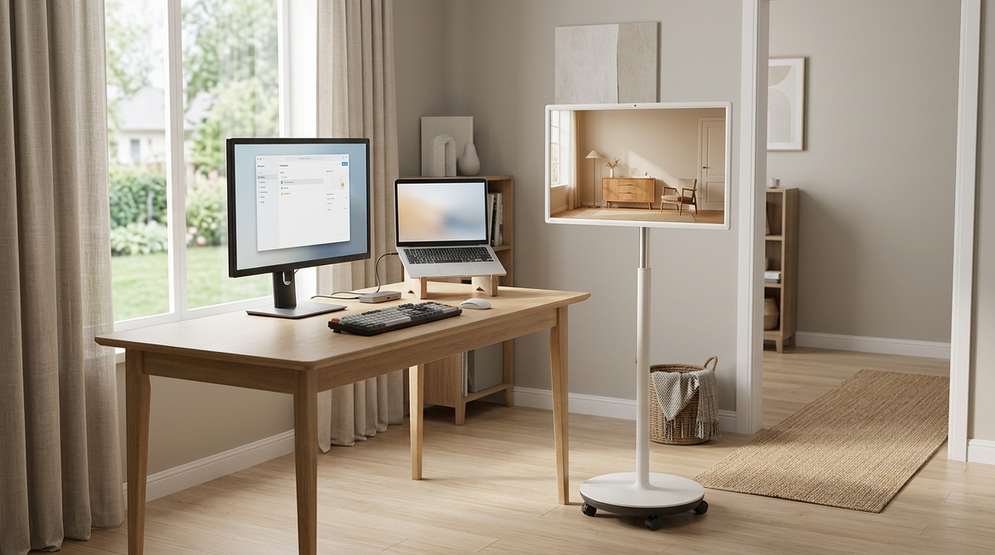
A bright room changes monitor choice because the display is competing with ambient light, not just showing content in isolation. Reflections from windows, overhead fixtures, and nearby walls can raise the apparent black level of the screen and make thin text, spreadsheet lines, and interface details harder to read. OSHA notes that glare from windows and overhead lights can wash out images and make work harder to see, and its monitor guidance also stresses placing the screen to reduce awkward posture and glare. That matters in bright rooms because a monitor that is technically good on paper can still feel tiring if it is placed poorly.
There is also a practical ergonomics side to bright-room viewing. If a screen is too high, too low, or too close, people often compensate by tilting their head, leaning forward, or changing chair height in ways that reduce comfort over long sessions. The more daylight and overhead light you have, the more likely you are to notice these small setup problems because glare makes them harder to ignore.
For that reason, it helps to think of the monitor and the room as a pair. A brighter display can help, but so can a better stand, a matte or low-reflection coating, and a desk orientation that avoids direct light on the panel. OSHA monitor placement guidance is a useful starting point when you are deciding how much panel brightness you really need.
Mini-LED vs OLED in Daylight
Mini-LED and OLED can both look excellent, but they tend to behave differently in bright rooms. OLED usually offers very deep blacks and strong contrast in controlled lighting, while Mini-LED relies on an LCD panel with a backlight that can get brighter overall and use local dimming to preserve contrast. In a bright office or daylight-heavy room, that difference often matters more than peak image quality in a dark room.
OLED brightness can also vary with the size of the bright area on screen. RTINGS explains that OLED displays use an auto brightness limiter, or ABL, which can reduce brightness when a larger portion of the screen is bright. That is one reason OLED can look especially impressive with small highlights, yet less consistent in full-screen white or other bright desktop workloads. For mixed desktop use, that behavior may or may not matter, but it is worth knowing before you buy: RTINGS OLED ABL explanation.
Mini-LED does not automatically solve every bright-room problem, but it often gives buyers a simpler starting point for daytime productivity because the backlight is not limited in the same content-dependent way. If your work includes documents, browser tabs, dashboards, and other mostly static windows, that steadier behavior can be easier to live with. At the same time, Mini-LED's local dimming can introduce its own trade-offs, especially around small bright objects on dark backgrounds, so the decision is usually about which compromise fits your use. Mini-LED and OLED brightness differences are also why the best monitor for bright room choice often comes down to the room, not just the panel.
| Topic | Mini-LED | OLED |
|---|---|---|
| Bright room behavior | Usually a stronger default for daylight-heavy desks | Can look excellent, but large bright areas may trigger brightness changes |
| Black levels in a dark room | Good, depending on local dimming tuning | Typically excellent |
| Desktop consistency | Often steadier for bright UI and mixed work | Can vary more with content and panel protection behavior |
| Reflections and glare | Still depends on coating and room placement | Still depends on coating and room placement |
| Best fit | Productivity in bright or mixed rooms | Darker rooms, film, and contrast-first viewing |
What to Look for in a Bright-Room Monitor
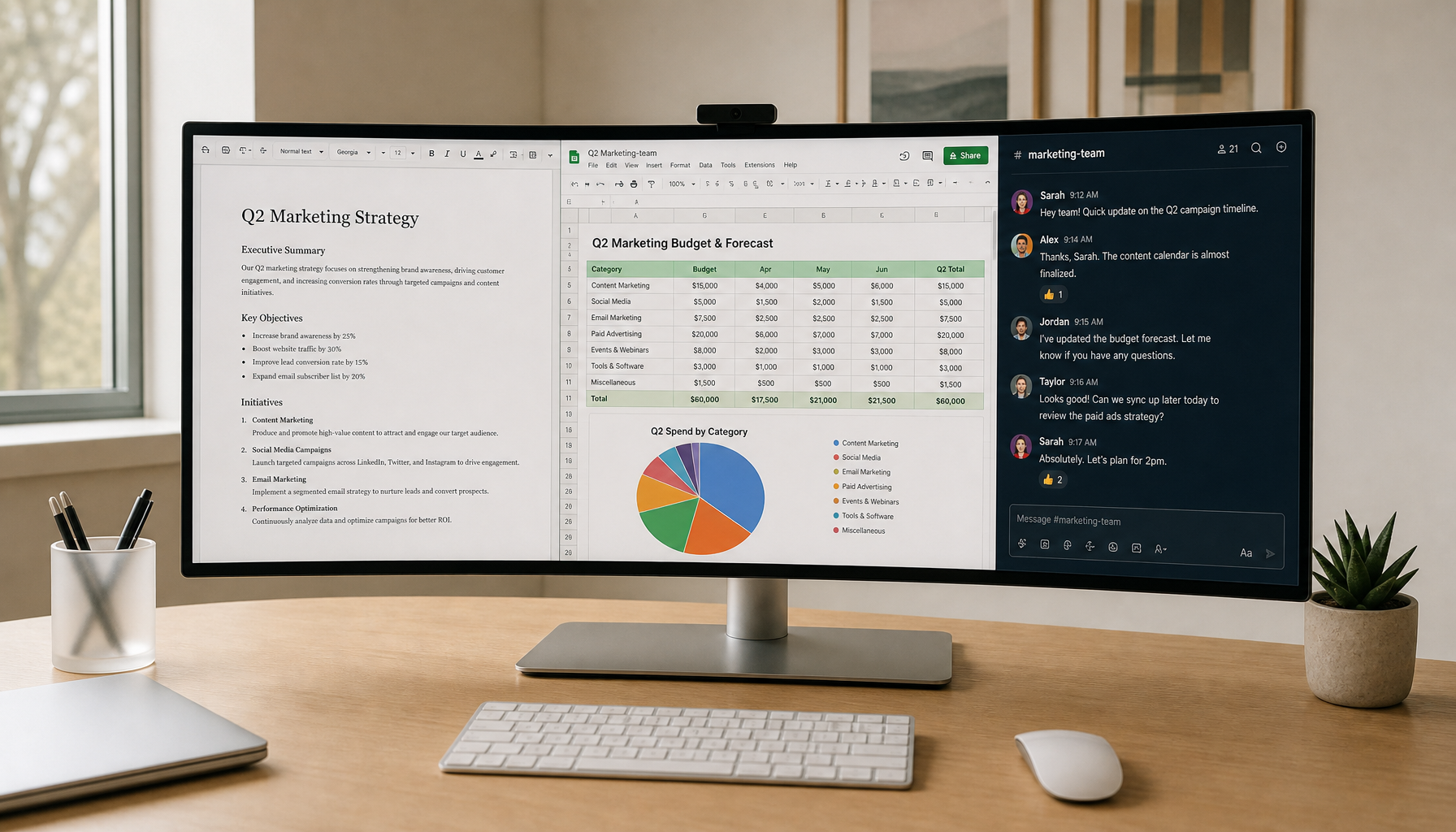
A bright-room monitor should be evaluated as a system, not as a single spec sheet number. The most useful factors are often the ones that reduce strain during normal work: visible text, manageable reflections, and a stand that lets you place the screen correctly.
First, check the coating and reflectivity. A good matte or low-glare finish can matter as much as raw brightness because it reduces mirror-like reflections from windows and lamps. If a screen reflects a lot of the room, you may end up raising brightness more than necessary, which can make the image feel harsher without fully fixing the glare issue. For a broader look at surface finish trade-offs, screen coating and black level appearance is a useful follow-up.
Second, look for enough brightness headroom for the room you actually have. Bright-room productivity does not always require extreme HDR ratings, but it does benefit from a display that can stay legible without looking washed out. That is especially true if you use light-colored documents, code editors, or dashboards with dark side panels and bright content windows.
Third, pay attention to local dimming only if the monitor is likely to be used for HDR media, games, or occasional contrast-heavy content. For everyday productivity, local dimming may be helpful, neutral, or distracting depending on implementation. It can improve perceived contrast, but it can also make bright text and small UI elements more noticeable against dark backgrounds. Mini-LED blooming in desktop use is worth keeping in mind if you spend a lot of time in static windows.
Fourth, prioritize ergonomics. A height-adjustable stand, tilt, swivel, and enough desk depth all help you keep the top of the screen near eye level and the monitor directly in front of you. That matters because bright rooms make the effects of poor positioning more obvious, especially when you are trying to avoid windows or ceiling reflections.
Finally, match resolution to distance and task. In a productivity setup, sharper text can matter more than extra motion features. A 4K panel on a 27-inch screen can make desktop text and interface details look cleaner if your graphics setup supports it and your scaling preferences fit the workflow.

Where the M27P6 Fits Best
The M27P6 fits best for buyers who want a bright-room-friendly 27-inch monitor with 4K detail and Mini-LED backlighting. Based on the supplied product facts, it is a KTC Mini-LED 27-inch 4K 160Hz HDR1400 monitor with 1,152 local dimming zones. That combination points toward a screen that is designed to offer more daylight headroom than a typical office monitor while also giving sharper desktop rendering than a lower-resolution option.
For productivity, the most relevant part of that mix is not just the HDR badge. It is the way 4K resolution, Mini-LED backlighting, and a brighter-room target can support clearer text and more usable contrast in a mixed-light environment. If your desk is near a window or you work through the day under strong indoor lighting, that is a natural place to consider it. You can also browse the broader All-Mini-LED Monitors collection if you want to compare size, refresh rate, and panel style before narrowing down to one model.
At the same time, the M27P6 is not automatically the best choice for every bright-room buyer. If your work is mostly spreadsheets, writing, browsing, and general office tasks, a different panel could still be a better fit if it has a more comfortable coating, a stand you prefer, or a lower price that better matches your needs. If your focus is mainly entertainment in a controlled room, the added bright-room headroom may be less important than other features.
A practical way to think about the M27P6 is this: it makes sense when you want one display that can handle a bright desk during the day and still offer the higher-end contrast and sharpness profile associated with Mini-LED and 4K. It is less about being universally superior and more about matching a specific use case.
Pick the Right Setup for Your Room
Check three things before you buy: where the light hits your desk, how much of your day is static text work, and whether you are comfortable with local-dimming behavior. If the monitor faces a window or strong side light, placement and coating matter as much as panel type. If your day is mostly documents and spreadsheets, a steadier desktop image usually matters more than HDR labels.
If you want one display for both work and media, Mini-LED can be a sensible middle ground. If your room stays controlled and you care most about contrast-first viewing, OLED may still be the better fit. The best monitor for bright room choice is usually the one that matches your layout, not the one with the biggest spec headline.
FAQs
Is Mini-LED Better Than OLED for Bright Rooms?
Often, yes, if your desk gets a lot of daylight or overhead light. Mini-LED usually gives you more straightforward bright-room headroom, while OLED tends to shine more in darker conditions. The better choice still depends on coating, placement, and the kind of content you use most.
Do I Need HDR for Productivity in a Bright Room?
Not necessarily. For office work, a stable SDR picture with good brightness and low glare is usually more important than HDR branding. HDR can matter more for video, games, or media work than for spreadsheets and documents.
Does a Higher Brightness Spec Always Mean a Better Bright-Room Monitor?
No. Brightness helps, but reflections, screen coating, stand adjustability, and text clarity can matter just as much. A monitor that is easier to position and less reflective may feel better than a brighter one with poor ergonomics.
Will Local Dimming Help With Office Work?
Sometimes, but not always. Local dimming can improve contrast, yet it may also create distracting behavior around menus, cursors, or bright text on dark backgrounds. It is usually more valuable if you also plan to use the monitor for HDR media or gaming.
Is the M27P6 a Good Fit for a Sunny Desk?
It can be, if you want a 27-inch 4K Mini-LED monitor with HDR1400 and 1,152 local dimming zones. That combination suggests it is aimed at buyers who want bright-room headroom and sharper desktop detail. Whether it is the right fit still depends on your desk layout, viewing distance, and how much you value the Mini-LED trade-offs.