Mini-LED vs OLED comes down to your desk, not a universal winner. If you work in a bright room, keep lots of text on screen, or want the lower-anxiety choice for long static sessions, Mini-LED is usually the safer first look. If you care most about deep blacks, scene separation, and very fast motion for gaming, OLED can be the stronger fit when the room is controlled and the tradeoffs are acceptable.
Sources
- Mini-LED vs OLED for Bright Room Desks
- Mini-LED vs OLED Text Clarity for Office Productivity
- Mini-LED vs OLED for Value Shoppers

Mini-LED vs OLED at a Glance
The fastest way to separate Mini-LED vs OLED is to ask what kind of desk you have. Bright rooms and long work sessions tend to favor Mini-LED, while dark-room gaming and contrast-first viewing often point toward OLED. The All-Mini-LED Monitors and OLED gaming monitors collections are useful starting points once you know which side of the tradeoff matters more.
| Buyer condition | Mini-LED | OLED |
|---|---|---|
| Bright room or window light | Usually the easier fit | Can work, but room control matters more |
| Text-heavy work | Often the lower-anxiety choice | Can be good, but panel behavior varies |
| HDR gaming | Strong when you want brightness punch | Strong when you want per-pixel black levels |
| Burn-in concern | No OLED-style burn-in risk class | Needs more care with static content |
| Motion response | Good, especially in gaming-focused models | Often the motion-first pick |
| Value direction | Often easier to justify for mixed use | Often worth it when contrast is the priority |
The Mini-LED filter-based buying guide is the right next stop if you already know Mini-LED is your lane. If not, keep reading the sections below and let your room light and workload decide first.

Room Light and Desktop Use
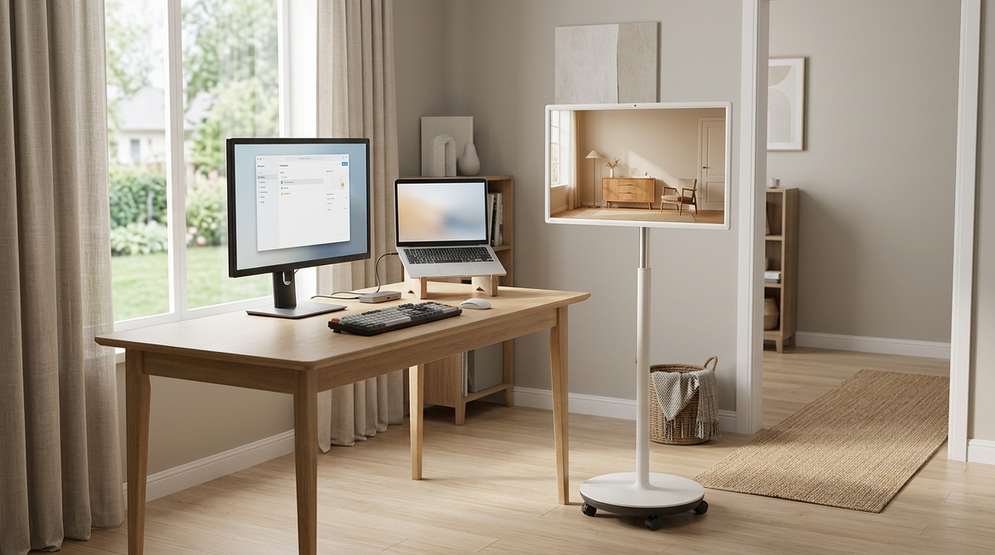
For most buyers, room light is the first filter that changes the Mini-LED vs OLED decision. In a bright room, the monitor has to fight reflections and ambient light before image quality even matters. That is why Mini-LED usually looks like the lower-risk choice for daytime desks, while OLED often makes more sense when you can dim the room or control glare.
Bright Rooms and Window Light
If your desk faces a window or sits under strong overhead lighting, Mini-LED is usually the more forgiving option. The practical reason is simple: brighter screens and strong local dimming tend to hold up better when the room itself is not controlled. OLED is not a bad option by default, but its contrast advantage is easier to appreciate in darker spaces.
A glossy or reflective setup can exaggerate this difference. If reflections already bother you, check the room and screen finish first, then decide whether the contrast benefits of OLED are worth the tradeoff.
Text-Heavy Work and Spreadsheet Use
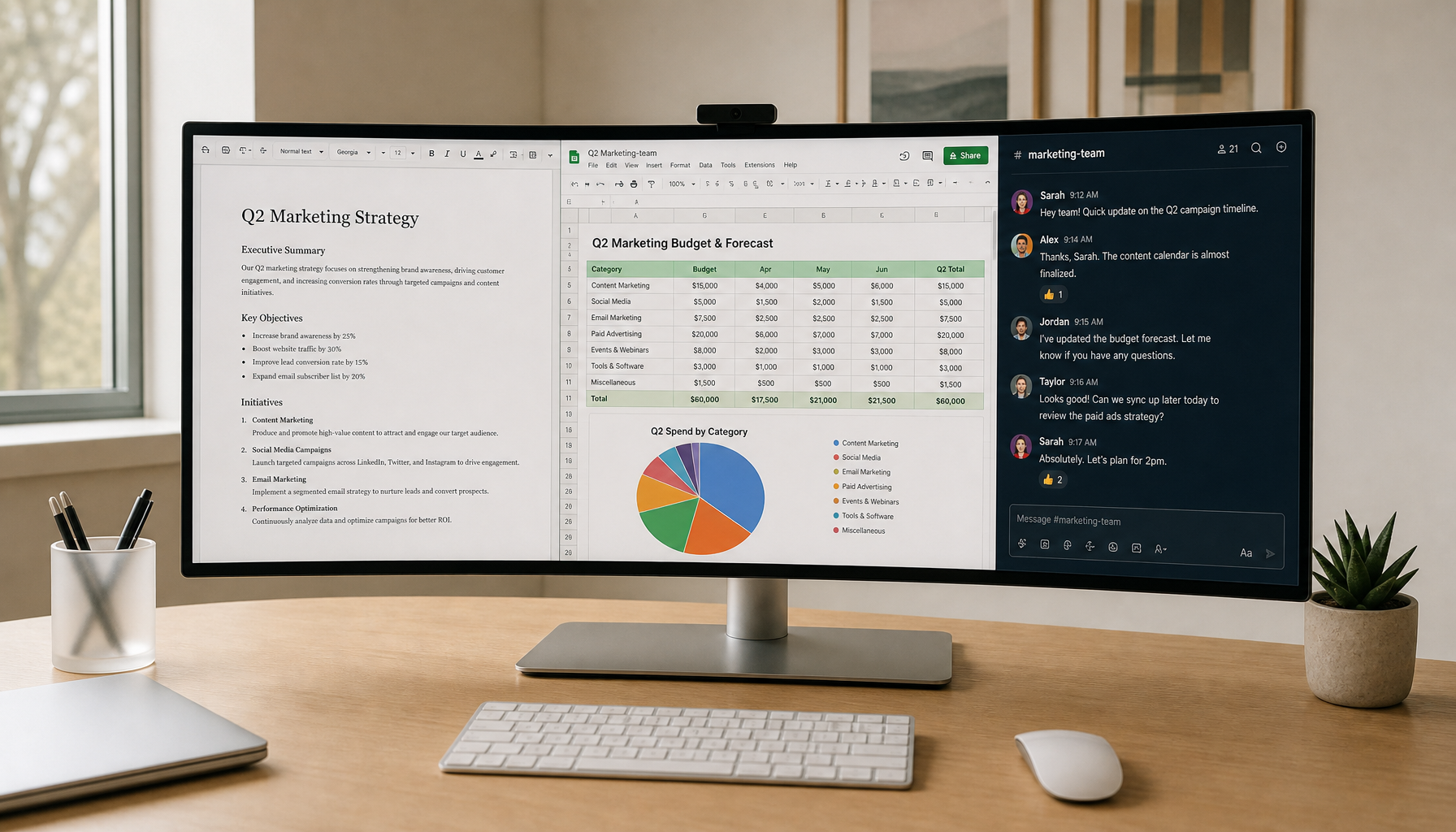
If you spend most of the day in documents, browser tabs, code, or spreadsheets, do not choose only by panel name. Text clarity depends on subpixel layout and pixel density, and RTINGS' text clarity testing shows why some OLED panels can display slight color fringing on high-contrast text while higher-resolution panels narrow that gap.
That means the right question is not just "OLED or Mini-LED?" It is "How many hours a day will this screen show static text, and how sensitive am I to small readability quirks?" For productivity desks, Mini-LED is often the easier default unless OLED is clearly the better fit for your other priorities.
Office monitors are a practical browse path when you want clarity and comfort to matter more than panel headlines.
Mixed Work-And-Play Desks
Mixed-use desks are where Mini-LED vs OLED becomes most personal. If you split time between email, spreadsheets, and gaming, Mini-LED usually gives you more flexibility without making you think about panel habits all day. OLED can still be a great one-monitor setup, but it asks more from your usage pattern.
A useful self-check is this: if the screen is on for long stretches with the same taskbar, browser chrome, or app layout, Mini-LED is usually the calmer choice. If the desk is mostly used for gaming and media after hours, OLED moves up the list.
HDR Gaming and Motion
HDR gaming is not just about how bright a monitor can get. It is about whether highlights pop, whether dark scenes stay detailed, and how the screen handles motion when the camera pans or the action gets fast. That is why Mini-LED and OLED both make sense here, but for different reasons.
HDR Impact and Highlight Punch
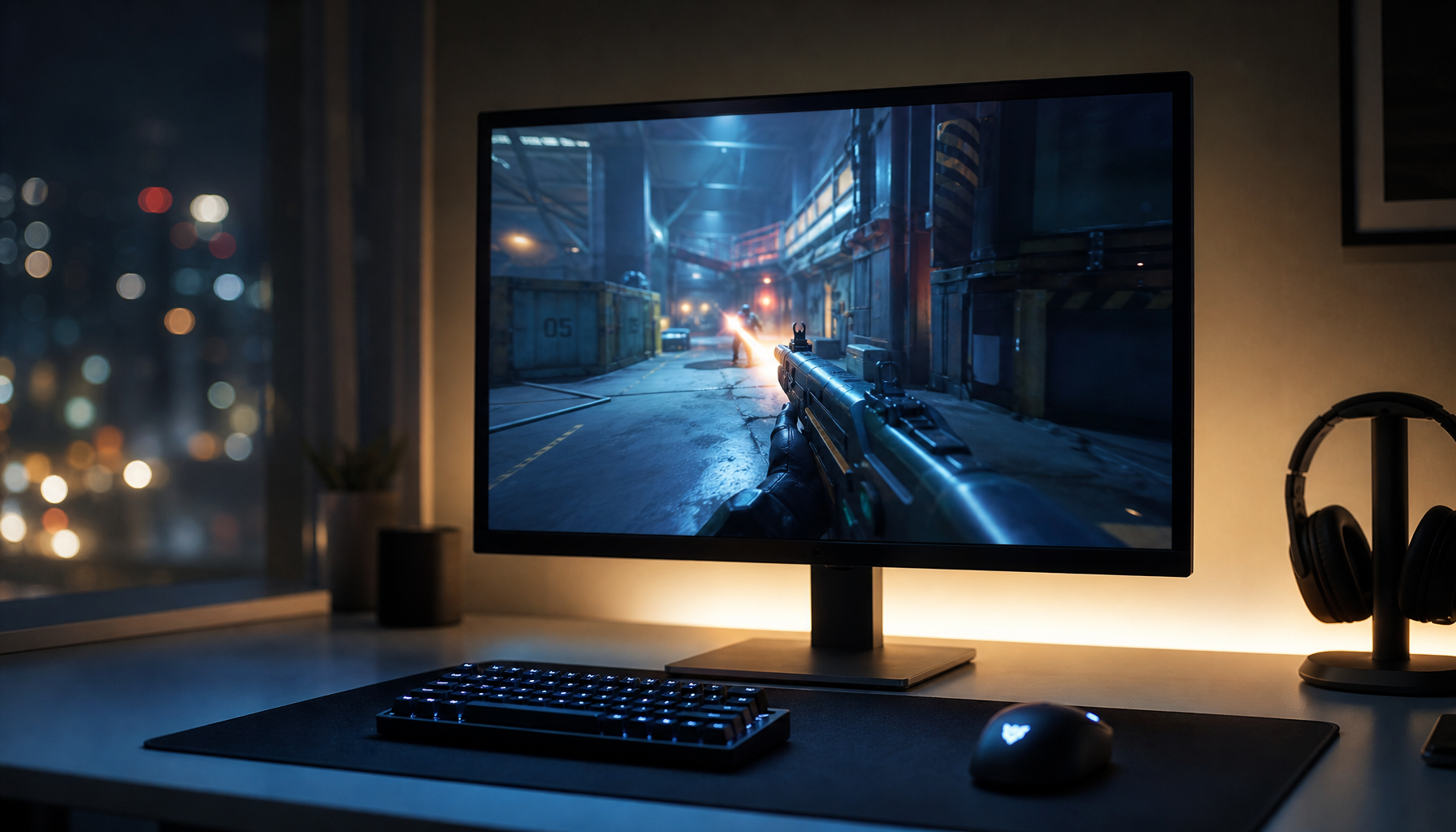
Mini-LED usually has the edge when you want a brighter-looking HDR presentation, especially in rooms that are not perfectly dark. OLED usually has the edge when you want deep blacks and scene separation that makes night scenes, shadows, and space-heavy games look more layered.
For example, KTC's 27-inch OLED gaming monitor is built around 240Hz motion, 0.03ms response, and OLED contrast, while the M27P6 Mini-LED monitor centers on 4K, HDR1400 brightness, and 1,152 local dimming zones. Those are fit examples, not universal proof, but they show how the two technologies aim at different gaming priorities.
If you want a broader look at how backlights and color films shape bright HDR presentation, that comparison can help frame the Mini-LED side.
Motion Response and Competitive Play
OLED is often the more obvious pick if your main gaming concern is clean motion in shooters, racing games, or fast action titles. The appeal is simple: fast pixel response can reduce the sense of blur during quick movement. Mini-LED can still be excellent for gaming, though, especially if you care more about image punch and a brighter overall presentation than the absolute fastest-feeling motion.
So the recommendation flips based on the game mix. If you want the clearest motion and play mostly in a darker room, OLED deserves a close look. If you want a monitor that still looks strong in daytime use and games with lots of bright scenes, Mini-LED is often the more balanced choice.
PC and Console Fit
PC and console use change the decision only when they change your habits. A high-end PC user chasing motion purity may lean OLED, while a console player who wants a bright, all-purpose desk screen may prefer Mini-LED. If you use both, the better choice is usually the one that fits the room and daily workload first, then the gaming system second.
For a brighter, more versatile console-and-PC setup, gaming monitor options are easier to sort by use case after you decide which panel behavior you want most. If your main goal is competitive speed, OLED usually rises. If your main goal is HDR punch plus all-day flexibility, Mini-LED stays competitive.
Burn-In Risk and Daily Habits
Burn-in should be treated as a usage-pattern risk, not as an automatic outcome. Independent longevity testing from RTINGS' burn-in results shows why static content matters: repeated on-screen elements are the real concern, especially over long periods. That makes this section less about fear and more about habits.
Mini-LED removes that specific OLED burn-in risk class, which is why it often feels like the lower-anxiety choice for static desktops. If you keep the same taskbar, dashboard, or app layout on screen for hours every day, that difference matters. OLED can still be a smart buy, but it rewards buyers who are comfortable being a little more deliberate.
A sensible habit set is simple: vary content when you can, avoid running maximum brightness all the time, and use built-in protection features if the monitor offers them. If that sounds like too much maintenance for your workflow, Mini-LED is probably the better fit.
If you want a deeper look at static-element planning, the OLED burn-in risk guide is a useful follow-up for people who keep UI-heavy or document-heavy windows open for long stretches.
Which Panel Fits Your Budget
Budget changes the Mini-LED vs OLED decision because value is not only about panel technology. Resolution, refresh rate, and how you actually use the screen all matter. A more expensive panel can be a worse purchase if it does not match your desk habits.
| Buying profile | Better starting point | Why it usually fits |
|---|---|---|
| Bright-room mixed use | Mini-LED | Easier daytime visibility and less burn-in worry |
| Text-first productivity | Mini-LED or a sharper non-OLED option | Readability and long-session comfort matter more than contrast |
| HDR gaming in a controlled room | OLED | Contrast and motion are often the main goals |
| One screen for work and play | Mini-LED | More forgiving for long static sessions |
| Contrast-first gaming buyer | OLED | Better match for dark scenes and motion-focused play |
KTC's M27P6 Mini-LED monitor is a good example of the Mini-LED value logic: 27-inch 4K, 160Hz, HDR1400, USB-C with 65W PD, and full ergonomic adjustment. It is not the answer for every buyer, but it makes sense when you want premium HDR and a calmer day-to-day ownership experience.
On the OLED side, the All-OLED Monitor collection is the cleaner browsing path if your budget is aimed at contrast and motion rather than brightness-first flexibility. That is usually the right place to compare prices once you already know OLED is your preferred direction.
Choose Mini-LED or OLED for Your Desk
Use this quick path if you want the shortest possible answer. Choose Mini-LED if your desk is bright, your work is text-heavy, you leave static content on screen for long stretches, or you want the more relaxed ownership choice. Choose OLED if you care most about black levels, motion, and HDR gaming in a controlled room. If neither fit feels clean, check whether a different size, resolution, or price tier is the real issue.
Before you add anything to cart, verify the exact panel, resolution, refresh rate, and port layout of the model you are considering. If you want to keep comparing inside one browse path, start with gaming monitors and narrow from there.
Final Takeaway
Mini-LED vs OLED is mostly a decision about your room and your habits. Mini-LED usually fits bright desks, text-heavy work, and long static sessions better. OLED usually fits contrast-first gaming and dark-room use better. If you want a calmer all-around choice, start with Mini-LED. If you want the strongest motion and black-level experience, start with OLED, then confirm the exact model specs before buying.