Small tablets create real friction in active kitchens. They force you to lean in close, strain your neck, scroll constantly with messy hands, and risk cross-contamination right where food safety matters most. A rolling 32-inch smart display shifts the decision from personal portability to dynamic distancing, letting you keep the screen readable from a safer distance while freeing your hands and supporting shared family use.

The Squint and Smudge: Why Tablets Struggle in Active Kitchens
Weeknight dinner prep or weekend batch cooking quickly exposes the limits of a 10-inch tablet. You end up hunched over the counter to read small text, bringing the device into the immediate work area where flour, oil, and raw meat splatter. This leaning posture contributes to neck strain over repeated use, and the constant need to touch the screen with greasy fingers creates hygiene concerns.
Research from the University of Arizona shows that personal electronic devices like smartphones and tablets can carry 10 times more bacteria than most toilet seats, including pathogens such as E. coli and salmonella. An FDA survey adds that while most people wash hands after handling raw meat, only 37% do so after touching a mobile device while cooking, widening the gap in kitchen hygiene practices.
Countertop tablet stands also consume valuable prep space and feel unstable when bumped. These repeated annoyances—squinting, scrolling, smudging, and cleaning—make many home cooks look for a better shared workstation that stays out of the way until needed.
Visibility at a Distance: Why a 32-Inch Screen Beats the Tablet Lean-In
A larger screen changes where you can stand while still seeing details clearly. A typical 10-inch tablet requires you to be within about 2–3 feet for comfortable reading, while a 32-inch 4K display remains legible from 5–8 feet away in many setups. This extra distance keeps the screen outside the most active prep area.
Positioning the display so its top third sits at or slightly below eye level—roughly 100–130 cm from the floor—helps maintain a neutral neck posture during standing tasks. This eye-level view also makes it easier to follow step-by-step video tutorials without pausing to adjust or wipe the screen.
The table below summarizes the likely pattern across typical kitchen distances and use cases, based on manufacturer legibility guidance and ergonomic recommendations. It clarifies the tradeoff without implying exact measured thresholds.
| Display Option | Typical Viewing Distance | Legibility Tier | Hygiene Risk Tier | Likely Zone |
|---|---|---|---|---|
| 32-inch rolling display | 5–8 feet | High | Low | Safe Zone |
| 10-inch tablet | 2–3 feet | Medium–Low | High | Splash Zone |
For most families, this distance advantage alone reduces the number of times you need to touch the screen mid-recipe. The rolling base lets you wheel the display closer for detailed ingredient checks, then roll it back during messy steps.

Beyond the Splash Zone: How a Rolling Display Improves Kitchen Hygiene
Glass surfaces can harbor foodborne viruses for extended periods. One academic review found that norovirus surrogates may persist on glass for up to 56 days under certain conditions, underscoring why minimizing unnecessary touch in the kitchen matters.
A rolling 32-inch display lets you move the screen away from the immediate counter during high-risk tasks such as chopping raw meat or working with loose flour. You read the recipe from several feet back, then roll it forward only when hands are clean. This dynamic positioning reduces direct contact compared with a tablet that must stay within arm’s reach.
Cleaning is also simpler: a vertical screen can be wiped with a microfiber cloth without the same risk of liquid pooling around edges or ports that a flat-lying tablet faces. For busy kitchens, these practical hygiene wins accumulate over time and lower the chance of cross-contamination.
The Shared Hub: Collaborative Cooking and Smart Home Management
Kitchens in 2026 are increasingly multi-purpose hubs. The NKBA 2026 Kitchen Trends Report highlights smart technology integration as a priority for homeowners who want spaces that support cooking, planning, and family interaction at once.
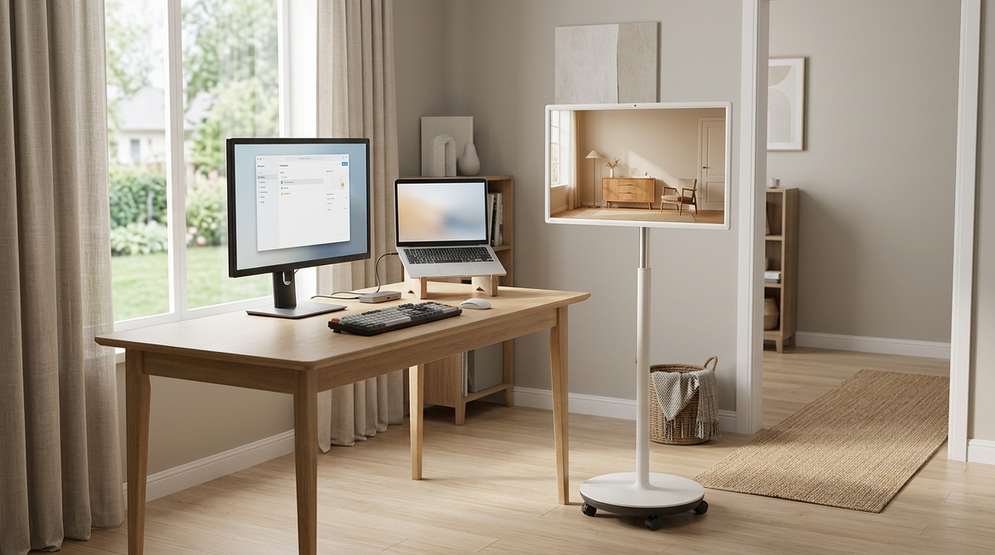
A 32-inch rolling display works well as a shared command center. Multiple people can view a recipe video from different angles around the island without huddling. The same screen can show a synchronized grocery list, multiple timers, or a family calendar while someone chops vegetables. Battery-powered mobility removes cord hazards in high-traffic areas and allows the display to pivot 360 degrees to face the stove, island, or dining table as needed.
During longer batch-cooking sessions, the screen can stream music or light entertainment without blocking views or requiring someone to hold a device. This shared-workstation model replaces the personal-device approach and better matches how families actually cook together.
For related ideas on portable smart displays, see our guide on 5 Essential Specs to Check Before Buying a Portable Touch Screen Monitor. If you want to learn proper care, the article How to Clean a Portable Touch Screen Without Damaging the Capacitive Layer offers practical tips that apply in kitchen environments.
Choosing a Rolling Kitchen Display for Your Meal Prep Workflow
Start by matching the display to your actual cooking style. Frequent video-recipe users benefit most from 4K resolution and a screen size that stays readable at 5–8 feet. Battery life around 11 hours (depending on brightness and volume) supports several meal-prep sessions between charges, but check your typical usage pattern before relying on all-day untethered operation.
Android compatibility with Google Play and streaming services lets you run popular recipe apps, timers, and calendars directly. Wheel quality and a stable adjustable stand matter for smooth movement across different floor types without tipping. Consider space: the rolling base needs room to maneuver, so measure your kitchen traffic paths first.
A decision checklist can help:
- How often do multiple people cook together?
- Do you follow long video tutorials that benefit from larger text and distance viewing?
- Is counter clutter already an issue?
- Will the display also serve as a smart-home hub for lists and calendars?
If your answers lean toward shared visibility, reduced touch, and mobility, a rolling 32-inch format usually fits better than a tablet. For the right balance of size and smart features, look at options in the Mobile Touch Screen collection or the specific KTC MEGAPAD 32" 4K Android 13 Google EDLA Smart Touch Monitor with 9500mAh Battery that aligns with the capabilities discussed.
Users who value this setup often pair it with our KTC Remote-control for Touch Mobile Monitor to minimize even incidental screen contact. Those exploring broader smart-home integration may also like the Smart Monitor collection for complementary devices.
Is a Rolling 32-Inch Display Better Than a Tablet for Following Video Recipes?
Yes for most shared or hands-busy cooking sessions. The larger screen and mobility reduce leaning and touching, which improves both visibility and hygiene. A tablet remains convenient for solo, quick-reference use where you prefer a fully portable personal device.
How Far Away Can You Read a 32-Inch Kitchen Screen?
In typical lighting and with standard recipe fonts, 5 to 8 feet is a comfortable range for many users. Actual legibility depends on eyesight, font size, and screen brightness—test in your kitchen before deciding on permanent placement.
Does a Rolling Smart Display Need to Be Waterproof for Kitchen Use?
No model should be treated as waterproof. The advantage comes from positioning the screen outside splash range rather than relying on liquid resistance. Wipe with a dry or slightly damp microfiber cloth and keep it away from direct streams or submersion.
Can the Whole Family Use One Rolling Display at Once?
Yes. The 32-inch size and 360-degree swivel allow viewing from multiple sides of an island or between stove and prep areas. This shared visibility removes the huddle friction common with small tablets.
How Long Does the Battery Last During Meal Prep?
Runtime varies with brightness and volume. At moderate settings, expect several hours of continuous use per charge. For all-day meal planning or heavy streaming, plan to keep the charger accessible.
What Should I Check First When Buying a Kitchen Rolling Screen?
Confirm 4K resolution for distance readability, solid wheel stability on your floor type, and Android compatibility with the recipe apps you use most. Measure your available maneuvering space and decide how often you need fully untethered mobility versus plugged-in reliability.