Thunderbolt 4 is usually a reliability upgrade, not an image-quality upgrade. It matters most in complex one-cable setups with dual displays, charging, and peripherals.
Yes, but mostly in consistency rather than raw speed. For monitor setups, Thunderbolt 4 makes dual-display support, dock behavior, and cable performance more predictable, while Thunderbolt 3 can be just as good in simpler single-monitor setups.
A one-cable desk can look perfect on paper and still fail in practice with charging issues, dock quirks, or a second screen that refuses to turn on. The practical benefit here is simple: newer Thunderbolt 4 setups remove more guesswork than Thunderbolt 3, especially when you run two displays, fast storage, and laptop charging at the same time. The goal is to decide whether Thunderbolt 4 is worth paying for on your next monitor or whether Thunderbolt 3 is already enough.
The Short Answer for Real Monitor Buyers
For display performance alone, both Thunderbolt 3 and Thunderbolt 4 can reach 40 Gbps, so Thunderbolt 4 does not make a single monitor look sharper, brighter, or smoother by itself. If you already have a stable Thunderbolt 3 monitor driving one 4K panel and charging your laptop reliably, you are not missing a hidden image-quality upgrade.
Where Thunderbolt 4 starts to matter is predictability. Thunderbolt 4 requires support for two 4K displays. That matters when your monitor also acts like a dock, handling USB devices, Ethernet, external SSDs, and laptop charging through one cable. In day-to-day use, that tighter baseline is often worth more than another promise about “up to” speeds.
What Actually Changes for Monitor Use?
Thunderbolt 4 is a standards upgrade, not a picture-quality upgrade
The clearest way to frame it is that Thunderbolt 4 is a consistency and reliability upgrade over Thunderbolt 3. The connector is still USB-C shaped, the peak headline speed is still 40 Gbps, and both standards can carry video, data, and power. What changes is the minimum that certified hardware must deliver.
That is why Thunderbolt 4 feels better in premium office and creator setups than it sounds on a spec sheet. If you connect a 32-inch 4K productivity monitor, add a second 4K panel, attach an external SSD, and expect your laptop to charge from the same cable, Thunderbolt 4 gives you a better chance of getting exactly that without trial-and-error shopping.
Dual displays are where the upgrade becomes easy to feel

For many buyers, the most tangible monitor-side benefit is guaranteed dual-4K support on Thunderbolt 4 systems. Some Thunderbolt 3 hosts and docks handled dual external displays well, while others were more selective and sometimes depended on workarounds.
A simple bandwidth reality check helps. KTC notes that one 4K display can consume roughly 14 Gbps, so two 4K 60 Hz displays can take a large share of a 40 Gbps link. That does not make Thunderbolt 4 faster, but it does explain why stronger baseline requirements matter when your setup is juggling displays and storage at once.

Where Thunderbolt 3 Is Still the Smart Buy
If your desk runs one external 4K monitor, a keyboard, a mouse, and occasional file transfers, Thunderbolt 3 often remains the better-value choice. In that kind of setup, the money you save can often buy a better panel: a higher refresh rate, better color coverage, stronger ergonomics, or deeper contrast. Those are improvements you will notice every day.

That value case is even stronger because the current market still includes excellent Thunderbolt 3 displays. Tested 4K monitor picks for 2026 show why panel quality and color accuracy often matter more than having the newest port standard on the box.
Where Thunderbolt 4 Earns Its Price
One-cable workstations benefit the most

The strongest reason to pay for Thunderbolt 4 is not vague future-proofing. It is that Thunderbolt 4 monitors and docks are built for demanding single-cable setups. For hot-desk offices, creative workstations, and home setups where a laptop is plugged in and unplugged every day, that reliability is a real productivity feature.
Cable behavior also improves in a practical way. Certified Thunderbolt 4 passive cables can maintain full 40 Gbps at about 6.6 ft, which is a meaningful convenience gain over older cable situations where length and performance could become unclear quickly. If your monitor sits on an arm or your dock lives off to the side instead of directly under the laptop, that extra certainty is worth paying for.
Portable and hybrid desks see the biggest daily gain
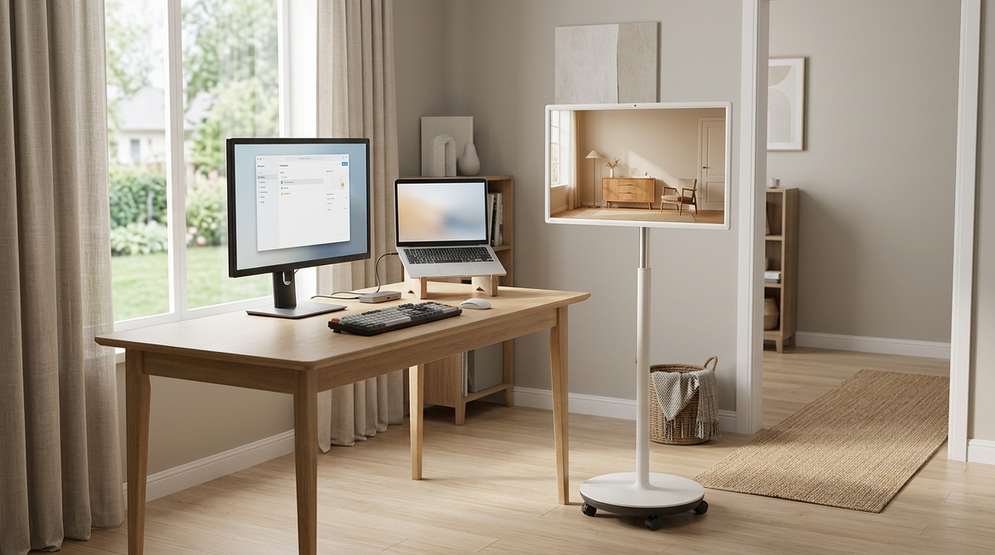
Thunderbolt 4 also makes sense if your monitor doubles as your docking station for a laptop that moves between rooms or offices. Power delivery is more predictable on Thunderbolt 4, so a single cable is more likely to cover both display and charging duties without surprise battery drain under load.
That matters on modern productivity and creator laptops. A portable workstation connected to a 27-inch or 32-inch monitor should feel like it has snapped into desktop mode, not like it is borrowing half a dock and hoping for the best.
The Limits Buyers Miss
One important nuance is that Thunderbolt 4 is not magic. A Thunderbolt 4 hub does not automatically bypass. If your system’s integrated graphics tops out at a certain number of displays, a better dock will not erase that ceiling. For office dashboards or static spreadsheets, software-driven USB graphics can extend screens, but that is a compromise, not true native display performance.
Another overlooked point is dock bandwidth design. Thunderbolt 4 works well for mixed data and display workloads, but that does not mean every extra port on a dock gets unlimited bandwidth. If your workflow includes very fast card readers, high-speed networking, and multiple displays at once, the dock design matters just as much as the logo on the port.
Practical Buying Advice by Use Case
Use case |
Better fit |
Why |
One 4K office monitor and charging |
Thunderbolt 3 |
Usually enough and often a better value |
Two 4K monitors from one laptop |
Thunderbolt 4 |
Stronger baseline support and fewer surprises |
Creator desk with monitor, SSD, dock, and charging |
Thunderbolt 4 |
Better consistency under mixed workloads |
High-refresh gaming desktop |
Neither is automatically best |
Direct DisplayPort from the GPU often matters more |
Budget buyer choosing between panel quality and port version |
Thunderbolt 3 or USB-C monitor |
Spend first on the screen itself |
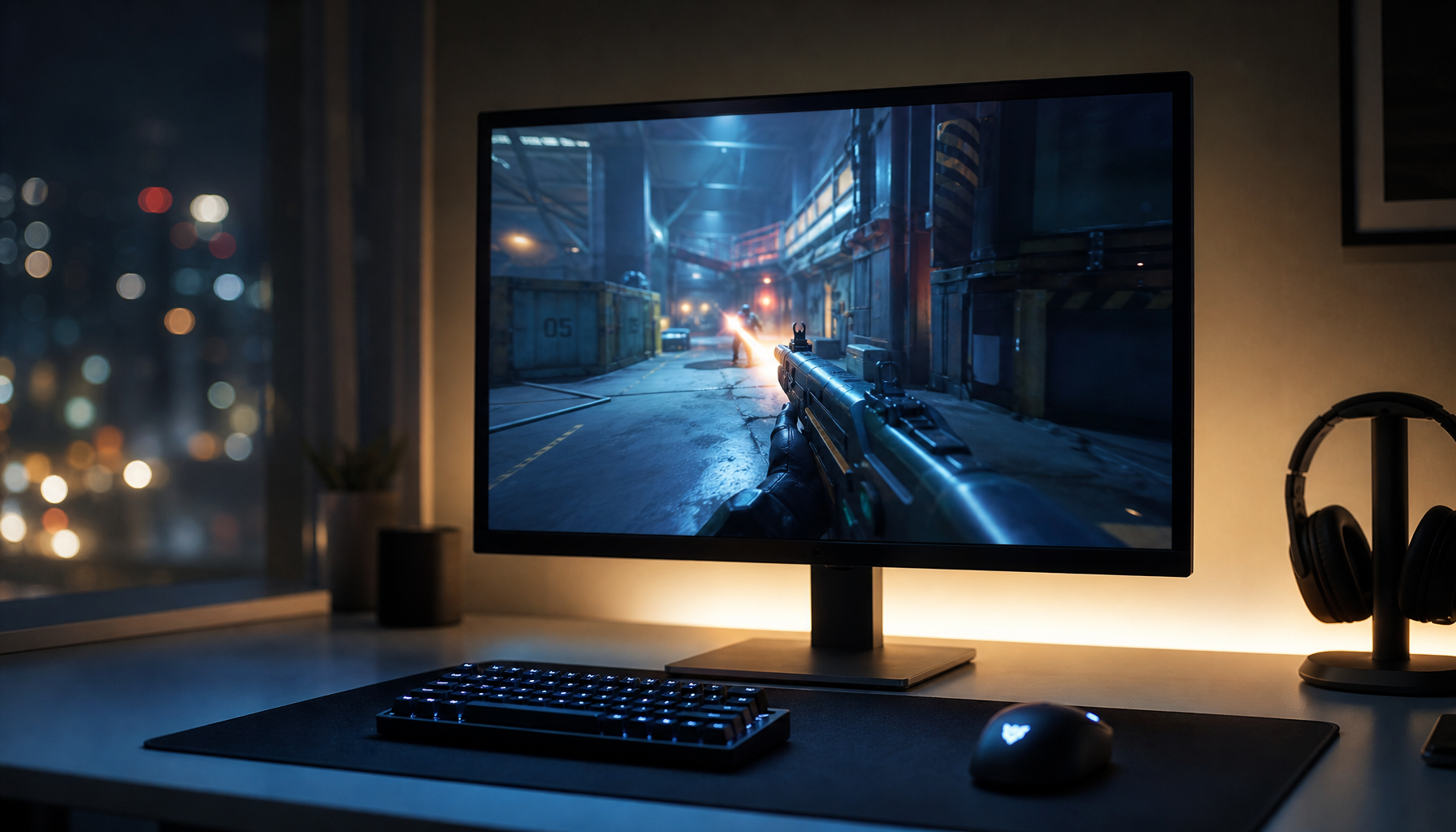
For gaming-focused buyers, the monitor matters more than the Thunderbolt badge unless you are specifically building a docked laptop gaming setup. Current gaming monitor picks emphasize refresh rate and panel quality, which matches real-world experience: a great 240 Hz gaming display with the right GPU connection will usually outperform a mediocre monitor that focuses mainly on premium connectivity.
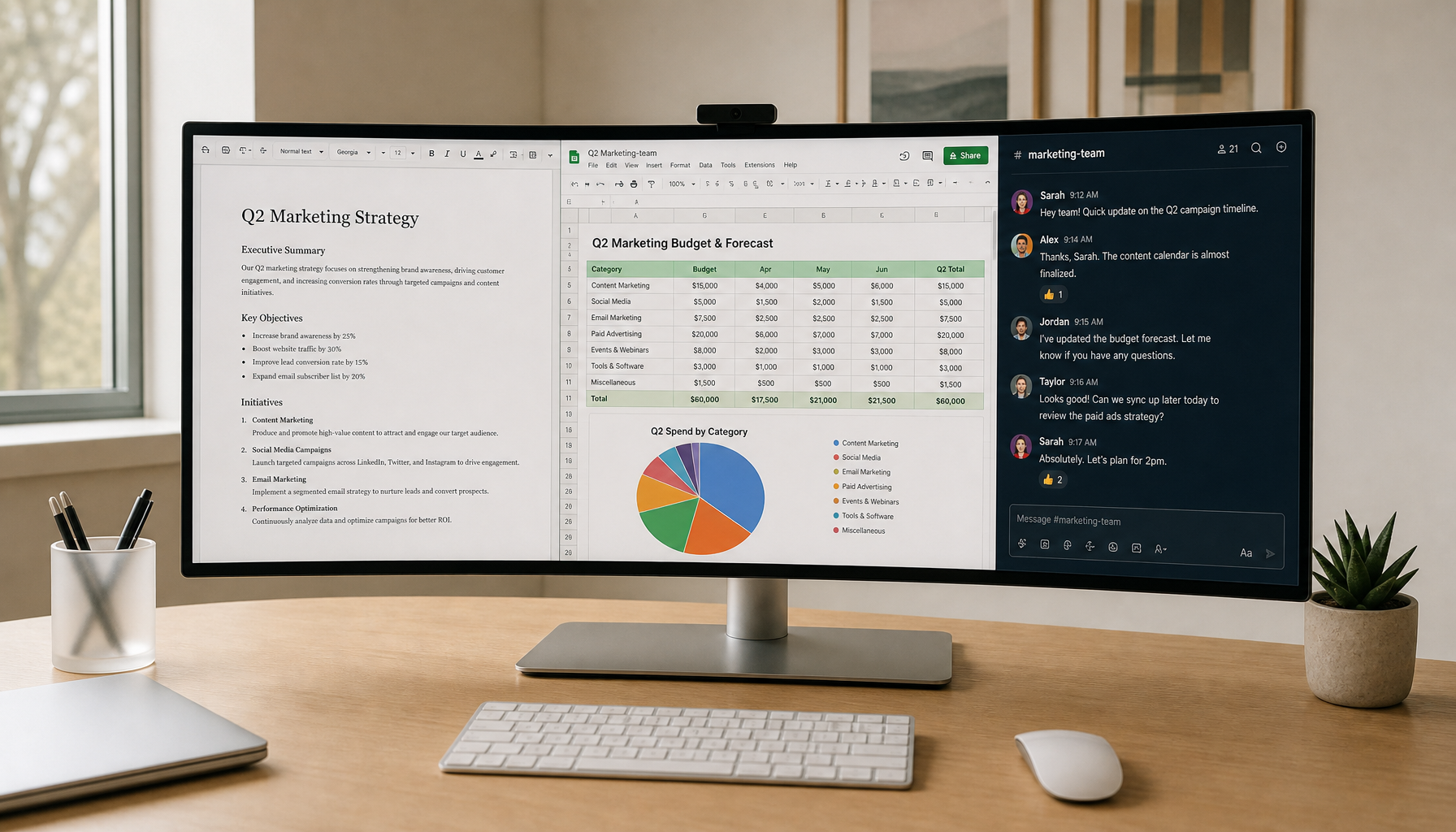
For office and creator buyers, the balance flips. Monitor buying guidance focused on resolution, color, ports, and charging reflects the right priorities. Thunderbolt 4 earns its keep when the monitor is the center of your workspace rather than just a panel.
So, Is Thunderbolt 4 Better for Monitors?
Yes, but in a specific way. Thunderbolt 4 is better when your monitor is part of a serious single-cable setup with dual displays, laptop charging, fast accessories, and daily dock-and-undock use. Thunderbolt 3 remains excellent when your setup is simpler and you would rather invest in a better screen than in stricter connection standards.
The best display upgrade is still the one that improves what you actually do at your desk. If your monitor is your command center, Thunderbolt 4 is the safer bet. If your monitor is mainly a great screen, Thunderbolt 3 can still be the smarter choice.