Choosing between a triple monitor setup and one 49-inch super ultrawide comes down to your main workload, available desk depth, and GPU budget. A single 49-inch 1000R curved DQHD display offers seamless immersion and simpler setup for most AAA gaming and hybrid productivity, while a triple 27-inch QHD array delivers superior peripheral field of view for sim racing and rigid window snapping for heavy multitasking—provided you have the flagship GPU and space to support its roughly 50% higher pixel load.

Both configurations push high-end hardware in 2026, but they create different daily experiences. The decision often hinges on whether you prioritize cinematic seamlessness or maximum real estate and customization.
Bezel-Free Immersion: Why the 1000R Curve Beats Physical Gaps
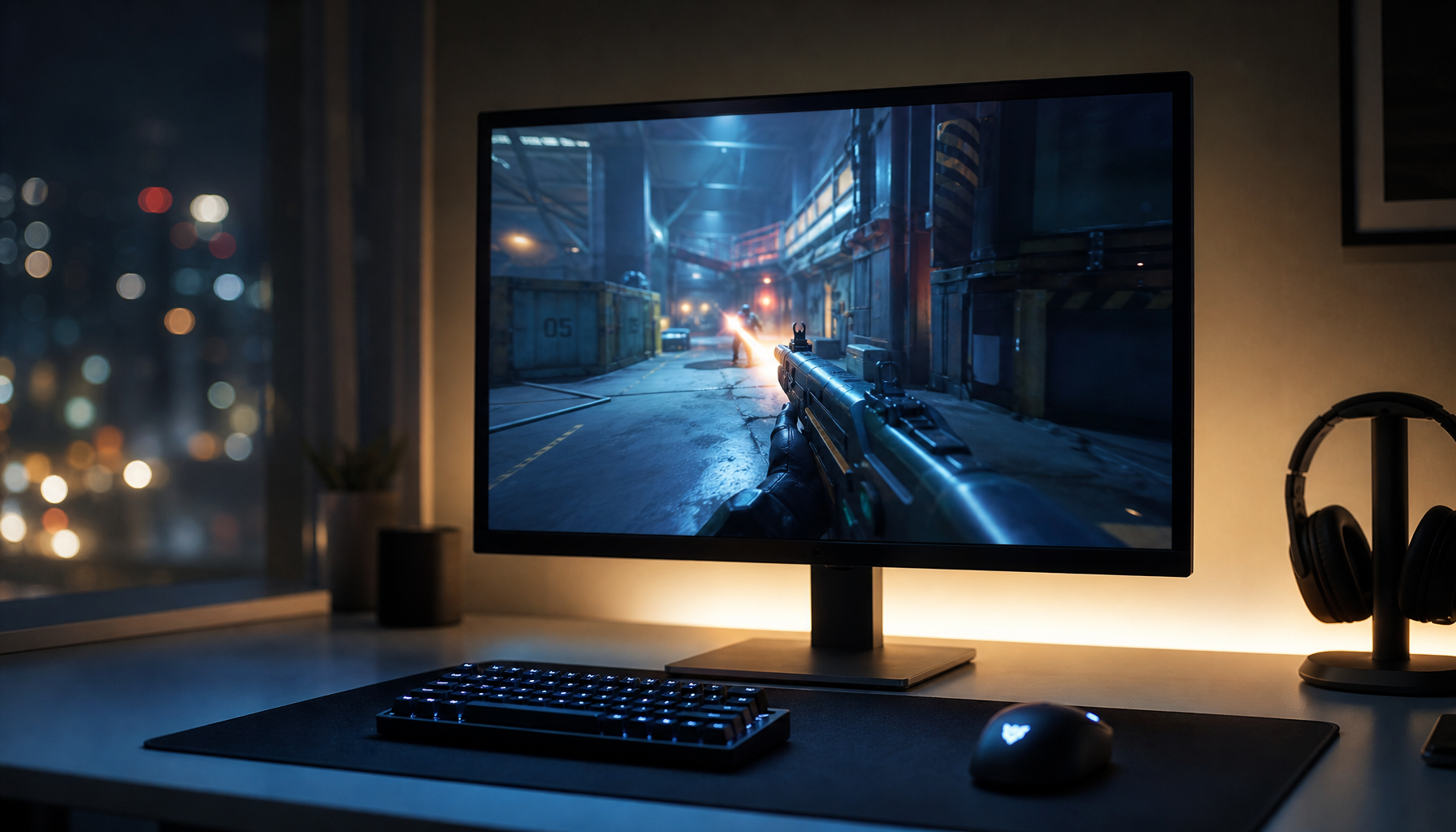
In fast-paced open-world or cinematic games, physical bezels create visual friction that repeatedly pulls your eyes out of the scene. A 1000R curved super ultrawide eliminates those gaps entirely, matching the natural curvature of human vision more closely than flatter or less aggressive panels. This reduces eye strain during long sessions and delivers a more continuous horizon line, especially in driving or exploration titles.
Triple-monitor arrays, even with thin-bezel 27-inch models, retain two permanent vertical breaks. These gaps become noticeable when panning across the screen in immersive games, acting as constant visual anchors. For general AAA gaming and story-driven experiences, the single 49-inch curved panel typically feels more immersive for most players.
That said, the gap penalty matters less in competitive esports where your focus stays centered. Curved monitors in general enhance peripheral awareness, but the aggressive 1000R radius on a super ultrawide stands out for comfort in mixed use. This guide to curved versus flat monitors explores how curvature affects real-world gaming comfort.
Productivity Powerhouse: Separate Windows vs. Seamless Super Ultrawide Workflows
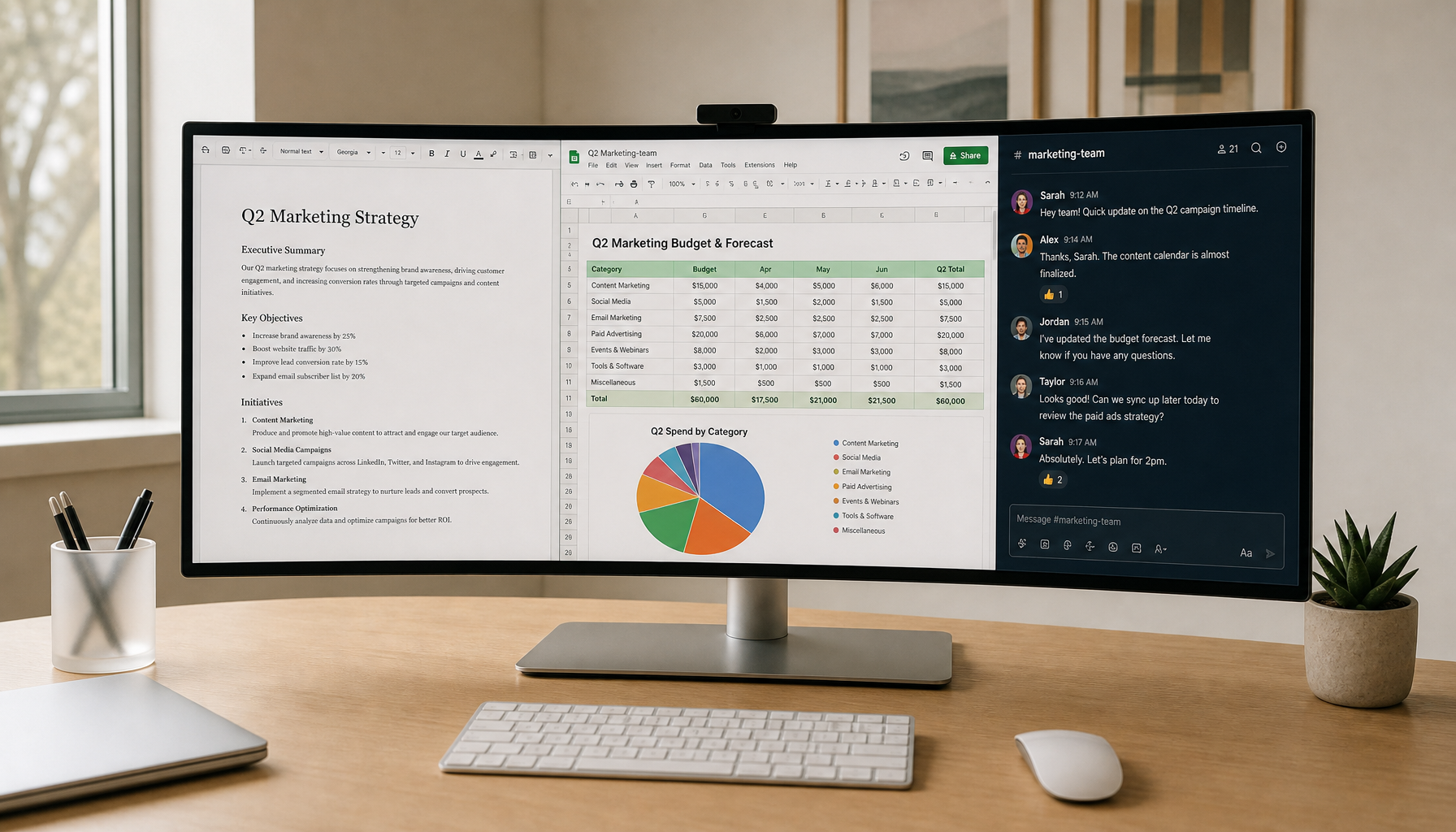
For users running multiple applications side by side—such as code editors, browsers, spreadsheets, and chat windows—triple monitors provide natural physical borders that make window snapping intuitive. You can dedicate one screen to reference material, another to your primary workspace, and the third to communication tools without constant resizing.
A 49-inch super ultrawide offers the same total horizontal real estate but lacks those hard dividers. The solution is straightforward: Microsoft PowerToys FancyZones lets you create custom grid layouts that mimic separate monitors on one large canvas. As the official FancyZones documentation explains, these snapping zones turn the seamless display into a highly organized productivity surface.
Many hybrid workers report less head-swivel fatigue on a single large curved panel once zones are configured. The 49-inch option also simplifies color calibration and settings management. If your workflow involves frequent window rearrangement across very different applications, test FancyZones first; it often closes the productivity gap for all but the most rigid multi-app setups.
The Sim Racing Edge: Why Triple 27-Inch Monitors Still Lead in FOV
Serious sim racers and flight simulator enthusiasts continue to favor triple-monitor arrays because they can angle the side panels to create a true 180-degree field of view. This wrap-around effect delivers unmatched peripheral awareness for judging apexes, spotting traffic, or maintaining situational awareness in the cockpit. As detailed in sim racing setup comparisons, the adjustable angles simply cannot be matched by any fixed-curve single panel.
Even a 49-inch 32:9 super ultrawide with its 1000R curve falls short of replicating that extreme peripheral vision. The fixed radius works brilliantly for most driving games and open-world titles but cannot fully substitute for the physical side monitors in dedicated racing rigs. If your primary use is professional-level sim racing or flight simulation on a dedicated rig, the triple setup remains the specialist choice.
For mainstream gamers who occasionally play racing titles alongside AAA games, the super ultrawide delivers excellent immersion without the added complexity. The FOV advantage of triples is real but highly scenario-specific.

Desk Footprint and Cable Chaos: Managing the Physicality of Your Combat Station
Space and setup friction often become the real deciding factors. A 49-inch super ultrawide typically fits comfortably on a desk around 45 inches wide and works well with shallower depths thanks to its aggressive curve. You manage only two main cables and one heavy-duty VESA mount, making adjustments or sit-stand desk use far simpler.
A triple 27-inch array demands 60 to 70 inches of horizontal width and at least 30 inches of depth so the angled side monitors remain ergonomic. You will route six cables instead of two, and independent monitor arms introduce the alignment nightmare—small sagging or shifts over time break the visual horizon and require frequent readjustment. The “toggle tax” of managing three separate OSD menus for brightness, HDR, or local dimming adds another layer of daily friction that many hybrid users eventually find annoying.
If your desk is smaller than 50 inches wide or you dislike frequent calibration, the single super ultrawide is usually the more practical choice. Those with expansive desks and dedicated rigs can absorb the extra complexity.
Driving 11 Million Pixels: 2026 GPU Requirements for Triple-QHD vs. DQHD
Pixel count directly determines rendering load. A 49-inch DQHD (5120×1440) panel contains approximately 7.37 million pixels. Three 27-inch QHD monitors total 11.06 million pixels—a 50% increase that translates into noticeably higher GPU demand at the same refresh rate and settings.
In 2026, both setups benefit from DisplayPort 2.1. As the VESA DisplayPort 2.1 specification release establishes, UHBR10 and higher provide the bandwidth needed for uncompressed 180 Hz+ output at these resolutions, reducing reliance on heavy compression that can introduce artifacts.
A high-end card equivalent to an RTX 5070 can typically sustain 180 Hz in optimized titles on the 49-inch super ultrawide. Driving the triple-QHD array at the same target usually requires a flagship-tier GPU such as an RTX 5090 equivalent to maintain smooth frame times. The extra compute also raises power draw and heat, which matters for smaller cases or noise-sensitive environments.
GPU Floor for 180Hz Gaming: Super Ultrawide vs Triple QHD
Pixel count and recommended 2026 GPU tier for high-refresh gaming setups. DQHD is close to 4K-class load, while triple QHD adds roughly 50% more pixels and typically needs a flagship-tier GPU.
View chart data
| Category | Pixel Count (millions) | Relative Load vs 4K (%) | GPU Tier Index | 180Hz Feasibility Index |
|---|---|---|---|---|
| 49-inch DQHD super ultrawide | 7.37 | 89.0 | 2.0 | 4.0 |
| Triple QHD | 11.06 | 134.0 | 4.0 | 2.0 |
The chart above visualizes the pixel tax and resulting GPU tiers. Check your specific titles and target frame rate; some 2026 optimized games may close the gap, but the 50% difference remains a reliable planning guideline.
Which Setup Should You Build? Choosing Your Ultimate Wide-Screen Array
Match the configuration to your dominant use case rather than chasing maximum pixels. The ultrawide generalist—focused on AAA gaming, content creation, and hybrid work with limited desk space—will usually find better value and daily convenience with a 49-inch 1000R super ultrawide like the KTC H49S66. It delivers seamless immersion, simpler cabling, and manageable GPU requirements for most users.
Dedicated sim racers or flight sim pilots who already own a deep desk and flagship GPU should choose the triple-monitor route. Three KTC H27S17 curved panels angled properly still provide the FOV edge that no single screen can match. Our curved monitors collection includes options for both paths.
Use this quick self-check before buying:
- Desk width under 50 inches or depth under 28 inches → prefer the 49-inch ultrawide.
- Primary use is sim racing or flight simulation with a dedicated rig → triple array is worth the effort.
- You switch frequently between work and gaming and dislike managing multiple menus → single ultrawide reduces the toggle tax.
- GPU budget tops out at high-end rather than flagship tier → the 49-inch setup is the safer performance target.
For broader inspiration on building immersive desks, see our ultrawide gaming monitor guide and guide to ergonomic home office monitors. The right choice comes down to honest assessment of your space, hardware, and the type of content you spend most hours viewing.
Frequently Asked Questions
Is a triple monitor setup better than a 49-inch ultrawide for productivity? It depends on your window management habits. Physical borders help with rigid snapping, but tools like FancyZones make a single 49-inch panel nearly as efficient while reducing head movement and calibration effort. Hybrid users often prefer the simpler single-display workflow after initial setup.
How much GPU power is truly needed for triple 27-inch monitors at 180Hz in 2026? Expect to need a flagship-tier card equivalent to an RTX 5090 for comfortable 180 Hz in demanding titles. The 50% pixel increase over a 49-inch DQHD pushes the requirement from high-end to top-bin hardware in most cases.
Does a 49-inch super ultrawide require special desk depth or mounting? Its 1000R curve allows comfortable viewing from roughly 24–30 inches away, fitting standard desks better than angled triple wings. A single robust VESA mount is usually sufficient, avoiding the alignment issues common with multi-arm triple setups.
Can I use the same games and settings on both configurations? Most titles support both, but sim racing and flight simulators gain the most from triple arrays due to FOV. General AAA games often look more cinematic on the seamless ultrawide. You may need to adjust FOV sliders and test for bezel compensation on triples.
What cable and connectivity standards matter most in 2026? DisplayPort 2.1 is the practical requirement for uncompressed high-refresh output on either setup. Ensure your GPU, monitors, and cables all support UHBR10 or higher to avoid bandwidth bottlenecks at 180 Hz and above.
Which setup is easier to maintain over multiple years? The single 49-inch ultrawide wins on maintenance. One OSD, one color profile, fewer cables, and simpler mounting reduce long-term friction. Triple arrays can develop minor alignment drift and require more frequent menu navigation for features like local dimming.