TN panels stay fast and competitive, but their angle-sensitive design keeps them from matching IPS color accuracy. Price can improve tuning and speed, not the core limits of the panel type.
Have you ever paid for a “pro” gaming monitor, opened the same image on a second screen, and watched skin tones, shadows, or team colors look slightly wrong? The difference is easy to test: move your head a few inches up, down, or sideways, and TN color changes far sooner than IPS. Here is why that happens, when TN still makes sense, and how to buy a display that matches your work, games, and budget.
The Short Technical Answer
TN, or Twisted Nematic, is built around liquid crystals that twist to control light. IPS, or In-Plane Switching, keeps its crystals aligned more parallel to the screen surface, which helps the panel preserve color and brightness from wider angles. That physical difference is why IPS panels improve color accuracy and viewing angles compared with TN, while TN keeps its reputation for speed and lower cost.
Price can improve a TN monitor’s electronics, refresh rate, backlight, overdrive tuning, and factory calibration. It cannot fully redesign the TN optical structure without turning it into a different panel technology. That is why expensive TN esports monitors can feel razor-sharp in motion yet still look washed out beside a competent IPS screen during editing, media work, or multi-window productivity.

Color Accuracy Is Not Just “More Vivid Color”
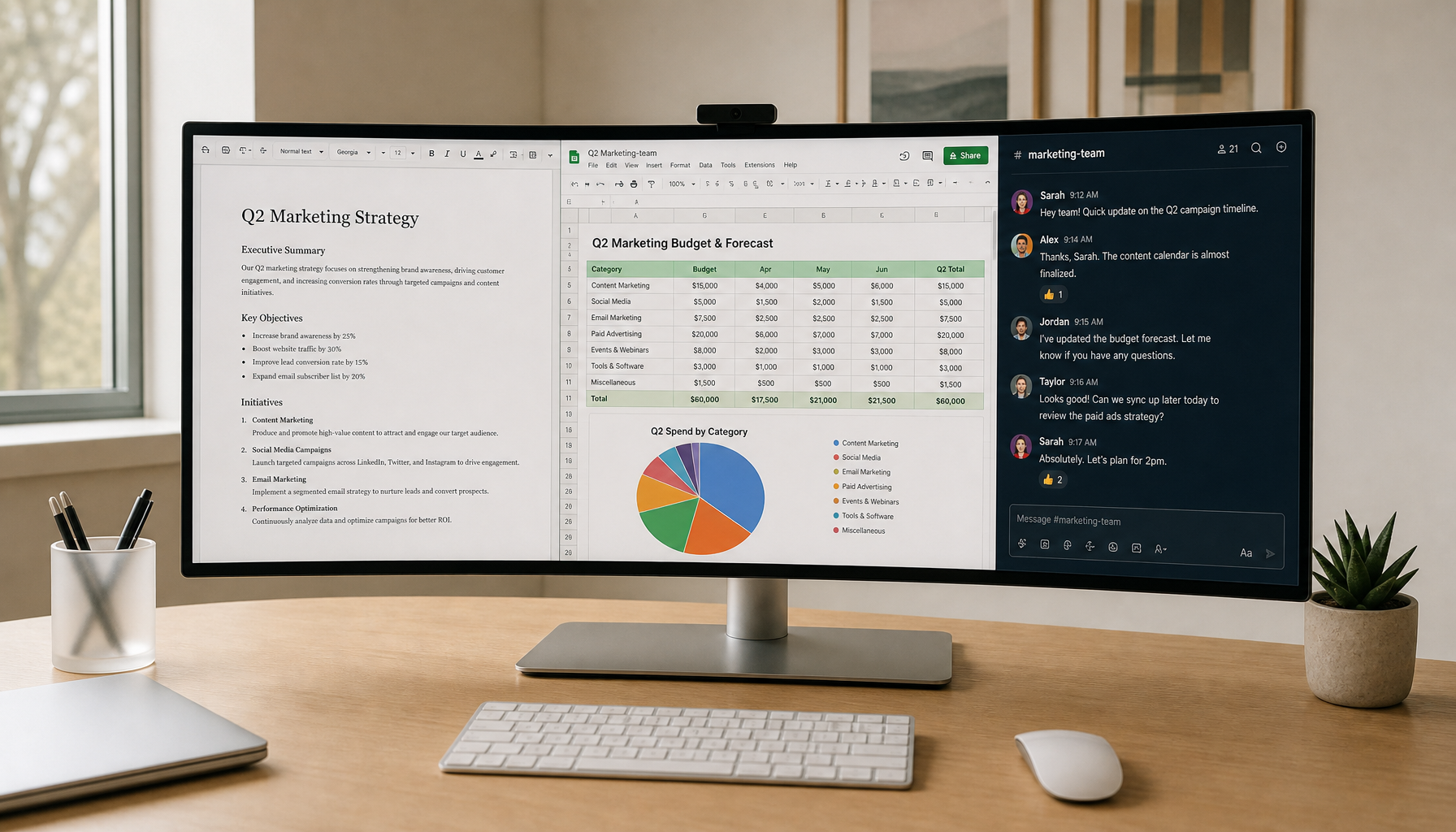
Color accuracy means a display reproduces the intended color rather than simply making it brighter or more saturated. For a gaming monitor, that affects whether a desert map looks dusty instead of orange, whether a health bar is easy to read, and whether dark areas show detail without crushing the scene. For office and creative work, it affects brand colors, product images, spreadsheets with conditional formatting, and reading comfort over a long day.
A wider color gamut helps a screen produce more colors, but accuracy also depends on consistency. A monitor that shifts color when viewed slightly off-center can measure acceptably in one test position yet still disappoint in real use. In gaming, color accuracy and gamut shape immersion, visibility, and whether game art appears as intended.
Why TN Falls Behind IPS Even When It Costs More
The first barrier is viewing-angle stability. TN panels are highly sensitive to head position, especially vertical angle. Raise the monitor too high, recline your chair, or use it as a side display, and the image can lose contrast, shift colors, or even invert tones. At severe off-axis angles, TN can become hard to view, while IPS is designed to stay usable from much wider positions.
The second barrier is color depth and tonal smoothness. Many TN panels have historically relied on lower native color depth and compensation techniques, while IPS models more often deliver stronger 8-bit or better color reproduction. In practice, TN prioritizes speed and cost, while IPS is built for richer color, wider viewing angles, and better visual consistency in productivity and creative setups.
The third barrier is uniformity across the screen. On a 27-inch monitor, your eyes do not view the center and corners from exactly the same angle. With TN, that means the top, bottom, and edges can appear different even when you sit directly in front of the panel. On IPS, the same spreadsheet, photo timeline, or game HUD usually stays more consistent across the surface.

Factor |
High-End TN |
Comparable IPS |
Motion clarity |
Excellent, especially at very high refresh rates |
Strong on modern fast IPS, but usually not the extreme esports leader |
Color consistency |
Limited by angle-sensitive crystal behavior |
Stronger across the panel and off-center views |
Viewing angles |
Narrow, especially vertically |
Commonly rated up to 178 degrees in many IPS references |
Best use |
Competitive FPS where speed dominates |
Gaming, office work, creative tasks, portable screens, and multi-monitor setups |
Main compromise |
Washed-out or shifting color |
Possible IPS glow and weaker contrast than VA |
Why Calibration Cannot Fully Save TN
Calibration can make a TN monitor better. It can correct white balance, reduce oversaturation, improve gamma behavior, and make the center of the screen more predictable. If you already own a TN monitor, calibration is worth doing before you judge it too harshly.
But calibration targets one viewing condition. It does not stop TN color from changing when your eyes move relative to the panel. That is the key reason a calibrated TN can still look inconsistent in daily use. More broadly, display quality depends on several categories, including color, gamma, contrast, motion, and viewing angle, rather than a single specification like refresh rate.
A simple real-world example makes this clear. Open a neutral gray image or a photo with skin tones on a TN monitor, then lower your chair slightly. If the image warms, cools, darkens, or loses shadow detail, that is not a profile problem. It is the panel’s viewing-angle behavior showing through.
Why Expensive TN Monitors Still Exist
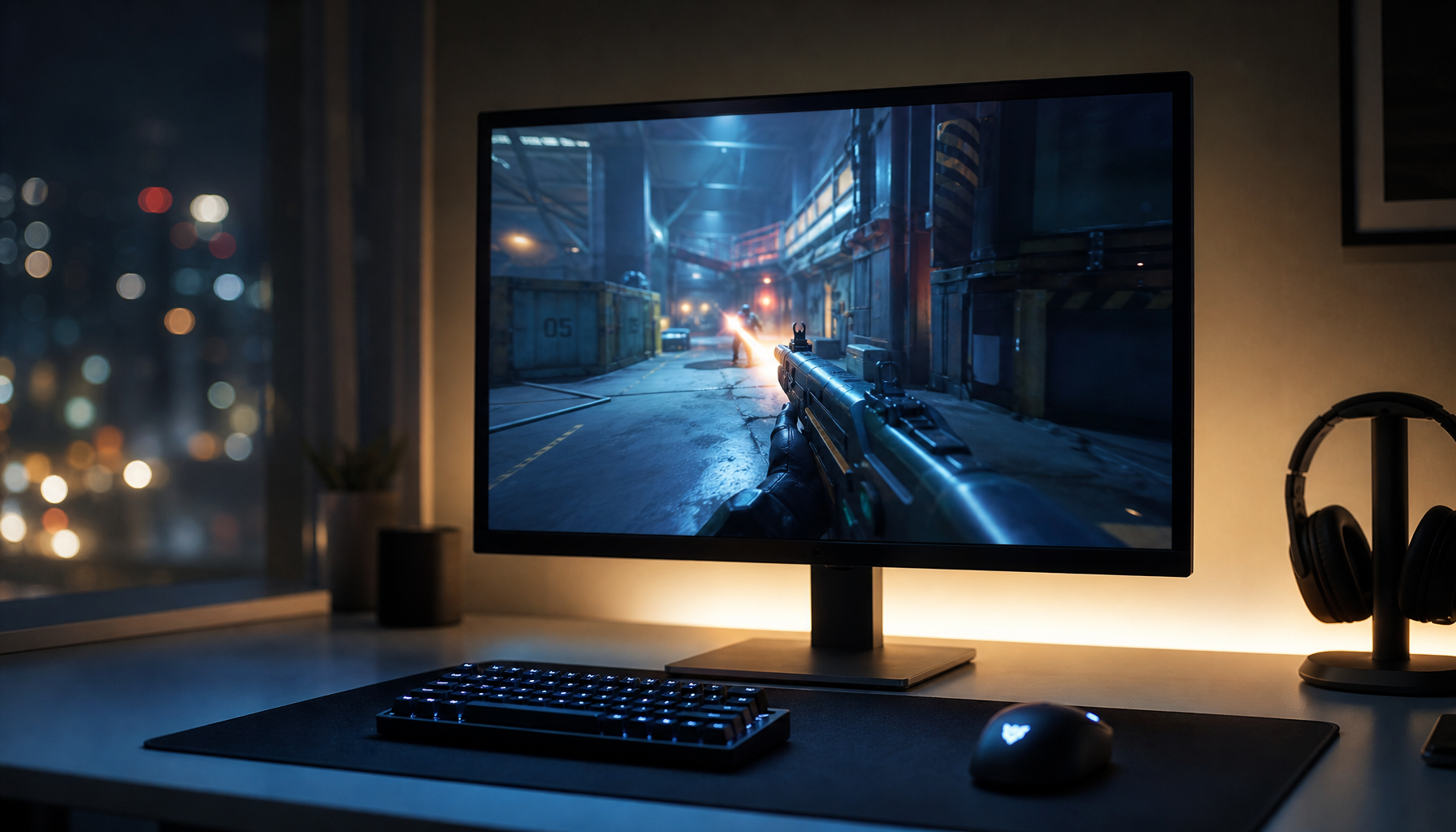
TN is not obsolete for everyone. It remains valuable when the goal is maximum competitive responsiveness. Esports-focused TN displays can deliver extremely high refresh rates and very fast response times, and some competitive players still prefer TN because motion clarity matters more to them than color depth or cinematic image quality.
This is why a high-priced TN monitor can still make sense. You are not paying for IPS-level color. You are paying for elite refresh behavior, motion tuning, strobing features, and a design aimed at one job: competitive speed. If your main game is a tactical shooter and you sit centered, close, and focused, TN’s weaknesses may be acceptable.
The mistake is buying an expensive TN because you assume a higher price means better image quality in every category. In monitor buying, price does not erase panel identity. It usually amplifies the strengths the panel was already designed to deliver.
IPS Is the Better Match for Color-Critical and Mixed Use
IPS is usually the stronger choice when you want one monitor to handle gaming, office productivity, content creation, video calls, and side-by-side windows. Many IPS models reach about 99% to 100% sRGB, while TN often lands around 60% to 70% sRGB, which helps explain why IPS usually looks richer and more faithful in everyday use.
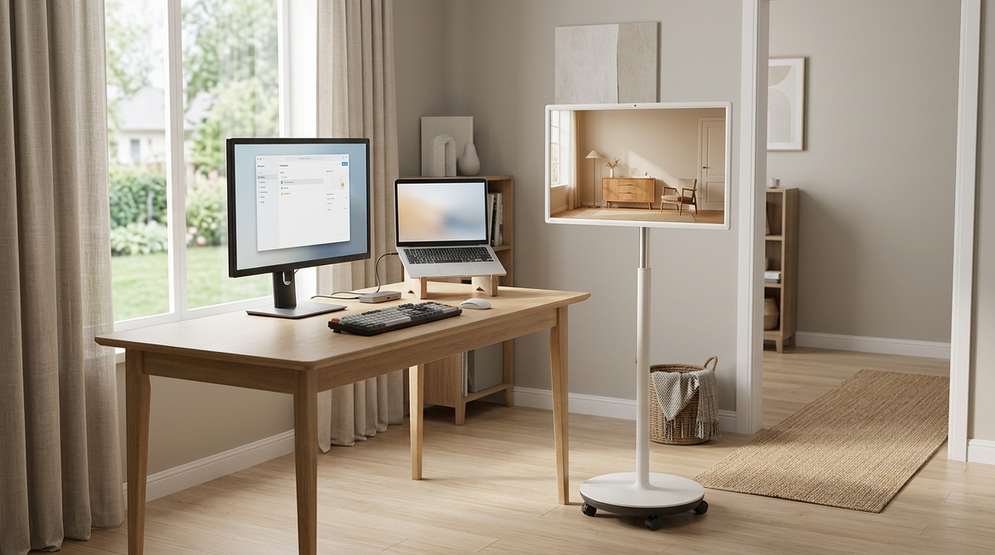
For a productivity setup, IPS also solves a practical ergonomics problem. If you use a laptop plus a portable smart screen, a vertical side monitor, or a dual-display desk, you rarely view every screen perfectly straight on. IPS makes those imperfect angles less punishing. That means fewer micro-adjustments, less second-guessing over colors, and a cleaner workflow when comparing documents, dashboards, images, or game footage.

For creative users, IPS is not automatically perfect. You still need to check color-space coverage, factory calibration claims, brightness, uniformity, and whether the monitor supports the workflow you care about. As a practical benchmark, Delta E below 2 is preferred for color-critical work, while strong DCI-P3 coverage is a good target for modern HDR and creative workflows.
The Practical Buying Rule
If your work or entertainment depends on color staying stable, buy IPS, OLED, or another image-quality-focused technology rather than hoping a premium TN will behave like one. If your priority is pure esports speed, especially at very high refresh rates, TN can still be a disciplined value choice.
For most buyers, the better question is not “Which panel is best?” but “Which mistake would cost me more?” A designer who buys TN may lose confidence in every color decision. A competitive FPS player who buys a beautiful but slower screen may lose the motion clarity they care about. A hybrid user who writes, edits, games, and streams will usually get more value from a 2K IPS display such as the KTC 24”/27” 2K IPS 100Hz Home & Office Monitor丨H27T27 than from paying extra for TN and expecting IPS-like color.
Final Verdict
TN panels cannot match IPS color accuracy at high price points because the limitation is structural, not just budget-related. Choose TN when every millisecond matters and you sit dead center; choose IPS when you want speed with dependable color, cleaner viewing angles, and a screen that supports more than one kind of work or play.