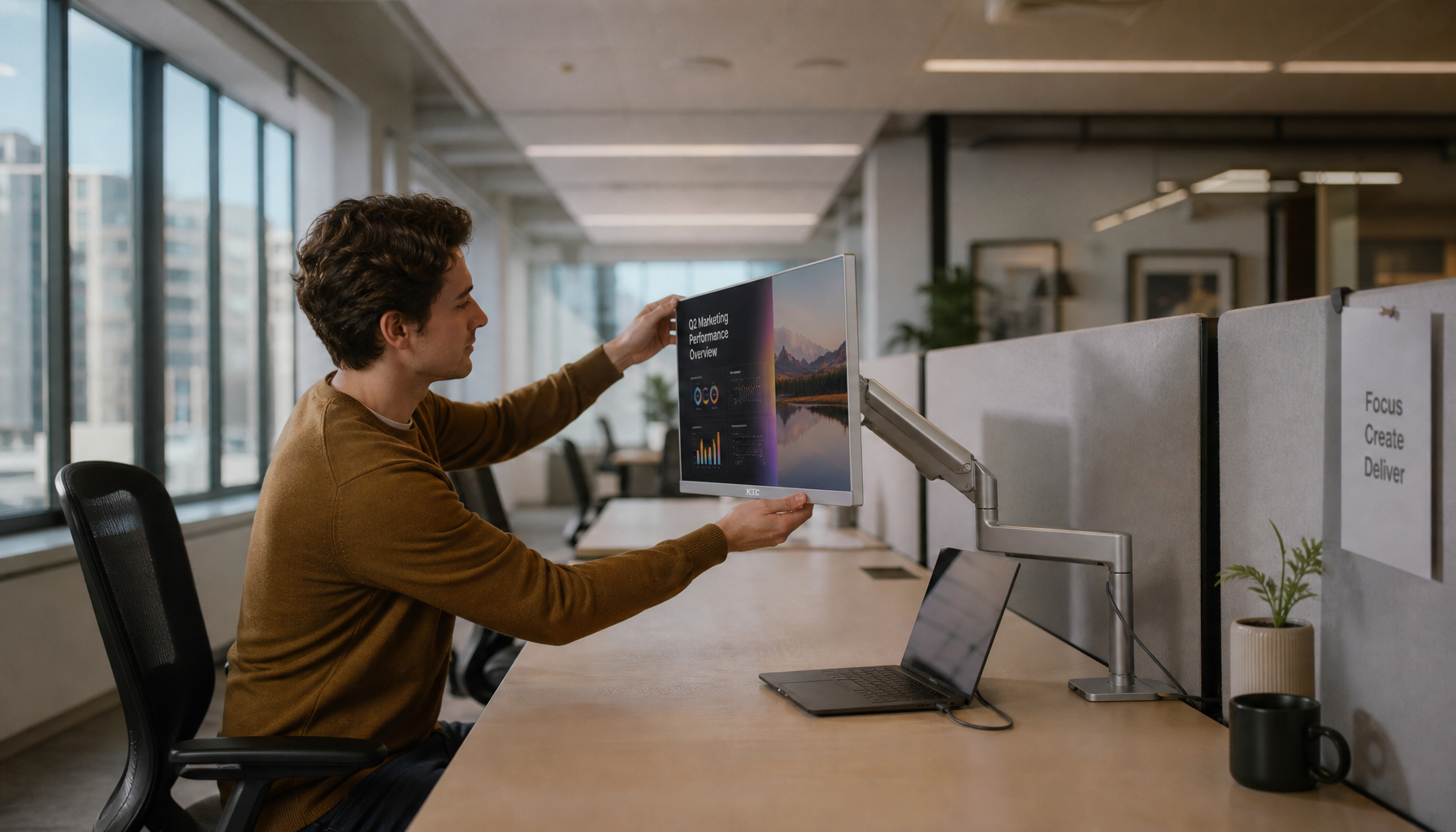
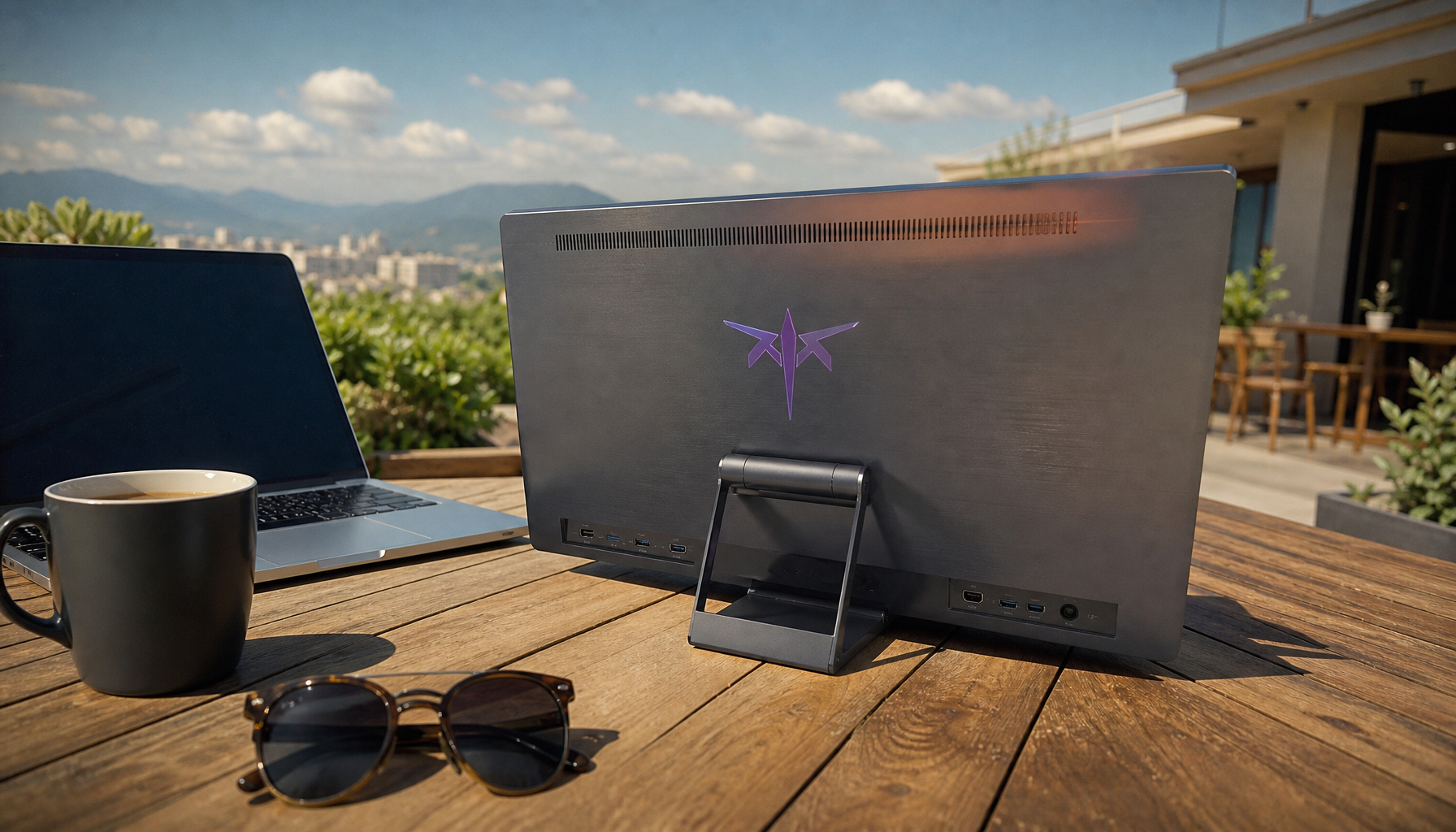
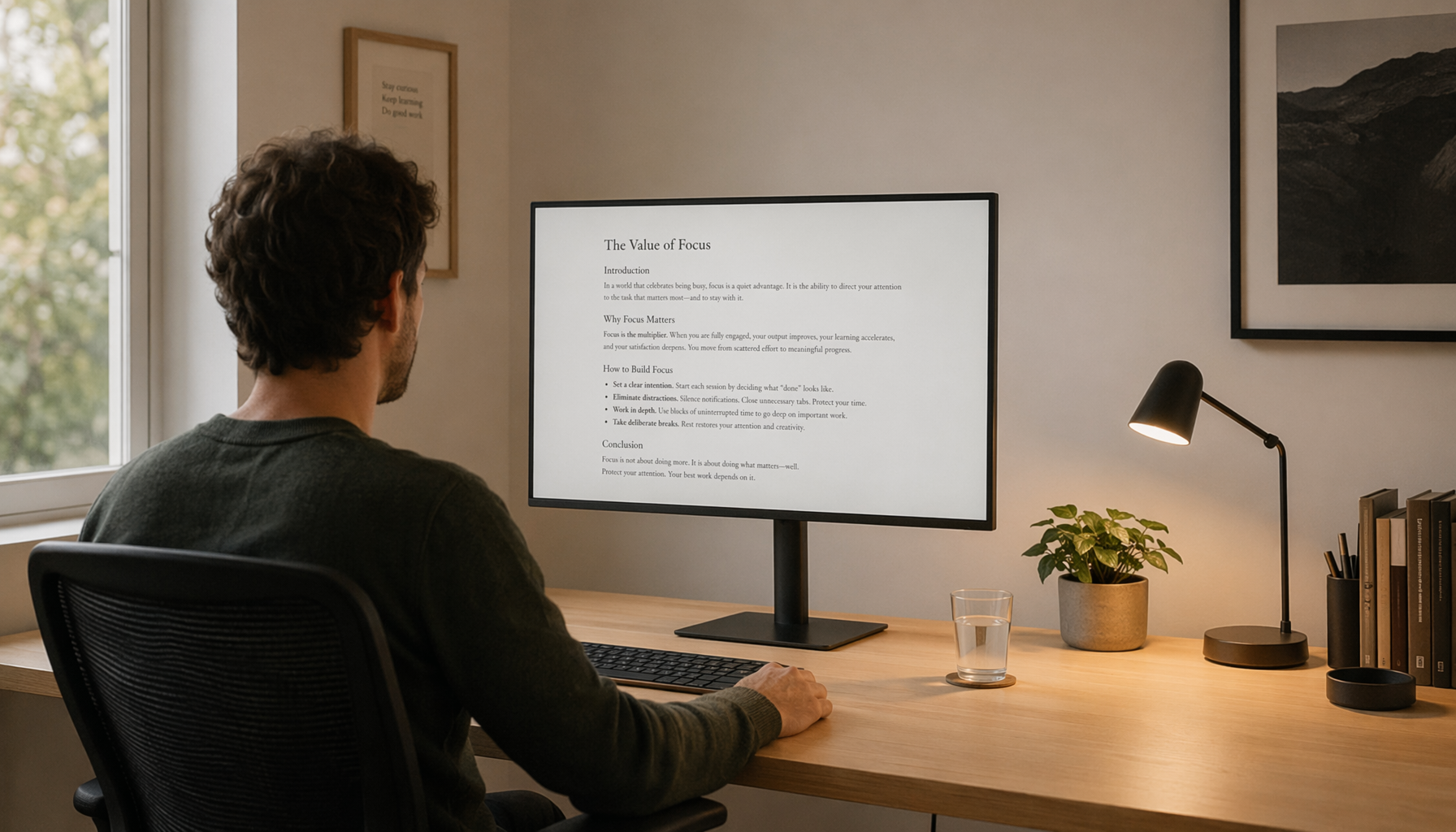
You can trust a monitor without a colorimeter for casual viewing, office work, and non-critical gaming after careful setup. For paid creative work, print matching, HDR grading, or brand color decisions, a colorimeter is still the reliable line between “looks right” and “measures right.”
Does your edited photo look clean on your screen, then come back from print too dark, too warm, or strangely flat? A practical setup using the right picture mode, controlled room light, and standard targets can reduce obvious color mistakes before you buy calibration hardware. This article explains when visual setup is enough, when it is risky, and how to get the most trustworthy color your monitor can deliver.
The Short Answer: Trust Context, Not Hope
A monitor can look convincing and still be inaccurate. Factory calibration, sRGB modes, ICC profiles, and online test images all help, but none of them directly measures your specific unit in your specific room after weeks or months of use. That matters because panel variance, brightness drift, ambient light, and color temperature shifts can push a display away from the standard it claims to support.
The display calibration process is built around two connected jobs: adjusting the display toward a target and creating a profile that tells the system how that display behaves. Without a measuring device, you can adjust by eye, but you cannot verify the result with the same confidence.
For gaming, spreadsheets, web browsing, and general media, a well-chosen preset may be good enough. For photography, product images, video grading, print proofing, medical-style review, or brand work, “good enough” can become expensive quickly.
What Color Accuracy Actually Means
Color accuracy is not the same as vivid color. A wide-gamut monitor can show more saturated colors, but that does not mean it shows the correct colors. If a game, website, or product photo is mastered for sRGB and your monitor stretches it into a wider gamut without proper color management, skin tones can look sunburned, reds can glow unnaturally, and greens can look overcooked.
A useful definition is simple: color accuracy is how closely the monitor reproduces a known target. That target might be sRGB for web and office work, a wider print-oriented RGB space for some photography, DCI-P3 for cinema-style or HDR-oriented content, or Rec.709 for SDR video. The sRGB calibration standards commonly point to practical targets such as a 6500K white point, full sRGB coverage, and low Delta E error.
Delta E is the gap between intended color and displayed color. Lower is better. In practical terms, values under 2 are often treated as strong accuracy for demanding work, while higher values may be visible to trained eyes or even casual users depending on the color and image.
What You Can Trust Without a Colorimeter
You can trust a monitor more when your task is tolerant of small errors. A competitive gamer who mainly needs motion clarity, visibility in shadows, and consistent brightness can work from a strong sRGB preset. An office user editing slides, dashboards, and documents does not usually need lab-grade color. A portable smart screen used for travel productivity can be acceptable if it has a neutral white point, stable brightness, and no obvious tint.
Factory calibration is most useful when the monitor ships with credible test data and offers locked or well-tuned presets. A monitor advertised as “99% sRGB” is not automatically accurate, but it gives you a better starting point than an unknown panel with a vague “wide color” claim. The spec helps, but implementation decides the experience.
You can also trust your eyes for broad faults. If grayscale ramps show green or magenta tint, if white pages look blue beside a neutral paper sheet under steady lighting, or if dark scenes crush shadow detail, something is off. Visual checks are useful for diagnosis, but they are not proof of precision.
Where Eyeballing Falls Apart
Human vision adapts. Sit in a warm-lit room for 20 minutes and a yellowish screen may start looking normal. Move to daylight and the same screen may look dull or cool. This is why color-critical rooms control lighting and wall color instead of relying on instinct.
Brightness is the most common trap. Many monitors ship extremely bright because that looks impressive on a shelf or in a product photo. For editing, an overly bright screen makes you darken images too much. Then prints come back muddy, and the print lab gets blamed even though the monitor was the real problem. Print-focused calibration advice often targets roughly 100 to 120 cd/m² depending on room brightness, and accurate prints depend heavily on matching screen brightness to the viewing environment.

Panel technology also matters. IPS panels are usually stronger for color consistency across the screen and from different angles, while VA panels often deliver deeper blacks and stronger contrast. That makes VA attractive for immersive single-player gaming and movies, but IPS is usually the safer choice for color-sensitive work. OLED can be excellent for contrast and viewing consistency, but it still needs profiling if the work is critical.
Use Case |
Without Colorimeter |
With Colorimeter |
Office work |
Usually acceptable with sRGB or standard mode |
Better consistency, rarely essential |
Competitive gaming |
Acceptable if visibility and gamma look right |
Useful, but not a top priority |
Photo editing for web |
Risky but workable with a good sRGB mode |
Strongly recommended |
Print matching |
Unreliable by eye |
Essential for repeatable results |
HDR grading |
Not trustworthy |
Measurement and reference targets are required |
Brand/product color |
Too subjective |
Required for accountable decisions |
The Best No-Colorimeter Setup
Start with the monitor’s most accurate preset, usually sRGB, Rec.709, Standard, or a factory-calibrated mode. Avoid “Vivid,” “Dynamic,” boosted color, or entertainment modes for accuracy work because they often exaggerate saturation and contrast. For a gaming monitor, you can keep a separate high-visibility gaming preset, but do not judge product photos or skin tones in that mode.
Set white point near 6500K or D65 when available. This is the common baseline for general digital work, gaming content, and many photo workflows. Use gamma 2.2 for typical office, web, and bright-room use. If your monitor offers brightness control in sRGB mode, reduce brightness until a white document feels like a lit page rather than a flashlight. In many rooms, that lands near the 100 to 120 cd/m² range, though without a colorimeter you are estimating.
Let the display warm up before judging it. Several calibration workflows recommend warming the monitor for at least 15 to 30 minutes because brightness and color can shift after power-on. Also disable automatic brightness, dynamic contrast, blue light filters, and night modes when doing any color-sensitive work. Those features are useful for comfort, but they move the target while you are trying to judge it.
Use the same room lighting every time. A desk beside a window is productive, but it is hostile to reliable color because daylight changes by the hour. A stable lamp placed to avoid glare is better. The luminance should match the editing environment, which is exactly why a screen that feels right at noon may mislead you at 10:00 PM.

When a Colorimeter Becomes Non-Negotiable
Buy or borrow a colorimeter when the output has consequences. If you sell prints, deliver client images, grade video, design packaging, match brand colors, or compare monitors for buying decisions, measurement is part of the job. A colorimeter reads color patches, compares them to expected values, and creates an ICC or ICM profile that corrects the workflow as much as the display allows.

This is especially important because monitors drift. Backlights age, OLED behavior changes, room lighting changes, and settings get bumped. The display profiling workflow exists because calibration is not a one-time personality trait of the monitor; it is a repeatable maintenance process. Some users recalibrate monthly, while less demanding users may stretch that to several months, but critical work needs a schedule.
A colorimeter also reveals whether the monitor itself is the bottleneck. If a budget portable display cannot cover enough sRGB, has poor uniformity, or lacks RGB controls, calibration cannot turn it into a reference monitor. It can improve behavior, but it cannot create color volume, panel uniformity, or stable viewing angles that the hardware does not have.
HDR, Wide Gamut, and Gaming Monitors Need Extra Skepticism
HDR branding is not a substitute for color accuracy. HDR performance involves peak luminance, black level, contrast behavior, bit depth, gamut, and tone mapping. The HDR performance tiers define measurable requirements across luminance, black level, color gamut, rise time, contrast, and accuracy, which is more meaningful than a vague “HDR compatible” badge.
For gamers, wide gamut can be a win when the content supports it. Open-world titles, HDR games, and cinematic single-player experiences can look more immersive with strong DCI-P3 coverage and high contrast. But for SDR games mastered around sRGB, an unclamped wide-gamut mode may oversaturate colors. The result can look punchy at first and wrong after you compare it with a calibrated display.
For creators who also game, the practical answer is profiles. Keep an accurate sRGB or Rec.709 mode for editing and a separate high-impact mode for games. The monitor is a tool, not a moral commitment to one preset.
Factory Calibration: Useful, But Not a Lifetime Warranty
Factory calibration is a valuable buying signal, especially when the test data includes Delta E values, gamma, white point, gamut coverage, and the exact preset tested. It is much better than marketing language alone. Still, it describes the monitor at the factory, under factory conditions, at that time.
Shipping, temperature, panel aging, and your desk setup can all change the result. Factory test data also may not cover every mode. The sRGB preset might be excellent while the wide-gamut mode is less controlled, or the accurate preset may lock brightness too high or too low for your room.
For professional buyers, the stronger approach is to treat factory calibration as a head start, then verify with your own instrument. That is how you turn a promising monitor into a dependable display system.
Pros and Cons of Skipping the Colorimeter
Choice |
Pros |
Cons |
No colorimeter |
Saves money, faster setup, good enough for casual use, useful with strong factory presets |
No measured proof, poor print matching, drift goes unnoticed, room lighting can fool your eyes |
Colorimeter |
Repeatable results, ICC profile creation, better print and multi-monitor consistency, reveals hardware limits |
Costs extra, takes setup time, still depends on monitor quality and lighting control |
Spectrophotometer |
Broader measurement capability, better for demanding professional environments |
More expensive and usually unnecessary for everyday users |
A Practical Trust Test
If you want a simple decision rule, ask what happens if the color is wrong. If the answer is “the game looks a little different” or “the spreadsheet theme is off,” a good preset is fine. If the answer is “the client rejects the product image,” “the print order is wasted,” or “the final video grade shifts on delivery,” do not trust eyeballing.
For a value-oriented setup, put the budget where it changes outcomes. A solid IPS monitor with an accurate sRGB mode plus an entry-level colorimeter often beats a flashy wide-gamut monitor with no measurement plan. For immersive gaming, a VA or OLED display may deliver deeper blacks and better perceived contrast, but keep a controlled color mode available when accuracy matters.
FAQ
Can online calibration images replace a colorimeter?
They can help you spot obvious brightness, contrast, sharpness, and gamma problems, but they cannot measure your panel’s actual color response or create a reliable ICC profile. They are a setup aid, not a measuring instrument.
Is sRGB enough for color accuracy?
sRGB is enough for most web, office, SDR gaming, and general digital content. It is not enough for every print, cinema, HDR, or wide-gamut workflow. The key is matching the monitor mode to the content target.
Should I use my monitor’s HDR mode for editing photos?
Usually no. HDR modes often change brightness, tone mapping, and color behavior in ways that are not appropriate for standard photo editing. Use a calibrated SDR mode unless your workflow specifically requires HDR.
Final Word
Trust a monitor without a colorimeter only when the stakes are low and the preset is sensible. For serious creative output, a colorimeter is not a luxury accessory; it is the tool that turns a high-performance screen into a display you can make decisions on.