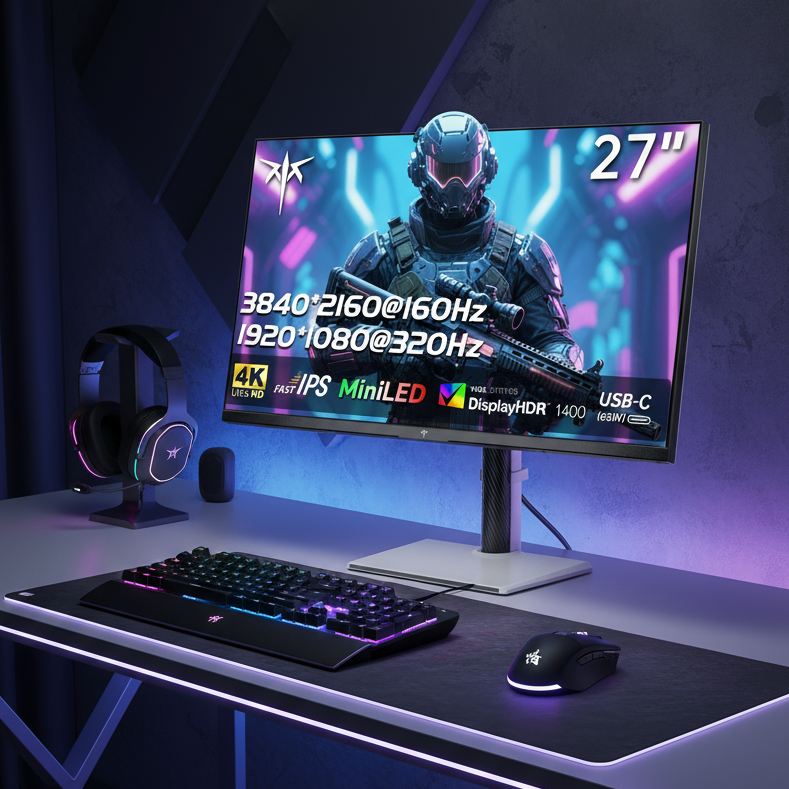


Yes, DisplayPort 1.4 can usually support 2560 x 1440 at 240Hz without DSC when you use 8-bit RGB or 8-bit 4:4:4 color over a clean HBR3 link. With 10-bit HDR, heavy blanking overhead, adapters, or a weak cable, DSC often becomes the difference between full performance and a capped mode.
The Bandwidth Reality
DisplayPort 1.4 has a raw ceiling of 32.4 Gbps, but the usable video payload is lower because of encoding overhead. In practical terms, the important number is about 25.92 Gbps of effective bandwidth, which is why effective bandwidth matters more than the headline spec.
A 1440p 240Hz signal is demanding, but it is not automatically beyond DP 1.4. At 8-bit color, the active image data is roughly 21.2 Gbps before timing overhead. With efficient reduced blanking, it can fit inside DP 1.4’s usable limit.
That is the clean answer for competitive PC gaming: 1440p, 240Hz, SDR, full chroma, and no DSC is realistic.
When DSC Becomes Necessary
DSC enters the picture when image quality settings push past the available uncompressed bandwidth. A 10-bit HDR signal uses about 25% more color data than 8-bit, which can take 1440p 240Hz beyond what DP 1.4 can carry uncompressed once timing overhead is included.

That does not mean DSC is bad. Display Stream Compression is designed to be visually lossless, and many modern gaming monitors use it to enable higher refresh rates, HDR, or richer color formats over existing ports. Some cable and monitor resources describe DP 1.4 as supporting high-refresh modes while using Display Stream Compression when the mode gets too bandwidth-heavy.
Quick rules:
- 1440p 240Hz, 8-bit SDR: usually no DSC needed
- 1440p 240Hz, 10-bit HDR: often DSC needed
- 1440p 240Hz through adapters: higher failure risk
- 1440p 240Hz with long cables: test carefully
- 4K high refresh: DSC is much more common
Your Cable and Port Still Decide the Outcome
A DP 1.4 logo on one product does not guarantee the whole chain runs at full performance. The GPU output, monitor input, cable quality, cable length, driver, and monitor firmware all have to support the same mode.
For high-refresh setups, keep the signal path simple: GPU DisplayPort output directly to monitor DisplayPort input. Cable guidance also notes that refresh rate depends on the cable type and version, along with resolution, length, GPU, monitor, and adapters.
If you are buying a cable, look for certified cables and avoid overly long passive cables for 240Hz use. A short, well-built DP 1.4 cable is a smarter value than a long cable covered in inflated resolution claims.
Why Some Monitors Still Need DisplayPort
Many 1440p 240Hz monitors reserve their top refresh rate for DisplayPort even if they include HDMI. One common pattern is HDMI topping out at 1440p 144Hz while DisplayPort unlocks the full 240Hz mode.
That is not a panel limitation. It is an input-bandwidth and firmware choice. PC-focused gaming monitor setups still tend to favor DisplayPort for performance because it is widely supported on GPUs and high-refresh displays.
A small nuance: some sources simplify this as “DP 1.4 supports 1440p 240Hz,” but the missing condition is color format. Uncompressed 8-bit is different from 10-bit HDR.
Bottom Line
DisplayPort 1.4 can run 1440p at 240Hz without DSC in the right configuration, especially at 8-bit SDR with a direct, high-quality DP connection. For HDR, 10-bit color, adapters, or less reliable cables, expect DSC to be used or at least supported.
For a performance-driven gaming or productivity setup, the best move is simple: use native DisplayPort 1.4, set the monitor to 240Hz in your GPU or operating system display settings, confirm color depth, and only worry about DSC if HDR or 10-bit output is part of the target experience.