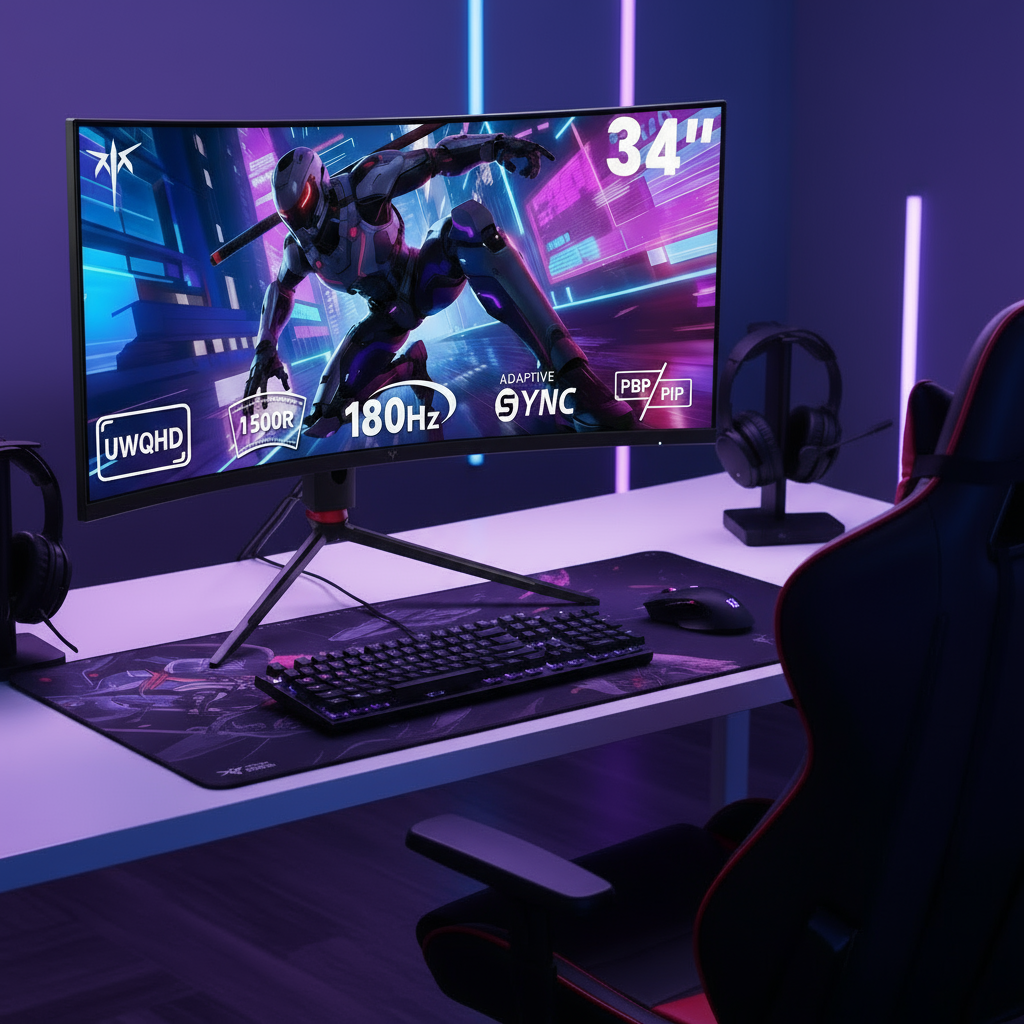


No, an HDMI switch or splitter does not automatically disable HDMI 2.1 on a console. It only works as well as the weakest device in the chain, so the accessory can preserve 4K 120Hz and VRR or quietly cut your gaming monitor back to 4K 60Hz.
If your a console or a console looked perfect on a gaming monitor and then lost 120Hz after you added a switch, you are not imagining it. In real-world setups, users have restored 1440p at up to 120 fps simply by removing the splitter and plugging the console straight into the display. The goal here is to show which accessories keep HDMI 2.1 features intact and which ones become the bottleneck.

The Short Answer for Gaming Monitor Setups
HDMI 2.1 supports up to 48 Gbps bandwidth, along with console-friendly features such as 4K at 120Hz, VRR, ALLM, and Dynamic HDR, but full functionality still requires compatible hardware all the way from the console to the monitor. That means the monitor, the cable, and the switch or splitter all have to support the mode you want.
Feature support depends on the specific switch or splitter model, not on the product category alone. Retail listings show a mix of HDMI 2.1 devices that claim 48 Gbps and 4K 120Hz, alongside cheaper models limited to 4K 60Hz or even 4K 30Hz, which is why two boxes that look similar can behave very differently on a high-refresh gaming monitor.
Why 4K 120Hz Often Fails First
Bandwidth Is the First Filter
A common 5-in-1 HDMI switch example tops out at 18 Gbps, with support listed for 4K 60Hz, 1440p 120Hz, and 1080p 240Hz. That is fine for many 1440p gaming monitor setups, but it is not a full-bandwidth path for a 4K 120Hz console signal, even if the product page also mentions VRR, HDR, and CEC.
A 48 Gbps HDMI 2.1 cable is marketed for 4K 120Hz and 8K 60Hz, which highlights the gap between an HDMI 2.1-class link and an 18 Gbps accessory. If your monitor supports 4K 120Hz over HDMI 2.1 but the switch in the middle does not, the console usually drops to the highest format the full chain can hold, often 4K 60Hz.

The Display Negotiates to the Weakest Path
An HDMI splitter used with displays of different resolutions will usually force the lowest shared format. In practice, that means a console mirrored to a 4K gaming monitor and a lower-spec capture device may stop offering the monitor’s best mode, because the console sees the lower-capability path too.
A forum example showed a console regaining 1440p at up to 120 FPS when connected directly to the monitor. That is the clearest sign that the splitter or passthrough device, not the monitor, is limiting the signal.
Switch, Splitter, or Matrix: Pick the Right Tool
An HDMI switch takes multiple source devices and sends one selected source to a single display, while a splitter does the opposite and mirrors one source to multiple displays. For a gaming monitor buyer, that means a switch is the right fit if you want one monitor to handle a console, a console, and a gaming PC, while a splitter is only for duplication.
A splitter listing that says it will only copy or mirror one input screen should be treated literally. If your real goal is to send one console to a monitor sometimes and a TV other times, a basic splitter is the wrong tool and often creates unnecessary handshake problems.
A 2x2 routing setup is a common need for people sharing a PC and a console between a TV and a monitor. In that case, you are really shopping for a matrix or KVM-style device, and every route has to support the target mode you care about, such as 4K 120Hz on the TV and 1440p high refresh on the gaming monitor.

Which HDMI 2.1 Features Are Most Likely to Break
4K 120Hz and VRR
a console and a console users are best served by a 4K display with HDMI 2.1 ports, because that is the baseline for full 4K 120Hz console output on a monitor. The same rule applies to the accessory in the middle: if the switch or splitter does not explicitly support 4K 120Hz, it should not be trusted in a premium HDMI 2.1 monitor setup.
VRR is one of the headline gaming features of HDMI 2.1, but it is also sensitive to signal stability, firmware behavior, and display compatibility. Even when bandwidth is technically enough, the handshake between console, accessory, and monitor still has to stay clean.
HDR, ALLM, and Audio Return
Some lower-bandwidth switches still advertise VRR, Dynamic HDR, and CEC, which can be true within their supported video modes. The catch is that a box can pass HDR at 4K 60Hz and still fail to preserve the full 4K 120Hz experience a high-end gaming monitor was bought for.
Not every HDMI accessory supports ARC or eARC, and that matters if your setup includes a monitor, a TV, and an external audio device. Many monitor-only buyers will not care, but hybrid desk-and-living-room setups often do.
Not Every Failure Is the Switch
One recent VRR issue on a display showed 4K 144Hz VRR working in a platform but blanking in a platform after a display-side change. That does not mean the same problem applies to consoles, but it is a good reminder that a failing HDMI feature can come from the display firmware or platform behavior, not only from the accessory.
How to Buy an HDMI Accessory Without Bottlenecking Your Monitor
Many gaming monitors sold for console use advertise HDMI 2.1 alongside 4K 120Hz or higher refresh support, but not every fast monitor has full HDMI 2.1 bandwidth. Some are designed mainly for PC over DisplayPort and offer more limited HDMI support, so buyers should verify the console mode specifically, not just the maximum refresh rate on the front of the box.
a brand’s HDMI 2.1 monitor guidance centers on 4K 120Hz console support, which is the cleanest way to judge whether an accessory belongs in your setup. If your display target is a 4K 120Hz monitor, buy the switch or matrix as if it were part of the monitor itself: explicit 4K 120Hz support, HDMI 2.1-class bandwidth, and clear mention of VRR and HDR passthrough.
Use this quick comparison when matching an accessory to your monitor setup:
Setup goal |
Best accessory type |
Minimum spec to look for |
Common failure point |
One console to one 4K 120Hz gaming monitor |
No accessory or HDMI switch |
Explicit 4K 120Hz support |
18 Gbps switch drops to 4K 60Hz |
Two consoles to one 1440p 120Hz monitor |
HDMI switch |
Explicit 1440p 120Hz and VRR support |
Product says “4K” but only means 4K 60Hz |
One console to monitor plus capture device |
Splitter or matrix with downscaling |
Separate high-refresh output for monitor |
Capture path forces lower shared format |
One PC and one console shared between TV and monitor |
Matrix or KVM-style HDMI device |
Every route must support target resolution and refresh |
One output path has lower bandwidth |
Monitor plus external audio return needs |
Switch or matrix with ARC/eARC support |
Confirm ARC/eARC in specs |
Video works but audio plan fails |
How to Test the HDMI Chain Before You Blame the Console
Full HDMI 2.1 functionality requires compatible hardware and an Ultra High-Speed HDMI cable. The fastest way to diagnose feature loss is to connect the console directly to the gaming monitor first, confirm which modes appear, and then add the switch, splitter, capture device, or second display one at a time.
A direct connection restoring 1440p at up to 120 FPS is a strong indicator that the accessory is the bottleneck. If the direct path works, check the accessory’s real bandwidth, HDCP support, and whether a second output is dragging the whole chain down through EDID negotiation.
Some HDMI switches also require USB power for stable transmission. That matters more than many buyers expect, because an underpowered switch can look like a monitor compatibility issue when the real problem is unstable signal handling.

Final Takeaway
An HDMI switch or splitter does not automatically cancel HDMI 2.1 features on a console-to-monitor setup. The real rule is simpler: your gaming monitor only gets the features that every device in the chain can pass, and the accessory is often the first place that falls short.
- Connect the console directly to the monitor and confirm the best working mode first.
- Match the accessory to the monitor’s real console target, such as 4K 120Hz or 1440p 120Hz.
- Reject vague “8K” or “console compatible” claims unless the box explicitly lists the refresh rate and features you need.
- Use a known-good Ultra High-Speed HDMI cable when testing.
- If a splitter feeds two displays, assume the weaker output may limit the stronger one unless downscaling is supported.
- Verify ARC/eARC separately if your monitor setup also depends on external audio gear.
FAQ
Q: Will an HDMI switch stop my a console or a console from running 4K 120Hz on a gaming monitor?
A: Not by default. It only stops 4K 120Hz if the switch lacks enough bandwidth or does not explicitly support that mode. Many common switches still top out at 18 Gbps and 4K 60Hz.
Q: Can VRR and HDR still work through an HDMI switch?
A: Yes, but only if the switch supports those features in the exact video mode you are using. Some accessories advertise VRR or HDR while still limiting the chain to lower refresh rates.
Q: Why does everything work when the console is plugged straight into the monitor, but not through the splitter?
A: That usually points to bandwidth limits, EDID negotiation, or a lower-capability second output such as a capture device. The console often chooses the safest shared format for the whole chain.