Uniformity problems stand out when an app fills the screen with tones your panel renders least evenly, especially gray, dark, or low-contrast backgrounds.
Ever notice how your monitor looks fine on the desktop, then suddenly looks blotchy in a dark game, a spreadsheet, or a photo-editing session? That shift is real, and you can verify it in minutes with full-screen white, gray, and black tests. You’ll come away with a clear way to tell whether the problem is normal panel behavior, a settings mismatch, or a display worth replacing.
What “uniformity” actually means on a monitor
Screen uniformity is how evenly your monitor shows brightness and color from the center to the edges and corners. When uniformity is weak, you may see darker corners, brighter hotspots, edge glow, cloudy patches on gray, or a warm or cool tint that affects only part of the panel.
Brightness uniformity matters because the same shade can look different depending on where it appears on the screen. In practical use, that means a gray menu may look slightly dirty on one side, a white document may look dimmer in the corners, or a black loading screen may reveal backlight bleed you never noticed during normal browsing.

On real desks, this becomes most obvious when you move from mixed, busy content to full-screen fields of similar tone. A monitor packed with icons, browser chrome, and moving video can hide unevenness surprisingly well; a blank canvas or dark cinematic scene cannot.
Why some applications expose the problem immediately
Neutral test screens reveal defects because they remove visual distraction. Applications do something similar by accident. If a program uses large gray sidebars, dark backgrounds, or full-screen solid areas, your eyes stop tracking content and start noticing the panel itself.
Gray-heavy interfaces make luminance drift easy to see
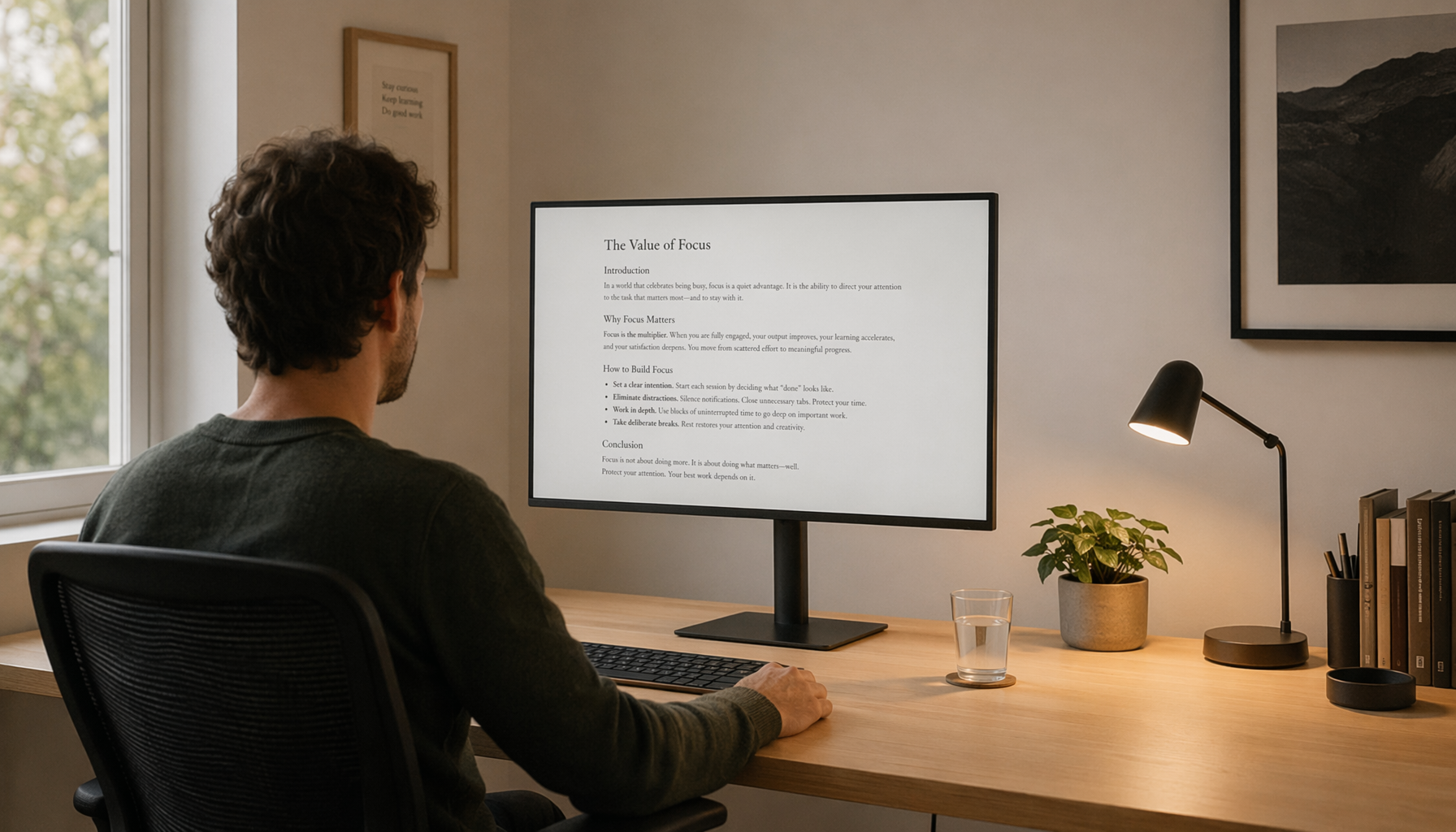
White and gray screens are the easiest way to spot uneven luminance, which is why uniformity flaws often jump out in office apps, design software, and coding tools. Think about a spreadsheet with wide blank areas, a word processor on a white page, or a video editor with large gray panels. Those flat tones act like a built-in uniformity test.

This is also why some users complain more about “dirty screen” effects in productivity work than in gaming. A game scene changes every second, but a static white document gives your eyes time to compare the center, edges, and corners. If one area is even 10% brighter, the mismatch can feel much larger than that number suggests during real work.
Dark apps reveal bleed, glow, and clouding
Black uniformity problems in dark content are especially distracting, even though that article discusses diagnostic use. The same visual principle applies at home: when the screen is mostly dark, any extra light leaking from an edge or corner becomes much easier to detect.
That is why dark games, movie scenes, and apps with dark themes can look worse than bright web pages. On many LCDs, especially IPS-type panels, corner glow and backlight variation become more visible in a dim room. A monitor that seems perfectly acceptable at 2:00 PM can suddenly look uneven at 11:00 PM with the lights off.

Color-critical apps make small errors more costly
Uneven brightness can distort editing decisions because the panel stops being a trustworthy reference. If the left side of the image is dimmer, you may brighten shadows too much. If one corner is cooler, you may over-warm the whole photo trying to fix something that exists only on the screen.

That is why uniformity matters almost as much as color accuracy in photo retouching, grading, and design review. The problem is not just that the monitor looks imperfect; it is that the imperfection changes your decisions. On a gaming display, that may be annoying. In client work, it becomes rework.
Why gaming, office work, and portable displays feel different
Calibration experts note that non-uniformity is common on many displays. That matches what many gamers see in practice: high refresh rates and speed-focused tuning do not guarantee even gray or color performance across the panel.
In games, uniformity is most noticeable in loading screens, fog, sky gradients, snow maps, and dark horror scenes. Fast motion can hide flaws, but slow panning across a dusk sky often exposes them instantly. If your monitor also has modest contrast, washed-out dark grays can make the panel look even more uneven than it technically measures.
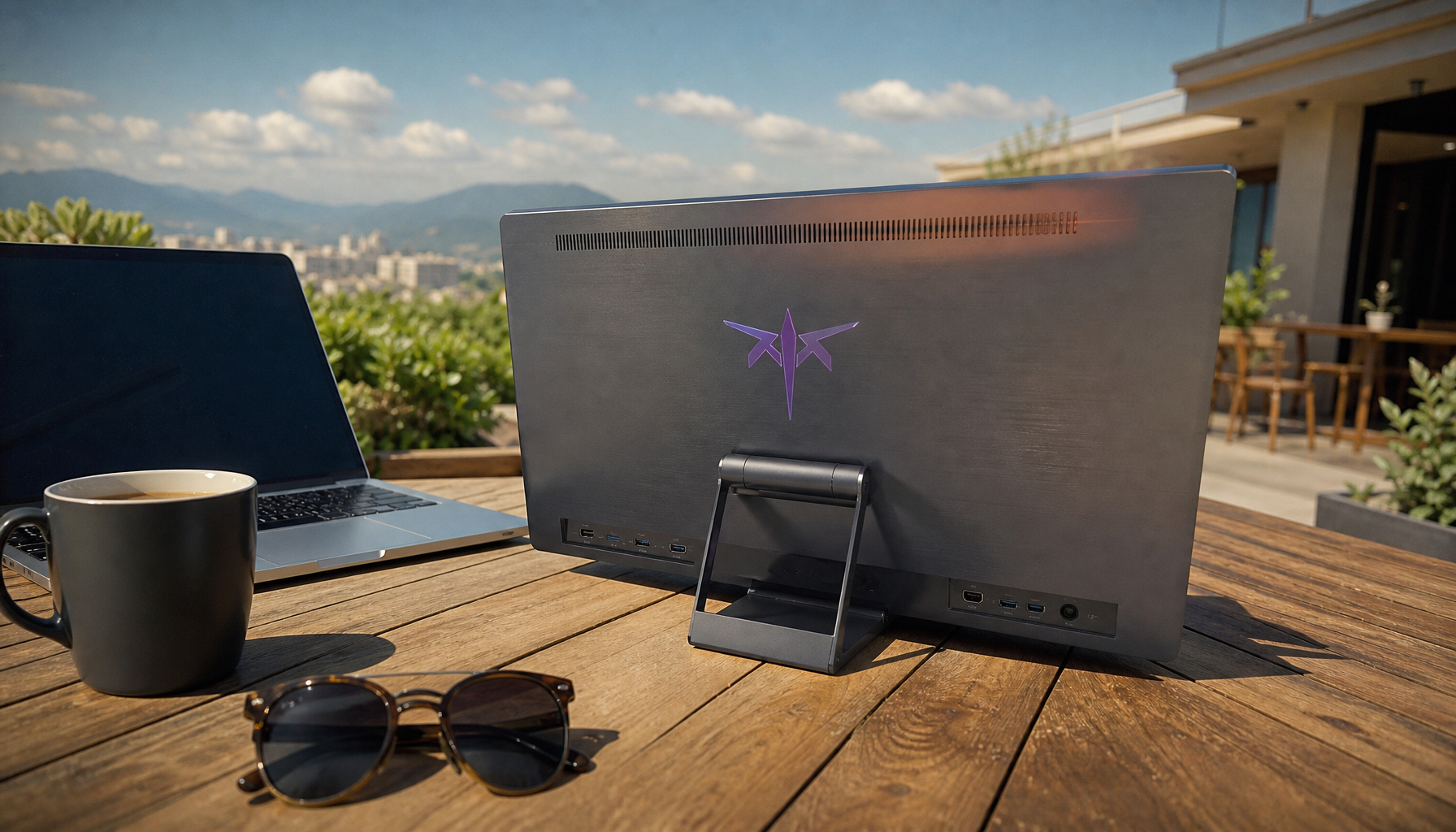
Office and productivity apps create a different stress test. Large white backgrounds highlight corner dimming, while gray UI panels expose patchiness. Portable smart screens can make this more noticeable because smaller, thinner enclosures and aggressive brightness targets leave less room for thermal and backlight consistency. When you carry the display between bright cafes and dim hotel rooms, the same flaw can seem minor in one setting and obvious in another.
Can calibration or monitor settings fix it?
Most uniformity problems cannot be fully corrected with calibration alone. Calibration can improve white point, gamma, and overall balance, but it does not rebuild the panel. If the top-right corner is physically dimmer or warmer, a global correction can help only so much.
Uniformity compensation can reduce visible variation, but there is a tradeoff: it often lowers usable contrast or locks certain controls. That matters if you bought a display for strong black levels, HDR-like pop, or flexible hardware calibration. In other words, compensation can make a panel look flatter in a good way and flatter in a bad way at the same time.
Here is the practical tradeoff most buyers face:
Approach |
Main upside |
Main downside |
Leave uniformity correction off |
Higher contrast and more display control |
Uneven areas stay more visible |
Turn uniformity correction on |
More even screen appearance |
Contrast may drop and settings may lock |
Calibrate closer to native white |
Can look more natural on a flawed panel |
Less strictly standardized |
Best chance of a real fix |
Time, cost, and no guarantee of perfection |
How to test what your apps are revealing
A controlled full-screen check is still the fastest way to separate panel behavior from app behavior. Open full-screen white, 50% gray, and black images, set the monitor to a comfortable but fairly bright level, dim the room, and step back a bit. If the same dark patch or bright corner appears across multiple screens, you are looking at the monitor, not the software.

Testing at more than one brightness level matters because some defects become stronger as brightness rises. That is especially relevant for portable displays and gaming monitors that are often run hard for daytime visibility. A panel that looks decent at moderate brightness can show clear clouding when pushed higher.
If you want a simple decision rule, use this one: if you notice the issue only during test patterns or a few extreme scenes, the monitor is probably usable for general work and play. If you notice it during ordinary documents, common game maps, or everyday editing, the panel is affecting the experience enough to justify a return, exchange, or role change.
When it is normal, and when it is worth acting on
Perfect uniformity is uncommon even on higher-end screens, so the goal is not perfection. The real question is whether the non-uniformity shows up in the applications you care about most. A competitive player may tolerate mild corner tint if motion performance is strong. A photo editor should be far less forgiving.
Standards-based display work in medical imaging treats uniformity seriously, which is a useful reminder that this is not just cosmetic. If uneven brightness hides subtle detail in one area, it can also hide low-contrast information in your own workflow, whether that is shadow detail in a game, a vignette in a product photo, or a faint line in a presentation background.
The right monitor is not the one with the prettiest spec sheet. It is the one whose weaknesses stay invisible in the moments that matter to you. If your display keeps drawing attention to itself instead of the content, the immersion is already broken, and that is usually the clearest answer.