A multi-monitor setup only boosts output when every screen has a job. Without structure, the extra display space becomes a live billboard for chat, feeds, dashboards, video, and half-finished tabs.
More Screens Can Mean More Switching
The promise is simple: keep more work visible, switch less, move faster. That can be true. Multi-monitor workflows are often used to reduce app switching by keeping documents, references, and dashboards visible at once, and some workplace research cited in multi-monitor productivity discussions points to meaningful gains.
The problem starts when visibility turns into availability. Email sits open. Chat apps keep pulsing. A browser tab becomes a second task. Your eyes move, your hand follows, and suddenly the “productivity screen” is running your attention.
For gamers, the trap is even clearer: one screen for the match, one for voice chat, music, stream chat, hardware monitoring, or a walkthrough. These tools can help, but for ranked play or deep focus, that second panel can cost more concentration than it saves.

The Distraction Is Usually the Layout
A second monitor is not automatically a second workspace. It is often just a larger junk drawer.
When every app gets permanent screen time, the brain has to keep sorting priority in real time. That creates low-grade friction: glance, evaluate, ignore, repeat. Over an 8-hour workday, those micro-decisions add up.
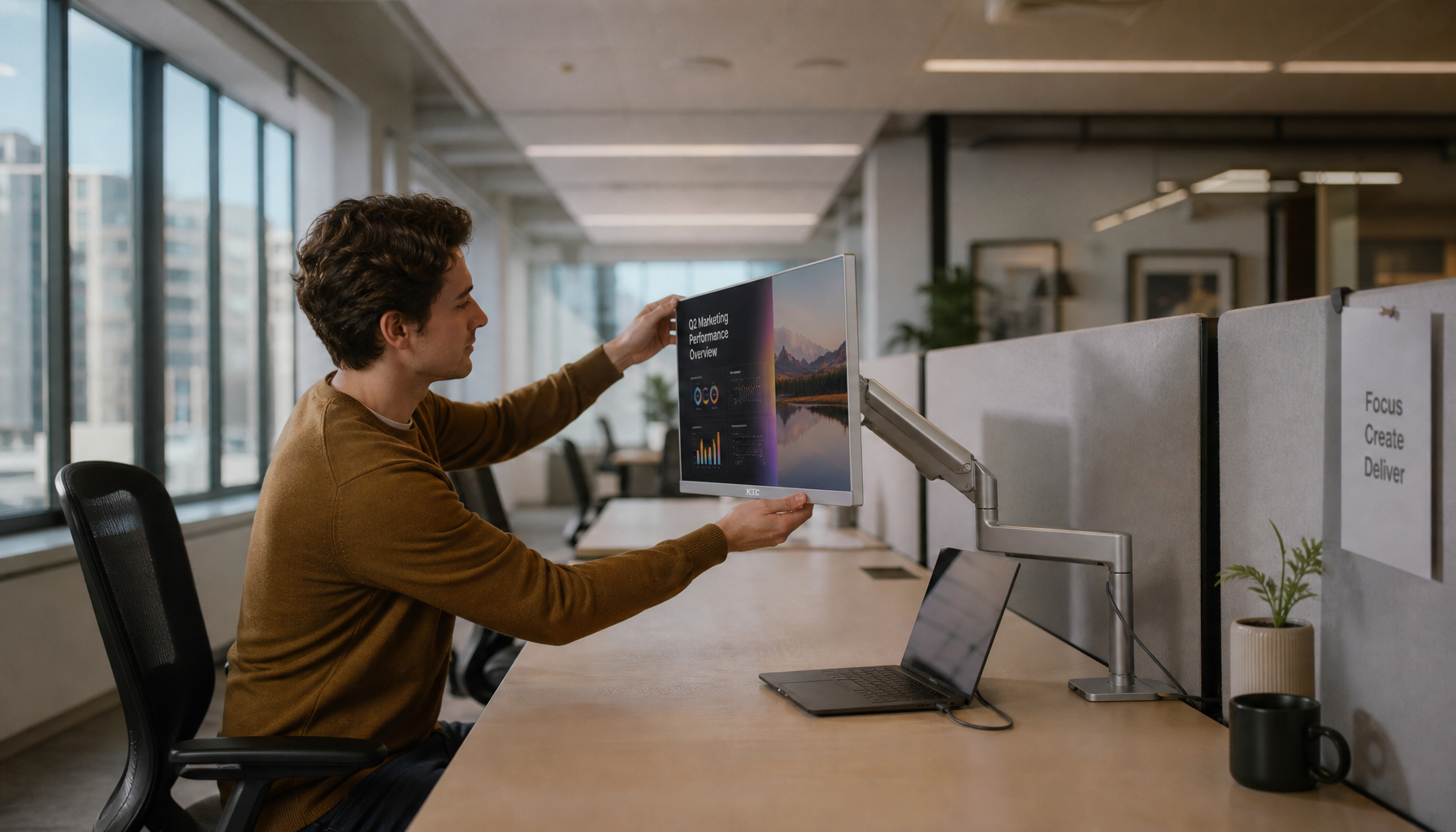
The strongest setups use hierarchy. Your primary task belongs directly in front of you. Secondary screens should hold only the material that supports the active task: source notes for writing, a preview for design, logs for development, or a meeting window while you edit a shared document.

A practical rule: if a window would not help you finish the next 15 minutes of work, it should not be visible.
Ergonomics Can Quietly Break Focus
Distraction is not only digital. Bad placement turns multi-monitor work into a neck-and-eye endurance test.
Side displays that sit too far out force repeated head turns. Mismatched brightness or color makes the eyes keep readjusting. Different resolutions and scaling can make text jump in size as windows move across screens. Setup advice often recommends matching monitor size, resolution, and refresh rate because inconsistent displays can create awkward viewing angles and visual artifacts in a dual-monitor setup.
For comfort, keep the main screen centered and side displays angled inward. If the second display is mainly for reading, code, or long documents, portrait mode can be a smarter use of space than another wide panel.

Dual monitors can be excellent for task separation, but only when the physical setup makes the right screen easy to look at and the wrong screen easy to ignore.
When One Bigger Screen Works Better
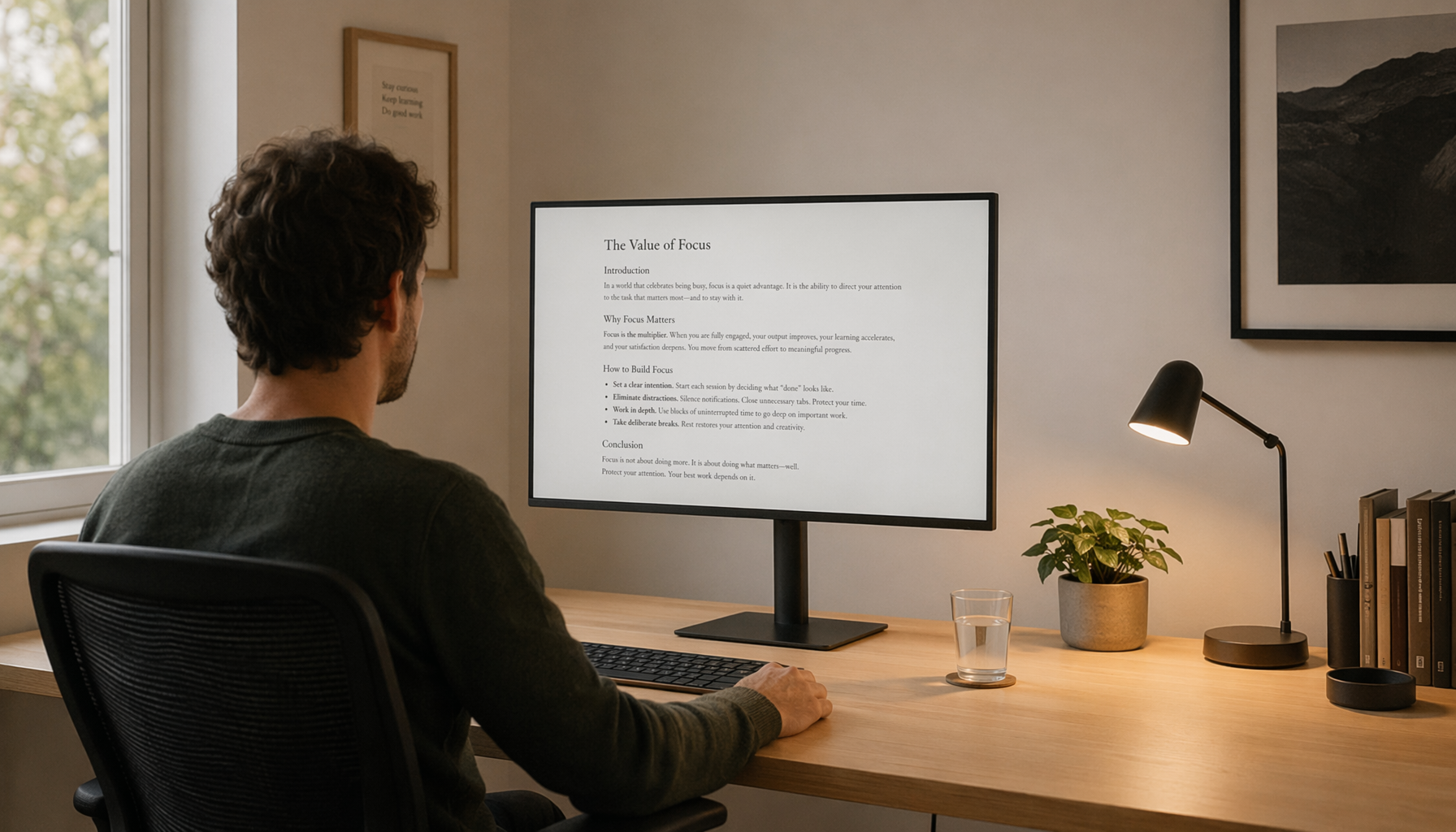
Sometimes the productivity answer is not “more monitors.” It is one better canvas.
An ultrawide monitor removes the bezel gap, reduces cable clutter, and gives you a continuous workspace for timelines, spreadsheets, editing tools, and side-by-side documents. Compared with two standard displays, a 21:9 ultrawide can feel calmer because there is no hard visual split pulling your attention into separate zones.

Dual monitors still win when you need true separation: gameplay plus stream controls, code plus logs, video call plus notes, or a vertical screen for reading. But if your work is one focused flow with multiple panels, an ultrawide can deliver the space without the “second screen syndrome.”
How to Make Multiple Monitors Productive Again
Treat screens like performance gear, not decoration. More pixels should reduce friction, not multiply inputs.
Use this quick reset:
- Center the primary task on the best display.
- Move chat, email, and feeds off-screen during focus blocks.
- Reserve the second screen for task-relevant support only.
- Match brightness, scaling, and height across displays.
- Use window zones or snap layouts to prevent clutter creep.
The best multi-monitor setup is not the one with the most glass. It is the one that protects attention while giving your work enough room to move.