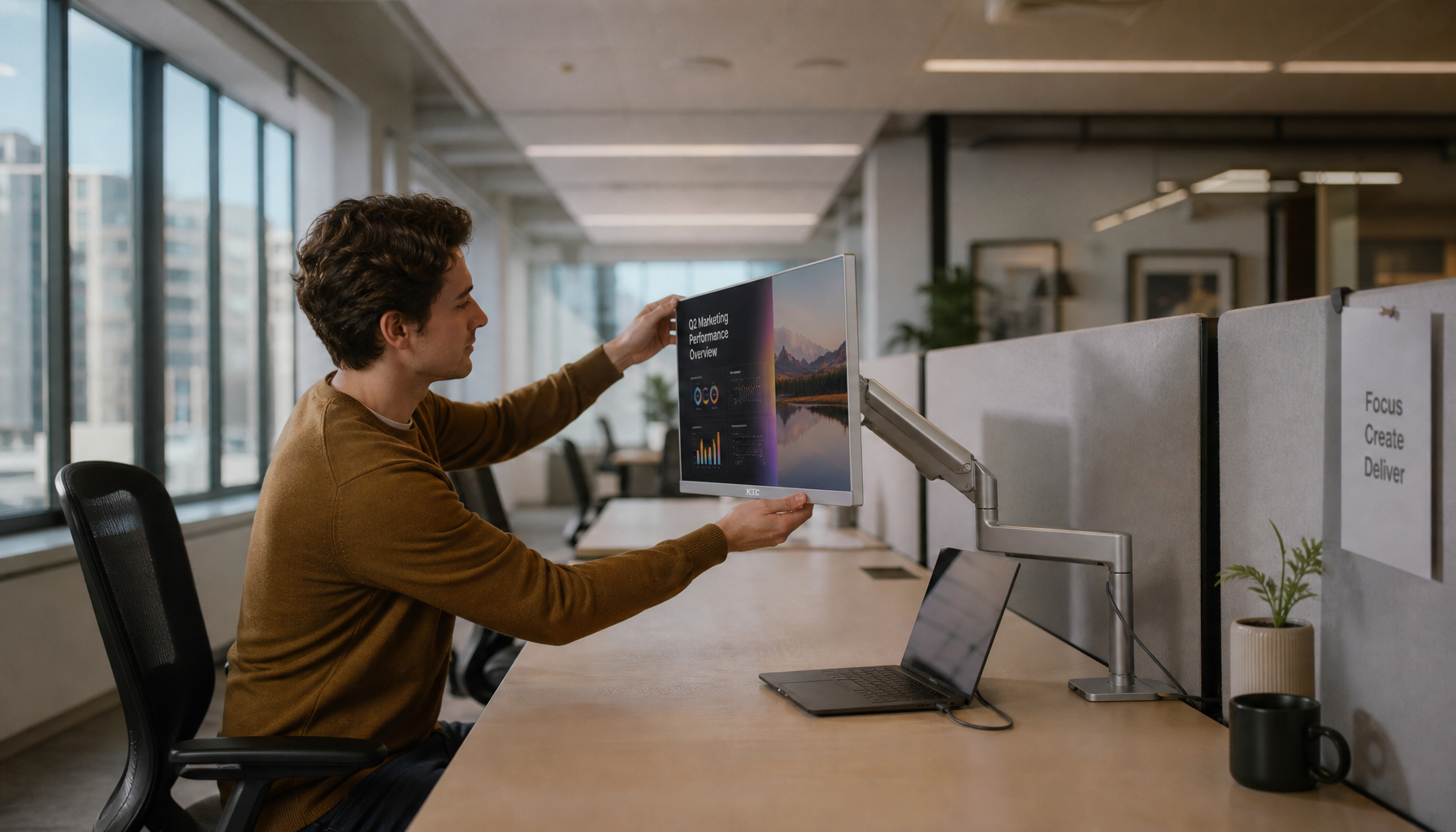
Yes, many portable touchscreen monitors can work with a ChromeOS laptop, including touch input for apps, when the port, cable, monitor, and display settings all support it.
Trying to tap a drawing app, POS dashboard, classroom tool, or game on a second screen only to watch the laptop ignore your finger is frustrating. A properly matched USB-C touchscreen monitor can give you a bigger, more natural control surface without turning a lightweight laptop into a full desktop setup. Here is how to choose the right setup, connect it cleanly, and avoid common cable and compatibility problems.
The Short Answer: It Works, But Touch Requires More Than Video
A portable monitor can show your laptop screen through USB-C, HDMI, DisplayPort, DVI, or VGA, and ChromeOS includes built-in controls for external displays through its monitor connection settings. For a touchscreen portable monitor, however, video output is only half the job. The laptop also needs a data path for touch input, which is why USB-C is usually cleaner than HDMI alone.
Think of the setup as two signals traveling together. The display signal paints the app on the portable screen, while the touch signal sends your tap, drag, pinch, or swipe back to ChromeOS. A single full-featured USB-C cable can often carry both, but an HDMI-only setup commonly needs an additional USB cable for touch data and sometimes separate power.

What Touch Control Means on a ChromeOS Laptop
Touch control means the external monitor acts like an input device, not just a screen. When it works correctly, tapping the portable monitor should select buttons, dragging should scroll or move objects, and pinch gestures should behave much like they do on a built-in touchscreen. ChromeOS touchscreen guidance includes core gestures such as tap, long-press, drag, swipe, pinch, and split-screen interaction on touch-capable devices.
For apps, the experience depends on the app’s own layout. A note-taking or drawing app may feel excellent on a 15.6-inch portable panel because the target area is larger than a built-in 11- to 14-inch laptop screen. A phone-first app may simply scale up awkwardly, so touch works technically but the interface may not feel optimized.
The Best Connection Path Is USB-C With Display and Data
For the most reliable portable touchscreen experience, start with USB-C. Modern portable monitors often use USB-C because it can carry DisplayPort video, USB data, and power over one cable when both devices support it. Portable monitor testing notes that USB-C is the preferred modern connection because many ports can handle display and power together through portable monitor connections.
The important catch is that not every USB-C port is equal. Device support guidance warns that not all USB Type-C ports support display output, so you should verify your laptop’s port before assuming a USB-C monitor will work through USB Type-C display output. A charge-only USB-C port or a low-spec cable may power something without carrying video or touch data.
A practical example: if your laptop has one full-featured USB-C port and your portable monitor supports USB-C video plus touch, try the included USB-C cable first. If the monitor powers on, displays ChromeOS, and responds to touch, you have the cleanest travel setup possible. If video appears but touch does not, check whether the monitor requires a second USB connection for touch input.
HDMI Can Display the App, But Touch Usually Needs USB
HDMI is still useful, especially when your laptop or dock has a stable HDMI output. A USB-C to HDMI adapter converts USB-C video output into an HDMI signal for an external screen, a common path for work, presentations, media, and dual-screen use through an HDMI adapter.

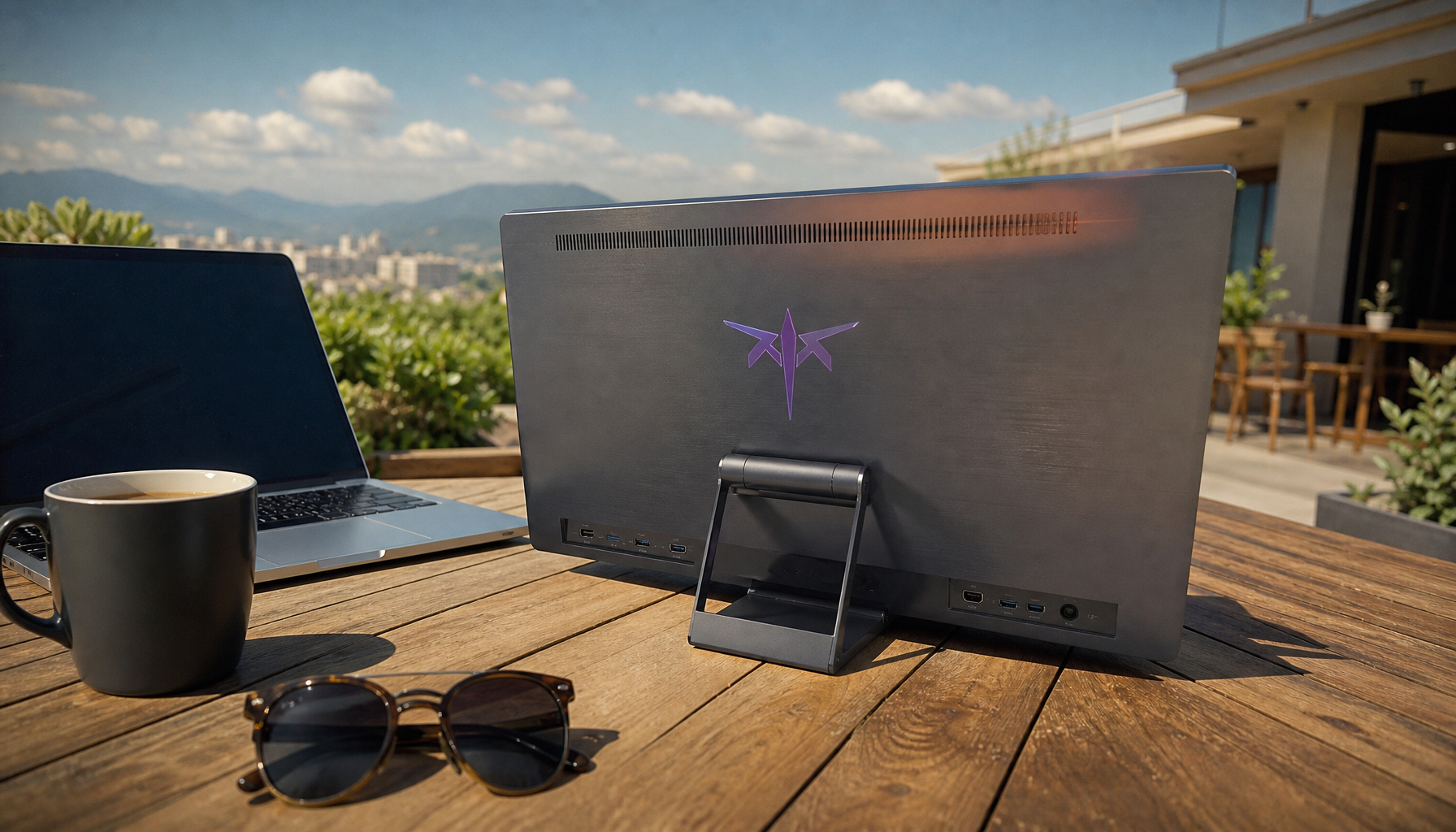
The limitation is that HDMI does not carry touchscreen input back to the laptop. If your portable touchscreen monitor has HDMI or mini-HDMI for video, it will typically need a USB cable connected to the laptop for touch data. Some monitors also need separate power, which means a compact portable setup can become a three-cable layout: HDMI for video, USB for touch, and USB-C power for the panel.
Setup Type |
Video |
Touch Input |
Best For |
Full-featured USB-C single cable |
Yes |
Usually yes |
Travel, clean desks, touch apps |
HDMI plus USB |
Yes |
Possible with USB data cable |
Older laptops, docks, reliable video |
HDMI only |
Yes |
Usually no |
Presentations, media, non-touch use |
Docking station |
Yes |
Depends on monitor and USB data path |
Multi-display desks |
How to Set It Up in ChromeOS
Connect the portable touchscreen monitor first, then open ChromeOS settings from the time area and go to Device, then Displays. The display controls let you mirror the built-in screen, extend the desktop, adjust resolution, change orientation, select refresh rate, and calibrate an external touchscreen when ChromeOS recognizes one.
Start in mirrored mode if you are testing touch for the first time. Mirroring removes one layer of confusion because the app appears in the same place on both screens. Once touch works, switch to extended mode if you want the app on the portable touchscreen while keeping documents, video calls, browser tabs, or files on the laptop display.
If taps land in the wrong spot, use the touchscreen calibration option for the connected display. Calibration will not help a non-touch monitor, but it can fix offset touches on a recognized touchscreen panel. After calibration, open a simple app with large buttons and test tap accuracy at all four corners before relying on the setup for work.
Choosing the Right Portable Touchscreen Monitor
Size, resolution, brightness, stand quality, and cable design matter more than marketing language. Portable monitors are useful for users who want a larger display while keeping ChromeOS mobility, with common options larger than typical laptop screens through portable monitor options. For touch control, a 15.6-inch 1080p IPS panel is often the value sweet spot because text is readable, touch targets are comfortable, and power demands stay manageable.

Brightness is a real-world limiter. Many portable monitors test dimmer than their manufacturer claims, often around 180 nits, while newer OLED models can get much brighter. If you use your laptop near windows, in classrooms, or in shared offices with overhead lights, prioritize a brighter panel over a thin spec sheet.
Stand design also affects touch. A floppy origami cover may be fine for watching video, but repeated tapping can push the screen backward. For apps, look for a rigid kickstand, hinged base, or case that keeps the panel steady at a comfortable angle. A touchscreen that wobbles every time you tap it feels slower even when the electronics are working correctly.

Pros and Cons for App Touch Control
The main advantage is direct interaction. Instead of using a trackpad to control a touch-first app, you can tap where the action is. That helps with drawing, handwriting, dashboards, form entry, media controls, light gaming, and classroom apps. Multi-display research found that knowledge workers reported a better ability to view more information at once and use multiple programs without switching windows through multi-display productivity.
The tradeoff is compatibility discipline. You need the right laptop port, a video-capable cable, power that can sustain the monitor, and touch drivers that ChromeOS recognizes. You may also find that some apps scale poorly on a landscape external display, even though touch technically works.
Battery life is another practical cost. A portable screen draws power, and a bright touchscreen draws more. If your laptop powers the monitor over USB-C, expect faster battery drain. For long sessions, use a monitor with pass-through charging or connect laptop power through a capable USB-C hub.
Docking Stations and Multi-Monitor Desk Setups
A dock can turn a ChromeOS laptop into a more capable workstation, especially if you want a portable touchscreen plus a larger office monitor. Some models can support one to three external monitors through a compatible docking station, and certified docks are recommended for the most predictable setup.
For touch, do not evaluate the dock only by HDMI or DisplayPort count. Make sure the touchscreen monitor’s USB data connection reaches the laptop through the dock. A dock may handle video perfectly while failing to pass touch input cleanly if the USB routing, cable, or power budget is weak. For a desk example, you might run a 24-inch monitor over HDMI for documents and a 15.6-inch USB-C touchscreen beside the laptop for whiteboarding or app control.
Troubleshooting When Touch Does Not Work
If the screen displays but touch fails, swap the cable before replacing the monitor. USB-C monitor and dock connections need a cable fast enough to support displays, and a weak cable can trigger no response or a cable warning. Many USB-C cables are built only for charging, so they may look identical while missing the data or video capability you need.

Restart ChromeOS after the monitor is connected, then check for updates. If the laptop’s own touchscreen is acting up too, clean the screen, reset the hardware, and contact the manufacturer if problems remain. On a school or work-managed laptop, policy restrictions may also affect touch behavior, external device access, or app use.
If touch lands on the wrong display in extended mode, open Display settings, select the external touchscreen, and calibrate it. If apps open on the laptop screen instead of the portable monitor, move the app window with Search + Alt + M or Launcher + Alt + M, then test whether the app remembers that placement.
Buying Advice: What to Verify Before Checkout
The strongest purchase signal is explicit ChromeOS compatibility plus USB-C video and touch support. External monitor recommendations emphasize matching the display to the use case, with portable monitors favored for travel and USB-C hub monitors favored for cleaner desk setups through external monitor choices.
For a value-oriented buy, choose a 1080p IPS portable touchscreen with USB-C video, HDMI fallback, a stable stand, and included cables that specify video and data support. For a performance-driven workflow, consider brighter panels, stronger color coverage, pass-through charging, and a rigid hinge. For immersive touch control, the best monitor is not always the sharpest one; it is the one that stays stable, maps touch correctly, and keeps the cable path simple.
FAQ
Can a ChromeOS laptop use an external touchscreen as the main touch display?
Yes, if ChromeOS recognizes the external display as a touchscreen and the input is calibrated correctly. You can use the external monitor in mirrored or extended mode, and you can dim the built-in display if you want to focus only on the larger touch panel.
Will every app support external touch correctly?
No. Touch input may work at the system level, but app layout quality varies. Tablet-friendly apps usually feel better than phone-first apps that stretch awkwardly across a landscape monitor.
Is USB-C better than HDMI for portable touchscreen monitors?
Usually, yes. USB-C can carry video, data, and power through one cable when supported, while HDMI generally handles only video and needs USB for touch input.
Do I need a dock?
Not for a single portable touchscreen monitor if your laptop has the right USB-C port. A dock becomes useful when you need extra displays, Ethernet, more USB ports, charging, or a cleaner desk setup.
A portable touchscreen monitor can make a ChromeOS laptop feel far more capable for touch-first apps, but the benefit depends on matching the whole signal chain. Prioritize full-featured USB-C, a stable touch-friendly stand, clear display controls, and a return policy that protects you if your exact laptop model does not cooperate.