Heat speeds up panel aging, and moisture raises the odds of corrosion, condensation, and internal failures. For gaming monitors, ultrawides, and portable displays, room conditions matter more over five years than many spec sheets make obvious.
If your monitor looks fine in winter but starts running hotter, dimmer, or less consistent in summer, the room may be part of the problem. Reliability testing on modern LCD modules now focuses on heat, humidity, powered use, and thermal cycling together because those stresses better match what happens in real long-session setups. You will leave with clear buying, placement, and maintenance rules that help a display stay stable longer.
Why Room Conditions Matter More Than Most Monitor Owners Expect
A monitor is not just a panel. It is a stack of layers, adhesives, polarizers, backlight parts, control boards, ports, and power components, and display service life is closely tied to operating temperature. When those parts live above their intended range, the usual result is not instant failure. It is slower aging: more heat in the chassis, earlier color drift, weaker adhesives, and a shorter useful life.
Humidity is often underestimated because the screen can still power on and look normal for a long time. But moisture ingress can oxidize internal parts and corrode circuits, especially in rooms with poor ventilation, big day-to-night temperature swings, or storage conditions that trap damp air. That is why a monitor in a basement office, garage setup, or near an AC vent can age differently from the same model in a stable room.
For buyers, the practical takeaway is simple: published operating and storage limits are not filler text. They are early clues about how much environmental margin a monitor has, especially if you run a high-refresh-rate display for long sessions, leave an ultrawide on all day, or move a portable monitor between home, work, and travel.
What Heat Does to Panels Over Time
Long-term heat exposure is linked to yellowing, bright spots, polarizer aging, and backlight lifetime reduction. On a gaming monitor, that usually shows up first as small consistency losses rather than dramatic failure: warmer top edges, brightness that no longer looks even, or slightly duller highlights after a few summers of heavy use. In dense setups with a PC tower exhausting hot air toward the screen, those effects can arrive sooner.
OLED gaming monitors deserve a separate note because heat accelerates OLED degradation. The good news is that one lab-style summary found only marginal differences between rooms around 72°F and 86°F over a typical three- to five-year period for normal users. The bigger risk was still static, high-brightness content. In plain terms, a hot room matters, but a bright fixed HUD or desktop layout matters even more on OLED.
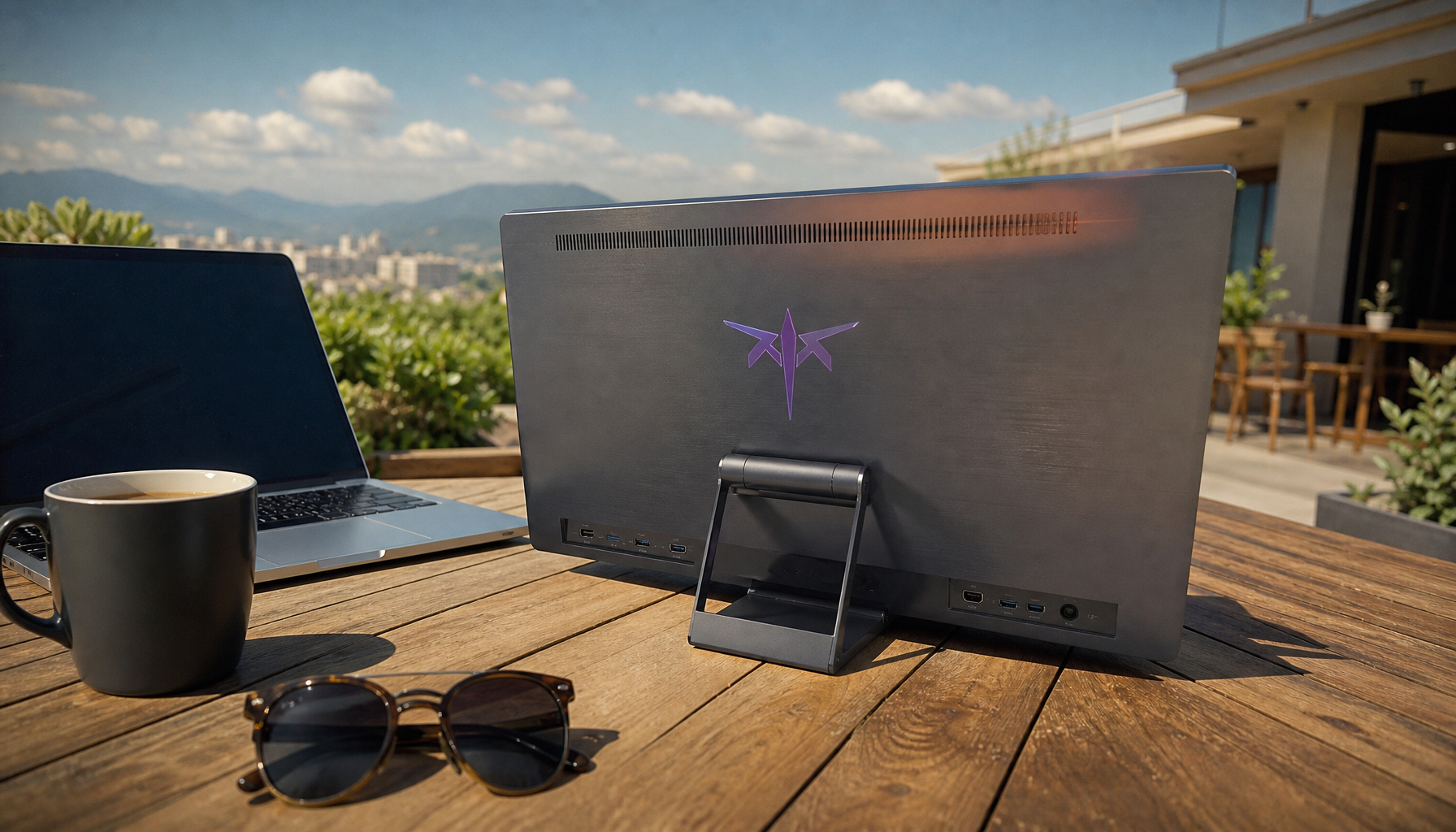
Portable monitors are especially vulnerable because they are often used in less controlled spaces: hotel desks, sunlit kitchens, trade-show tables, or next to a laptop that is already running hot. A thin chassis gives heat fewer places to go, so even if the panel survives, sustained warmth can push the display into dimming, slower response, or earlier wear on internal adhesives and laminated layers.
Why Humidity Creates More Subtle but More Expensive Problems
High humidity is dangerous because moist air can enter packages, joints, and board interfaces, where it contributes to corrosion, slower response, short circuits, or permanent damage. On monitors, that can translate into flicker, intermittent black screens, dead columns, or a display that fails after storage even though it worked the last time you used it. This is one reason a spare portable monitor kept in a closet near an exterior wall can age poorly without much runtime.
Condensation is the worst-case version of the same problem. Rapid temperature shifts can create condensation on the screen and inside the assembly, which causes temporary issues first and long-term moisture damage later if sealing is weak. A common real-world example is bringing a portable monitor from a cold car into a warm room and powering it up right away. Another is a gaming monitor placed near a window AC unit where surfaces cool faster than the surrounding air.

Moisture also affects displays that sit idle. One LED-display maintenance guide recommends running indoor screens for more than two hours per week at 10% to 65% relative humidity and using dehumidification above 65% RH because long inactivity in humid conditions can contribute to moisture-related faults. Consumer monitors are not identical to LED walls, but the maintenance logic carries over: electronics stored damp and unused tend to age badly.
Which Monitor Setups Face the Highest Environmental Risk
Large ultrawide monitors and dual-monitor desks often live in tighter spaces with less airflow behind the screens. That matters because even small rises above acceptable temperature or humidity levels can reduce component performance and shorten lifespan. A 34-inch or 49-inch panel pushed against a wall, sitting above a warm console, or boxed in by speakers and shelving is more likely to hold heat than a smaller monitor on an open arm.

High-refresh-rate gaming monitors also see heavier daily duty cycles. The refresh rate itself is not the environmental problem, but long play sessions, bright HDR use, and closed-off desk layouts create more sustained thermal load. If you are running 240 Hz or 360 Hz for hours in a warm room, the monitor’s cooling headroom matters more than it does for casual office use.
Portable monitors face a different risk profile: travel, storage, and rapid environmental swings. Outdoor-capable LCD designs use sealed enclosures, flexible gaskets, hydrophobic vents, and condensation control because standard electronics do not tolerate rain, humidity, salt, and temperature swings well. Most consumer portable monitors do not have that level of sealing, so buyers should assume they need gentler handling than rugged marketing photos suggest.
How to Reduce Long-Term Damage in Real Setups
The best first step is environmental control, not a monitor setting. A warehouse-monitoring example treats humidity above 85% RH and temperatures below 32°F or above 100°F as points where control equipment should turn on. Home offices do not need industrial thresholds, but the principle is useful: if a room feels damp, traps warm air, or swings hard between day and night, fix the room before blaming the monitor.
Placement matters more than many buyers expect. Leave airflow behind the chassis, keep the display out of direct afternoon sun, and do not aim a desktop exhaust straight into the rear vents. For portable monitors, let the screen acclimate after travel before powering it on. For OLEDs, combine good airflow with lower SDR brightness, auto-hide for static UI, and the panel’s built-in refresh tools, since static bright content remains the larger long-term risk.
Monitoring helps when the room is the weak point. Control-panel systems use temperature and humidity sensors with alerts and historical logging because environmental problems are easier to solve when they are visible. For a serious gaming or work setup, even a basic room sensor can confirm whether your “hot monitor problem” is really a room that spends all afternoon above a reasonable comfort range or stays damp after dark.
What to Look for When Buying a Monitor for Tougher Conditions
The first buying filter is the published operating and storage range. A display rated for broader environmental use has usually been designed with better tolerance for thermal stress, moisture control, or both. That does not make it indestructible, but combined stress testing is increasingly used because single-factor tests miss real-world failures. If two monitors look similar on paper, the one with clearer environmental specs is often the safer long-term pick.
The second filter is construction. Features such as bonded layers, stronger sealing around ports, and better venting matter more for portable monitors and displays used in humid apartments, coastal homes, or shared spaces without central climate control. In more rugged display categories, optical bonding, sealed joints, and hydrophobic vents help prevent internal condensation. Consumer monitors rarely advertise those details clearly, but thicker chassis design, fewer obvious gaps, and better warranty language can be useful clues.
The third filter is how realistic your ownership pattern is. If you keep screens a long time, durability matters more than tiny image-quality gains. One university IT guidance page notes that screens are often kept for 10 years or more, which makes environmental fit part of value, not just reliability. A monitor that is slightly less flashy but better suited to your room can be the better buy over a full replacement cycle.
Practical Next Steps
A monitor lasts longest when the room is stable, airflow is decent, and moisture never gets a chance to sit inside the chassis. For gaming monitors, ultrawides, and portable displays, the smartest move is to treat temperature and humidity as part of setup quality, not just comfort.
Action checklist:
- Keep the monitor out of direct sun and away from a PC or console exhaust path.
- Leave open space behind the display instead of pushing it flat against a wall.
- Use a dehumidifier if the room regularly feels damp or shows condensation on windows.
- Let a portable monitor reach room temperature before turning it on after travel.
- Lower sustained brightness on OLED and enable pixel refresh, pixel shift, and auto-hide for static UI.
- Check the manual for operating and storage limits before buying, especially for portable and high-refresh-rate models.
- Use a simple temperature and humidity sensor if the room has seasonal swings or poor ventilation.
FAQ
Q: Can a hot room actually shorten a gaming monitor’s lifespan?
A: Yes. Long-term heat is tied to faster aging in backlights, polarizers, adhesives, and other internal parts. On OLED, heat also speeds pixel wear, even though static bright content is usually the bigger long-term risk.
Q: Is humidity worse than heat for portable monitors?
A: Often, yes. Portable monitors are moved, stored, and exposed to quick temperature changes more often, so condensation and moisture ingress become more likely. A monitor that survives a warm room may still fail after damp storage or cold-to-warm travel.
Q: What spec matters most if I use a monitor in a tough environment?
A: Start with operating and storage temperature and humidity limits. After that, look for signs of better sealing, better thermal design, and a warranty that does not feel vague about environmental use.
References
- Environmental impact of IT: desktops, laptops and screens
- Impact of Temperature & Humidity on Resistive Touch Screens
- Why LCD Display Module Reliability Testing Is Still Evolving
- How Waterproof Outdoor LCD Screens Withstand the Elements
- Moisture Effects on Sensor Elements and Mitigation Methods
- How to Protect Your LED Display from Humidity
- Environmental Monitoring inside a Machine Control Panel
- The Effect of a Good Temperature and Humidity Monitoring System on the Warehouse
- Does Heat Kill Your OLED?