If your monitor moves back on its own, the problem is usually not random. It is almost always a mismatch between the display, the mount, and the adjustment point you changed.
You tilt the screen into place, let go, and it slowly dips forward or twists sideways again. That is especially common with gaming monitors, ultrawide displays, and portable setups because extra width, curve depth, and cable pull all change how the load sits on the hinge. You will be able to tell whether the culprit is the tilt joint, spring tension, standard mount fit, or simple under-support, and fix it without guessing.
What the movement is telling you
Height drift, forward droop, and side swing are different faults
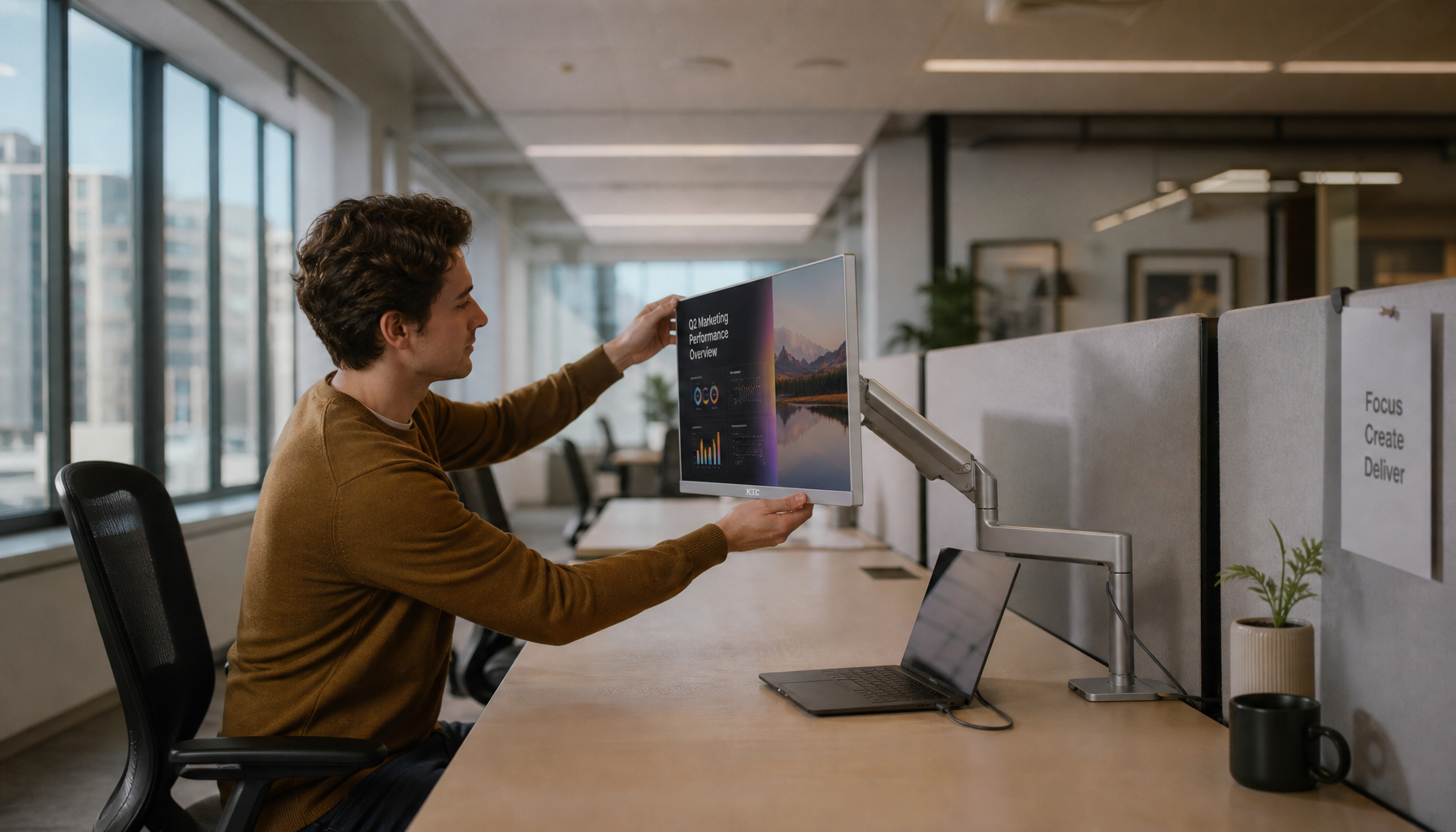
A drooping monitor arm usually points to overload, wrong-joint adjustment, or wear. If the whole arm sinks in height, the spring or lift mechanism is not balanced to the monitor’s real load. If height stays the same but the screen pitches forward, the tilt joint near the mount plate is the more likely failure point. If the monitor swings left or right after you position it, the swivel joint or bracket tension is usually too loose.
 That distinction matters because tightening the visible tilt bolt will not fix a spring arm that is under-tensioned. The reverse is also true: increasing spring force will not stop a loose tilt hinge from nodding forward. On adjustable arms, height tension, tilt, rotation, and left-right swing are separate controls even when they feel like one problem during daily use.
Sometimes the “rotation” is on-screen, not mechanical
A rotated screen can also be a software orientation issue, especially on portable monitors, 2-in-1 systems, or displays connected over a cable interface where orientation settings or sensor behavior can change after you move the device. In that case, the panel is not physically slipping; the image itself has changed to portrait, upside down, or sideways.
That is why the first check is simple: does the monitor body move, or does only the picture rotate? If the picture rotates while the panel stays still, look at display orientation, rotation lock, and keyboard shortcuts first. If the panel itself sags, swings, or turns back after you touch it, you are dealing with a stand, arm, hinge, or mounting issue.
Why heavier gaming and ultrawide monitors drift more easily
Weight rating is only part of the story
A monitor arm should be matched to the display-only weight, not the shipping weight and not the weight with the original stand attached. That matters for high-refresh-rate gaming monitors because their panels, housings, lighted shells, and larger stands can make the product feel heavier than the actual mounted panel weight. The arm only “sees” the panel, the adapter, and anything attached at the mount point.
A safer setup leaves margin below the arm’s published maximum. Several mounting references recommend staying roughly 20% to 25% under the limit so normal repositioning, wear, and daily movement do not push the joint to its edge. If your arm is rated for 22 lb and your real mounted load lands near that ceiling, minor drift after adjustment is not surprising.
Depth and curve create extra torque
Weight and depth matter more than screen size alone. Two 34-inch monitors can behave very differently if one is flat and the other is deeply curved. A 49-inch ultrawide with a tight curve pushes its center of gravity farther forward, which increases leverage against the tilt joint even if the listed weight still falls inside the arm’s rating.
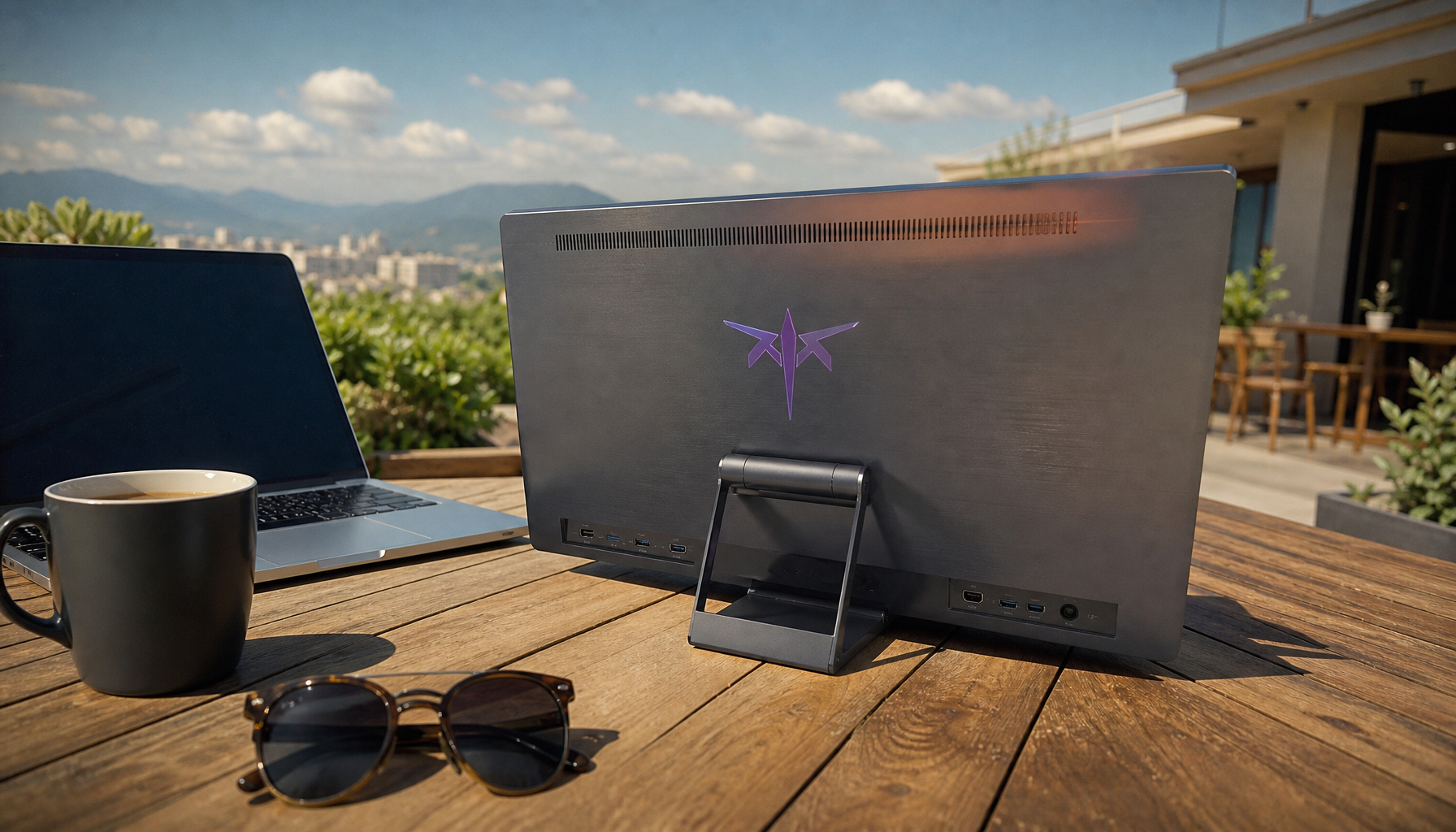
That is why wide gaming displays often “nose-dive” at the hinge while a smaller flat office monitor stays put on the same hardware. One mounting note even estimates that some curved ultrawides shift the center of gravity forward by about 4 to 6 inches, which can make a panel act heavier at the pivot than its scale weight suggests. Portable monitors can show a smaller version of the same problem when a light stand and stiff cable pull combine into enough torque to rotate the screen back.
Standard mount fit and mounting hardware can make a good arm behave badly
Check the hole pattern before blaming the arm
A standard monitor mount is a standardized four-hole pattern for attaching flat-panel displays. Common monitor sizes are 75 x 75 mm and 100 x 100 mm, while larger and wider screens may use bigger patterns. If the mount plate does not match the monitor’s mounting pattern cleanly, the screen may sit off-center, bind during movement, or work loose after repeated adjustments.
You do not need to guess. Measure the distance from hole center to hole center on the back of the monitor or confirm it in the spec sheet. The reference site notes that the spacing itself defines the standard, so a 100 x 100 mm monitor needs that exact pattern at the mount interface.
Recessed mounts and wrong screw depth cause hidden instability
A manual mount-pattern check also helps identify when an adapter is required. Some displays have recessed mounting areas, and that changes how the plate should sit against the back of the monitor. If the plate bottoms out on the casing or the screws do not reach properly, the monitor may look mounted but still shift after you tilt it.
 This is a common trap with modern gaming monitors and ultrawides. Several setup notes warn that recessed mount housings often need 0.4 to 0.8 in standoff spacers so the plate seats correctly. Without those spacers, the hinge can seem loose when the real problem is poor contact at the mounting point.
How to diagnose the exact cause in a few minutes
Use this symptom table first
Symptom |
What stays fixed |
Most likely cause |
Best first check |
Monitor drops in height |
Screen angle stays the same |
Arm spring tension too low or arm overloaded |
Verify display-only weight and arm range |
Screen tilts forward |
Arm height stays the same |
Loose tilt joint or extra forward torque |
Tighten tilt hardware and check curve/depth |
Screen swings sideways |
Height and tilt mostly stay fixed |
Swivel bracket too loose |
Adjust left-right swing tension |
Monitor slowly twists after release |
Mount point is slightly loose |
Mounting-pattern mismatch, missing spacer, or uneven screw seating |
Recheck plate fit and screw depth |
Screen image rotates but panel does not move |
Physical position stays fixed |
Software orientation change |
Check display orientation and rotation lock |
Monitor wobbles when desk moves |
Position changes with desk shake |
Weak clamp, flimsy desk, or poor base stability |
Inspect clamp/grommet and desk stiffness |
Run a simple physical check
A tilt mechanism that will not stay upright often comes down to a loose bolt behind the monitor plate. If your screen immediately falls forward after you set the angle, inspect that hardware first. On many mounts, the key bolt sits behind a plastic cap and can be tightened with the included hex key.
 After that, check the monitor with cables disconnected or relaxed. Cable strain is an underrated cause of “ghost sag,” especially when a short video, data, or power cable is pulling down on a portable monitor or fully extended arm. If the screen holds position when the cable is loose but drifts when everything is plugged back in, routing and slack are part of the problem.
 Fixes that usually work without replacing the monitor
Adjust the right joint in the right order
A proper arm adjustment sequence separates spring tension, swing, tilt, and rotation. Start by confirming the monitor is mounted correctly and the screws are seated evenly. Then fix height drift with the arm’s tension control, fix forward droop at the tilt hinge, and fix side swing at the swivel bracket. Small adjustments are better than big ones because over-tightening can make the arm hard to move and accelerate wear.
If your monitor is very light for the arm, the opposite problem can happen: the arm may float upward instead of staying down. Gas-spring arms are designed for a weight range, not just a maximum. An arm rated for 10 to 25 lb can misbehave with an 8 lb panel just as surely as it can sag with a 27 lb one.
Improve leverage, cable slack, and desk stability
A stable mount also depends on cable slack, attachment method, and desk strength. Keep the monitor slightly closer to the support point if bounce or sideways movement shows up after every adjustment. On a clamp-mounted arm, re-tighten the clamp and inspect whether the desk edge is compressing or flexing.
This matters more with ultrawides and high-refresh-rate panels because their width amplifies small movements. If the desk is made from softer composite material and the setup feels springy, reinforcing the clamp area can reduce movement. For everyday comfort after the fix, keep the top of the screen around eye level and the panel about 20 to 28 inches away, with a slight backward tilt.
When the better answer is a different stand or mount
Replace the mount if the numbers never lined up
A monitor arm that is outside the correct load range will keep drifting, even if you keep tightening it. For a 27-inch display, many setups fall into a manageable range, but large ultrawides, heavy curved gaming monitors, and some portable dual-screen rigs can push well past what a basic arm handles comfortably. A useful rule is to keep 25% to 50% headroom above actual load for wall or arm mounts that will be adjusted often.
If your monitor only stays put when every joint is tightened to the point that adjustment feels harsh, the hardware is probably undersized for the job. That is a selection problem, not a tuning problem. A higher-capacity arm, a more stable grommet mount, or a stand built for deeper displays is usually the cleaner long-term fix.
Wear is real, especially on frequently adjusted setups
A gas spring can lose a little lifting force over time. If your monitor was stable for a year or two and only recently began sinking or rotating back, the mount may simply need re-tensioning. That is normal wear, particularly on arms used daily for standing-desk changes, streaming setups, or gaming stations where the screen gets repositioned often.
But if re-tensioning no longer holds, the hinge surfaces may be worn or the cylinder may be past its useful range. At that point, replacing the arm is safer than forcing a tired joint to carry a heavy display.
FAQ
Q: Why does my monitor tilt forward even though the arm says it supports the weight?
A: Published capacity is only part of the fit. Curved and ultrawide monitors place more leverage on the tilt joint because the center of gravity sits farther forward. Recessed standard mounting, adapters, and cable pull can add more stress even when the listed weight looks acceptable.
Q: Can a standard arm handle a high-refresh-rate gaming monitor?
A: Usually yes, but only if the display-only weight, mount pattern, and monitor depth all fit the arm’s real range. High-refresh-rate monitors are often fine in standard sizes, but curved 32-inch to 49-inch panels are more likely to expose weak tilt joints or narrow safety margins.
Q: Why does my portable monitor rotate or shift after I move it?
A: Portable monitors often deal with two issues at once: light stands that are easy to disturb and data or power cables that tug the panel out of place. Some setups also trigger display orientation changes in software, so check whether the panel is moving physically or only the image is rotating.
Final Takeaway
The fastest way to stop a monitor from swinging or rotating back is to diagnose the exact kind of movement before tightening anything. Height drift means spring balance, forward droop means tilt hardware or extra torque, and image-only rotation means software.
Use this checklist:
- Confirm whether the panel moves physically or only the on-screen image rotates.
- Verify the monitor’s display-only weight and compare it to the arm’s real load range.
- Check the mount pattern, screw depth, and whether recessed mounts need spacers.
- Tighten the correct joint: spring tension for height, tilt bolt for forward droop, swivel tension for side swing.
- Add cable slack and reduce pull from video, data, or power leads.
- Recheck the clamp, grommet, wall plate, or desk surface for flex or looseness.
- Replace the arm or stand if the monitor only stays put at the extreme end of adjustment.