ABL lets an HDR monitor hit impressive peak brightness in small highlights, then dim when bright content covers more of the screen. That means spec-sheet HDR brightness is not always the brightness you experience during gameplay, desktop work, or creative editing.
Does your HDR game look stunning during a muzzle flash, then flatter when a snowy map, white browser page, or bright HUD fills the screen? Real-world OLED behavior shows that reducing static HUD brightness and choosing the right HDR mode can make brightness shifts less distracting without giving up HDR impact. This article explains why ABL happens, when it matters, and how to buy and tune a monitor around it.
What ABL Means for HDR Brightness
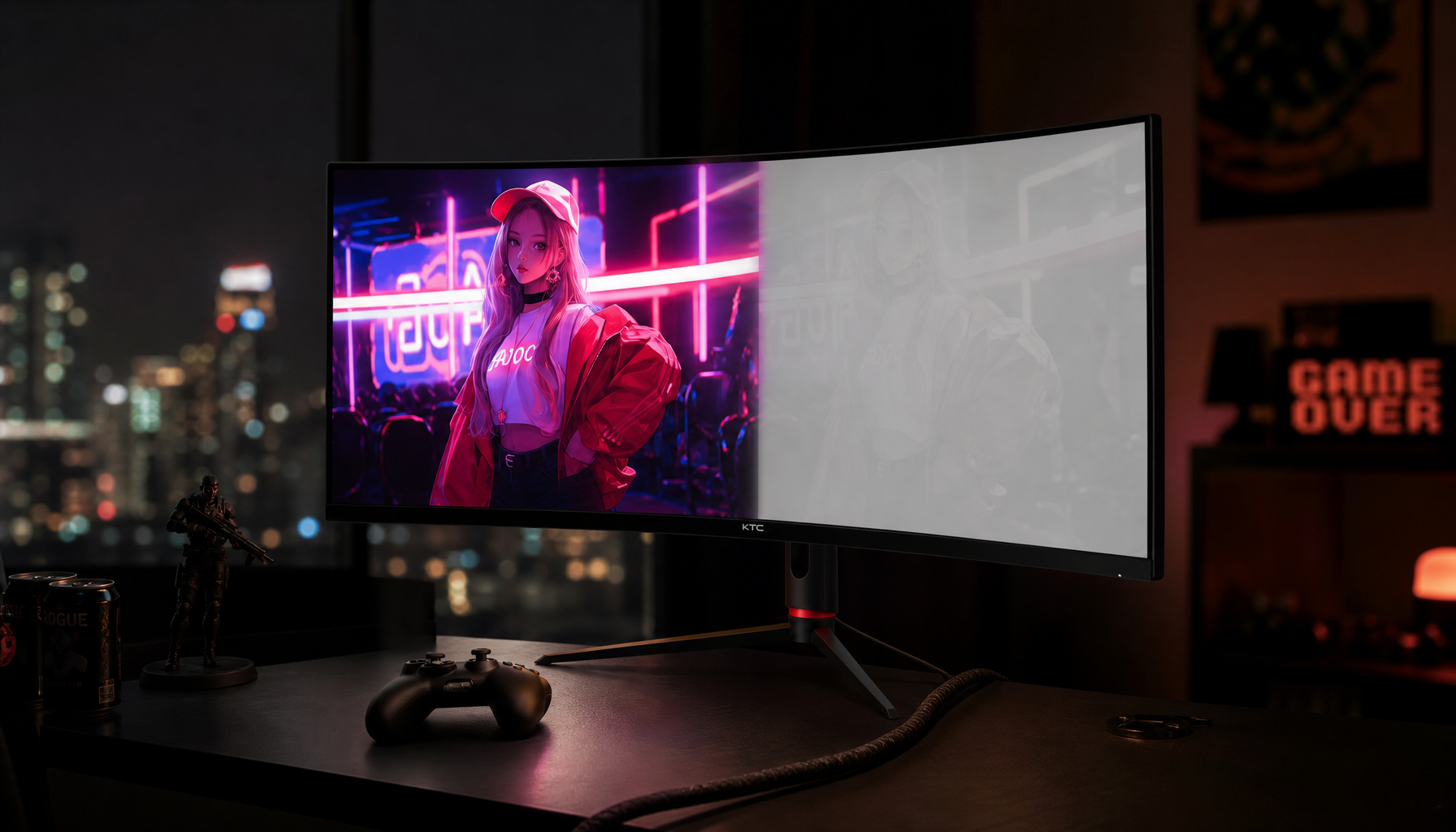
Auto Brightness Limiting, or ABL, is a brightness-control system that reduces panel output when a large bright image pushes the display toward power, heat, or panel-protection limits. On OLED monitors, ABL reduces pixel brightness as Average Picture Level rises, which means the same monitor can look extremely bright with a small fireball but noticeably dimmer on a full-screen white menu.
That distinction matters because HDR peak brightness is often measured in small windows. A QD-OLED gaming monitor may advertise a high peak for small highlights, while a full-field bright scene lands much lower. In real use, neon signs, sunlight glints, spell effects, and explosions can look spectacular, but a bright desert map, snow level, spreadsheet, or web page can trigger dimming.

ABL is not the same as adaptive brightness in an operating system. ABL is panel behavior tied to image brightness, power, and protection. System display features, by contrast, may adjust brightness or color through software settings, and display brightness and color controls can affect how stable the desktop feels, especially on laptops and supported external displays.
Why Small Highlights Look Brighter Than Full Scenes
HDR is designed to add headroom for highlights, not simply make every frame brighter. A good HDR image keeps midtones believable while letting reflections, lamps, fire, clouds, sparks, and UI glow rise above SDR. The practical issue is that OLED panels have to budget light output across millions of self-lit pixels.
One OLED brightness explanation gives a useful real-world frame: gaming scenes often move through lower-to-mid Average Picture Level ranges, while office work and web browsing tend to use brighter backgrounds. In the same discussion, HDR True Black 400 behavior is described as sitting around the mid-200-nit range at full-screen brightness and rising closer to 400 to 450 nits at a smaller bright area. That is why your monitor can look punchy in a dark cyberpunk alley and restrained in a white inventory screen.
A simple way to think about it: if only 10% of the screen is a bright lightning bolt, the panel has more headroom to make that bolt intense. If 80% of the screen becomes a bright skybox, snowfield, or document window, ABL lowers the overall output so the panel stays within limits.
OLED, Mini-LED, and FALD Behave Differently
OLED’s advantage is pixel-level control. Black pixels can turn off, which gives games and movies deep contrast without blooming around bright objects. That is why OLED often feels more immersive in dark rooms and fast games.

The tradeoff is sustained brightness. HDR monitor recommendations for photography often favor mini-LED for accuracy because OLED displays may dim when bright content covers more than a small portion of the screen. Mini-LED and full-array local dimming displays can usually sustain higher brightness across larger areas, but they may show halos around bright objects on dark backgrounds.
Display Type |
HDR Strength |
Real-Scene Weakness |
Best Fit |
OLED and QD-OLED |
True blacks, instant pixel response, intense small highlights |
ABL can dim large bright scenes or static bright UI |
Gaming, movies, dark-room immersion |
Mini-LED LCD |
Stronger sustained brightness, less full-screen dimming |
Blooming or haloing around bright objects |
HDR productivity, photography, bright rooms |
Basic HDR LCD |
Accepts HDR signal, often cheaper |
Limited contrast and weak highlight impact |
Casual use, budget setups |
This is why “1,000 nits” alone does not settle the purchase decision. A monitor with strong small-window brightness can still feel less bright in desktop HDR than a lower-contrast mini-LED display with better sustained output.
How ABL Shows Up in Games
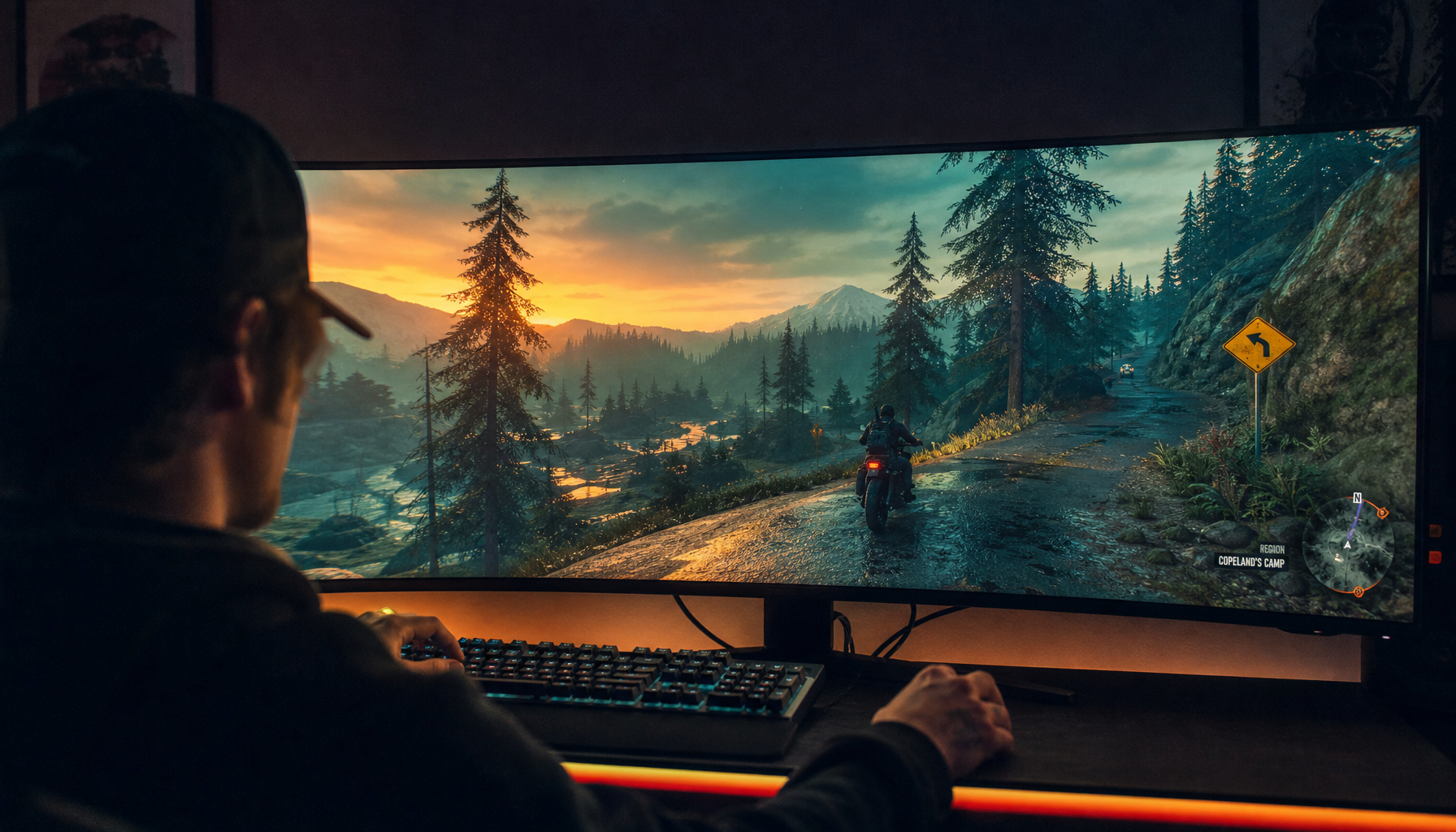
In gaming, ABL is most obvious when bright static elements stay on screen. Health bars, ammo counters, minimaps, crosshairs, cooldown icons, and white menus can all raise the panel’s workload. Gaming-focused OLED coverage notes that bright HUD elements can make dimming more noticeable during long sessions.

For cinematic games, ABL is often acceptable because the image changes constantly and the contrast benefit is huge. For competitive play, even a small brightness shift can be distracting. If you are tracking enemies in a fast shooter, a sudden dimming step during an explosion or a bright respawn screen can affect visual consistency.
The practical fix is not to abandon OLED automatically. Reduce HUD opacity or brightness in-game, especially if it is set to 100%. Moving a white HUD down to about 80% can preserve readability while lowering the chance that the panel treats the interface as a sustained bright load. Dark mode menus, transparent minimaps, and less aggressive crosshair brightness can also help.
How ABL Affects Desktop HDR and Productivity
Desktop HDR is where ABL can become more annoying than cinematic. White browser pages, spreadsheets, coding windows, email clients, and side-by-side video playback can push large bright areas onto the screen. If brightness changes while you drag windows or switch apps, the display may feel unstable even when nothing is technically broken.
Uniform Brightness modes are designed to reduce SDR brightness swings during office tasks. That setting is usually about consistency, not maximum punch. It can make the monitor feel calmer for work, but it may reduce the perceived brightness advantage you expected from OLED.
Desktop HDR also depends on operating-system color behavior. If colors look inconsistent, auto color management can help supported displays keep app color more consistent. That does not remove OLED ABL, but it can reduce a separate source of display inconsistency.
ABL, BFI, and Motion Clarity Tradeoffs
Black Frame Insertion, or BFI, can improve motion clarity by inserting black frames between visible frames. The downside is lower perceived brightness. On OLED, that lower brightness can collide with ABL behavior in frustrating ways.
A display-forum discussion of OLED behavior notes that lowering OLED Light was the only way to avoid ABL in that user’s scenario. The tradeoff is direct: reducing panel light may calm ABL, but BFI becomes dimmer, which can defeat the reason you wanted a bright HDR display in the first place.
For esports players, the decision is practical. If motion clarity is your priority, test BFI in SDR first and decide whether the lower brightness is acceptable. If HDR impact is your priority, leave BFI off and tune HUD brightness, peak brightness mode, and room lighting instead.
Buying Advice: Read Peak Brightness Correctly
HDR labels are useful, but they do not tell the whole story. HDR10 support means a monitor can accept an HDR signal, but it does not guarantee strong HDR hardware. One HDR overview warns that HDR10 is a low-barrier label compared with higher-performance HDR tiers and better dimming systems.
For a stronger HDR experience, look for meaningful peak brightness, wide color gamut, real dimming hardware, and credible reviews that test different window sizes. Expert monitor recommendations point to full-array local dimming or OLED pixel control as key hardware differences, along with at least 600 nits for stronger HDR impact.
If you are buying for competitive gaming, prioritize refresh rate, response time, input lag, and predictable brightness behavior. Current 4K gaming monitor coverage often highlights fast OLED models with 240 Hz refresh and very low gray-to-gray response, but a fast panel still needs the right brightness behavior for your games.
If you are buying for photo or video work, favor sustained brightness, calibration support, and stable tone response. Mini-LED often makes more sense for bright HDR editing, while OLED can be excellent for dark-room evaluation and contrast judgment.
Practical Settings That Reduce ABL Distraction
Start by separating desktop use from entertainment use. Use SDR with a stable brightness mode for office work, writing, browsing, coding, and spreadsheets. Save HDR for games, movies, and HDR creative review where highlight detail actually matters.
For gaming, enable HDR only when the game and monitor both handle it well. A general gaming setup should already use the highest supported refresh rate, native resolution, adaptive sync, and appropriate brightness; gaming settings guidance reinforces that HDR works best when the display and game support it properly.
Then tune the game itself. Lower HUD opacity, reduce pure-white UI elements where possible, and avoid maxing every brightness slider just because HDR is available. If the image looks washed out, fix the HDR calibration screen first instead of raising desktop brightness blindly.
For desktop HDR problems, reduce the SDR content brightness slider if available, use dark mode in common apps, and check whether the monitor has Uniform Brightness or a similar stability mode. These changes trade some peak punch for consistency, which is often the right call during long work sessions.
Pros and Cons of ABL
ABL’s main benefit is reliability. It helps OLED panels manage heat, power, and long-term wear, especially when bright static content stays visible. That makes it a protective feature, not a random defect.
The downside is perceptual inconsistency. A sudden brightness drop can break immersion, make HDR feel less impressive, or interfere with color-sensitive work. The effect is highly model-dependent, so two OLED monitors with similar advertised peak brightness can feel different in real scenes.
For most gamers, the OLED advantages still outweigh the issue: deep blacks, high contrast, wide color, and near-instant response remain compelling. For office-first users or HDR creators who need stable large-area brightness, a high-quality mini-LED display may be the more reliable tool.
FAQ
Does ABL Reduce HDR Peak Brightness?
ABL usually does not stop a monitor from reaching peak brightness in small highlights. It reduces brightness when bright content covers a larger part of the screen or persists long enough to hit power, heat, or protection limits.
Is ABL Only an OLED Problem?
ABL is most associated with OLED because each pixel emits its own light. LCD and mini-LED monitors can have other brightness-management behavior, but they usually handle large bright areas differently because they use a backlight.
Should I Turn HDR Off on the Desktop?
For many OLED users, yes. SDR is often more stable for productivity, while HDR is best reserved for games, movies, and creative work that actually uses HDR content.
Is Entry-Level HDR Enough?
Entry-level HDR certification can be useful as a baseline, but it is not the level where HDR usually becomes impressive. For a stronger HDR experience, look for higher brightness tiers, OLED or real local dimming, wide color gamut, and reviews that measure real-scene behavior.
Final Word
ABL is the reason HDR peak brightness needs context. A monitor’s best highlight number matters, but the real win is choosing a display whose brightness behavior matches your workload: OLED for immersive contrast and speed, mini-LED for sustained HDR brightness, and careful settings for the stability your eyes notice every day.