

Adaptive Sync usually adds little to no meaningful power draw or heat. Brightness, panel size, resolution, refresh rate, GPU workload, and FPS limits matter more.
What Adaptive Sync Actually Changes
Adaptive Sync, also called VRR, lets the monitor vary its refresh rate to match the GPU’s frame output, which helps reduce tearing and stutter during uneven gameplay. A 144Hz display does not have to stay locked at 144Hz if the game is running at 83 FPS; it can refresh closer to that real output instead.

That timing coordination is the point. The display standard focuses on front-of-screen variable refresh performance and compliance testing, not on turning Adaptive Sync into a high-power display mode through Adaptive-Sync protocols.
In practical terms, enabling Adaptive Sync is more like improving timing between the GPU and panel than adding a new heat-generating component.
Where Power Draw Really Comes From
Monitor power consumption is driven mostly by visible output demands. Brightness and backlighting are usually the biggest factors, while screen size, resolution, and refresh rate also matter because more pixels and more updates require more work from the display electronics.
A 32-inch 4K screen at high brightness will usually consume more power than a 24-inch 1080p screen at moderate brightness, whether Adaptive Sync is on or off. Display power depends heavily on brightness and backlighting.

Refresh rate can also affect energy use. A monitor operating near 240Hz may draw more than it would at 60Hz, but Adaptive Sync can sometimes let the panel run below its maximum when the game is below max FPS.
The GPU Heat Question
Adaptive Sync does not directly make your graphics card work harder. It does not generate extra frames; it synchronizes the display with frames the GPU is already producing.
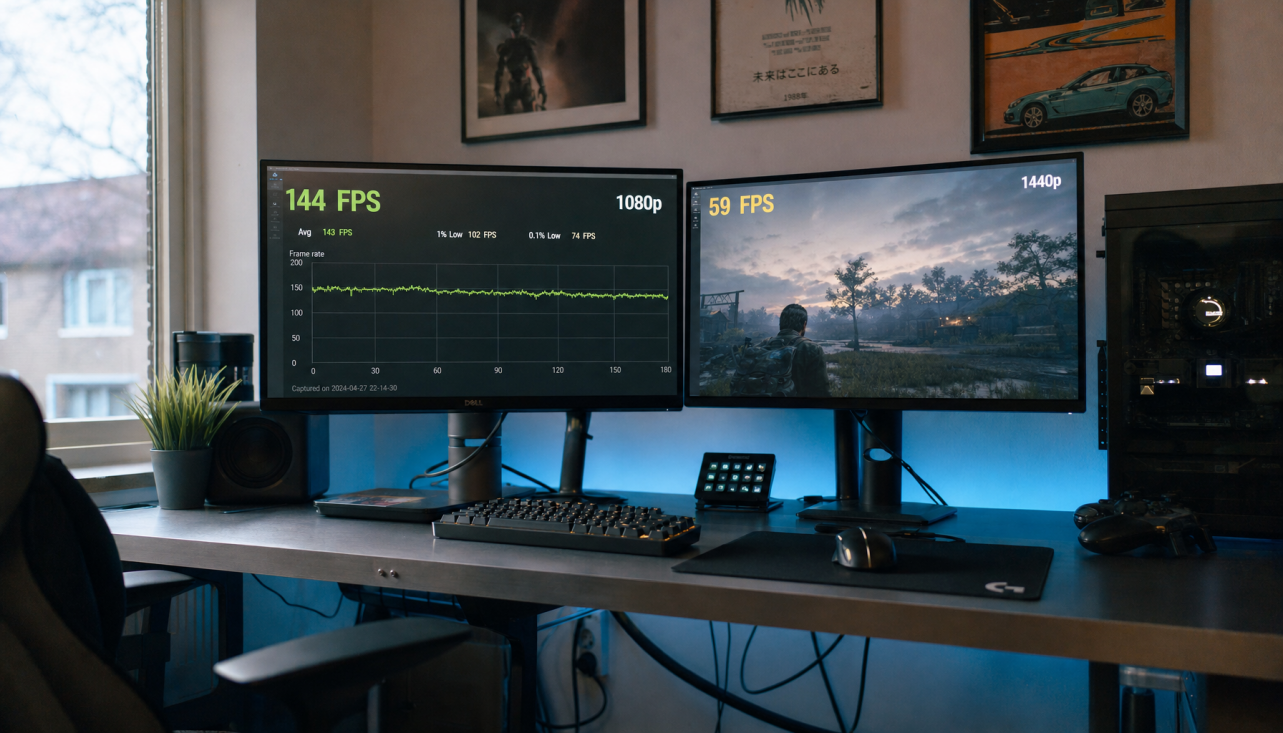
The heat risk comes from unlocked FPS. If a game menu or esports title runs at 300 FPS because there is no frame cap, the GPU may boost harder, draw more power, and create more heat. Adaptive Sync may still be active, but the heat is coming from the GPU chasing extra frames.
For a cleaner setup, cap FPS slightly below the monitor’s max refresh. For example:

- 120Hz monitor: cap around 117 FPS
- 144Hz monitor: cap around 141 FPS
- 165Hz monitor: cap around 162 FPS
- 240Hz monitor: cap around 237 FPS
This keeps gameplay inside the VRR range and avoids needless GPU load. Story-driven games especially benefit from VRR plus a small cap because stable pacing often matters more than raw frame count.
When It Can Feel Warmer
Some users may notice more heat after enabling Adaptive Sync because they also raise refresh rate, disable V-Sync, increase graphics settings, or remove an FPS cap. Those changes can push the GPU harder.
There is also a low-end VRR range nuance. Some monitors operate Adaptive Sync only within a range, such as roughly 48Hz to 144Hz, and behavior below that range can vary. In rare setups, especially with always-on VRR, users have reported blanking or instability when refresh drops below the monitor’s lower VRR limit in low frame rate conditions.
That is not a power-consumption problem, but it is a setup-quality issue worth watching across mixed desktop, browser, and gaming workloads.
Best Settings for Smoothness and Efficiency
For most gaming monitors, turn Adaptive Sync on, keep brightness reasonable, and cap FPS just under the panel’s refresh ceiling. This delivers the main benefit: smoother motion without forcing the GPU to render wasteful frames.
For office productivity, Adaptive Sync is rarely a power concern. Bigger battery or electricity savings usually come from lowering brightness, using sensible sleep settings, and avoiding unnecessarily high refresh rates for static work.

Bottom line: Adaptive Sync is not the heat problem. Uncapped FPS, high brightness, high-refresh operation, and demanding graphics settings are.