Dynamic contrast ratio is the single most important display specification for atmospheric walking simulators. These narrative-driven games use lighting, shadow, and environmental detail to tell their stories, and only monitors capable of deep blacks paired with bright, controlled highlights can deliver the intended mood and legibility. For most players in dim rooms, a high-zone Mini-LED such as the KTC M27P6 provides the best balance of contrast, brightness, and long-term reliability, while true blackout-room purists may prefer an OLED like the KTC G27P6 for zero blooming at the cost of lower peak brightness and burn-in considerations.

Defining the Role of Dynamic Contrast in Walking Simulators
Walking simulators, also known as atmospheric exploration games, prioritize environmental storytelling over combat or complex mechanics. As SteamDB's walking simulator tag page shows, the genre relies on visual cues—distant lanterns, subtle wall textures, fog layers, and silhouettes—to guide players and convey narrative. Refresh rate and input lag matter far less here than in competitive titles because gameplay unfolds slowly.
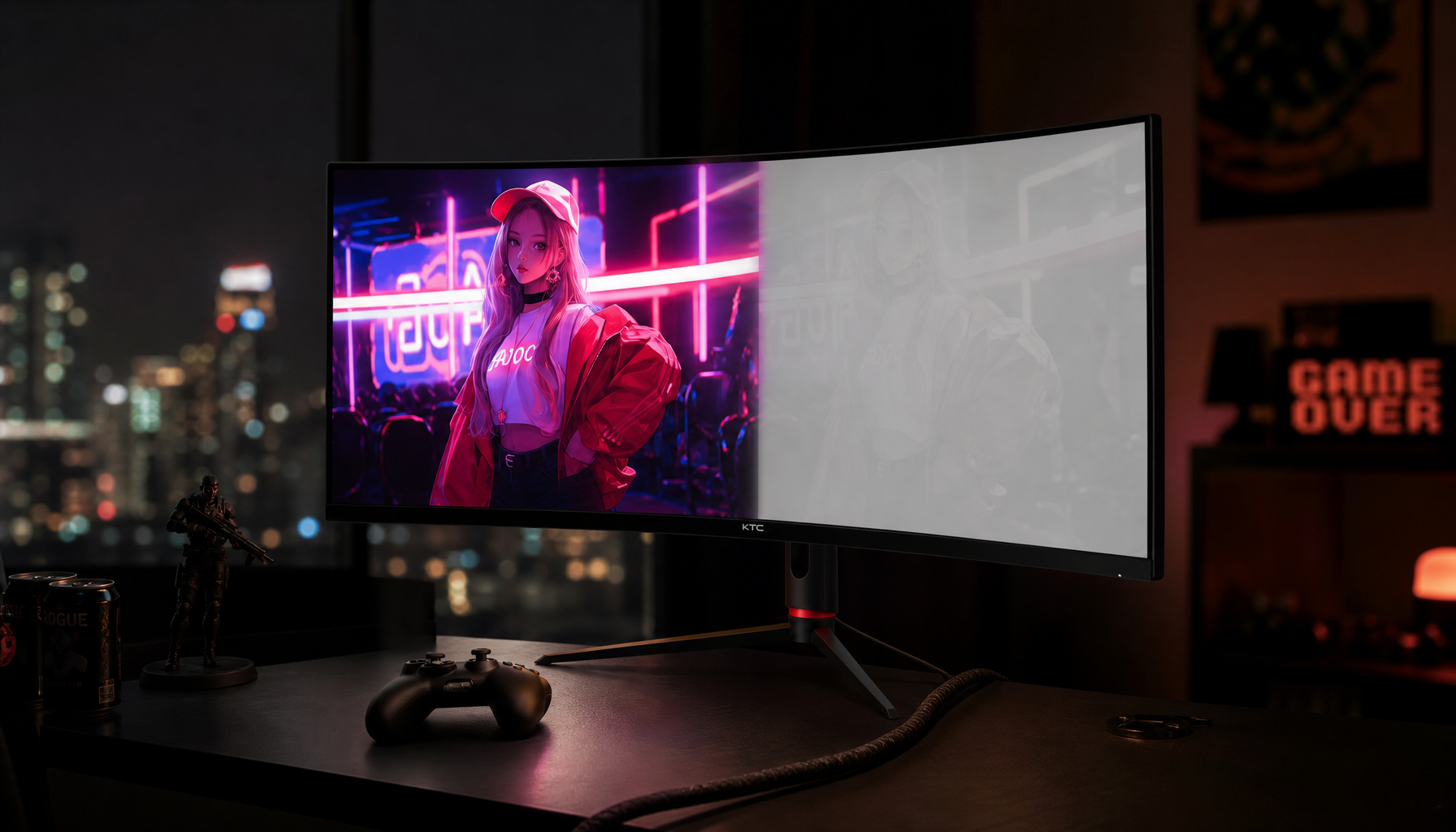
Standard LCD panels with roughly 1000:1 native contrast create a persistent “grey veil” over dark scenes. This haze flattens depth, hides narrative-critical details, and weakens the sense of presence developers intended. Dynamic contrast ratios of 500,000:1 or higher restore that depth by allowing true blacks alongside bright specular highlights. The result is a world that feels inhabited rather than backlit.
Immersion in this genre therefore depends on “presence” created by realistic light behavior. When blacks stay inky and highlights remain sharp without washing out surrounding shadow, the environment itself becomes the narrator. Players who spend dozens of hours in moody titles notice this difference immediately, often describing the upgraded display as “how the game was meant to be seen.”
How High Contrast Ratios Translate to Environmental Storytelling
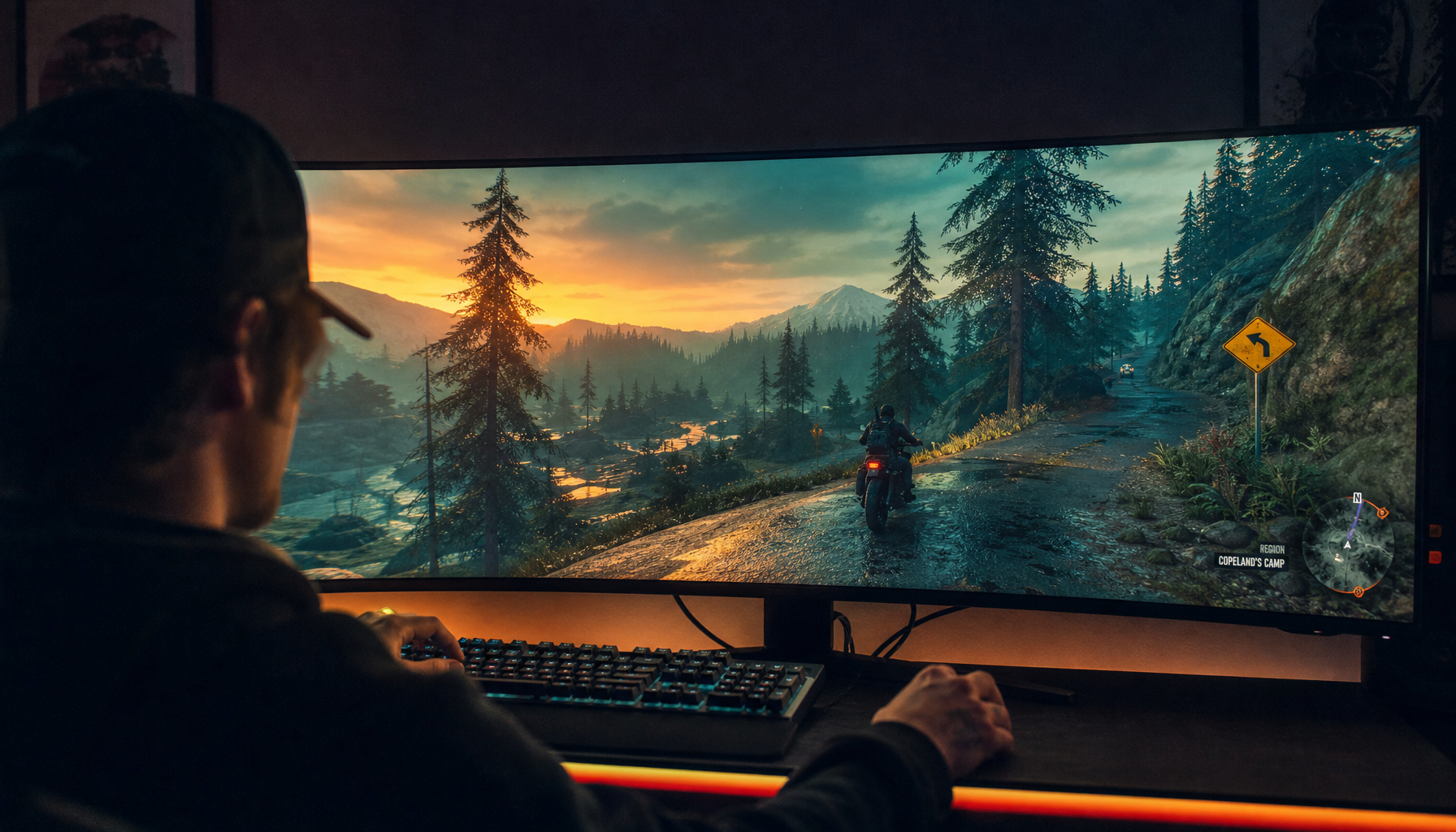
High dynamic contrast turns technical numbers into practical gameplay advantages. Bright beacons—lanterns, windows, or flashlight reflections—stay crisp and functional for navigation while the surrounding darkness retains texture instead of collapsing into uniform grey. This clarity directly supports the genre’s core loop of careful observation and slow discovery.
According to the VESA DisplayHDR 1400 specification, certified displays must achieve at least 500,000:1 dynamic contrast along with local dimming and high peak brightness. These requirements ensure complex effects such as layered fog, subtle scratches on walls, and distant silhouettes remain visible rather than disappearing into a muddy background. The KTC M27P6 meets this standard with 1152 local dimming zones, delivering the contrast performance needed for atmospheric titles.
In practice, this means environmental clues that standard panels obscure become legible. A faint glow behind a cracked door or the outline of a distant structure against night sky regains its storytelling power. The difference is not merely prettier graphics; it restores the developer’s intended pacing and emotional tone.

The insight from narrative game design is clear: when contrast falls short, players miss details that were deliberately placed to guide or unsettle them. High-contrast hardware therefore functions as both visual upgrade and functional navigation aid.
Mini-LED vs. OLED: Selecting Your Immersion Engine
Choosing between Mini-LED and OLED for walking simulators comes down to your room lighting and tolerance for specific trade-offs. OLED delivers infinite contrast because each pixel can turn completely off, producing zero blooming in total darkness. This makes it the preferred choice for “Blackout Cave” setups where any light halo around lanterns or UI elements would break immersion. However, OLED peak brightness typically sits lower than Mini-LED, which can make specular highlights feel less impactful when even modest ambient light is present.
High-zone Mini-LED, such as the KTC M27P6 with 1152 dimming zones, bridges much of the gap. In “Moody Den” environments that include a small bias light or dim lamp, blooming becomes far less noticeable while the panel’s higher peak brightness—often exceeding 1000 nits in HDR—creates stronger highlights and a more physical sense of light. Mini-LED also removes burn-in concerns for players who leave static HUD elements on screen or use the monitor for productivity between gaming sessions.
The chart below visualizes these typical patterns based on common room conditions.
Mini-LED vs. OLED for Atmospheric Walking Simulators
This chart highlights the likely fit under two common room setups. In a pitch-black room, OLED tends to better preserve deep blacks and avoid blooming, while Mini-LED can look brighter but may show more haloing around highlights. In a dim room with bias light, Mini-LED becomes more competitive because extra brightness can help specular detail stand out; OLED still keeps stronger black depth, but burn-in caution remains part of long-session use.
View chart data
| Scenario | Pitch Black | Dim with Bias Light | High | Medium | Low |
|---|---|---|---|---|---|
| Mini-LED | 2.0 | 1.0 | 3.0 | 2.0 | 1.0 |
| OLED | 1.0 | 2.0 | 2.0 | 3.0 | 2.0 |
Mini-LED blooming remains a technical reality in complete darkness even with high zone counts, though it is often mitigated enough in practice for most atmospheric play. OLED’s lower sustained brightness can feel limiting outside pure blackout conditions. For players who mix walking simulators with productivity work, the burn-in-free nature of Mini-LED adds practical peace of mind.
Our Mini-LED vs. OLED monitor comparison explores these technologies in greater depth, while the local dimming zones guide explains how zone count directly affects contrast performance.
Optimizing Your Display Settings for Narrative Immersion
Proper calibration prevents “black crush” that hides shadow detail and navigation cues. Use the official DisplayHDR test tools to align your monitor’s peak brightness and black levels with the game’s HDR output. This step is especially important for walking simulators where subtle gradients in fog or dimly lit interiors carry story information.
For Mini-LED models like the KTC M27P6, set local dimming to High or Standard to maximize dynamic contrast without excessive brightness pumping that could distract during quiet exploration. Avoid overly aggressive settings that introduce noticeable haloing around small light sources such as candles or distant windows.
Adding bias lighting—a dim lamp or LED strip behind the monitor—improves perceived contrast, reduces eye strain during long sessions, and helps mask minor blooming on Mini-LED panels. Many players report that even a 5 W warm light dramatically improves the experience in typical evening setups.
Consider resolution and refresh rate within the context of this genre. A 4K panel such as the M27P6 delivers sharper textures for close inspection, while 1440p options like the M27T6 still provide excellent visual fidelity at a lower price. Since these games rarely demand high frame rates, prioritize contrast, color volume, and panel technology over maximum refresh rate. Our HDR calibration guide and general monitor calibration steps offer practical checklists for fine-tuning.
If you want the strongest HDR performance for 4K atmospheric play, the KTC M27P6 27" 4K HDR1400 Mini-LED Gaming Monitor matches the technical requirements discussed. For pure black-level performance in completely dark rooms, explore options in the All-OLED Monitor collection. Budget-conscious buyers seeking solid contrast without full Mini-LED pricing can start with the broader Gaming Monitor collection and focus on models with strong HDR support.
What Display Should You Choose for Walking Simulator Immersion?
Match the technology to your actual room and habits rather than chasing the highest contrast number on paper. Pitch-black “cave” gamers who cannot tolerate any blooming should choose OLED and accept the brightness trade-off plus burn-in vigilance. Most players in real-world dim rooms benefit more from high-zone Mini-LED that delivers brighter highlights, burn-in-free longevity, and effective contrast once modest bias lighting is added.
Check your setup first: play for 30 minutes in your typical lighting with current display, note whether shadow detail feels crushed or highlights look flat, then decide which limitation bothers you more. That self-check usually points to the right hardware class faster than spec sheets alone. With the right contrast performance, atmospheric walking simulators stop being games you watch and become worlds you inhabit.