









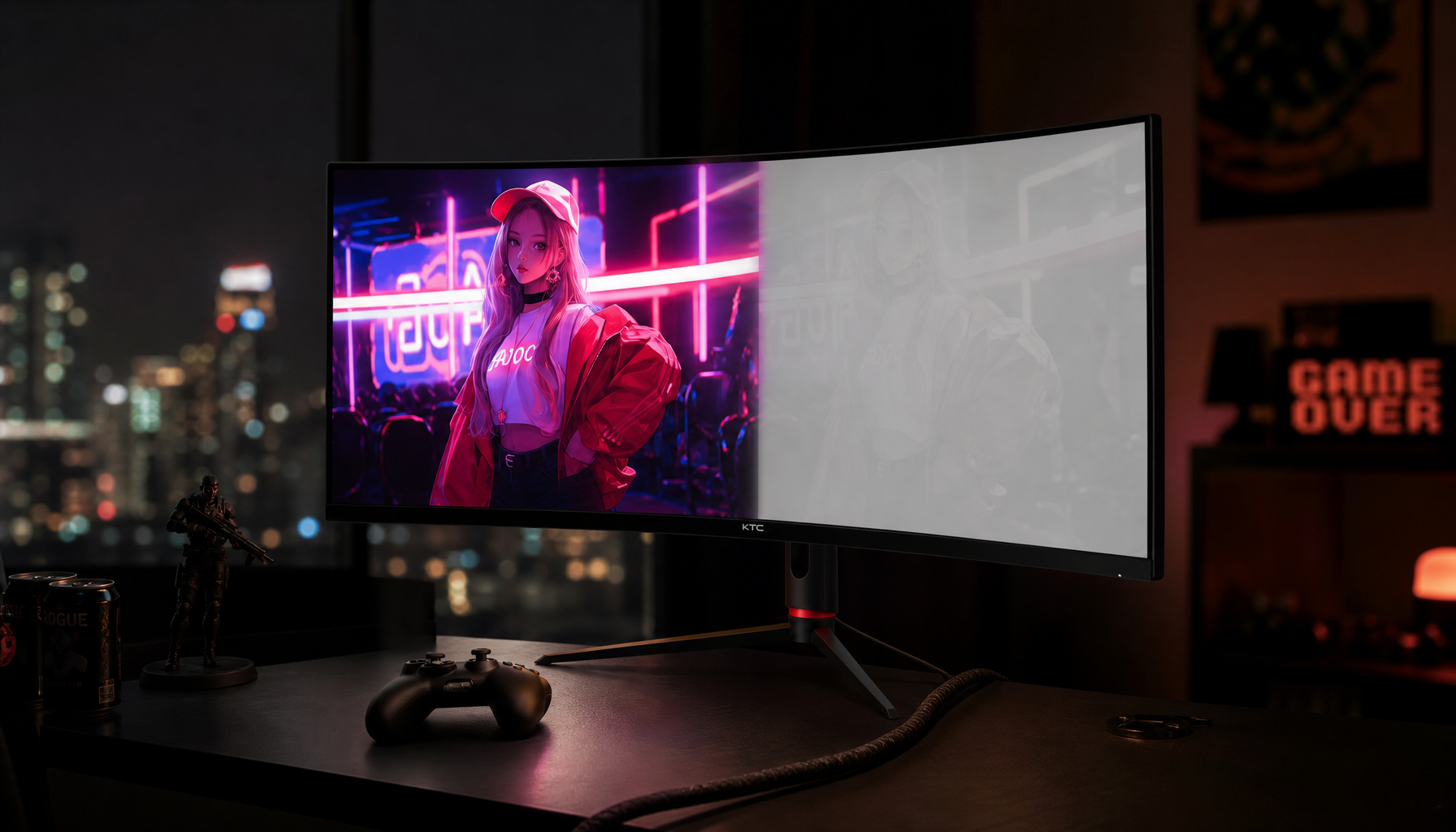
Most gaming monitors include a 'Game Mode' preset in their on-screen display (OSD), but the label rarely tells you exactly what changes under the hood. In practice, it often combines several adjustments—such as reduced post-processing to cut input lag, aggressive pixel overdrive to limit motion blur, black equalization to reveal shadow detail, and sometimes sharpened edges or altered gamma curves. Whether these changes help or hurt depends on the game genre you play, how much color accuracy you value, and whether you can tolerate occasional artifacts like overshoot or halos. For competitive FPS players who prioritize spotting enemies quickly, a well-tuned Game Mode can deliver a noticeable edge; for immersive RPGs or story-driven titles, Standard or Professional modes usually preserve better contrast and color fidelity without introducing distracting side effects.

What Does Game Mode Actually Do on a Monitor?
Game Mode is best understood as a bundled collection of technical tweaks rather than a single magical switch. On many panels it bypasses or shortens certain internal image-processing steps—such as extra scaling, sharpening filters, or color-correction buffers—that add small amounts of delay between the graphics card output and what appears on screen. The result is typically lower system latency, which competitive players notice as faster feel in aiming or reaction timing.
However, not every preset labeled "Game" performs this bypass. Some budget-oriented monitors simply apply a color profile with boosted saturation or contrast while leaving the full processing pipeline intact. As one long-running discussion on display behavior notes, some Game Mode options function more like picture presets and deliver no measurable reduction in input lag. This distinction matters: always check your specific monitor's behavior rather than assuming the label guarantees performance gains.
The practical takeaway is simple. If your current setup feels sluggish in fast-paced titles, test the Game or Instant Mode option and compare how responsive the crosshair feels. If colors look washed out or overly vivid afterward, the preset may have traded image quality for speed. This early check helps you decide whether the mode suits your playstyle before diving deeper into individual OSD sliders.
The Technical 'Recipe': Overdrive, Gamma, and Black Equalization
When you select a gaming preset, the monitor applies a specific "recipe" of adjustments. Three of the most common ingredients are overdrive, gamma curve changes, and black equalization.
Overdrive (sometimes labeled Response Time or OD) pushes pixels to change color faster than their native speed. This reduces the smearing known as ghosting during fast motion. Yet higher settings can overshoot their target color, creating inverse ghosting—bright glowing edges trailing moving objects. The DisplayNinja guide to monitor overdrive explains that moderate levels usually strike the best balance; extreme settings often create more distraction than they remove.
Black Equalization modifies the gamma curve, primarily in the darkest regions (roughly IRE 0-20%). Instead of simply raising overall brightness, it selectively lifts shadow detail so players can see enemies hiding in corners without washing out bright areas. Sony's official explanation of the gaming assist function clarifies that this is a targeted gamma shift rather than blanket brightness, which helps explain why it improves visibility in dark scenes without destroying overall contrast.
Many FPS-oriented presets also increase sharpness or apply edge enhancement. This can make outlines and hitboxes pop, but it frequently adds white halos around objects or makes textures look artificially crisp. The net effect feels great in competitive play but can fatigue the eyes during longer sessions.
These ingredients combine differently across brands and even firmware versions. KTC's high-refresh Fast IPS panels respond well to moderate overdrive paired with black equalization, yet the exact sweet spot varies by model and the content being displayed. Testing in your own games remains the most reliable way to judge the outcome.

Motion Clarity vs. Response Time: The 2026 Standard
For years, manufacturers advertised response time in gray-to-gray (GTG) milliseconds, but this metric often failed to capture real-world motion blur. In 2026 the industry has largely adopted the VESA ClearMR standard, which measures the ratio of clear image time versus blurred image time during motion. The official VESA announcement details how ClearMR provides a more useful benchmark for gamers comparing motion performance across displays.
High-refresh-rate panels like those in many current KTC monitors (180 Hz to 320 Hz) already reduce the duration each frame is held on screen, cutting sample-and-hold blur. When combined with appropriate overdrive, these panels deliver crisp motion in fast titles. However, variable refresh rate technologies such as G-Sync or FreeSync can interact unpredictably with fixed-voltage overdrive presets. In some cases enabling VRR slightly alters the overdrive behavior, requiring users to re-test their preferred OD level.
The practical decision rule is straightforward: prioritize ClearMR-rated performance and real gameplay testing over marketing GTG numbers. If you notice trailing or double images during panning, try lowering the overdrive one step rather than increasing it. This approach usually removes artifacts while preserving most of the motion clarity you paid for.
Genre-Specific Optimization: FPS vs. RPG vs. Racing
Different games stress different parts of the display pipeline, so the optimal OSD preset usually changes with the genre.
In competitive FPS titles such as Valorant or CS2, the priority is minimum input lag and high motion clarity to track fast-moving targets. Here a dedicated Game or Instant Mode often helps by bypassing unnecessary processing. Pair it with medium-to-high overdrive and a moderate black equalizer setting to reveal campers without crushing blacks. Many players also enable a subtle sharpness boost so enemy outlines remain distinct. However, if you notice glowing trails behind sprinting characters, drop the overdrive level immediately.
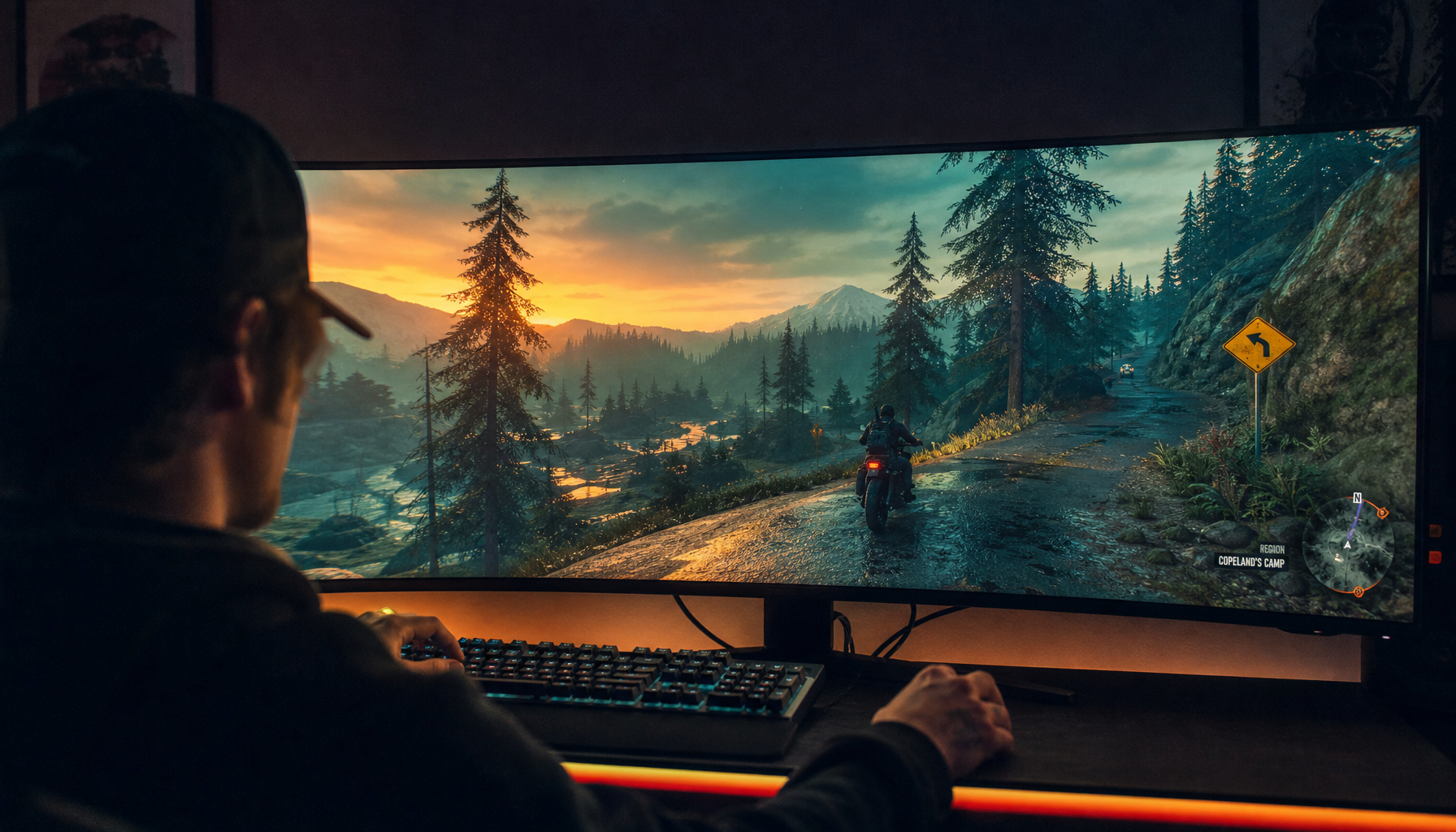
For immersive RPGs or single-player story games, color accuracy and contrast matter more than shaving every last millisecond. Professional, Standard, or a calibrated User mode typically delivers better gamma tracking and richer colors. These presets usually avoid aggressive overdrive, preserving natural motion without introducing halos or overshoot. Black equalization can still be useful at low levels to maintain shadow detail in dark dungeons or night scenes, but heavy application may flatten the intended cinematic look.
Racing games fall in the middle. They demand smooth motion during high-speed turns yet still benefit from accurate colors for judging distance and reading track markers. A balanced Game Mode or a custom profile with moderate overdrive and slight gamma adjustment often works best. Test how the car shadows and distant scenery behave when panning the camera; any visible artifacts quickly break immersion.
The chart below helps visualize these typical trade-offs. It uses relative tiers derived from common preset behavior and genre requirements rather than model-specific measurements. Lower input-lag scores are better; higher scores for the other three axes indicate stronger performance in that area.
OSD Preset Trade-offs by Gaming Genre
Relative performance tiers (1–5 scale) across common presets. Lower Input Lag score is better; higher scores for other categories are better. Use as a planning guide—actual results vary by monitor model and firmware.
Show Data Table
| Preset | Genre | Input Lag | Motion Clarity | Color Accuracy | Shadow Visibility |
|---|---|---|---|---|---|
| Game Mode | FPS | Low | High | Medium-Low | High |
| Game Mode | RPG | Medium | Medium | Medium | Medium-High |
| Game Mode | Racing | Low-Medium | High | Medium | Medium |
| Standard | FPS | Medium | Medium-High | Medium-High | Medium |
| Standard | RPG | Medium-High | Medium | High | High |
| Standard | Racing | Medium | Medium-High | High | Medium-High |
| Professional | FPS | Higher | Medium | Very High | High |
| Professional | RPG | Higher | Low-Medium | Very High | Very High |
| Professional | Racing | Medium-High | Medium | Very High | High |
Many users discover the "toggle tax"—the small but repeated effort of opening the OSD and cycling through presets when switching games. Monitors with a simple joystick or quick-access hotkey reduce this friction. If you frequently move between competitive and story-driven titles, investing a few minutes to create and save two or three custom User modes can eliminate most of the hassle.
Don't assume one preset fits every title. Using an aggressive Game Mode for a slow-paced narrative game often crushes shadow detail or adds unnecessary sharpening that distracts from the atmosphere. Conversely, a color-accurate Professional mode in a fast-paced shooter can hide enemies in dark corners and feel slightly less responsive. The right choice almost always depends on what you notice first when playing: missed shots due to blur, enemies hidden in shadow, or visual artifacts that pull you out of the experience.
How to Optimize Your KTC Monitor OSD for Peak Performance
Start with a clean baseline. Set the monitor to User or Professional mode, disable any dynamic contrast or ambient light sensors, and calibrate brightness and contrast using a known test pattern or in-game menu. This gives you a neutral starting point before layering gaming-specific tweaks.
Next, address motion. For most KTC Fast IPS panels, begin with Normal or Advanced overdrive and test in a fast-panning scene. If you see trailing, increase one level; if glowing edges appear, decrease it. The goal is the minimum overdrive that eliminates visible ghosting without introducing overshoot. Our guide on pixel overdrive and inverse ghosting walks through visual examples that help identify the right setting quickly.
For visibility in dark areas, enable Black Equalizer at a low-to-medium value. Raise it gradually while watching a dark scene until you can distinguish shapes without the overall image looking gray or flat. Combine this with a slight gamma adjustment if your model offers it.
KTC monitors usually feature a responsive joystick for OSD navigation. Learn the shortcut sequence for your model—many allow rapid switching between saved profiles once they are configured. Save one profile for competitive play and another for immersive titles to minimize the toggle tax.
If you own a high-refresh KTC model such as the H25Y7 300Hz vertical gaming monitor, take advantage of its 1 ms Fast IPS panel by pairing it with VRR and a moderate overdrive setting. The H27E6 300Hz 2K vertical monitor offers similar performance with added resolution headroom for sharper visuals in both competitive and story-driven games. For users on a slightly lower refresh target, the H27T6 200Hz 2K HDR gaming monitor provides a strong balance of speed, color, and built-in speakers.
Beyond individual monitors, explore the broader gaming monitor collection to match panel type and refresh rate to your typical genres. The 240Hz–400Hz monitors category is especially useful for competitive players who want maximum motion clarity.
Additional practical reading includes our articles on monitor ghosting solutions, the importance of 1 ms GTG for FPS, and sample-and-hold blur. Each breaks down one specific variable so you can isolate and solve the issue you actually notice during play.
Frequently Asked Questions
Does Game Mode always reduce input lag?
No. Only presets that bypass internal scaling and post-processing deliver meaningful latency reduction. Some manufacturers apply only color or sharpness changes under the Game Mode label, leaving latency unchanged. Test by comparing crosshair feel or using an external lag tester if available.
Should I use the highest overdrive setting for best motion clarity?
Usually not. Highest overdrive often introduces inverse ghosting or bright halos that are more distracting than moderate ghosting. Start in the middle and adjust based on what you see in actual gameplay rather than the OSD label.
Is Black Equalizer the same as increasing brightness?
No. Black Equalizer targets the gamma curve in shadow areas only, lifting detail without overexposing bright regions. Simple brightness increases affect the entire image and can wash out contrast or cause eye strain in dark rooms.
Can I leave one OSD preset active for all games?
You can, but you will likely sacrifice either responsiveness or visual fidelity in some titles. Most dedicated gamers maintain at least two profiles—one tuned for competitive speed and another for color accuracy—and switch when changing genres. The small effort pays off in better performance and enjoyment.
How does VESA ClearMR differ from traditional GTG response time?
ClearMR measures the actual proportion of clear versus blurred motion on screen, providing a more realistic gauge of perceived blur than GTG, which only captures one type of pixel transition. When comparing monitors in 2026, ClearMR ratings offer a stronger indicator of real-world motion handling.
What is the best starting point for KTC monitor calibration?
Begin in User or Professional mode with default brightness around 30–40%, contrast at 70–75%, and overdrive at Normal. Disable dynamic features, then fine-tune black equalization and sharpness while playing your most common game type. Save the profile so you can return to it quickly.


,%20but%20the%20label%20rarely%20tells%20you%20exactly%20what%20changes%20under%20the%20hood.%20In%20practice,%20it%20often%20combines%20several%20adjust...
)