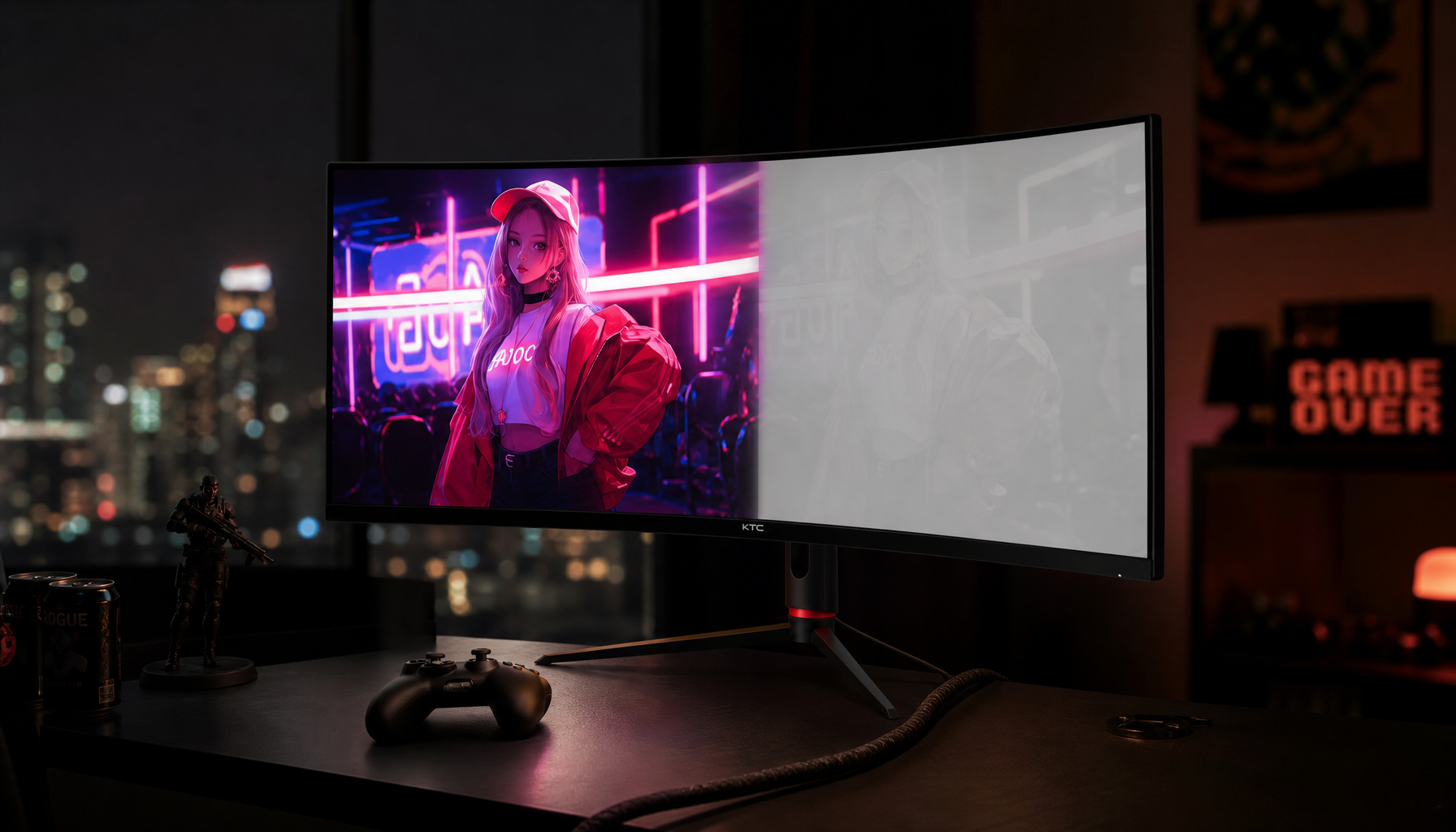
IPS glow is a soft gray haze that can appear near the corners of an IPS monitor during dark scenes, especially in dim rooms or at high brightness.
Why IPS Glow Happens
IPS panels use liquid crystals and a backlight to create the image. Because some light passes through the panel at wider viewing angles, dark areas can look brighter than intended, especially around the edges and corners.
That is why IPS glow changes when you move your head. A true panel defect like backlight bleed is more fixed in place, while IPS glow usually shifts in shape or intensity as your viewing angle changes.
For productivity, IPS remains a strong choice because it delivers stable color, wide viewing angles, and reliable text clarity. For dark-room immersion, the tradeoff is lower perceived contrast than VA or OLED.
How It Affects Dark Games and Movies
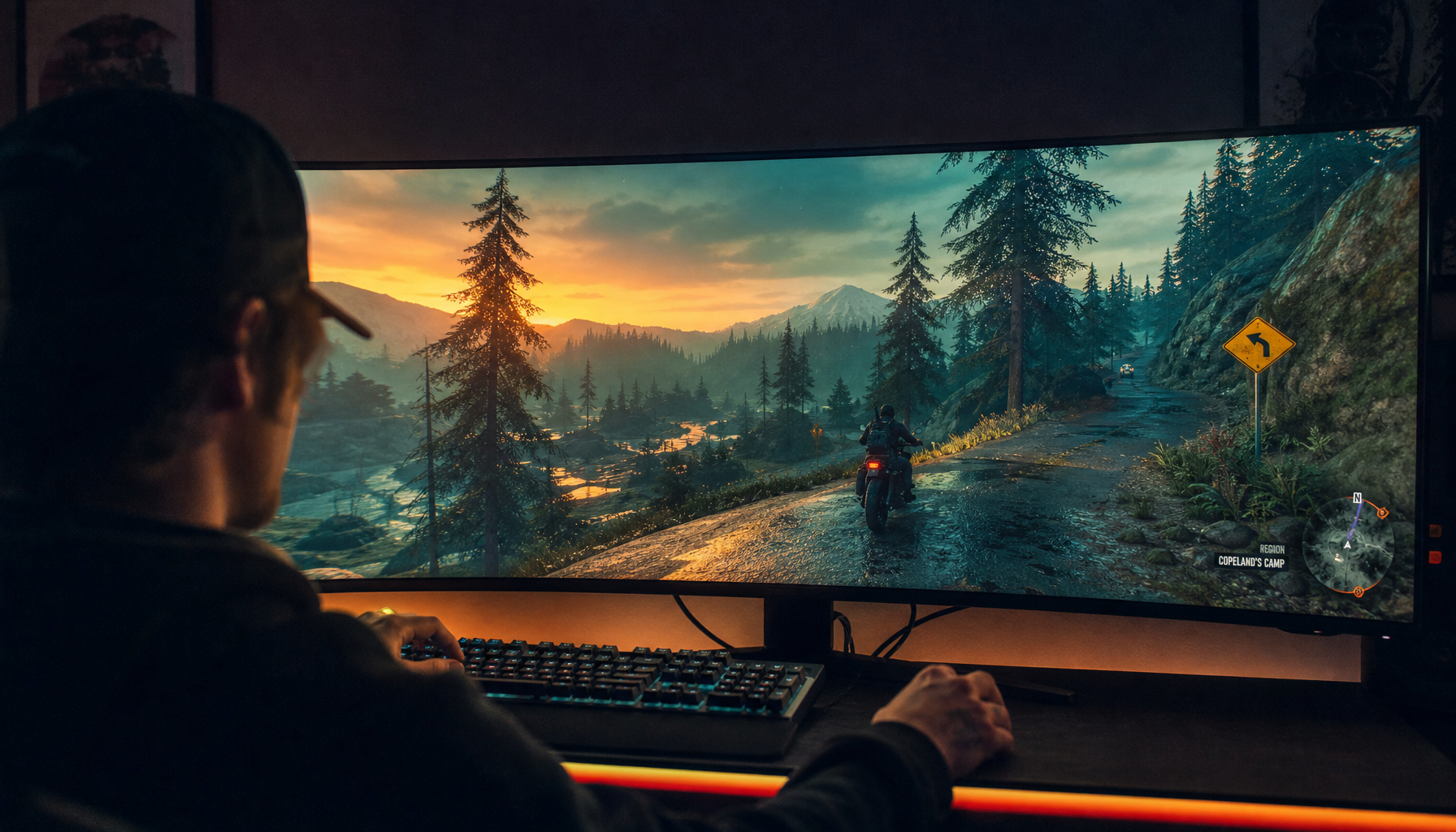
In bright desktop work, IPS glow may barely register. In a dark dungeon, space game, horror movie, or black loading screen, it can make corners look washed out instead of truly black.
The impact is stronger when you sit close to a large screen. A 32-inch monitor at a typical desk distance puts the corners farther off your direct line of sight than a 24- or 27-inch screen, so the glow can become more obvious.

Brightness matters too. Running an IPS monitor near maximum brightness in a dark room exaggerates haze and eye strain. A more practical setup is lower brightness, moderate ambient light, and a centered seating position.
IPS Glow vs Backlight Bleed
IPS glow is a normal optical behavior of IPS technology. Backlight bleed is usually caused by panel pressure, frame fit, or uneven light leakage around the edges.
A quick check:
- Move your head side to side: shifting haze suggests IPS glow.
- Lower brightness: both may improve, but bleed often remains in the same spot.
- View from the center: IPS glow usually looks less intense.
- Check normal use, not just a black screen at full brightness.
- Consider an exchange only if fixed bright patches disrupt real content.
Photos can exaggerate both issues because cameras gather more light than your eyes. Judge the display from your normal chair position, normal brightness, and actual dark content.
How to Reduce IPS Glow
Start with brightness. Lowering the backlight is the highest-value adjustment because glow is most visible when black content is competing with an overly bright panel.
Then tune your ergonomics. Keep your eyes near the vertical center of the screen, tilt the monitor slightly, and sit far enough back that the corners are not viewed from harsh angles.

Bias lighting helps more than many buyers expect. A soft light behind the monitor raises the room’s visual baseline, making corner haze less distracting without adding glare; ambient room lighting can also improve perceived comfort.

If dark visibility is the problem, adjust gamma before increasing brightness. Brightness lifts the whole image and can wash out blacks, while gamma can improve shadow detail in games without making the entire screen look gray.
Should You Avoid IPS?
Not automatically. IPS is still one of the best value choices for fast gaming, office productivity, creative work, and multi-use setups because it balances motion clarity, color consistency, and long-term reliability.
Choose VA if deep blacks matter more than speed. VA panels often deliver stronger contrast for dark rooms, though they can have slower pixel response and dark smearing; VA panels are often better suited to cinematic and horror gaming.
Choose OLED if you want true blacks and premium dark-scene immersion, and you accept higher cost plus burn-in considerations for static desktop use. OLED pixels can turn off individually, while IPS displays rely on a backlight.
The practical call: IPS glow is a real limitation, not a dealbreaker. Buy IPS for speed, color, and daily reliability; buy VA or OLED when dark-room contrast is the priority.