



A 4K monitor can display 1080p cleanly because 3840 x 2160 is exactly 2x 1920 x 1080 in both directions. The result depends on whether the display, GPU, cable path, and settings preserve that clean integer mapping or soften it with generic processing.
The Pixel Math Is Perfect, But the Processing May Not Be
On paper, 1080p should be easy for 4K. One 1080p pixel can become a neat 2 x 2 block of 4K pixels, so edges stay square and UI elements remain proportional.

That only happens when the scaling path respects the integer relationship. If the monitor’s internal scaler uses smoothing, overscan, sharpening, or TV-style image enhancement, 1080p can look softer than expected.
This is why two 4K screens with the same resolution can behave differently. A purpose-built monitor may preserve PC signals cleanly, while a TV-like display may process the image for video first and desktop clarity second.
Monitor Scalers, GPU Scaling, and 1080p Mode Are Different
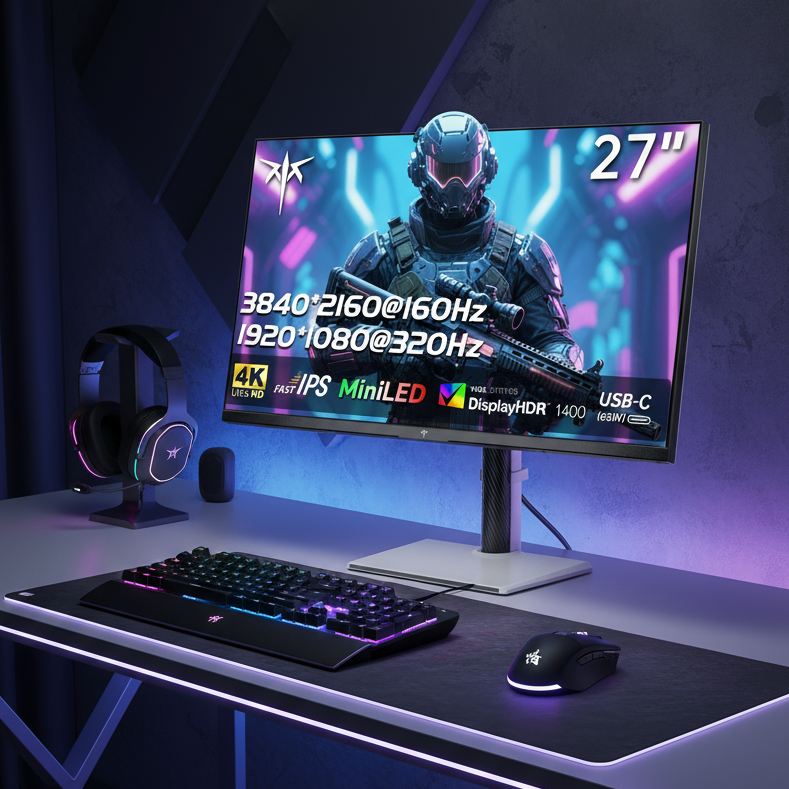
Some 4K gaming monitors include dual-mode behavior: 4K for sharp visuals and 1080p for ultra-high-refresh esports. That is different from simply feeding any 4K panel a 1080p signal and hoping it looks right.
A proper dual-mode panel is designed around the lower-resolution mode. For example, current high-end gaming options often advertise 4K at high refresh plus 1080p at much higher refresh for competitive play; dual-mode operation is a real feature, not just a resolution dropdown.
If your monitor lacks that feature, try GPU scaling. Modern graphics drivers can scale 1080p before sending a 4K signal, which sometimes looks better than relying on the monitor’s scaler.

Quick checks:
- Use integer scaling if your GPU offers it.
- Disable overscan, noise reduction, and dynamic picture modes.
- Select PC mode or Game mode on TV-style displays.
- Compare GPU scaling with display scaling.
- Use native 4K for desktop work when possible.
Bandwidth and Refresh Rate Can Change the Result
A 4K display is not only about pixel count. The signal also includes refresh rate, color format, and bandwidth demands.
For smooth desktop use, 4K at 60 Hz is the practical baseline. HDMI 2.0 is commonly recommended because it supports 4K resolution at 60 Hz, while older HDMI paths may fall back to 30 Hz or lower-quality formats.
That matters because a bandwidth-limited chain can force compromises: reduced refresh rate, chroma subsampling, or unexpected scaling behavior. Text is especially sensitive, so office users may notice color fringing or fuzzy letters before gamers notice anything wrong.

A 1080p game may look fine on the same screen where a 1080p desktop looks poor, because moving 3D content hides scaling softness better than small fonts and spreadsheet lines.
Size, Viewing Distance, and Use Case Decide Whether It Feels Good
A 27-inch 4K monitor makes 1080p scaling more forgiving because pixels are physically smaller. A 43-inch or 55-inch 4K screen exposes scaling flaws more easily, especially at desk distance.

For productivity, native 4K remains the sharper choice. Large digital displays often require true 3840 x 2160 assets because high-resolution screens reveal low-resolution content quickly; signage specs commonly ask for at least 3840 x 2160 pixels.
For gaming, the decision is different. Competitive players often accept 1080p because high frame rates and low latency can matter more than pixel density, while immersive players benefit from 4K detail if the GPU can sustain it. A strong 4K monitor should match your hardware, since modern gaming advice still weighs refresh rate, response time, and GPU capability alongside resolution; gaming monitor choices often start with the game type and performance target.
How to Pick a 4K Monitor That Handles 1080p Well
Look for explicit support for integer scaling, 1:1 scaling, aspect scaling, or dual-mode 1080p high refresh. These terms signal that the manufacturer expects users to run lower resolutions intentionally.
For office work, prioritize clean text handling, PC mode, DisplayPort or HDMI 2.0/2.1, and native 4K sharpness. For gaming, prioritize refresh rate, response time, adaptive sync, and whether 1080p mode is designed for speed rather than merely tolerated.
The best value move is simple: buy 4K for clarity, but verify the lower-resolution behavior before you depend on it. A great 4K monitor should support both modes: crisp native detail for work and media, plus controlled 1080p scaling when performance matters.