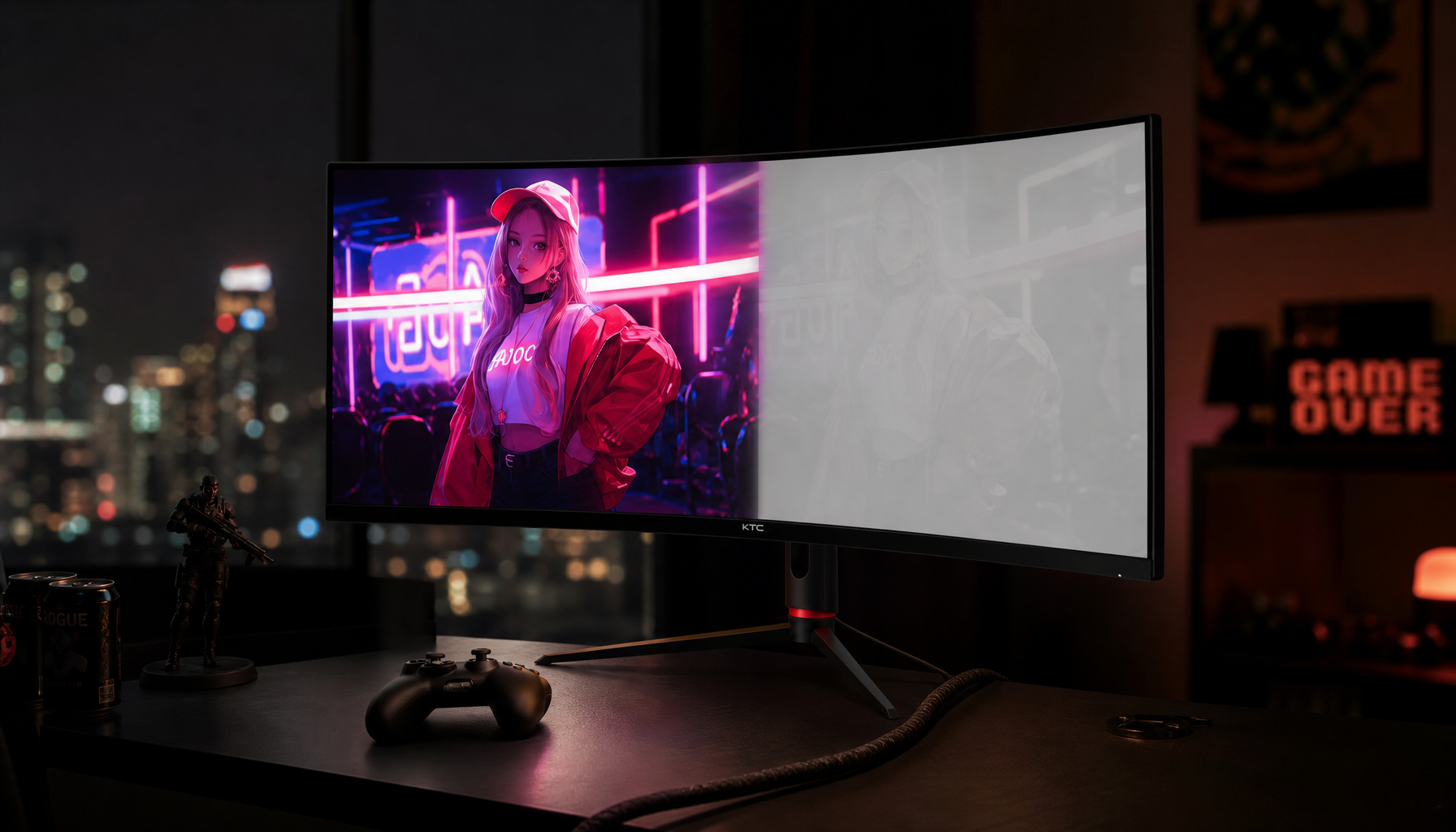
IPS panels show glow because a backlight sits behind the LCD layer, and some of that light leaks through instead of being fully blocked. In dark scenes, that leaked light appears as gray haze, corner glow, or uneven black levels.
IPS Glow Is a Panel Trait, Not Always a Defect
IPS stands for in-plane switching, an LCD panel type valued for color stability, wide viewing angles, and clear desktop readability. That is why IPS remains popular for gaming, creative work, and office productivity, even when darker scenes expose its weakness.
The tradeoff is black depth. Unlike self-emissive displays, an IPS monitor cannot turn off each pixel completely; it has to filter a constantly lit backlight. When the panel is showing black, some light still passes through, making dark areas look charcoal instead of truly black.
This glow often appears near corners because your viewing angle to those areas is more extreme than your angle to the center. On a 27-inch monitor viewed from about 2 ft away, the corners are already off-axis enough for haze to become visible.

Backlight Bleed vs. IPS Glow
IPS glow and backlight bleed are easy to confuse, but they behave differently. IPS glow usually shifts as you move your head, change distance, or adjust tilt.
Backlight bleed is more mechanical. It comes from uneven panel pressure, bezel fit, or layer alignment, and it tends to stay fixed in the same spot. Backlight bleed is most often seen along edges or corners as brighter leakage, clouding, or flashlight-like patches.

A quick test helps:
- Lower brightness to a normal level, not maximum.
- Open a black image in a dim room, not total darkness.
- Move your head left, right, up, and down.
- If the haze changes, it is likely IPS glow.
- If the bright patch stays locked in place, it may be bleed.
Why Dark Rooms Make It Look Worse
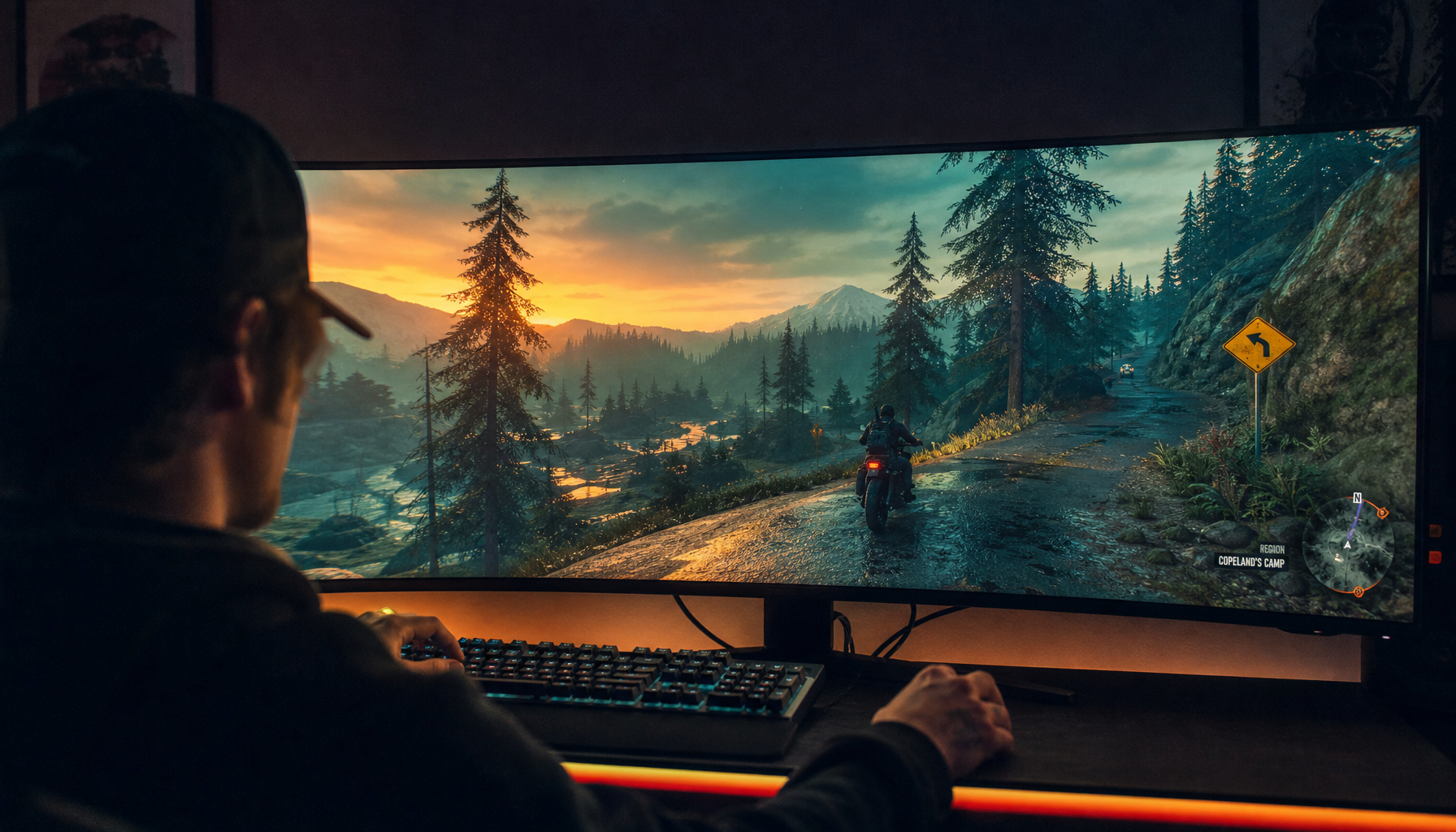
IPS glow is most visible when dark content, high brightness, and low room light happen together. In that setup, the monitor becomes the brightest object in your field of view, so every uneven patch stands out.
This is why a monitor can look excellent in an office at 2:00 PM and disappointing in a dark game at midnight. The panel did not suddenly get worse; your visual environment changed.
Camera photos can also exaggerate the issue. Long exposure, auto-brightening, and pitch-black test rooms can make normal glow look severe. Judge the screen from your actual seating position, at your actual brightness, with the room lighting you normally use.
Two units of the same model can show different glow or bleed levels because panel pressure and manufacturing tolerances vary.
How to Reduce the Glow Without Killing Image Quality
Start with brightness. Many IPS monitors ship far too bright for dark rooms, and lowering the backlight can immediately reduce haze while improving eye comfort.
Then tune the setup, not just the settings. A small bias light behind the monitor raises perceived room brightness, making black-level flaws less obvious without washing out the image. Better tilt and eye-level positioning also reduce corner angle stress.

Try these practical fixes:
- Use moderate brightness for evening gaming.
- Add soft bias lighting behind the display.
- Keep your eyes near the screen centerline.
- Sit slightly farther back on larger panels.
- Use in-game gamma before raising monitor brightness.
For competitive gaming, IPS still offers a strong mix of speed, color, and viewing consistency. For dark-room cinematic play, VA or self-emissive displays may deliver deeper blacks, while IPS remains a reliable all-rounder for fast gaming, productivity, and color-rich everyday work.