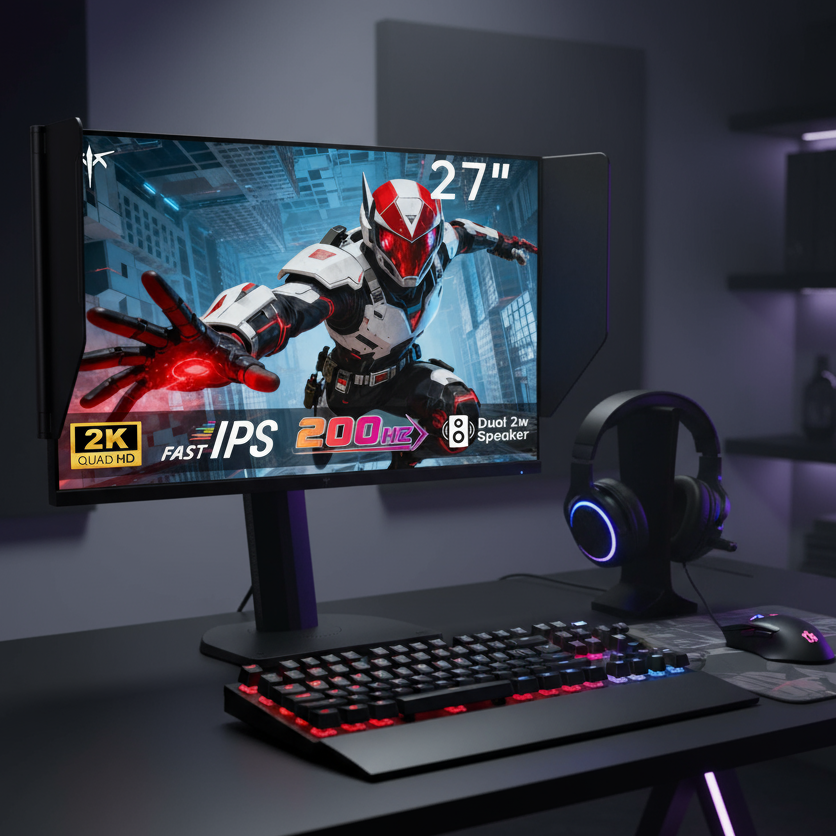
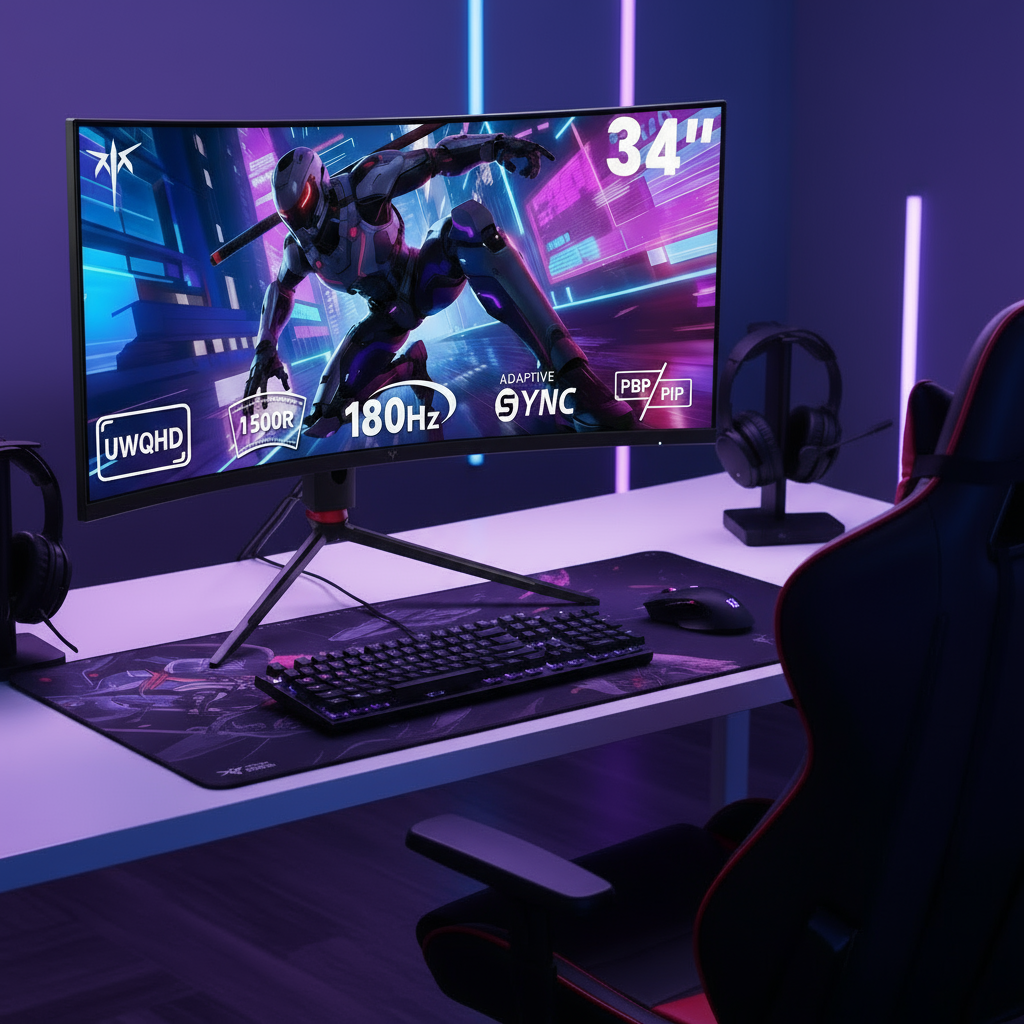




IPS panels often need more backlight because lower native contrast and IPS glow make dark areas look lighter, reducing the visual pop your eyes read as brightness. VA panels block more light in dark scenes, so the same measured luminance can feel richer and brighter in real use.
Contrast Changes How Brightness Feels
Brightness is measured in nits, but perceived brightness is shaped by contrast. A white window at 250 nits looks more vivid when the surrounding blacks are truly dark.

That is where VA has a built-in advantage. Standard IPS monitors usually have far lower native contrast than typical VA panels; one set of IPS contrast testing measured non-Mini LED, non-high-contrast IPS displays at about 1,113:1, while typical VA panels sit around 3,000:1.
In practice, a VA panel can make a spreadsheet, game HUD, or movie highlight feel punchier without pushing the backlight as hard. IPS may need a higher brightness setting to create the same subjective separation between light and dark elements.
IPS Lets More Dark-Scene Light Escape
IPS is excellent for color stability and wide viewing angles, but it struggles to keep black pixels as dark as VA. The result is raised blacks, especially in dim rooms.
This is why two monitors can both be set to 200 nits, yet the VA model feels deeper and more luminous. The VA screen is not necessarily brighter; it is wasting less light into the black parts of the image.
IPS glow makes this more visible. It appears as a gray haze near corners or edges during dark scenes, and it becomes more obvious at higher brightness, close desk distances, and wide viewing angles, as described in this IPS glow explanation.

Panel quality, coating, local dimming, and newer high-contrast IPS variants can narrow the gap, so this is a typical trend, not a rule for every monitor.
Backlight Intensity Is Not the Same as Image Impact
A monitor’s backlight is the engine. The LCD layer is the gate. IPS and VA simply manage that gate differently.
VA liquid crystals are better at blocking the backlight when the image calls for black or near-black. IPS tends to maintain more consistent color and viewing angles, but its weaker black control means the backlight can lift the whole image floor.
That tradeoff matters by use case. Competitive gamers may still prefer IPS for speed and viewing consistency, even if it needs more brightness. Dark-room gamers may prefer VA because deeper blacks make scenes feel more immersive. Office users often benefit from IPS text clarity, color stability, and shared viewing angles. On portable screens, higher IPS backlight settings can also drain the battery faster.

For a quick example, imagine two 27-inch monitors in a dim room. If both peak at 250 nits, the VA panel’s darker blacks may make white text and UI edges look more defined. To get similar punch from the IPS screen, you might raise it to 280 or 300 nits, even though that can increase glow.
How to Tune IPS Without Overdriving It
The goal is not always more brightness. It is usable brightness with clean contrast.
Start with a sensible SDR target. For color-conscious work, 120 nits is a common calibration reference, and IPS calibration workflows often recommend letting the display warm up first so the backlight stabilizes before adjusting brightness and white balance.

For gaming or mixed use, tune by room:
- Bright office: raise brightness enough to reduce reflections.
- Dim room: lower brightness before judging black levels.
- Dark games: adjust gamma before pushing the backlight.
- Large IPS screens: sit centered to reduce corner glow.
- Long work sessions: use bias lighting instead of maximum brightness.
The Buying Takeaway
Choose IPS when you want reliable color, fast response, sharp productivity performance, and strong off-angle viewing. Choose VA when deeper blacks and high perceived contrast matter more, especially for movies, atmospheric games, and dark-room immersion.
The smarter value move is not chasing the highest nit number. It is matching panel behavior to your room, content, and workload, then setting brightness so the screen feels clear without washing out the experience.