









Printed color and screen color never match perfectly because a display emits RGB light while paper reflects ink, toner, and surrounding light. Calibration narrows the gap, but proofing, ICC profiles, paper choice, and realistic brightness targets decide how close the final result gets.
Does your photo look clean, vivid, and balanced on a calibrated monitor, then come back from the printer darker, flatter, or slightly green in the grays? A disciplined color workflow can reduce wasted reprints, protect key colors, and make each proof more predictable before money goes into a full run. Here is how to understand the mismatch and build a workflow that gets print and display close enough to trust.
The Core Mismatch: Screens Glow, Paper Reflects
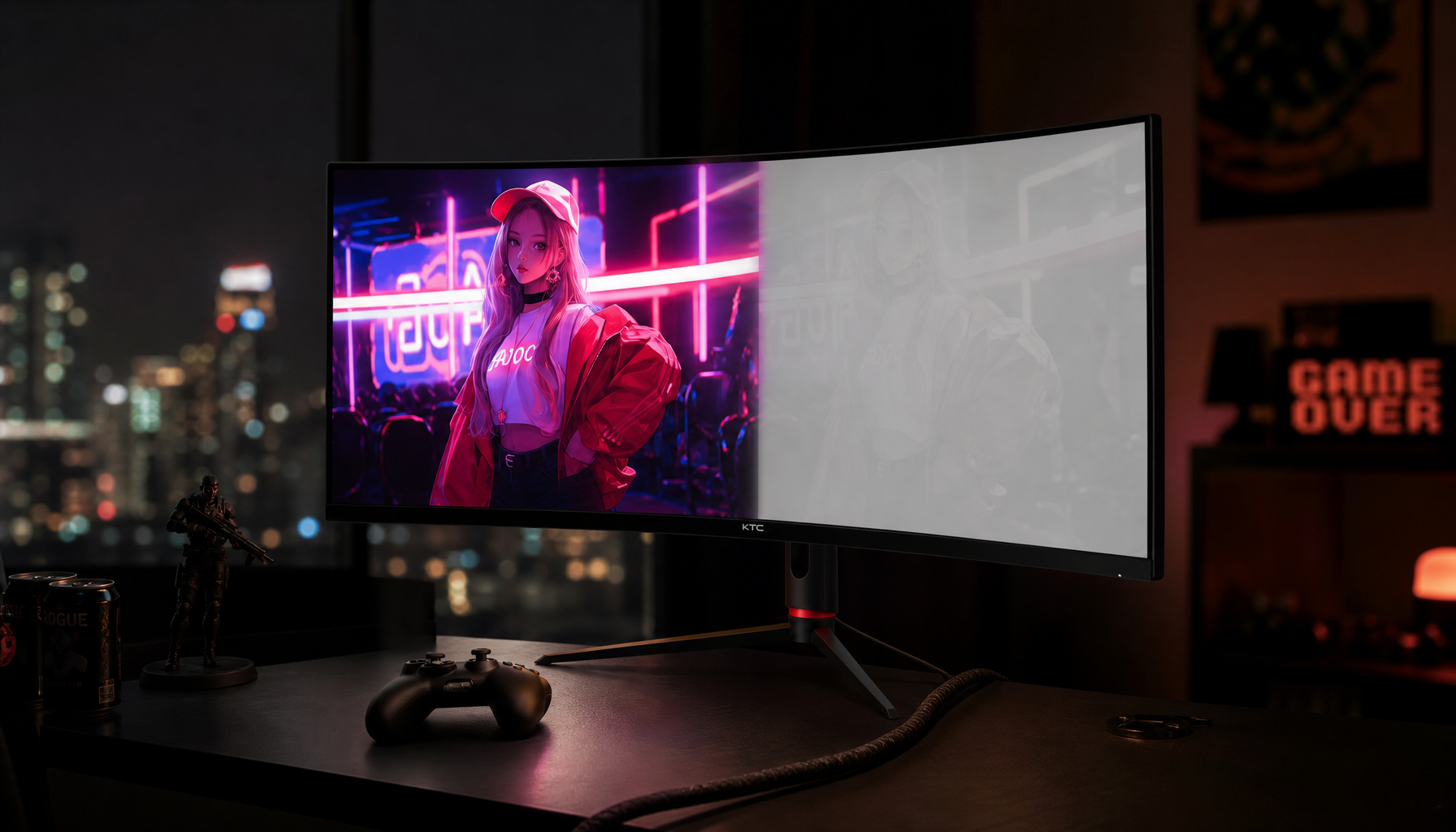
A calibrated display is still a light source. It builds color with red, green, and blue light, so bright blues, electric greens, and punchy reds can look alive in a way ink simply cannot reproduce. Print works differently: cyan, magenta, yellow, and black ink or toner absorb and reflect light from the room, which is why printed colors look duller than the same file on a backlit screen.

That difference becomes obvious with high-saturation artwork. A neon green game logo may glow on a 27-inch wide-gamut monitor, especially if brightness is set high, but the same color can collapse into a more muted green on matte paper. This is not a failure of calibration. It is a physical limit of the output medium.
Calibration Makes the Display Honest, Not Magical
Monitor calibration adjusts the screen toward known targets for white point, gamma, and brightness, then profiling records how that monitor behaves so color-managed apps can interpret files correctly. A calibrated display can stop you from editing against a screen that is too blue, too bright, or too contrasty, but it cannot force CMYK ink to reproduce every RGB color.
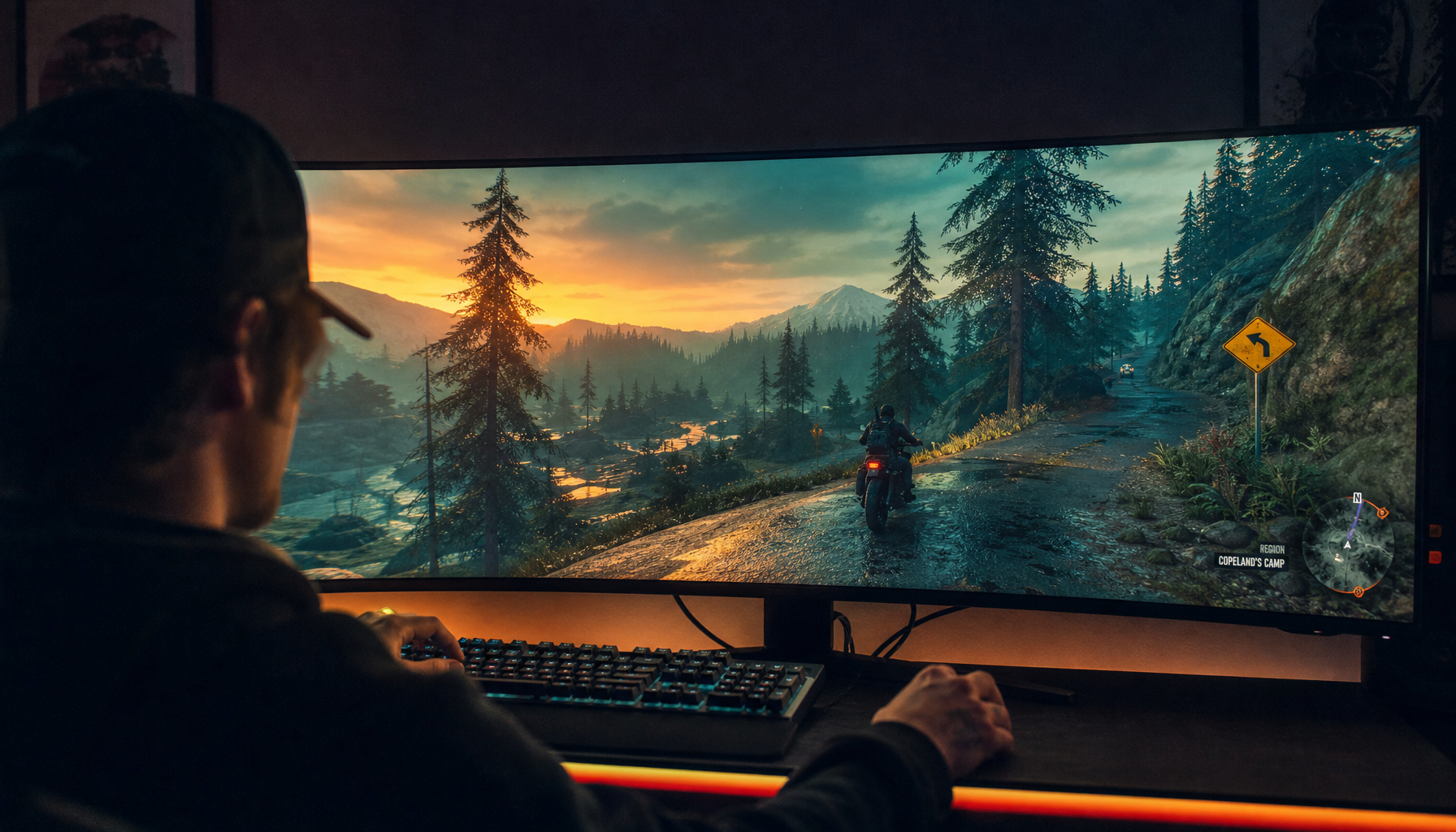
For most display-to-print workflows, a practical starting point is gamma 2.2, a controlled white point, and brightness near 80 to 120 cd/m² for dimmer print-viewing rooms. Many creators leave gaming or office monitors at 250 to 400 nits because it feels immersive and crisp; that makes prints look disappointing because paper can never compete with a glowing panel. Before calibration, warm the display for about 20 to 30 minutes and turn off dynamic contrast, eco modes, low-blue-light modes, and vivid game presets.
The performance metric worth watching is Delta E, often written as ΔE. It measures visible color error between a target and what the display actually shows; for professional SDR work, average dE2000 under 2 is a strong baseline, while under 1 is preferred for critical proofing. The catch is that an average number can hide a bad gray ramp, weak deep blues, or a red cast in shadows, so calibration reports should be treated as evidence, not decoration.
RGB, CMYK, Spot Colors, and Gamut in Plain English
RGB is the screen model. It uses red, green, and blue light for monitors, cell phones, apps, websites, PDFs, and digital ads. CMYK is the print model. It uses cyan, magenta, yellow, and black ink for brochures, posters, packaging, flyers, and many office print jobs.
Gamut means the range of colors a device can reproduce. A gaming monitor, creative display, or portable smart screen may cover standard RGB or wider RGB color spaces, while a printer has its own ink-and-paper gamut. Since RGB has a broader color gamut than many CMYK print conditions, some screen colors must be compressed into printable alternatives.
Spot colors work differently. Instead of relying only on CMYK process inks, they use standardized premixed colors. That can improve consistency for logos, packaging, and color-critical assets, although the final result still depends on material, ink, coating, and lighting.
Color system |
Best use |
Main advantage |
Main limitation |
RGB |
Screens, web, apps, video, digital ads |
Bright, wide, flexible color |
Can show colors print cannot reproduce |
CMYK |
General print production |
Built for ink or toner output |
Narrower gamut than many screens |
Spot colors |
Color-critical and spot-color printing |
More predictable named colors |
Still shift with substrate and finish |
ICC profiles |
Managed screen-to-print workflows |
Describe device behavior |
Work well only when apps and devices honor them |
Paper, Ink, and Lighting Change the Result
The same file can print differently on glossy photo paper, matte fine-art paper, coated brochure stock, uncoated office paper, or fabric. Glossy stock often looks deeper and more saturated because it reflects light differently, while matte paper can soften contrast and reduce perceived density. A black T-shirt, white card stock, and textured poster paper will not make the same ink look identical.
Paper choice matters so much that serious printer and paper makers provide ICC profiles for specific printer, ink, and paper combinations. A monitor-to-printer workflow depends on correct ICC profiles for both display and output, plus color-managed image-editing and layout software.
Lighting is the quiet variable that ruins many comparisons. A print viewed under warm home lighting will look different from one viewed near a daylight-balanced lamp or under fluorescent office lights. For print evaluation, use consistent, moderate lighting and avoid direct sun on either the monitor or the print.
Why a Calibrated Monitor Still Produces Surprises
A calibrated monitor can still mislead you if it is calibrated for the wrong job. D65 is common for general screen work, while D50 is often used in print-focused workflows because it better aligns with print-viewing conditions. A monitor set for punchy gaming, HDR entertainment, or bright office productivity may be excellent for immersion but poor for judging paper output.
Wide-gamut displays add another layer. Wide-gamut RGB spaces can be useful for print-oriented photography because they cover greens and cyans that matter in many print workflows. Screen-first wide-gamut spaces are excellent for modern displays and media delivery, but they are not automatically the same as a print workflow. A reliable creative monitor should offer accurate sRGB, wide-gamut modes when needed, uniform brightness, and stable calibration behavior.

Hardware calibration is the stronger route when color affects client approval, product photography, packaging, or paid print work. Software calibration through the operating system is better than guessing by eye, but hardware tools with a colorimeter or spectrophotometer produce more repeatable results. Professional monitor lines may also store corrections inside the display’s own LUT, which helps maintain accuracy across computers.
The Practical Workflow That Gets You Closer
Start by deciding the destination before editing. If the asset is for a website, esports overlay, office presentation, or portable-screen demo, work in RGB and export with an embedded sRGB profile unless the delivery spec says otherwise. If the asset is for print, design with print limits in mind from the beginning, because late RGB-to-CMYK conversion can turn electric blue into a subdued navy or make neon green lose intensity.
Next, calibrate the monitor under the same lighting where you judge color. Use a neutral desktop background, avoid colorful walls or strong reflections, and set brightness realistically. If you edit a portrait at maximum brightness in a sunny room, then evaluate the print under a desk lamp at night, the print is almost guaranteed to feel wrong.
Then use the printer’s ICC profile and soft proof the file in a color-managed app. Soft proofing previews how the file is likely to change on a specific printer and paper combination. It is not a perfect prophecy, but it shows out-of-gamut colors and helps you adjust saturation, contrast, and black point before printing.
Finally, make a physical proof. A single test print is cheaper than a full batch of posters, catalogs, or product inserts. Print professionals often recommend proofing on the actual output device because a test copy before full production catches file, profile, driver, paper, and lighting issues early.

Pros and Cons of Chasing a Perfect Match
The upside is obvious: better print predictability, fewer rejected proofs, cleaner color consistency, and more confidence when delivering client-facing work. For photographers, designers, and product teams, a measured display workflow saves time because decisions are based on repeatable color rather than mood, memory, or monitor showroom settings.
The downside is that precision costs time and money. Hardware calibration kits can range from entry-level tools to professional packages, and every paper, printer, ink set, and lighting condition adds another variable. There is also a point of diminishing returns: an office flyer does not need the same process as a fine-art print or national retail packaging.
The right standard is not a perfect match. It is controlled expectation. If the calibrated display, soft proof, and physical proof all agree closely enough for the job, the workflow is working.
FAQ
Should I use a gaming monitor for print work?
You can, if it has a trustworthy sRGB mode, stable brightness, good uniformity, and hardware-measured accuracy. High refresh rate and fast response time help games feel fluid, but for print approval, color accuracy, gamut control, and calibration stability matter more.
Why does my print look too dark?
The most common cause is a monitor set too bright. If you edit on a glowing screen, you may darken shadows and reduce exposure until the image looks good on the display, then the paper version lacks light. Lower monitor brightness to a realistic print-editing target and compare under consistent lighting.
Do portable smart screens work for color proofing?
They are useful for mobile review, client previews, and second-screen workflows, but treat them cautiously for final color. Prioritize models with a usable sRGB mode, stated color-space support, and measured calibration options rather than a vivid default image.
The Reliable Color Mindset
A calibrated display is the cockpit, not the finish line. Trust it for controlled editing, use ICC profiles to translate between devices, and verify with a real proof on the actual paper or material. That is how a high-performance screen setup becomes a reliable print decision system instead of just a beautiful place to be surprised.


%20while%20paper%20reflects%20ink%20(CMYK).%20Attain%20closer%20results%20with%20proper%20calibration,%20ICC%20profiles,%20and%20proofing.
)