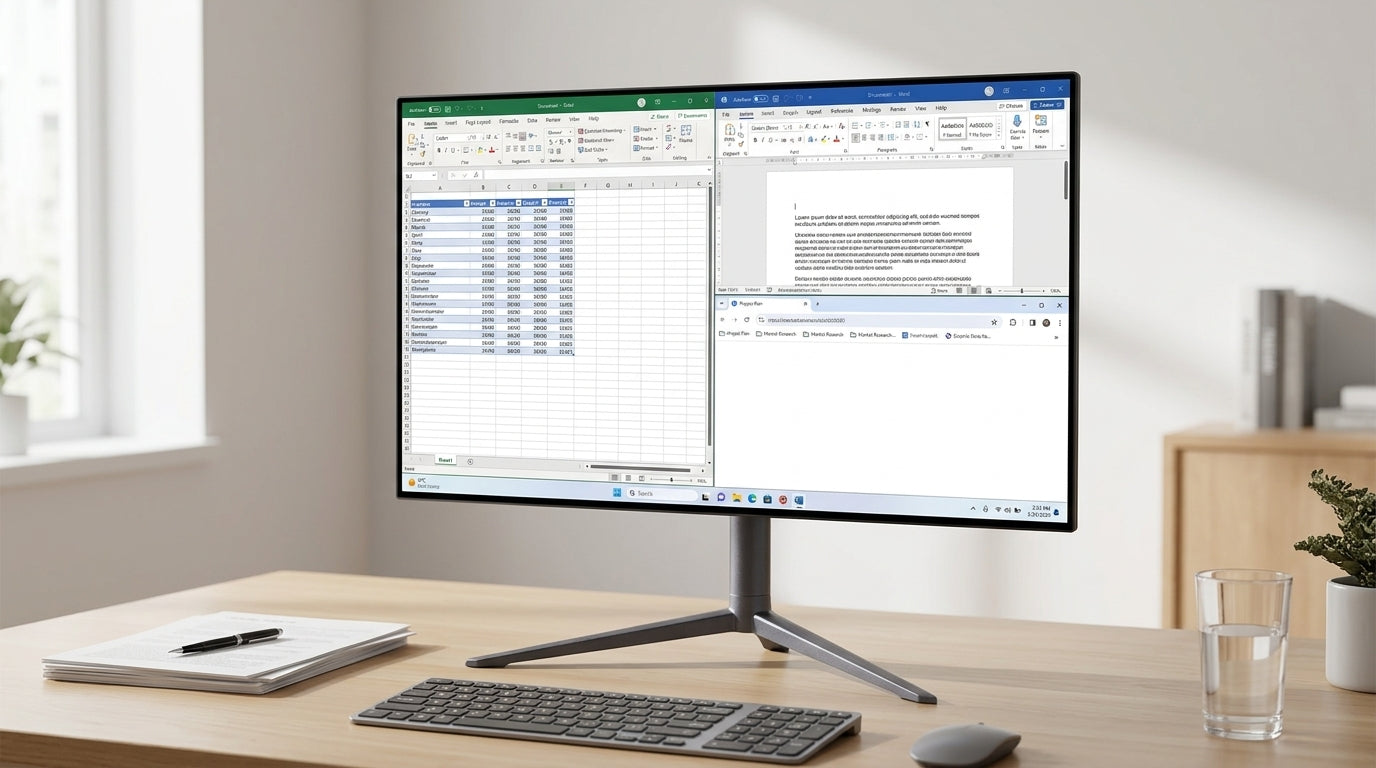
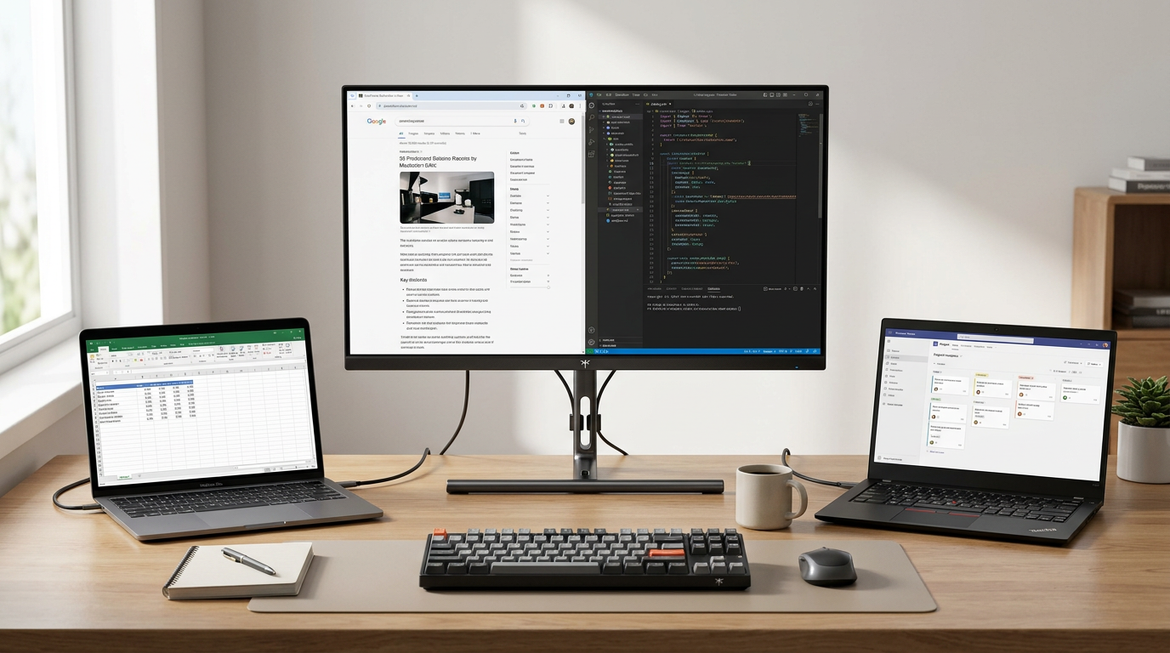
MegPad for business presentations makes sense when the screen has to move between rooms, floors, or client sites without a permanent AV install. It is usually a better fit for occasional-to-regular meetings than for a fixed conference-room setup, especially when setup time and room flexibility matter more than a full wall-mounted system.

When a Rolling Display Makes Sense
A rolling display is worth considering when the same screen needs to serve more than one space. That is common in small offices, shared suites, and home-based businesses that rotate between sales calls, reviews, and training. In those cases, the value is mostly convenience: you roll it in, connect the source, and start the meeting without building a permanent room around the display.
The catch is that a rolling screen is not automatically the best answer. If your team already has a dedicated meeting room and rarely changes layouts, a fixed monitor or TV may be simpler and cheaper. A mobile display helps most when movement is part of the workflow, not when it is an occasional novelty.
For buyers comparing categories, the Mobile Touch Screen collection is the closest browsing path if you want to compare portable display sizes before narrowing to a model. For broader office setups, the Smart Monitor collection is more useful when the screen will stay in one place.
Where the MegPad Fits Best
Client Pitches in Shared Spaces
Client pitches are one of the clearest use cases for MegPad for business presentations. If you often present in rented offices, coworking rooms, or temporary conference spaces, a rolling screen reduces the scramble to find a spare display or book a room with installed AV. The 27-inch MegPad model is a sensible middle ground when you want a screen that is still portable but not tiny.
This is strongest when your pitch is screen-led, meaning slides, live demos, and document review matter more than large-audience visibility. If you are trying to impress a room of 15 or more people from the back row, a larger screen can be easier to read.
Rotating Team Meetings Between Rooms
When meetings rotate between departments or floors, the best display is usually the one that wastes the least setup time. A rolling display helps because the room does not need to be reconfigured every week. You can wheel it in, connect it, and reuse the same workflow in different spaces.
That said, this setup breaks down if your team keeps changing connectors, power access, or casting methods. If every meeting turns into a troubleshooting session, the mobility benefit starts to disappear. In that case, the simpler choice is whichever screen class your team can connect with the fewest steps.
Training Sessions and Document Walkthroughs
Training sessions work well when the presenter needs to move the display closer to the audience, turn it for a different group, or use touch-based navigation. That is especially useful for policy walkthroughs, onboarding, and document reviews where people need to see a shared screen without huddling around a laptop.
The 32-inch format can be easier to read when several people are seated farther away. If your room is small and the audience is close, the extra size may not matter as much as the easier movement.
Freelancer Demos and Review Calls
Freelancers often need a display that can serve as a presentation screen in one client meeting and a review screen in a home office the next. A mobile smart display is helpful here because it handles quick handoffs between tasks without requiring a second permanent monitor setup.
The 25-inch portable MegPad is the most travel-friendly option in this group when client-site use matters more than room presence. It is the one to look at if you want the lightest-feeling presentation setup, not the biggest screen.

Setup That Keeps Meetings Moving
The fastest setups start before the meeting begins. If a team only checks the screen after people are seated, the first five minutes can disappear into cable swapping, source changes, or Wi-Fi login issues. The practical fix is to treat the room layout and connection path as part of the meeting prep.
- Place the display where the audience can see it without blocking the presenter or door.
- Check the cable path and power outlet before moving the screen into position.
- Confirm the normal input method, whether that is Type-C, HDMI, or wireless casting.
- Test audio if the meeting depends on sound, not just slides.
- Verify touch or casting only if the meeting actually needs it.
That sequence matters because a mobile display should reduce friction, not add new steps. The KTC for Business Portal is worth a look if your team is planning multiple units or wants to compare buying paths for business orders.
Battery runtime should be treated as a planning variable, not a promise. The 27-inch model is listed with up to 6 hours of runtime per manual, while the 32-inch model is listed at about 5 hours max per manual. Actual use will vary with brightness, connected devices, and how hard the screen is working, so wall power is still the safer plan for longer meetings.
Choosing the Right Size and Features
The right MegPad depends on room size, movement frequency, and how much viewers need to read from a distance. A smaller model is usually easier to move and store, while a larger one is easier to see across a conference table or training room. If you are on the fence, start with the room, not the spec sheet.
| Model | Best Fit | When It Works Best | When It Is Less Convenient |
|---|---|---|---|
| 25-inch portable model | Client visits, lighter travel, simple screen sharing | When mobility matters most and the audience is close to the screen | When you need more presence in a larger room |
| 27-inch model | Small offices, rotating meetings, regular carry-between-rooms use | When you want a balance of portability and room visibility | When the room is large and the audience sits farther back |
| 32-inch model | Training, larger meeting rooms, visibility-first setups | When readability matters more than compactness | When frequent transport and tight storage matter more |
The 27-inch unit includes a 27-inch FHD touch display, built-in wheels, a 9500mAh battery, and Android 14 Google EDLA support. The 32-inch model steps up to a 31.5-inch 4K panel with HDMI 2.0, Type-C, and USB 3.0, which gives it more flexibility for wired inputs. The 25-inch portable model is the most compact of the group and is the easiest one to imagine moving between client sites.
If you want a category view rather than a single model, the Mobile Touch Screen collection is the best place to compare sizes and input styles.
What to Check Before You Buy
- Make sure the display fits the room width and the audience distance. A screen that looks fine in a private office may feel small in a larger training room.
- Match the connection method to the way your team already works. If the room relies on wired input, do not buy as if wireless casting will save the day.
- Confirm power access before ordering. If the display will move often, you need a plan for charging and parking it between meetings.
- Review warranty and returns before business use. The current MegPad models list a 12-month warranty and a 30-day returns policy, which matters if you are buying for a team rollout.
- Check whether you are replacing a permanent room display or adding a flexible secondary screen. Those are different jobs, and they do not need the same spec mix.
The 32-inch MegPad model is the version to inspect when visibility and wired input flexibility matter most. The 25-inch portable MegPad is better when travel and quick carry are the main priorities.
MegPad for Business Presentations: The Bottom Line
MegPad for business presentations is a practical choice when you need mobility first and a permanent install would be too expensive or too rigid. It is strongest for rotating rooms, client pitches, and flexible training spaces. If your meetings are fixed in one room, or if the display must serve a large audience every day, a stationary setup may still be the better fit. Compare room size and movement frequency before deciding between the 25-inch, 27-inch, or 32-inch options.
Related Resources
- How a USB-C Monitor Can Streamline Your Workspace
- USB-C and KVM Monitor Setup Guide for Hybrid Work and Gaming
- How to Keep Monitor Cables Organized When You Frequently Disconnect and Reconnect Devices
FAQs
Q1. How Does a MegPad Fit a Small Business Meeting Room?
It fits best when the room changes often, because the rolling design removes the need for permanent mounting or a fixed AV install. If the room is used the same way every day, the mobility advantage shrinks and a standard monitor or TV may be simpler.
Q2. What Should I Check Before Using It for Client Pitches?
Check the room size, the audience distance, and the connection method first. Then confirm power access and whether the screen can be positioned so people can see it without crowding the presenter. A smooth pitch setup is usually about fewer steps, not more features.
Q3. Can the MegPad Replace a Fixed Conference Room Display?
Sometimes, yes, if your main need is a flexible screen for a smaller team or rotating space. It is less convincing when the room needs a wall-mounted display that stays in place, supports a larger audience, or integrates with a permanent AV setup.
Q4. Why Would a Freelancer Choose a Rolling Display Over a Monitor?
A freelancer may prefer a rolling display because it saves setup time and makes room changes easier than moving a standard monitor. It is most useful when you present in different locations or need one screen to serve both client demos and office work.
Q5. What Business Tasks Work Best on the MegPad?
Presentations, training sessions, client pitches, document walkthroughs, and video calls are the clearest fits. It is less compelling for tasks that do not benefit from a movable screen, especially if the setup rarely leaves one desk or one room.