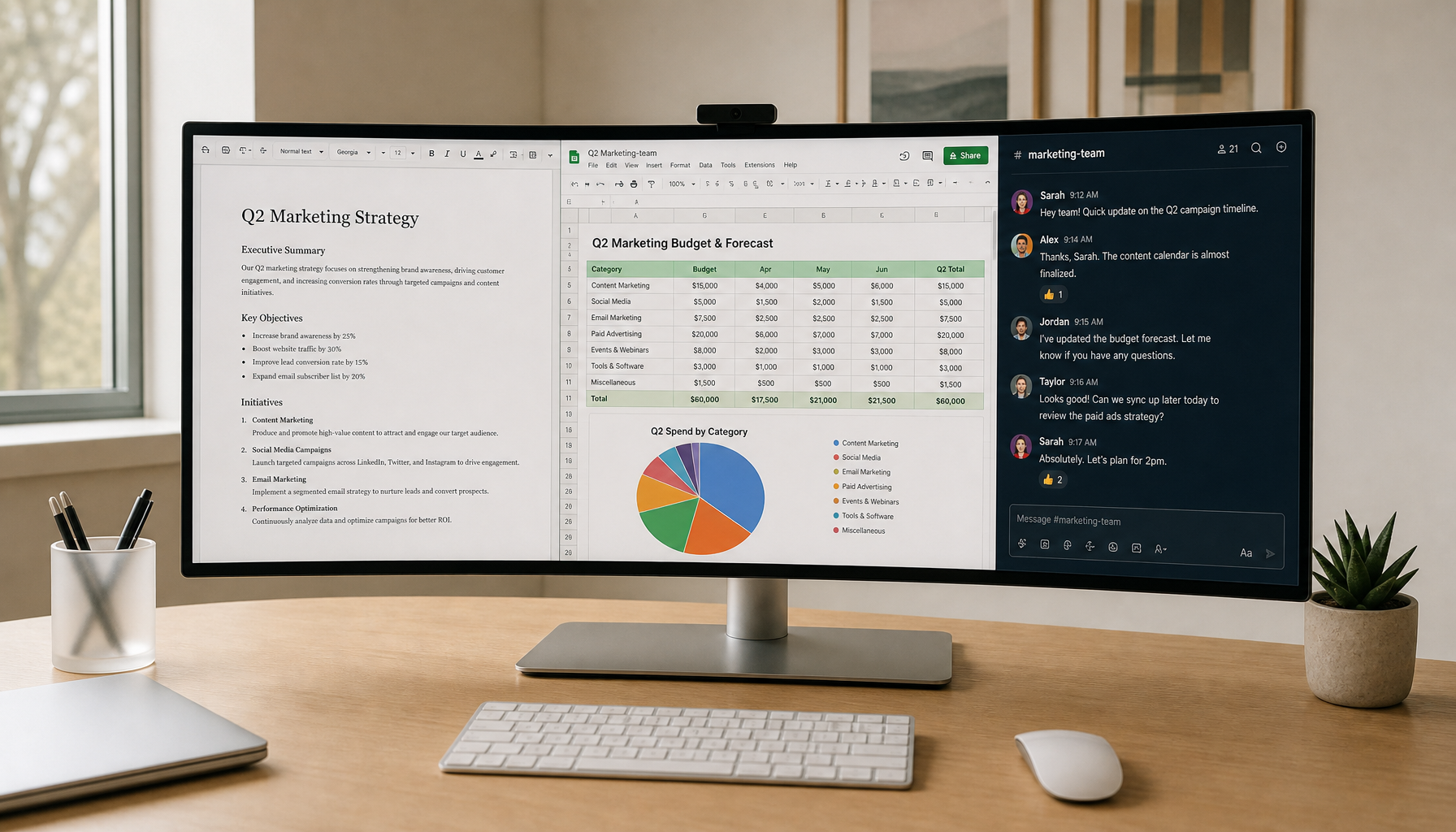
If you're looking for a single large screen that works as a shared recipe viewer in the kitchen or an entertainment and dashboard display in an RV, an Android smart monitor often makes more sense than a large tablet once the space is used by more than one person at a time. The key decision is whether the device needs to serve a communal area from several feet away or remain a personal handheld gadget.

The New Hub: Why Kitchens and RVs Are Outgrowing Tablets
Modern kitchens and RVs have shifted from personal gadgets to communal lifestyle screens. A 13-inch tablet works well when one person holds it, yet it quickly becomes frustrating when multiple family members try to follow a recipe or watch content together. Visibility drops sharply beyond arm's length, and the device often ends up in the middle of the prep zone where splatters and accidental touches become problems.
Android smart monitors in the 27- to 32-inch range solve this by delivering roughly four to five times the screen area of the largest tablets. The extra real estate lets you place the display farther from the action while keeping text and video readable. This change turns the screen into a true hub rather than another device someone must constantly manage.
Screen Real Estate: The 4x Advantage for Visibility and Safety
The surface-area difference between a 12.9-inch tablet and a 32-inch smart monitor is substantial. As this Ars Technica report on large-format mobile displays notes, the jump provides enough extra viewing area to make shared use practical.
In the kitchen, that size advantage translates into hygiene and safety benefits. You can keep the screen five to eight feet away from flour, oil, and heat while still reading instructions clearly. The same logic applies inside an RV where counter space is limited and movement during travel can knock over propped-up tablets.
The 4-foot rule offers a simple self-check: if you regularly need to view content from more than four feet away while your hands are busy, a large smart monitor becomes the clearer choice. Tablets remain better when the device is meant to be held or carried in a bag for personal use.
The OS Advantage: Why Google EDLA Changes the Game
Many smart displays rely on restricted operating systems that limit app selection and streaming quality. Full Android with Google EDLA certification removes those restrictions. According to Google's official EDLA documentation, this certification guarantees access to the complete Google Play Store and Widevine L1 support, enabling proper 4K Netflix and YouTube playback.
This matters for kitchen and RV users who want more than basic streaming. You can run native Home Assistant or Google Home dashboards, productivity apps, or niche tools directly on the large touch surface. The difference feels especially noticeable when a smart TV interface forces workarounds or blocks the exact app you need.
Power and Portability: RV Living and Mobile Home Use
Power management separates the two device types more than any other factor. A 32-inch smart monitor typically draws between 30 W and 60 W, which requires thoughtful battery or 12 V planning in an RV. Real-world battery runtime for these larger models usually falls in the four- to six-hour range under mixed use, so most owners treat the built-in battery as a bridge between outlets rather than full-day off-grid power.
The chart below helps visualize the trade-off between screen size and practical constraints for shared kitchen or RV setups.
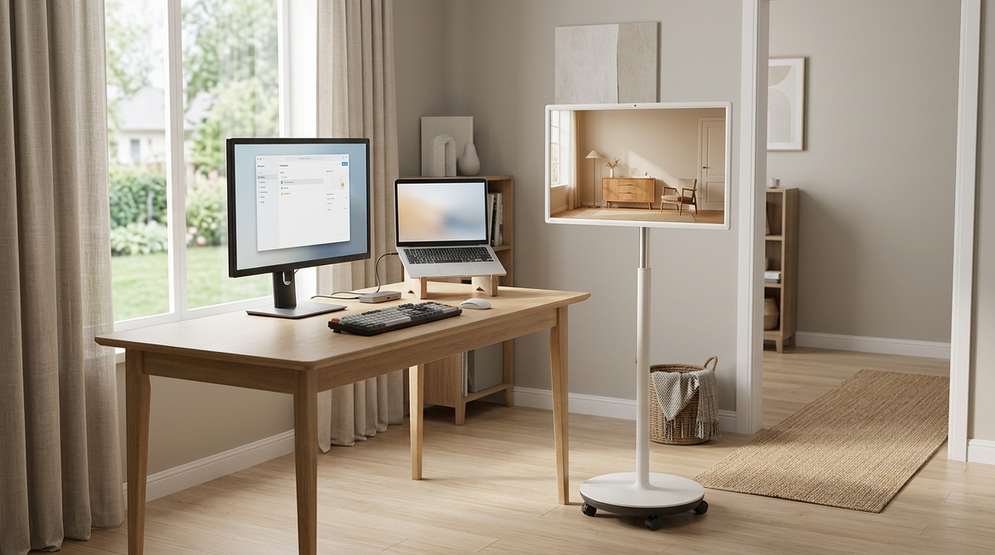
VESA mounting provides a reliable solution for transit safety that tablet clamps rarely match. Standard VESA patterns let you secure the monitor to an articulating arm or wall bracket so it stays put when the RV moves. In the kitchen, rolling stands offer room-to-room mobility without sacrificing the large display.

Buying Criteria: Choosing Your Perfect Lifestyle Screen
Focus on these practical specs when comparing options:
- Resolution: 4K delivers clear detail on a 32-inch panel, while 1080p remains perfectly usable on 24- to 27-inch models for most kitchen or RV distances.
- Touch: Look for 10-point capacitive touch so multiple people can interact with recipes or dashboards at once.
- Power: Check both the built-in battery capacity and whether the unit supports efficient 12 V DC input to reduce inverter losses on the road.
- Mounting: VESA compatibility on the back makes secure RV or under-cabinet installation straightforward.
Avoid assuming every large Android display offers native 12 V support; many still rely on inverters or specific adapters. Battery claims should also be read conservatively, as brightness, streaming, and background apps reduce the advertised runtime.
Our 5 Essential Specs to Check Before Buying a Portable Touch Screen Monitor breaks down these details further and includes real-world testing notes that apply directly to kitchen and RV decisions.
Choosing Your Screen by Scenario: The Final Verdict
Choose an Android smart monitor when the screen will serve as a shared hub in the kitchen or a stable entertainment and control display in an RV. The larger size, full Android ecosystem with EDLA certification, and secure mounting options make it the stronger fit for family use and hands-free operation.
Stick with a large tablet when the device needs to be carried frequently, used in bed, or kept ultra-light for backpacking or airline travel. Tablets win on weight and true portability but lose the communal visibility and stable placement that kitchens and RVs demand.
The 27- to 32-inch Android smart monitor range has become the practical sweet spot for most households and mobile lifestyles. It balances screen area, app flexibility, and manageable power needs without requiring a full TV installation.
If your RV solar setup is under 100 W or you travel without a DC-DC charger, a standard tablet or smaller portable monitor may create fewer headaches. For most shared kitchen and RV scenarios, however, the extra real estate and full Android capabilities of a smart monitor deliver noticeable daily convenience.
Frequently Asked Questions
Can a large Android smart monitor replace a kitchen tablet? Yes for shared viewing and hands-free use. The bigger screen keeps the device out of the splash zone while remaining readable from across the island, something a 13-inch tablet struggles to achieve.
How long does the battery last on a 32-inch smart monitor in an RV? Expect four to six hours of mixed use in real-world conditions. Treat the battery as a convenient buffer rather than a full off-grid solution, and plan for 12 V or shore power for longer sessions.
Is VESA mounting necessary for RV use? It is strongly recommended. VESA-compatible brackets keep the monitor secure during travel, reducing the risk of it sliding or falling compared with tablet-style clamps or stands.
Do all Android smart monitors support Netflix in 4K? Only those with Google EDLA certification and Widevine L1 support reliably deliver 4K streaming. Check for this certification to avoid restricted playback quality.
What size is best for both kitchen and RV use? The 27- to 32-inch range works well for both. It provides enough screen area for shared viewing without becoming too bulky to move on a rolling stand or mount securely in an RV.
Can I run smart home apps on these monitors? Yes. Full Android access to the Google Play Store lets you install Home Assistant, Google Home, or other dashboards directly, turning the large touch screen into a practical control hub.
Are rolling stands worth it for kitchen use? They add genuine value by letting you wheel the screen between the kitchen, dining area, or living room as needed. This flexibility is difficult to replicate with a traditional tablet.