If you are choosing mini-LED vs OLED for coding and gaming, start with this: code-heavy buyers usually should lean Mini-LED first, then only switch to OLED if they care more about dark-scene gaming and have checked the exact panel's text behavior. The best choice depends on scaling, font size, room light, and how much of the day you spend in editors, terminals, and browser tabs.

What Developers Need From a Mixed-Use Monitor
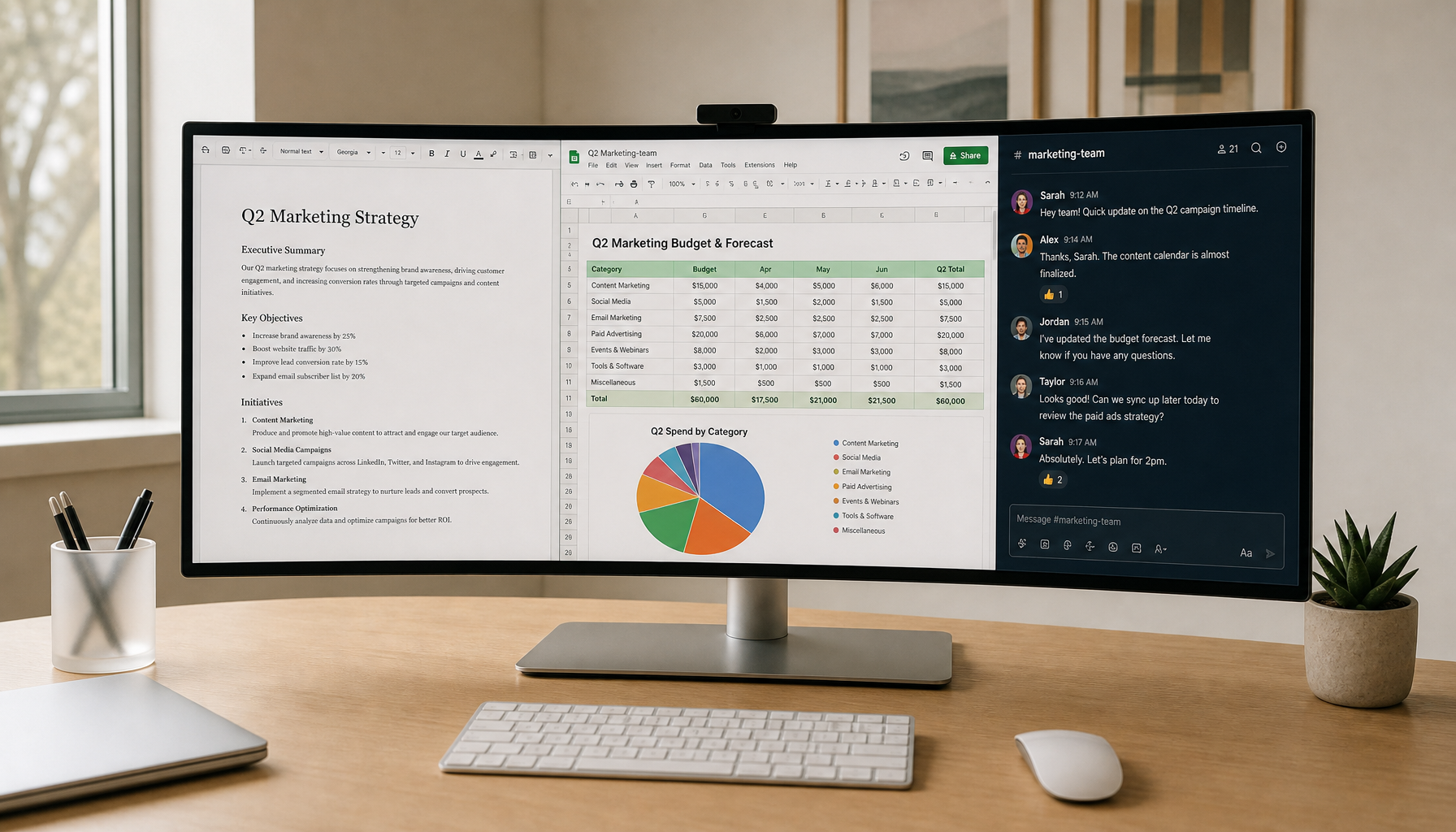
For developers, the monitor has to do two jobs without becoming annoying in either one. It should keep code readable for long stretches, then still feel good when you launch a game at night. That is why mini-LED vs OLED for coding and gaming is not really a generic panel debate. It is a workflow question.
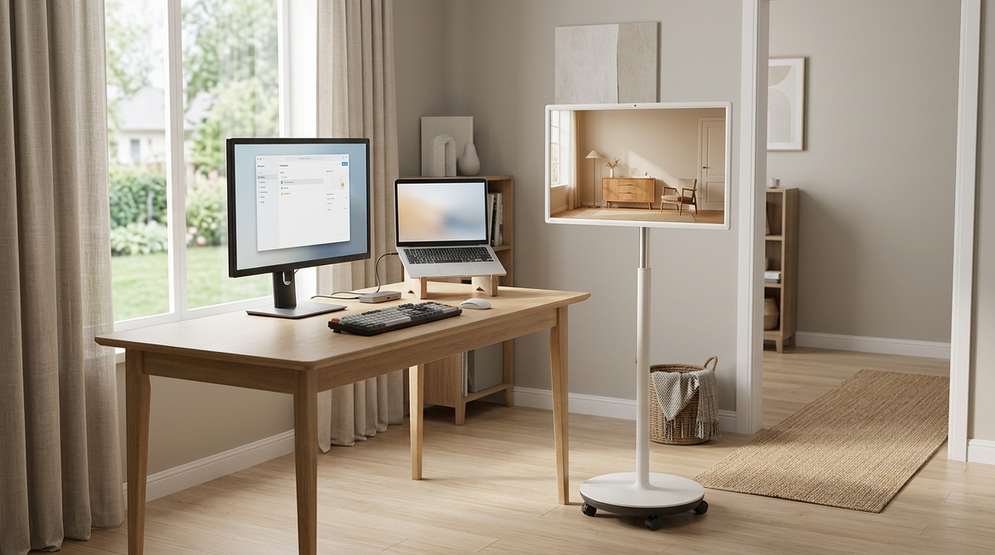
In practice, most code-first buyers care more about text stability, consistent desktop brightness, and low visual distraction than about the deepest blacks in a game. Room lighting matters too. A bright desk near a window can change the result more than a spec sheet suggests, so the same panel can feel great in one setup and merely okay in another.
For a deeper look at the work-first angle, the section on text clarity for coding is worth a read before you decide.
Text Clarity and Desktop Readability
Mini-LED typically has the safer default for code, docs, and dashboards because it usually behaves like a conventional LCD desktop display. That does not mean every Mini-LED panel is identical, but it does mean text rendering is usually more predictable for long IDE sessions. KTC's own comparison of OLED vs Mini-LED text clarity for coding makes the same broad point: static productivity tends to favor more familiar LCD-style rendering.
OLED can still look excellent, but text is more preference-sensitive. PC Monitors explains that QD-OLED and WOLED fringing issues can show up as colored edges or softness on some small-text layouts because of the panel's subpixel structure. That is not a universal defect, and higher pixel density can help, but it is a real enough caveat that developers should not ignore it.
What this means is simple: if you spend most of the day reading code, Mini-LED is usually the lower-risk pick. If you mostly game and only code in shorter blocks, OLED can still work well, but you should verify the exact panel in your preferred scaling and font settings first.

Settings can change the result more than people expect. Font size, OS scaling, viewing distance, and whether you use light or dark themes all affect how sharp a panel feels. A small OLED can look clean in one editor and a little busy in another, while a bright Mini-LED can feel steadier in a mixed workflow. For long coding sessions, the better question is not "Which technology is always sharper?" It is "Which one stays comfortable in my actual setup?"
Contrast, HDR, and Gaming Impact
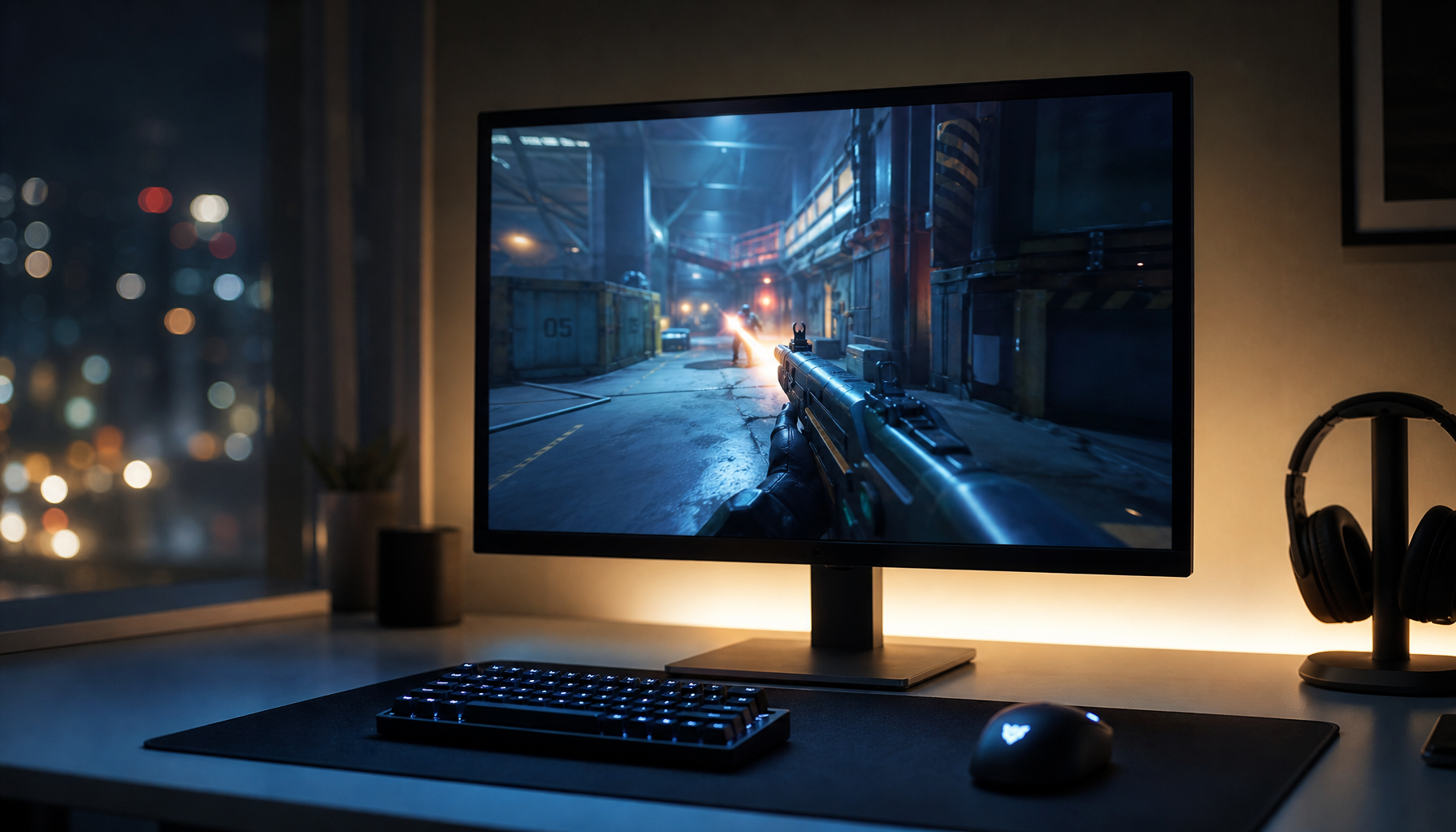
OLED usually has the stronger gaming image when you care about black depth, shadow detail, and cinematic contrast. In dark games, that deeper black floor can make scenes feel more immersive right away. KTC's gaming comparison on OLED versus Mini-LED describes OLED as the faster, more motion-focused option, which lines up with how many gamers experience it.
Mini-LED can still look very good in games, especially when the display supports strong local dimming and HDR. VESA DisplayHDR 1400 sets high requirements for peak brightness and local dimming, which helps bright highlights stand out. That matters more in mixed lighting, daytime gaming, and scenes with bright explosions or sunlight.
So the split is practical. OLED usually wins for dark-room immersion. Mini-LED usually wins when you want a brighter desktop by day and strong HDR impact without giving up the same level of daytime visibility.
Brightness and Room Lighting Fit
Room light is one of the biggest filters in this choice. In a bright office or a desk near a window, Mini-LED often feels easier to live with because the display can hold up better against ambient light. That does not make it eye-friendly by default, but it does make the desktop easier to use when the room is not dim.
OLED often feels more dramatic in darker rooms, where the contrast pops more and the image can seem cleaner for games and video. But glare, lamp placement, and brightness settings still matter a lot. KTC's support tips on flicker, blue light, and eye strain and color temperature and productivity are helpful reminders that comfort is a setup issue, not just a panel issue.
If your desk gets bright during the day, Mini-LED is usually the more forgiving starting point. If you code mostly in the evening and care more about a cinematic image when you game, OLED becomes more attractive.
Motion Performance for After-Work Gaming
If you only game after work, motion specs still matter, but not equally for every buyer. Fast shooters, racers, and competitive titles benefit the most from faster response and higher refresh rates. OLED usually has the edge here because it can switch pixels extremely quickly, which helps motion look cleaner in fast movement.
For many mixed-use buyers, though, the last bit of motion speed is not the deciding factor. If your game list is mostly single-player, strategy, or casual play, you may notice image quality balance and desktop comfort more than tiny differences in response time. That is why mini-LED vs OLED for coding and gaming often turns into a tradeoff between work comfort and gaming intensity.
For gaming-first buyers, the OLED gaming monitor route is usually the more natural fit. For developers who only want gaming to be the second priority, Mini-LED monitor options are often easier to justify.
Which Monitor Fits Your Workflow
Here is the simplest way to split the decision. If you code for most of the day, work in a bright room, and want one monitor to stay steady across editors, terminals, docs, and browser windows, Mini-LED is usually the safer default. If you game more than you code, prefer darker rooms, and want the most immersive image for night play, OLED is often the better match.
A neutral example of the Mini-LED side is the KTC Mini LED 27" 180Hz 2K HDR1400 Gaming Monitor | M27T6. Its 1440p resolution, 180Hz refresh rate, local dimming, HDR1400, and fully adjustable stand make it a plausible fit for developers who want one desk display for work and play, especially when portrait rotation or long document reading matters.
On the OLED side, the KTC OLED 27" 2K 240Hz/0.03ms USB-C Gaming Monitor | G27P6 is the more gaming-first example. Its 240Hz refresh rate, 0.03ms response time, OLED contrast, and USB-C charging make sense if fast motion and dark-scene immersion matter more than maximum desktop consistency.
Use this simple rule: if your day is mostly code, Mini-LED first. If your night is mostly games, OLED first. If you are right in the middle, the exact model and your scaling settings matter more than the panel label.
| Scenario | Mini-LED | OLED |
|---|---|---|
| Code-heavy work | Better fit | Can work, but more panel-dependent |
| Bright room | Better fit | More sensitive to glare and brightness settings |
| Long desktop sessions | More predictable | Can feel excellent, but depends on text behavior |
| Gaming-first | Good if you want HDR and brightness | Better fit for dark scenes and motion |
| Dark room | Good | Better fit |
| Motion priority | Good | Better fit |
Final Buyer Checklist
Before you buy, check your real workflow in this order: how many hours you code each day, how bright your room is, how small your fonts are, whether you stay in light or dark themes, how much you care about HDR contrast, and whether your games are fast-paced or mostly casual. If static desktop work is the bigger share, Mini-LED is usually the safer pick. If gaming immersion is the bigger share, OLED is usually the stronger one.
If you want a broader browse path after that, the gaming monitor lineup can help you compare panel types and refresh-rate tiers without narrowing the choice too early.
FAQs
How Do Mini-LED and OLED Compare for Code Readability?
Mini-LED usually feels steadier for long coding sessions because its desktop text rendering is more predictable. OLED can still look excellent, but small text may be more sensitive to panel layout, scaling, and the app you are using. If your workday is text-heavy, verify the exact panel first.
Can OLED Work Well for Long Coding Sessions?
Yes, for some users. The catch is that comfort and readability depend on font size, scaling, ambient light, and how much the specific panel's subpixel layout bothers you. If you already know you like OLED for gaming, test it in your actual IDE before you commit.
Why Does Mini-LED Often Make Sense in Bright Rooms?
Bright rooms make desktop visibility harder, especially near windows or overhead lights. Mini-LED often handles that better because higher sustained brightness and local dimming help the image hold up against ambient light. That makes it a practical starting point for daylight desks.
Can Burn-In Be a Concern for Developer Desktops?
It can be a consideration when static UI elements stay on screen for many hours. The safest approach is to treat burn-in as a product-level and usage-level question, then check the exact panel's protection features and your own work habits before buying.
Should I Prioritize HDR Contrast or Desktop Comfort?
If you code more than you game, prioritize desktop comfort and readability first. If gaming is the main event, prioritize contrast and motion. The best answer depends on which use case dominates your day, not on which spec looks better in isolation.
If you are still deciding, compare the two product examples above and then choose the panel that matches your room and workload. A quick check of scaling, font size, and lighting usually tells you more than a spec sheet does.