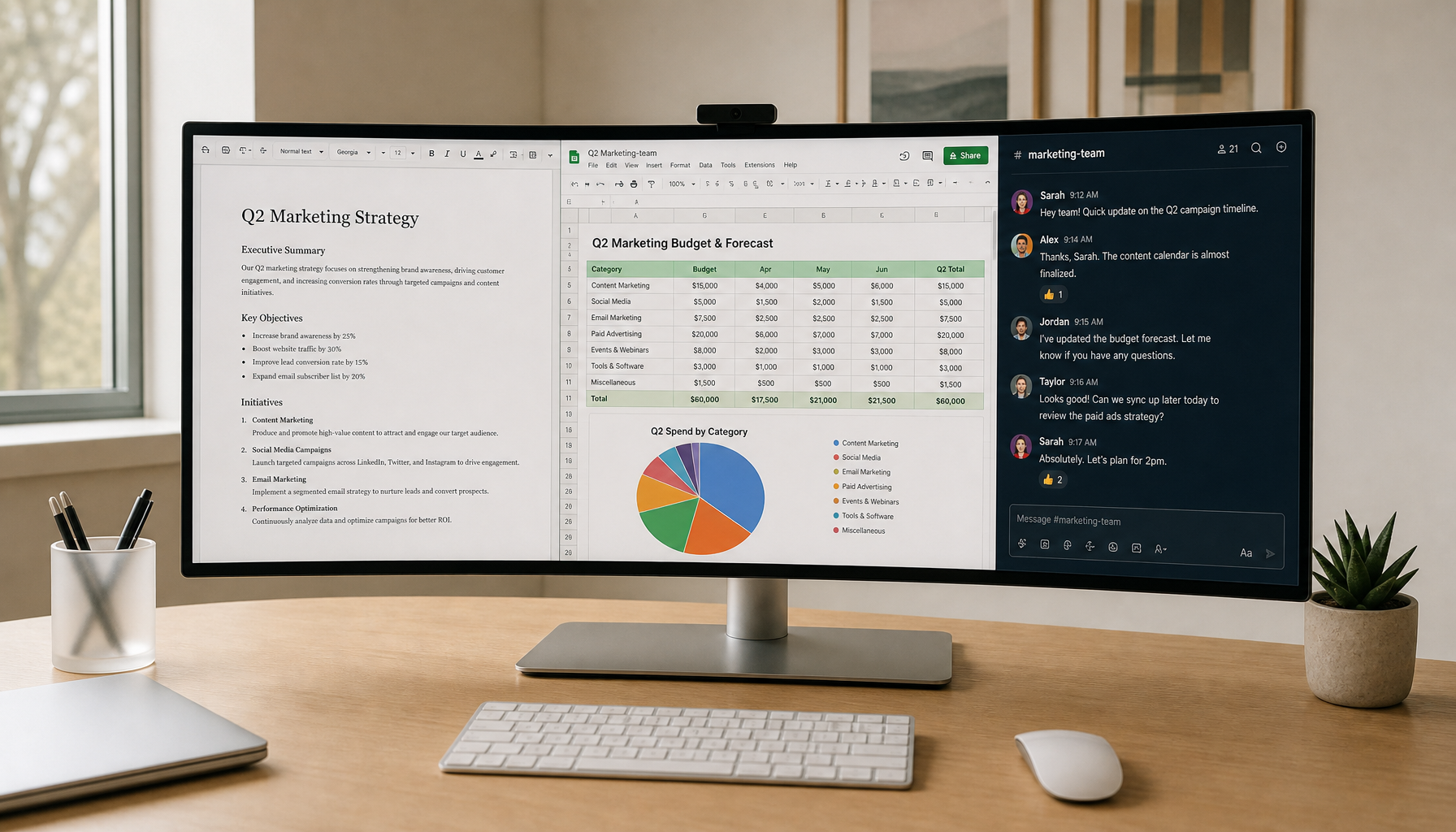
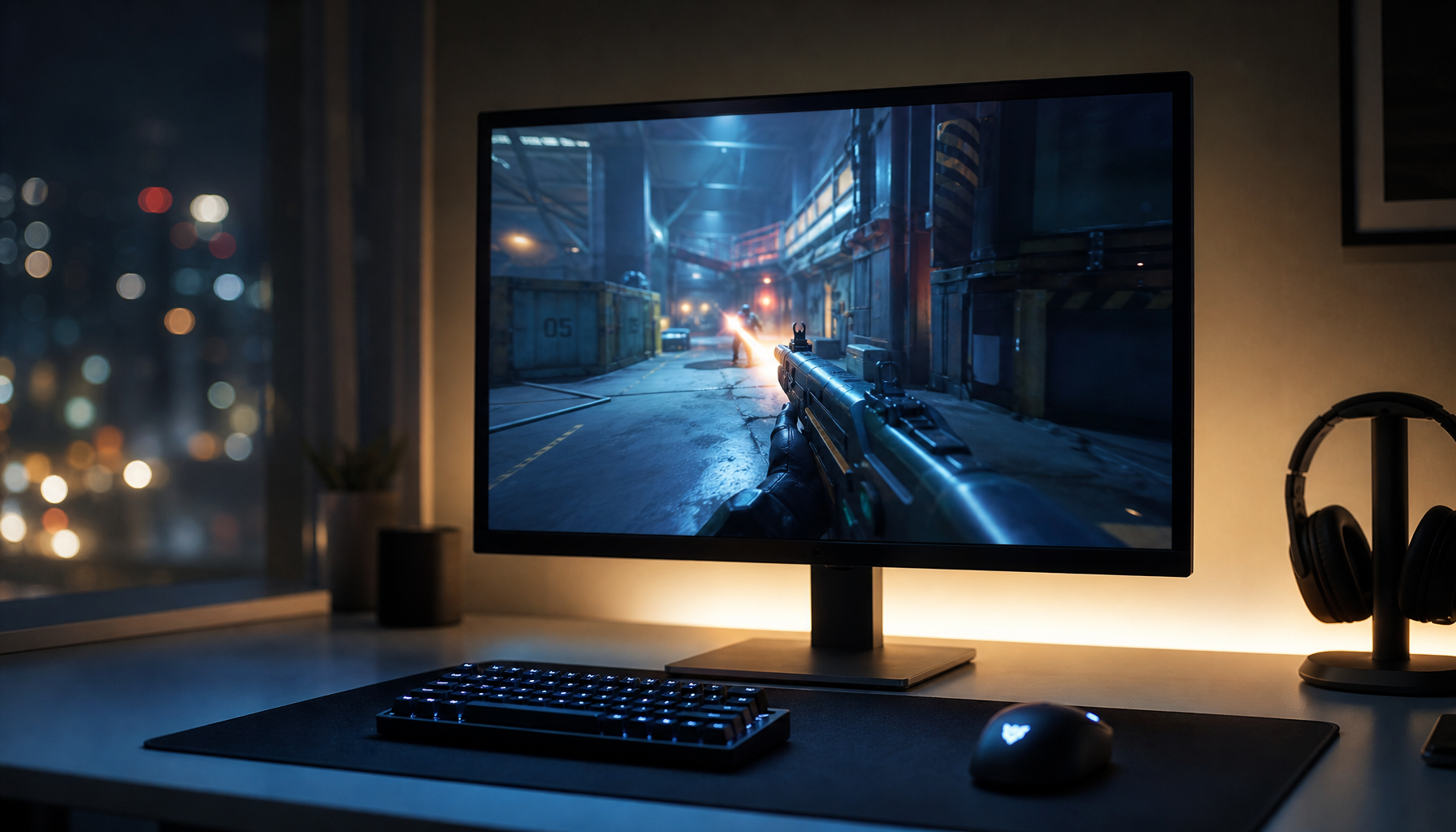
The real decision for productivity users choosing between Tandem OLED and high-zone Mini-LED comes down to your primary workflow and environment rather than raw specs. Tandem OLED delivers pixel-perfect text edges with zero blooming in dark mode, making it the stronger choice for coders who live in VS Code or terminal windows at night. 2000-zone Mini-LED, on the other hand, maintains higher sustained brightness without auto-brightness limiting on white backgrounds, which makes it the safer pick for spreadsheet-heavy office work in bright rooms.
The clarity gap is most noticeable at close viewing distances on a 27-inch 4K panel at native scaling, but it narrows quickly beyond about 32 inches or when you increase UI scaling to 150%. Your room lighting and preferred UI theme therefore become the first filters before you compare specific models.

Why Text Clarity Matters More Than Gaming Specs in 2026
Productivity buyers in 2026 increasingly spend more hours reading code, editing documents, and reviewing spreadsheets than playing games. Text rendering issues that once seemed minor now create daily eye strain or reduced accuracy during long sessions. Subtle fringing around letters, haloing from backlight zones, or slight luminance shifts when scrolling can break focus in IDEs or dense tables.
Tandem OLED panels address past OLED weaknesses with a true RGB stripe subpixel layout that aligns better with Windows ClearType and macOS text rendering. High-zone Mini-LED monitors preserve native RGB stripe clarity but must manage local dimming algorithms that sometimes prioritize black levels over perfect small-object brightness. This comparison therefore focuses on real legibility rather than contrast ratios or HDR pop.
For those building a healthier workspace, our complete guide to finding the best monitor for productivity explains how panel choice fits into broader ergonomic and eye-comfort decisions.
Subpixel Layouts and Local Dimming: The Mechanics of Text Rendering
Operating systems render text by lighting specific subpixels according to an assumed RGB stripe layout. When a panel uses a different arrangement, such as the triangular or RWBG patterns common in older OLED generations, letters can appear with colored fringes because the rendering engine misaligns with the physical pixels.

As this Tom's Hardware report on LG's new panel explains, 2026 Tandem OLED panels have adopted a true RGB stripe subpixel layout. This change effectively resolves the text fringing that made earlier WOLED and QD-OLED monitors less suitable for office work.
Mini-LED panels have always used standard RGB stripe subpixels, which matches OS expectations and avoids fringing. However, their local dimming zones can still introduce challenges. In dark scenes with fine white text, the algorithm may dim nearby zones too aggressively, creating a slight “black crush” effect or minor luminance fluctuations that reduce perceived sharpness. Our article on what subpixel layout is and why RGB and RGBW panels look different dives deeper into these rendering mechanics.
Similarly, understanding what local dimming zones mean helps explain why even 2000 zones cannot achieve the per-pixel precision of OLED when rendering small text elements.
Coding in Dark Mode vs. Light Mode: The Real-World Test
Dark-mode users who spend hours in IDEs with white text on black backgrounds see the largest difference. Tandem OLED produces truly pixel-level contrast with no backlight bleed or haloing around characters. This eliminates the subtle shimmering or zone-leak effects that appear on even advanced Mini-LED panels when scrolling through dense code.
In light mode, the situation reverses. Mini-LED maintains 1000+ nits of sustained full-screen brightness without the automatic brightness limiter that dims Tandem OLED screens when large white areas appear. This prevents the fatigue that comes from constantly adjusting to brightness changes while working on spreadsheets or long documents.
According to testing summarized by RTINGS.com, Mini-LED local dimming can occasionally exhibit black crush or slight luminance fluctuations on fine text in dark mode as algorithms prioritize deep blacks. This trade-off becomes noticeable in low-density dark themes but is usually masked in bright office lighting.
Many Mini-LED owners also report an “SDR toggle tax”: the need to disable local dimming for clean desktop work and re-enable it for media or HDR content. This repeated adjustment adds daily friction that OLED users avoid entirely.
Our guide to why some monitors make syntax highlighting look washed out explores related color and clarity issues that affect coding comfort.
Is Tandem OLED Better for Office Work?
Tandem OLED's two-stack architecture brings meaningful improvements over earlier OLED generations. Sustained brightness is higher and panel longevity is better, which reduces—but does not eliminate—burn-in risk during static productivity tasks like always-visible taskbars or IDE toolbars.
Both technologies now incorporate flicker-free solutions. Most 2026 premium panels use DC dimming or high-frequency PWM above 20 kHz, which minimizes visible flicker and helps reduce eye strain during long reading sessions. Our article on remedying digital eye strain covers additional practical steps beyond panel choice.
The remaining practical limits for Tandem OLED appear in bright rooms. When full white screens trigger automatic brightness limiting, the display can dim noticeably compared with a Mini-LED panel that sustains 1000+ nits across the entire screen. For users who keep windows open or work under strong overhead lights, this brightness advantage often outweighs contrast benefits.
According to analysis of Tandem OLED technology in 2026, the stacked design improves both peak brightness and durability, yet Mini-LED still leads in sustained full-screen luminance for bright environments.
Which Panel is Right for Your Workflow?
Match your setup to these practical thresholds rather than chasing the highest zone count or latest marketing label.
Choose Tandem OLED if you primarily work in dark themes, sit within 24–30 inches of a 27-inch or 32-inch 4K panel, and value absolute edge sharpness with zero haloing around text. Developers who keep dark IDEs open for 6+ hours per day usually notice the difference immediately and accept the higher price and residual burn-in precautions.
Choose 2000-zone Mini-LED if your workflow involves white backgrounds, spreadsheets, web browsing, or mixed lighting. The higher sustained brightness, complete absence of burn-in worry, and lower cost make it the more practical daily driver for most office users. The clarity gap shrinks dramatically beyond 32 inches or once you apply 125–150% scaling, so many users find Mini-LED indistinguishable in typical desk arrangements.
Our comparison of Mini-LED versus OLED for gaming provides additional context for hybrid users who also game.
For concrete examples, the KTC M27P6 27-inch 4K Mini-LED delivers the high sustained brightness and full RGB stripe clarity that suits light-mode productivity while supporting 160 Hz when you switch to entertainment. Users who prefer OLED can explore the KTC G27P6 27-inch OLED or browse the full All-OLED collection and All-Mini-LED collection to match exact resolution and refresh needs.
Which Panel Wins for Text Clarity in 2026?
Tandem OLED wins for dark-mode coding and close-range sharpness where pixel-level contrast is visible. 2000-zone Mini-LED wins for light-mode office work, bright rooms, and users who want maximum sustained brightness without burn-in concerns or SDR toggle friction.
Most buyers should first measure their typical viewing distance and note whether they spend more time in dark or light interfaces. If your setup sits between the two extremes, test both technologies in a store or with a generous return policy. The 2026 generation has narrowed the traditional gaps, but the remaining differences still map cleanly to specific workflows rather than delivering one universal victor.
FAQs
Does Tandem OLED Fix the Text Fringing Issues of Older OLED Monitors?
Yes. The 2026 Tandem OLED panels use a true RGB stripe subpixel layout that aligns with Windows ClearType and macOS text rendering. This removes the colored fringes that appeared on previous WOLED and QD-OLED generations, bringing text sharpness much closer to traditional LCD panels while retaining perfect per-pixel contrast.
Can High-Zone Mini-LED Match OLED Text Clarity in Dark Mode?
It comes close but not quite. Even 2000 zones can show minor blooming or black-crush effects around small bright text on dark backgrounds because the local-dimming algorithm must balance multiple zones. The difference is most visible when sitting close to the screen at native scaling; it becomes negligible beyond 32 inches or with increased UI scaling.
Is Tandem OLED Safe for All-Day Office Work in 2026?
It is safer than earlier OLEDs thanks to higher sustained brightness and improved durability, but it is not risk-free. Static elements like taskbars or spreadsheet grids can still contribute to burn-in over years of heavy use. Users who keep bright rooms or prefer white backgrounds often experience more comfortable results with Mini-LED's higher full-screen luminance and zero image-retention risk.
How Much Does UI Scaling Affect the Perceived Clarity Difference?
Significantly. At 150% scaling on a 27-inch 4K panel, characters become large enough that minor blooming or zone leakage on Mini-LED is usually masked. The maximum clarity advantage of Tandem OLED appears at 100% scaling when viewed from 20–28 inches away. If you already use higher scaling for comfort, the practical gap narrows and Mini-LED becomes the more compelling value.
Should I Buy Mini-LED or Tandem OLED if I Split Time Between Coding and Spreadsheets?
Prioritize your dominant interface. Heavy dark-mode coding favors Tandem OLED for its shimmer-free scrolling and perfect black levels. Heavy spreadsheet or browser work in bright conditions favors Mini-LED for consistent brightness and simpler long-term ownership. Hybrid users often choose Mini-LED to avoid the SDR toggle tax and burn-in vigilance, then add software tweaks to improve dark-mode contrast where needed.
Does Room Lighting Change Which Panel Performs Better for Reading?
Yes. In well-lit offices with windows or strong overhead lights, Mini-LED's ability to sustain high brightness across white pages reduces eye fatigue and maintains consistent readability. In controlled or darker rooms, Tandem OLED's infinite contrast makes text pop with less glare and no haloing, which many readers find more comfortable for long-form documents or books.