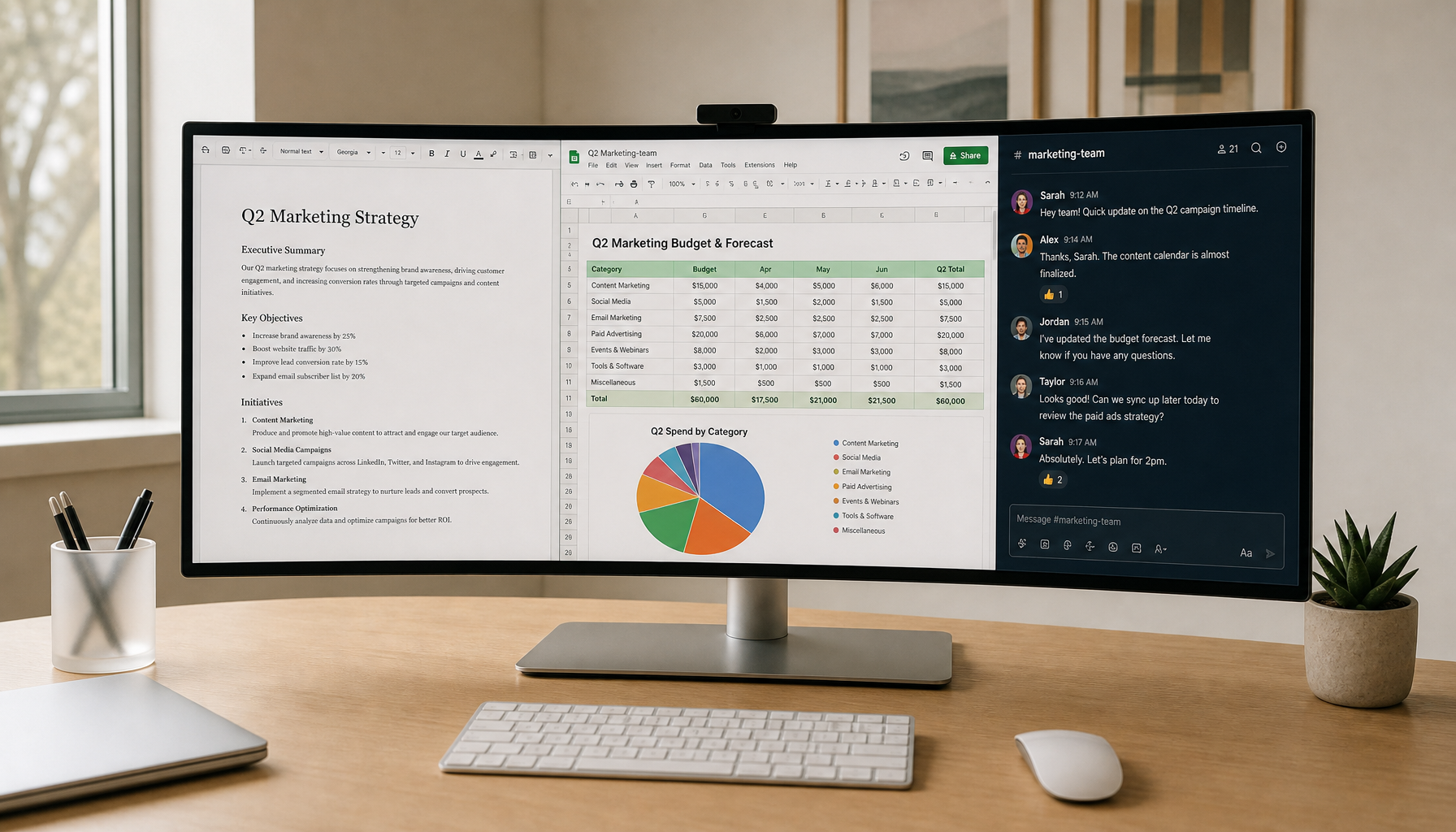
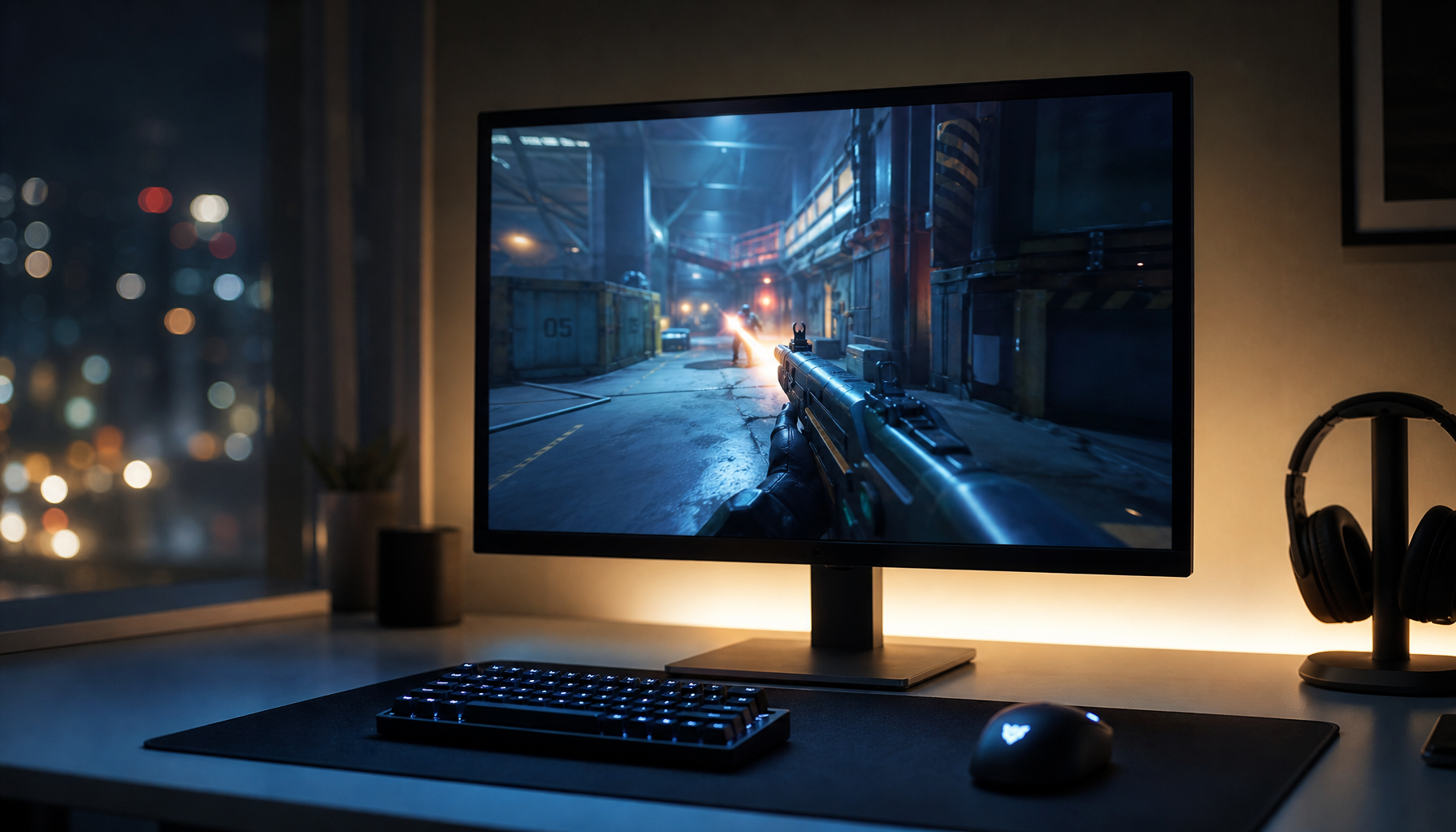
After roughly 10,000 hours of real-world workstation use—equivalent to about 3.5 years of full-time 8-hour workdays—Mini-LED monitors generally deliver lower long-term regret for most productivity users in 2026. Their uniform brightness stability avoids the localized burn-in that static light-mode interfaces can create on OLED panels, making Mini-LED the pragmatic choice for spreadsheets, browsers, and mixed office work in bright rooms. OLED remains compelling for dark-mode coding if you accept the potential need for a warranty claim around the three-year mark.

The 10,000-Hour Static UI Torture Test
Ten thousand hours represents the practical service life many professionals expect from a premium monitor. In this timeframe, the real stress test for workstation displays is not fast-motion gaming but prolonged exposure to unchanging light-mode elements such as taskbars, menu bars, spreadsheet grids, and browser tabs.
Independent testing shows that OLED panels typically develop visible ghosting around the 4,000-hour mark under sustained static light-mode use, with more noticeable burn-in often appearing between 6,000 and 9,000 hours (TechSpot OLED burn-in test). This timeline aligns with roughly 1.5 to 3 years of heavy daily productivity work. In contrast, Mini-LED and other backlit technologies avoid localized permanent artifacts entirely, as confirmed by long-term evaluations (RTINGS longevity and burn-in results).
The difference stems from how each technology ages. OLED wear is localized: static bright UI elements create permanent “scars” because individual organic pixels degrade at different rates. Mini-LED experiences only gradual, uniform luminance drop across the entire panel, preserving image cleanliness even after the full 10,000 hours. For coders and analysts who keep the same windows open for hours, this divergence in failure modes matters far more than initial contrast numbers.
Do 2026 OLED Protections Save You?
Advances such as Tandem OLED and deuterium-enhanced materials have meaningfully extended the lifespan of 2026 panels. These improvements raise the overall durability ceiling and make temporary image retention less common. Yet they do not eliminate the fundamental physics of uneven sub-pixel wear when static high-contrast elements remain visible for thousands of hours (Digital Void 2026 OLED update).
What has changed is the practical safety net. Most premium OLED monitors now carry three-year burn-in warranties, turning a potential hardware failure into a manageable replacement process for many buyers. Mini-LED, however, offers zero-hassle longevity—no need to monitor for ghosting, adjust taskbar hiding routines, or schedule an RMA during a busy project cycle. The decision therefore shifts from “Will this burn in?” to “Am I willing to handle a possible warranty claim at the three-year mark while losing productivity time?”
For bright-office spreadsheet users or multitaskers who prefer light interfaces, the hassle-free nature of Mini-LED usually outweighs the initial visual pop of OLED. Dark-mode coders may still favor OLED and view the warranty as acceptable insurance.
Brightness Stability: The Hidden Mini-LED Advantage
Beyond burn-in avoidance, Mini-LED maintains more consistent brightness over years of use. Industry benchmarks indicate less than 3% luminance degradation after 10,000 hours of continuous operation, keeping peak output and local-dimming performance reliable for color-critical or bright-room work. This stability is further supported by modern VESA DisplayHDR 1.2 certification criteria, which test for consistent performance under varying scene demands.
In real 8-to-12-hour workdays, this means the monitor you calibrate on day one still delivers predictable contrast and readability years later without the gradual dimming that can affect some OLED implementations in bright environments. The advantage becomes especially clear when comparing side-by-side with an older OLED that has accumulated static UI hours: the Mini-LED panel typically looks fresher in mixed lighting.
Panel Longevity After 10,000 Hours: Mini-LED vs OLED
A decision aid for static productivity use. OLED typically shows visible wear earlier in light-mode office work, while Mini-LED usually keeps brightness more stable over long hours. Dark-mode coding narrows the gap, but it does not remove OLED wear risk under static UI use.
View chart data
| Scenario | Early (<4,000h) | Mid (4,000-7,000h) | Long-term (>7,000h) |
|---|---|---|---|
| OLED | 3.0 | 2.0 | 1.0 |
| Mini-LED | 1.0 | 1.0 | 1.0 |
This chart visualizes the likely pattern of wear across three usage phases for typical static productivity workloads. The divergence highlights why Mini-LED often feels more consistent for long-term office use.

Many users also appreciate how Mini-LED pairs with strong ergonomics and color coverage in current models. The KTC M27P6, for example, combines 4K resolution, high peak brightness, and full adjustability that suit extended workstation sessions without feeling like a gaming-only panel.
The Dark Mode Paradox: Why Coders Might Regret Mini-LED
Not every workflow favors Mini-LED. Developers who live in dark-themed IDEs with high-contrast syntax highlighting often encounter blooming—halos around bright text elements caused by the local-dimming zones. This visual noise can create noticeable eye strain during long focused sessions, sometimes making per-pixel OLED control feel more productive despite the burn-in risk.
Community reports from coders indicate that when dark-mode usage exceeds roughly 80% of the workday, the immediate sharpness and absence of halos on OLED can outweigh theoretical longevity concerns. High-zone-count Mini-LED monitors reduce but do not eliminate blooming, and the constant zone adjustments during scrolling can introduce subtle flicker that some eyes find fatiguing. In these cases, accepting OLED’s three-year warranty reality may be the lower-regret path (related discussion on syntax highlighting clarity).
Which Panel Survives Your Workflow?
The practical filter is straightforward. Choose Mini-LED for light-mode spreadsheets, browsers, documents, and bright or mixed-light offices where consistent brightness and zero burn-in anxiety matter most. Models such as the KTC M27T6S or the larger options in the All-Mini-LED Monitors collection typically deliver the hassle-free longevity that matches 8-to-12-hour workdays.
Opt for OLED only if your primary work is dark-mode coding or creative work that benefits from perfect blacks, and you are prepared to manage static UI habits or use the warranty if needed. The Office Monitor category also contains strong non-Mini-LED alternatives for users whose needs fall between these poles.
Additional reading on related display choices includes our guides on MiniLED vs. OLED for gaming, local dimming zones explained, and remedying digital eye strain. Understanding these trade-offs early prevents the common regret of buying for day-one appeal instead of 10,000-hour reliability.
Do OLED Monitors Still Risk Burn-In in Bright Offices?
Yes, the risk remains for heavy static light-mode use even with 2026 protections. Tandem OLED improves durability, yet thousands of hours of unchanging white backgrounds or taskbars can still produce visible wear before the typical three-year warranty window ends. Mini-LED sidesteps this entirely, which is why many productivity buyers now treat it as the default safe choice in bright environments.
How Does Mini-LED Brightness Hold Up Compared to OLED After Years?
Mini-LED panels typically retain more than 97% of original peak brightness after 10,000 hours, while OLED brightness in bright scenes can drift as pixels age unevenly. For spreadsheet analysts or coders who rely on consistent readability across long days, this stability reduces the need for frequent recalibration or screen replacements.
Is Dark Mode Enough to Make OLED Safe for Coders?
Dark mode helps by reducing overall pixel stress, but static bright syntax highlights, window edges, and toolbars can still create localized wear over time. Many coders find that OLED’s perfect contrast improves focus enough to justify the risk, provided they use the included warranty and pixel-shift features. Mini-LED blooming around text remains the bigger daily distraction for this group.
What Maintenance Habits Extend OLED Life in a Workstation?
Hiding the taskbar automatically, using pixel refresh cycles daily, keeping brightness below 50% in office lighting, and varying window positions all slow degradation. Even with these steps, however, heavy static productivity often reaches noticeable levels before 10,000 hours. Mini-LED requires none of this babysitting, which is a key reason it wins for low-maintenance users.
Does the Warranty Make OLED a Better Value for Productivity?
The standard three-year burn-in coverage removes much of the financial risk, yet the hassle of shipping a primary workstation monitor for service can disrupt deadlines. For users who cannot afford downtime, Mini-LED’s inherent stability often proves the lower total-cost option over a four- or five-year horizon. OLED suits those who prioritize contrast and accept occasional maintenance.
Can a Single Monitor Serve Both Light-Mode Office Work and Dark-Mode Coding?
Many hybrid users compromise by selecting a high-zone Mini-LED and enabling software dimming or dark themes where possible. Others keep two profiles or even two monitors. The best single-monitor answer usually depends on which mode dominates your week: light-mode heavy points to Mini-LED, while dark-mode dominant favors OLED with good warranty support.