2026 marks a turning point in HDR displays: Tandem OLED panels have grown significantly brighter while 5000-zone Mini-LED backlights have reduced blooming to levels many users find acceptable. The real decision now hinges on your room lighting, content mix, and tolerance for maintenance rather than raw peak nits alone.
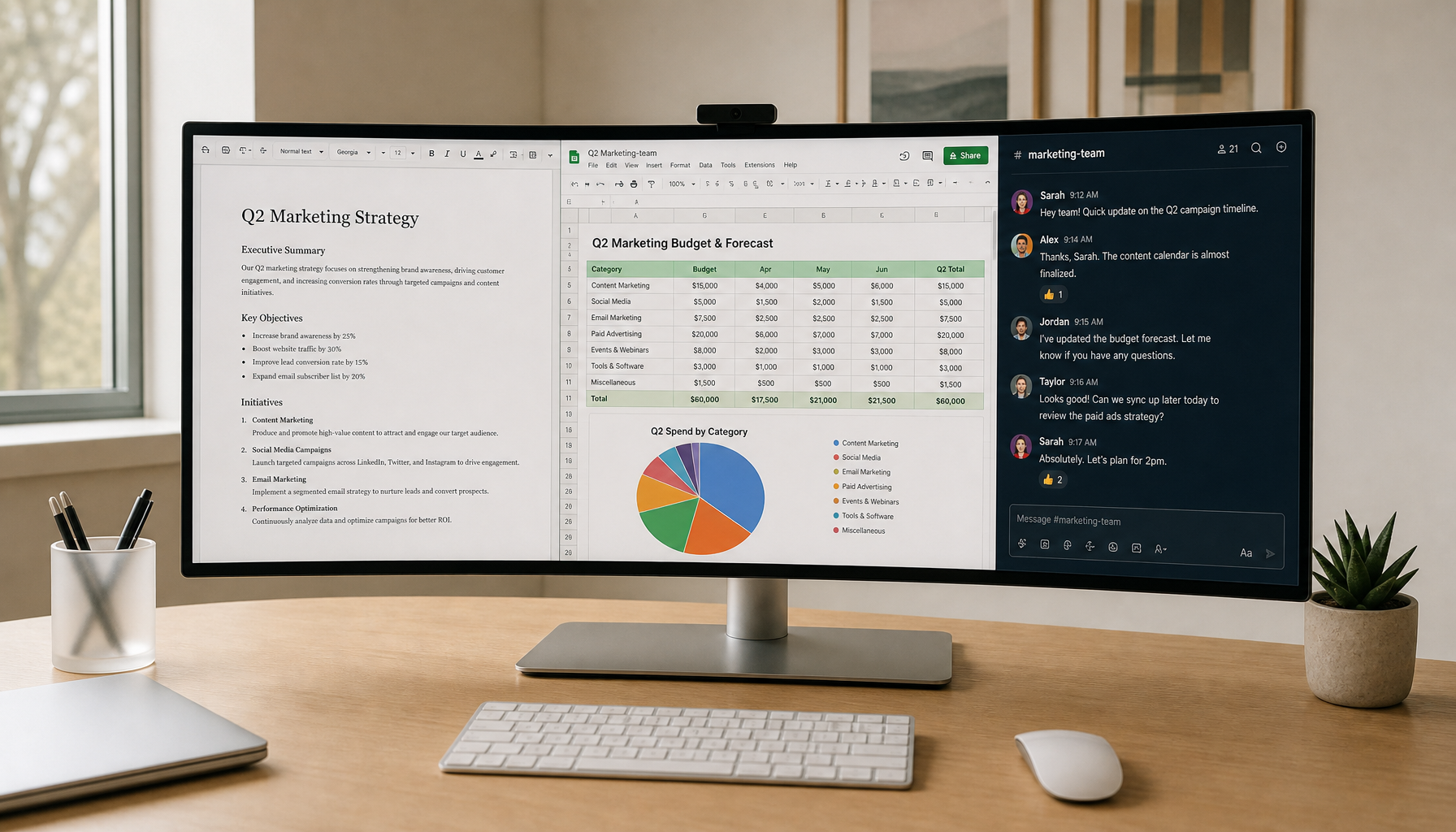
For bright-room hybrid use with lots of daytime productivity and varied HDR gaming, a high-zone Mini-LED monitor often delivers more consistent results without the anxiety of burn-in. In controlled dark rooms focused on cinematic AAA titles, Tandem OLED's perfect blacks and zero algorithmic haloing still provide the more immersive experience.

Tandem OLED: The Dual-Stack Brightness Breakthrough
Tandem OLED stacks two OLED emissive layers to increase light output and improve longevity compared with earlier single-stack designs. This architecture helps overcome the longstanding weakness of OLED monitors — insufficient brightness in well-lit rooms — by delivering stronger small-window highlights that pop in games and movies.
That said, even the latest Tandem panels remain subject to Auto Brightness Limiting (ABL). ABL prevents overheating and burn-in by reducing overall luminance when large bright areas appear on screen. In practice this means Tandem OLED can deliver stunning 3% or 10% window peaks yet still dims noticeably on full-field bright scenes such as snowy landscapes or bright skies. This technical overview explains how the dual-stack approach doubles effective brightness while extending panel life.
Many buyers coming from older OLEDs notice the improvement immediately in mixed desktop use, but the technology still trades some sustained full-screen brightness for its perfect pixel-level blacks. For more context on how these panels compare in gaming, see our guide to MiniLED vs. OLED: Which Display Technology Wins for Gaming in 2025?.
5000-Zone Mini-LED: The Sustained Luminance Champion
Increasing local dimming zones to 5,000 or more gives Mini-LED backlights far finer control over light leakage. The result is significantly reduced blooming around bright objects against dark backgrounds, narrowing the traditional contrast gap with OLED. PCMag's hands-on look at a near-5,000-zone implementation shows how this density helps the technology challenge OLED in real scenes.
Mini-LED's biggest practical advantage is its ability to sustain high brightness across the entire screen without aggressive ABL. A full white field or bright sky in a game stays visibly brighter on these panels than on even the newest Tandem OLEDs. The trade-off is that the backlight still relies on predictive algorithms; fast-moving high-contrast objects can occasionally reveal minor trailing or haloing that self-emissive OLED avoids by design.
Understanding what these zones actually achieve helps when shopping. Our article on What “Local Dimming Zones” Mean in Monitor Backlight Technology breaks down the differences between Mini-LED, full-array, and edge-lit approaches.
The ABL Factor: Peak Brightness vs. Real-World Impact
Auto Brightness Limiting exists on OLED panels to protect the organic materials from excessive current draw. When a large bright area appears, the panel dims the whole image to stay within safe power and heat limits. Tandem OLED has pushed this threshold higher, so you can now use it comfortably in brighter rooms than before. Yet Mini-LED still holds the advantage on sustained full-field luminance.
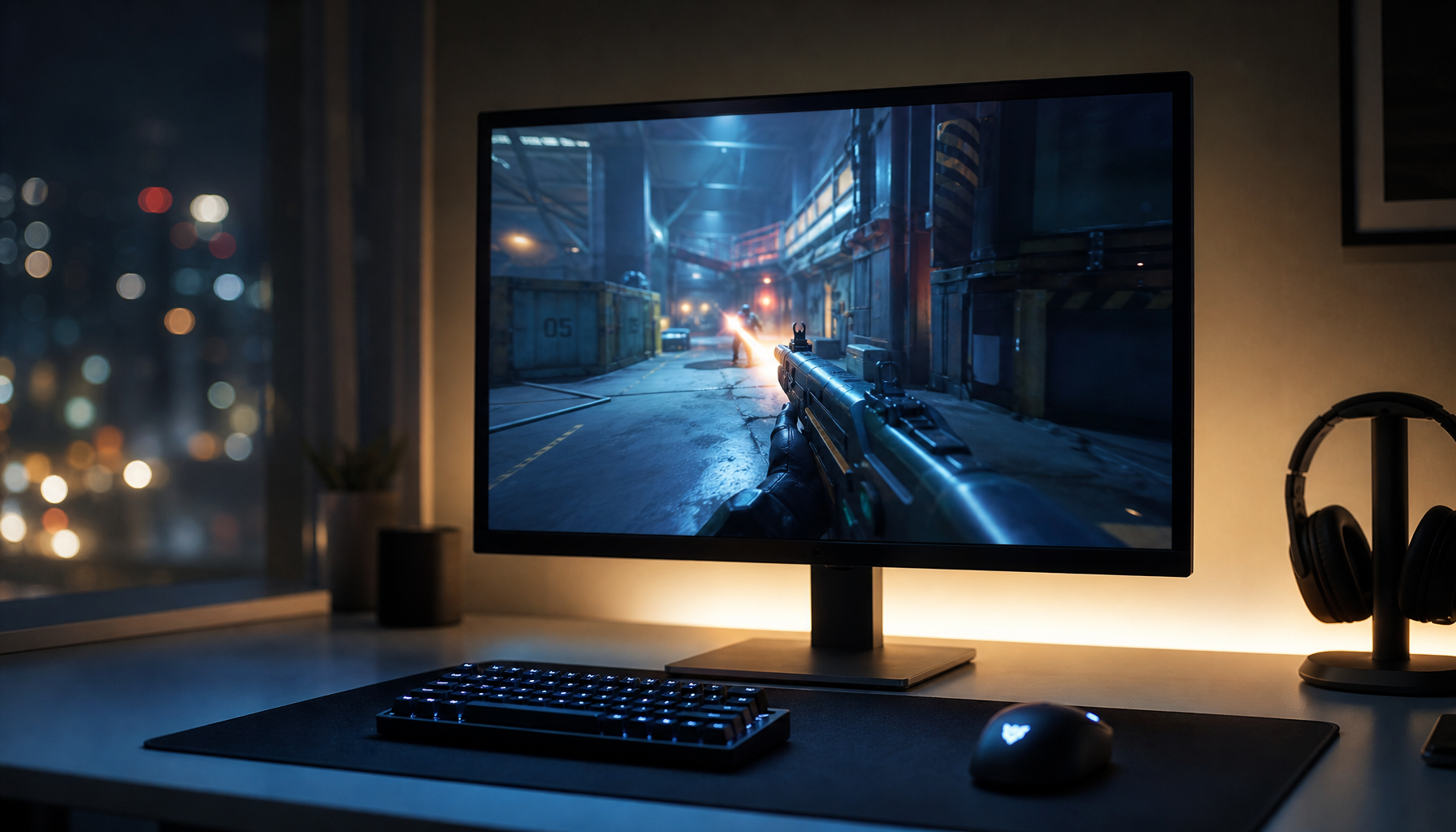
In gameplay terms this creates a clear scenario split. Tandem OLED shines on neon-lit cyberpunk streets or small highlight explosions where its perfect blacks make every light source feel infinite. Mini-LED delivers the “squint factor” on expansive bright environments — think snow-covered mountains in open-world games or bright desert horizons — because it does not throttle as aggressively.
This heatmap shows relative performance tiers rather than measured nits. Darker blue indicates stronger sustained brightness in that scenario. The pattern helps illustrate why the “best” technology changes with content.

Spec-Sheet Reality: How to Read 2026 HDR Labels
VESA certifications measure different things. DisplayHDR 1400 is a volume standard that demands at least 1,400 nits peak luminance along with strong local dimming. DisplayHDR True Black is a precision standard that prioritizes near-infinite contrast and black levels below 0.0005 nits. A 1,300-nit Tandem OLED carrying True Black certification can therefore deliver a more convincing dark-room HDR image than a 1,400-nit Mini-LED with visible blooming, even though the nit number is lower.
The practical takeaway is to stop chasing the highest nit rating in isolation. In light-controlled rooms the absence of algorithmic haloing often matters more than an extra 100 nits. In bright rooms or with lots of full-field bright content the sustained luminance of Mini-LED usually wins. Our piece on What Is the Real Difference Between Native and Emulated HDR on Gaming Monitors? explores how these labels translate to actual picture quality.
Choosing Your Panel: The 2026 Buyer’s Guide
Match the technology to your dominant use case and environment rather than marketing numbers.
Choose Tandem OLED when you game primarily in a dark or controlled-light room, value perfect blacks and zero haloing around small bright objects such as stars, UI elements, or gun sights, and are prepared to follow basic burn-in mitigation habits. The improved durability of the tandem stack makes these panels far more practical for mixed desktop use than 2023-era OLEDs, yet the technology still carries a small long-term risk in high-hour static workflows.
Opt for 5000-zone Mini-LED when your room has uncontrolled ambient light, you mix heavy productivity with gaming, or you want zero maintenance and no burn-in anxiety. These panels deliver brighter full-screen HDR scenes and remain the more “set-and-forget” option for users who keep the same taskbar, browser tabs, or IDE open for eight-plus hours daily. KTC’s Mini-LED lineup illustrates this balance well. The M27P6 combines 4K resolution, HDR1400 certification, and over 1,000 dimming zones in a fully ergonomic stand, making it a strong all-rounder for bright-room hybrid use. The M27T6 and M27T6S offer similar local-dimming advantages at 1440p with higher refresh rates for gamers who prioritize speed over pixel density.
If your workflow includes long static sessions or bright daytime use, the burn-in mental tax and reflection behavior of even improved OLED can outweigh its contrast advantage. In those cases a high-zone Mini-LED removes variables and delivers reliable HDR impact without extra steps.
Frequently Asked Questions
Does Tandem OLED eliminate burn-in risk compared with older OLED panels?
Tandem OLED significantly reduces burn-in risk through its dual-stack design and improved materials, yet it does not remove the risk entirely. Users with heavy static productivity workloads should still use dark mode, hide the taskbar, and enable pixel-cleaning routines. Mini-LED removes this concern completely.
Is HDR1400 always better than True Black for gaming?
No. HDR1400 emphasizes peak brightness volume while True Black prioritizes contrast precision. In dark rooms the True Black Tandem OLED often looks more convincing because there is no blooming. In bright rooms or full-screen bright content the HDR1400 Mini-LED maintains higher visible luminance.
How noticeable is blooming on 5000-zone Mini-LED monitors?
Modern 5000-zone implementations reduce blooming to a level most gamers find acceptable during fast motion. Subtle haloing can still appear around small bright objects on dark backgrounds, but it is far less pronounced than on older 500- or 1,000-zone panels. OLED remains the only technology with mathematically zero blooming.
Which technology is better for bright-room AAA gaming?
5000-zone Mini-LED generally performs better in bright rooms because it sustains higher full-screen brightness and cuts through ambient light more effectively. Tandem OLED has narrowed the gap for mixed content, but Mini-LED retains the advantage on large bright scenes.
Should I avoid Tandem OLED if I use my monitor for work all day?
If your workday exceeds eight hours with static UI elements such as toolbars, spreadsheets, or code editors, many users prefer Mini-LED to avoid any burn-in anxiety or the need to manage screen savers and dark themes. Tandem OLED is viable with good habits, but Mini-LED is the lower-friction choice for heavy hybrid use.
Can Tandem OLED match Mini-LED full-screen brightness in HDR games?
Current Tandem OLED panels still trigger ABL on large bright areas, so they cannot sustain the same full-field luminance as 5000-zone Mini-LED. The gap has narrowed for smaller highlights and mixed scenes, but expansive bright environments remain Mini-LED territory.