









Your monitor’s USB-C port usually stops charging at a certain level because its Power Delivery output is lower than your laptop’s real power demand. The display may keep the laptop running, but under load it cannot refill the battery past the point where system draw and USB-C charging power balance out.
USB-C Is the Plug, Not the Promise
USB-C looks simple because one reversible cable can carry video, data, and power. The catch is that USB-C is only the connector shape, while charging depends on USB Power Delivery, cable capability, and the specific monitor port.
A USB-C monitor can send a picture through DisplayPort Alt Mode, run a USB hub, and charge a laptop at the same time, but only when all three pieces support it. When supported, audio and video travel through USB-C through that mode.
That same idea applies to power. A port labeled “USB-C” may support video but offer little or no laptop charging. Another port on the same monitor may be the actual PD-capable input.

The Charging Ceiling Is Usually a Wattage Mismatch
Most USB-C monitors deliver 45W, 60W, 65W, 90W, or 100W. Many thin office laptops are comfortable at 65W, but gaming laptops, creator laptops, and mobile workstations often want 90W, 120W, 140W, or more during heavier use.
That is where “won’t charge above 72%” or “stays at 80%” behavior comes from. If your laptop needs 85W while gaming, rendering, or driving a high-refresh external display, and the monitor provides 65W, the battery becomes a buffer instead of a tank being filled.

For example, a 65W USB-C monitor may charge an ultrabook while you write documents, browse, and run spreadsheets. The same monitor may only slow battery drain on a performance laptop running a game, video export, or multiple browser-heavy work apps.
Some premium USB-C displays raise the ceiling. Many USB-C monitors provide 65W to 90W, while some models go higher, including displays with 140W USB-C Power Delivery.
Cable, Port, and Negotiation Problems Can Cap Charging
Power Delivery is negotiated electronically. The laptop, monitor, and cable agree on voltage and wattage before full charging begins. If that negotiation fails or falls back to a lower mode, charging may be weak, intermittent, or disabled.
USB-C devices use configuration signaling to decide power roles, and USB Power Delivery lets compatible devices agree on higher charging levels.
The most common blockers are simple: the cable may be charge-only, low-rated, damaged, or not full-featured; the monitor’s USB-C port may support display but not enough PD; the laptop’s USB-C port may be data/video-only or limited by firmware; a dock, hub, or adapter may reduce available wattage; or the laptop may be protecting battery health with a charge limit setting.
A cable that works for video is not automatically ideal for high-watt charging, especially with high-resolution or high-refresh monitor use.

How to Fix It Without Killing the Single-Cable Setup
Start with specs, not guesswork. Check the monitor’s USB-C PD rating, your laptop charger’s wattage, and whether the cable is rated for the power level you expect.
If your laptop ships with a 100W or 140W charger and your monitor outputs 65W, the monitor is not broken. It is underpowered for that laptop under load.

- Use the monitor’s PD-labeled USB-C port, not a downstream hub port.
- Test with a certified full-featured USB-C or Thunderbolt cable.
- Compare charging while idle versus gaming or heavy productivity.
- Update BIOS, chipset, Thunderbolt/USB4, and monitor firmware if available.
- Disable battery conservation limits only if you actually want 100% charging.
For hybrid work and gaming, 65W is often fine for ultrabooks, while heavier laptops may need closer to 90W, as KTC’s setup advice notes for Power Delivery capacity.
What to Buy Next Time
Choose the monitor around your laptop’s power profile, not just resolution and refresh rate. A 4K office display with 65W PD may be excellent for a business ultrabook, while a 144Hz gaming laptop deserves 90W, 100W, or a separate charger.
The best setup keeps performance stable: USB-C for clean video, data, and everyday charging, plus the original power brick when your laptop needs full-throttle power.



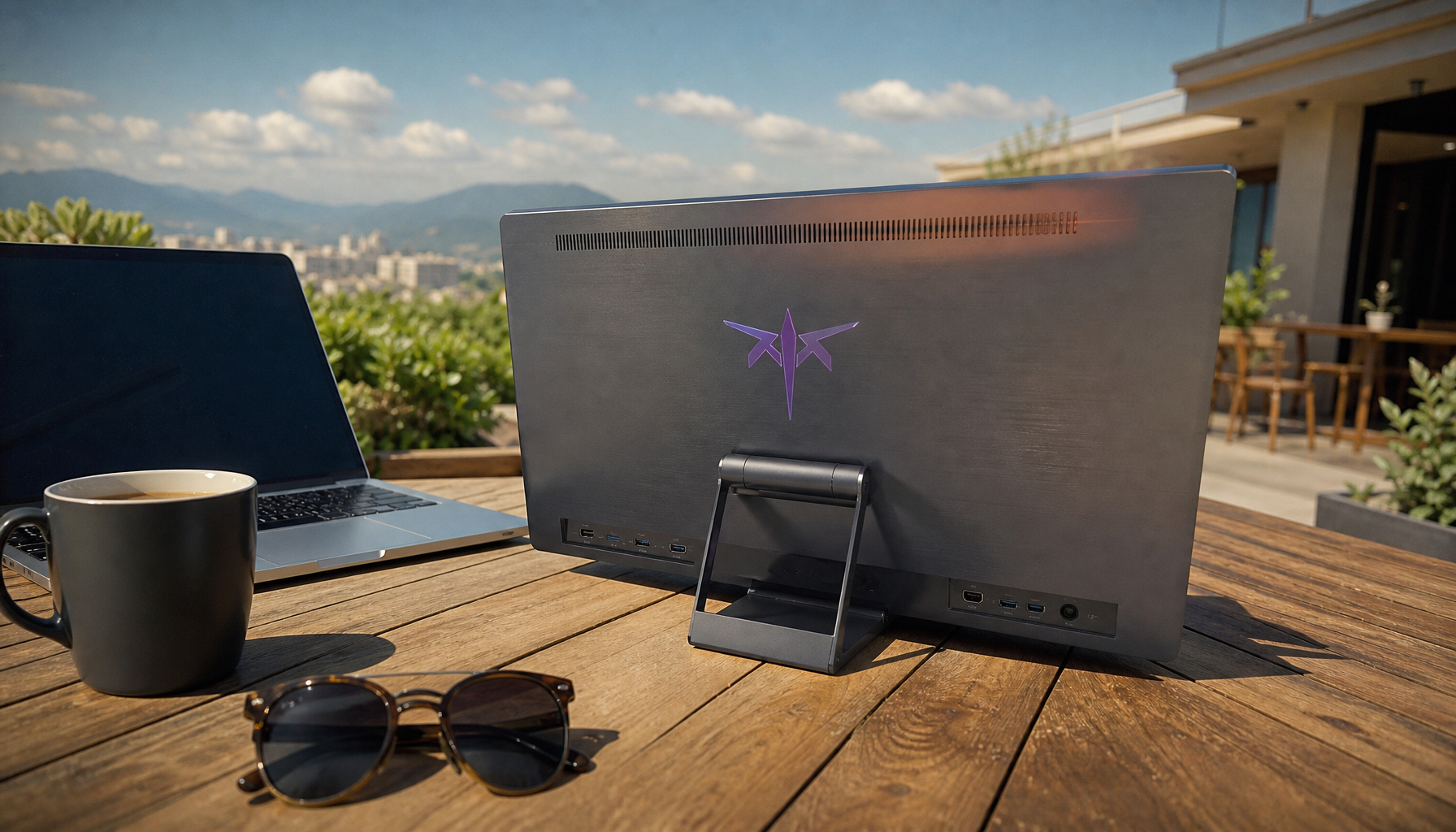
%20wattage%20is%20lower%20than%20your%20device's%20needs.%20This%20common%20wattage%20mismatch%20is%20why%20charging%20stalls.
)