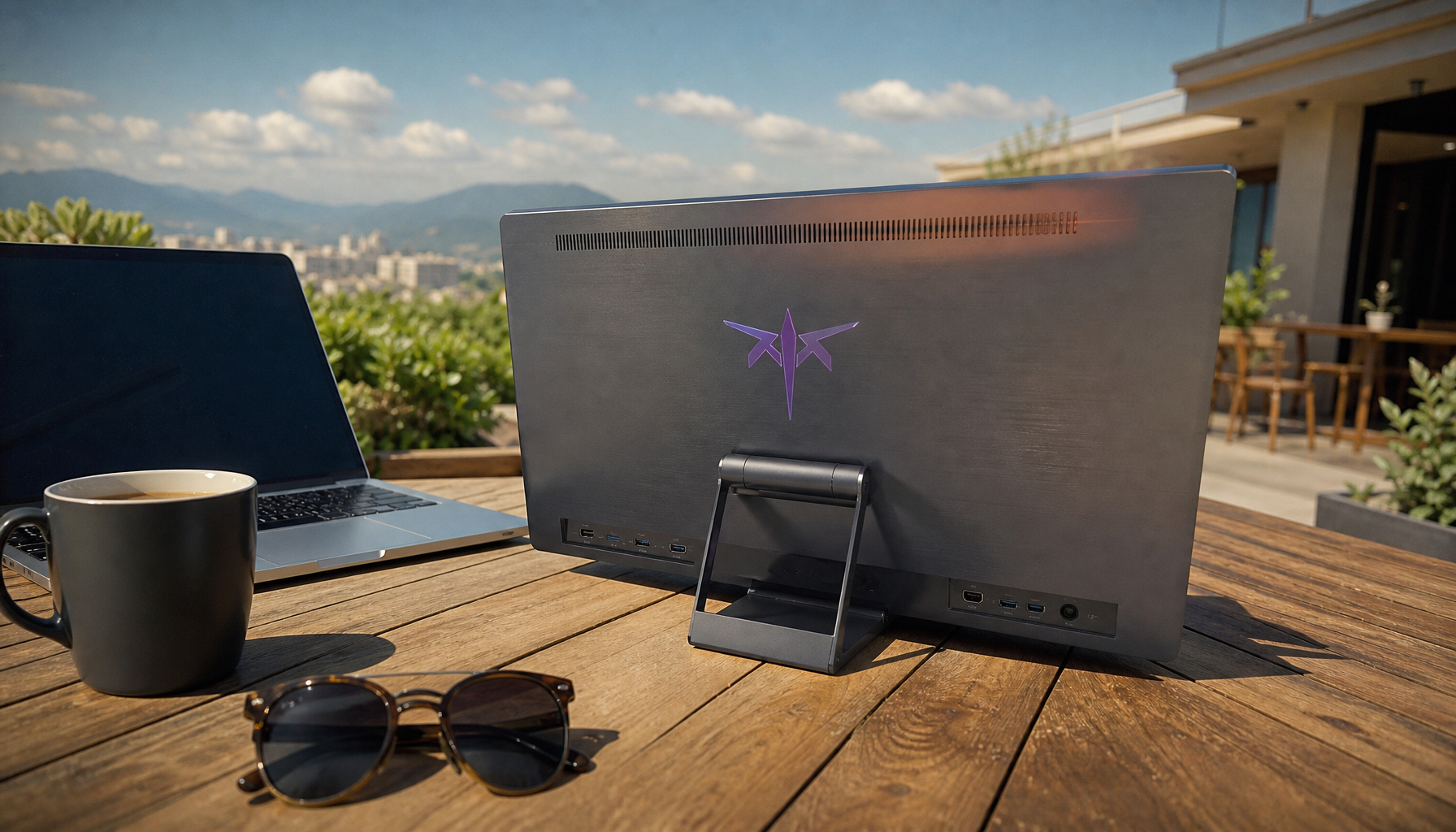
A USB-C monitor usually fails through a dock because one link in the chain does not carry video. The laptop port, dock, cable, operating system, or monitor input mode may support charging and data without supporting DisplayPort Alt Mode or Thunderbolt display output.
Is your screen charging your laptop and passing your keyboard and mouse input, but still showing “No Signal”? In real workstation troubleshooting, checking video capability first can save you from wasting time on driver reinstalls, monitor resets, and replacement docks. Here is how to identify the weak link and build a USB-C setup that supports the resolution, refresh rate, charging, and multi-monitor workflow you bought it for.
Why USB-C Fit Does Not Mean USB-C Works
USB-C is only the shape of the connector. The performance behind that port can range from basic charging to high-bandwidth Thunderbolt display output, which is why two devices can plug together perfectly and still fail to show an image. A USB-C port must support video output for a monitor connection, and not every USB-C port can output video.
The most common compatibility issue is a mismatch between what the dock expects and what the laptop can deliver. A dock with HDMI and DisplayPort outputs may still depend on the laptop’s USB-C port carrying DisplayPort Alt Mode or Thunderbolt. If the laptop’s port is data-only, the dock may run USB accessories while the monitor stays black.
This is especially confusing because USB-C accessories often work partially. Your Ethernet adapter may connect, your mouse may respond, and your laptop may charge, yet the display signal never reaches the monitor. That does not mean the dock is automatically defective. It means video support needs to be verified at every step.

The Core Requirement: DisplayPort Alt Mode or Thunderbolt
DisplayPort Alt Mode lets a USB-C port send video using DisplayPort signaling. Thunderbolt also uses the USB-C connector and supports display output with greater bandwidth and flexibility. In practical terms, Thunderbolt 3 can drive up to two 4K displays at 60 Hz, while Thunderbolt 4 can support up to two 4K displays at 60 Hz or one 8K display, depending on the system and device chain.
A USB-C monitor connection can carry video, audio, data, and power through one cable when the devices support it. That is the promise of a clean, high-performance desk. But USB-C monitors still require Alt Mode support from the connected device, or the monitor may receive no video even though the connector fits.
For example, a slim office laptop with two USB-C ports may have one charging/data port and one Thunderbolt port. If the dock is plugged into the data-only port, the monitor will fail. Moving the same dock to the Thunderbolt-marked port can instantly restore display output because the available signal path changed.
Where the Compatibility Breaks
The Laptop Port Is Data-Only
The first place to check is the laptop specification sheet, not the dock listing. Look for “Thunderbolt,” “USB4,” “DisplayPort Alt Mode,” or “video output over USB-C.” Some laptops show a lightning-bolt icon for Thunderbolt or a DisplayPort-style icon near the port, but markings are not universal.
If the laptop lacks native USB-C video, a normal USB-C dock cannot create a direct video signal out of nothing. In that case, a DisplayLink or similar software-driven dock may be the practical workaround because it uses drivers to send display data over USB rather than relying on native Alt Mode. That can be a good office solution, but it is not ideal for latency-sensitive gaming or color-critical creative work.
The Cable Charges but Does Not Carry Video
USB-C cables are not all built the same. A charging cable bundled with a phone may deliver power but lack the wiring or bandwidth needed for monitor video. For video transmission, a full-featured USB-C cable is required.

A practical test is simple: use the short USB-C cable that shipped with the monitor or dock, then test a certified cable rated for video, USB-C 3.1 Gen 2, 10 Gbps, USB4, or Thunderbolt. If the display works with one cable and fails with another, the dock was never the core issue.
The Dock Does Not Support Your Monitor Plan
A basic USB-C hub with one HDMI port is not the same as a desktop dock built for dual 4K output. Dual-monitor setups depend on the dock chipset, laptop video output, operating system behavior, and available bandwidth. Before choosing a dual-display dock, verify whether the laptop supports USB-C DisplayPort Alt Mode or Thunderbolt.
The resolution target matters. A 1080p office monitor is easy compared with dual 4K at 60 Hz, ultrawide gaming refresh rates, or three-display productivity setups. If you want a laptop screen plus two external displays, do not shop only by port count. Match the dock’s stated display modes to your actual monitors.
Setup Goal |
Compatibility Priority |
Practical Risk |
One 1080p monitor |
USB-C video-capable port and video cable |
Low, if Alt Mode is confirmed |
One 4K monitor at 60 Hz |
DP Alt Mode or Thunderbolt, capable dock, proper cable |
Medium, because cable quality matters |
Thunderbolt or a dock explicitly rated for dual 4K |
Higher, especially on some laptops |
|
Gaming monitor above 60 Hz |
Bandwidth, GPU support, dock refresh-rate limits |
High, because many docks cap refresh rates |
Portable USB-C smart screen |
Video plus enough power delivery |
Medium, because power draw can reduce stability |
The Operating System Handles Displays Differently
Some operating systems generally support extended displays through compatible docks predictably, though the hardware still must support video output. After connecting, the display settings should show the external monitor, and “Extend these displays” is usually the right mode for productivity.
Other laptops need closer attention. Certain system-on-chip configurations may mirror displays or limit the number of extended external monitors without DisplayLink-based hardware. A USB-C hub can support dual monitors, but the result depends on the laptop, operating system, hub chipset, and video standards.
For a real desk setup, this means the same dock can behave differently across computers. The dock listing may be technically correct, while your specific laptop still cannot drive the display arrangement you expect.
Power Delivery Can Make a Working Setup Look Broken
Power Delivery is not just about charging convenience. When a dock is powering a laptop, driving a monitor, running storage, and feeding USB accessories, unstable power can cause flicker, disconnects, or monitor detection failures. Monitor detection problems can come from insufficient power, bad cables, HDMI issues, unsupported USB-C ports, or hub compatibility.
For a dual-monitor desk, an 85 W to 100 W power path is often more reliable than a low-power hub, especially when you also use external drives, Ethernet, webcams, and USB peripherals. Monitor power output below roughly 60 W to 65 W may be better suited to phones or tablets than many laptops.
A simple calculation helps. If your laptop normally ships with a 65 W charger and your dock consumes some power internally, a 60 W pass-through hub may leave too little headroom under load. The result can be slow charging, battery drain during meetings, or intermittent monitor behavior when the system boosts performance.
A Practical Troubleshooting Path That Saves Time
Start With the Signal Path
Begin with the laptop port. Confirm the exact model’s USB-C specifications on the manufacturer support page, then look for Thunderbolt, USB4, or DisplayPort Alt Mode. If the port does not support video, a standard USB-C dock will not fix the monitor problem.

Next, bypass the dock. Connect the laptop directly to the USB-C monitor using a known video-capable cable. If the direct connection works, the laptop and monitor are capable, and the dock or dock cable becomes the suspect. If the direct connection fails, test a different USB-C video cable and another USB-C-capable device before blaming the monitor.

Then check the monitor input. USB-C monitors often need the input source set manually, especially after a reset or after using HDMI. A monitor can be fully powered and still listen to the wrong input.
Check the Dock Under Real Load
Reconnect the dock with only the monitor attached. If the display appears, add the charger, keyboard, mouse, storage, and Ethernet one at a time. This isolates overload and power instability. When a dock or hub is involved, testing devices directly on the computer can help confirm whether the dock is faulty or underpowered even when the connected device is healthy.
If the monitor disappears only after adding an SSD or several peripherals, you are likely hitting a power or bandwidth limit. A desktop-class dock with stronger Power Delivery and better thermal design is the better long-term choice than stacking adapters.
Update Firmware, Drivers, and Display Settings
Drivers are not the first thing to chase, but they matter after the hardware path checks out. Update graphics drivers, chipset drivers, BIOS or firmware, dock firmware, and monitor firmware where available. In the operating system’s display settings, use the detection option if the monitor is not shown automatically.
If the setup used to work and suddenly stopped, inspect both USB-C ports for lint, looseness, or physical damage. Test another port on the laptop if available. A port can still charge while failing at high-bandwidth video, which makes physical wear easy to miss.
Buying Advice: Match the Dock to the Screen, Not the Other Way Around
A value-oriented dock is not the cheapest dock with the most ports. It is the dock that supports your actual display workload without hidden compromises. If you use one 4K office monitor, a compact USB-C dock with verified DP Alt Mode support may be enough. If you run dual 4K displays, high-refresh gaming, or a monitor plus a portable smart screen, prioritize Thunderbolt or a dock explicitly rated for your resolution and refresh rate.
For productivity displays, Ethernet, SD card slots, USB-A ports, and stable charging may matter as much as HDMI count. A good dock should function as a single-hub solution for connecting monitors, projectors, keyboards, mice, drives, SD cards, Ethernet, printers, and webcams through one connection, which is exactly what users expect from a clean workstation.
For gaming monitors, be more skeptical. Many office docks support 4K at 60 Hz but not high refresh rates. A 144 Hz or 240 Hz monitor may need a direct USB-C-to-DisplayPort connection, a Thunderbolt dock with the right display spec, or a dedicated GPU output. The wrong dock can make a premium gaming panel behave like a basic office screen.
Pros and Cons of Running a USB-C Monitor Through a Dock
Advantage |
Trade-Off |
One-cable desk setup with display, charging, and accessories |
Every device in the chain must support the needed features |
Cleaner workspace for office, creative, and hybrid setups |
Cable quality can decide whether video works at all |
Easier laptop docking and undocking |
Some docks limit refresh rate, resolution, or extended display support |
Strong expandability with Ethernet, USB-A, storage, and audio |
Power and bandwidth limits can cause intermittent failures |
Good path for dual-monitor productivity |
Some laptops may require DisplayLink for extended displays |
Quick Compatibility FAQ
Why does my USB-C dock charge my laptop but not show the monitor?
Charging and video are separate capabilities. Your cable, laptop port, or dock may support power delivery without supporting DisplayPort Alt Mode or Thunderbolt video.
Can any USB-C dock run dual monitors?
No. Dual-monitor support depends on the laptop’s video output, dock chipset, operating system, cable quality, and monitor resolution. A dock with two display ports is not a guarantee of two extended displays.
Is Thunderbolt better than USB-C for monitors?
Usually, yes for demanding setups. Thunderbolt uses the USB-C connector but offers higher bandwidth and stronger support for multiple displays, high-speed storage, and charging through one connection.
Should I replace the dock first?
Not first. Test the laptop port, cable, direct monitor connection, monitor input source, and power delivery before replacing hardware. A $20.00 cable can cause the same symptom as a failed $200.00 dock.
Build the Setup Around Verified Video
A USB-C monitor and docking station can create a fast, clean, immersive workstation, but only when the signal path is real from end to end. Confirm USB-C video support on the laptop, use a cable rated for display, choose a dock that matches your resolution and refresh goals, and keep enough power headroom for the full desk. That is how you turn USB-C from a guessing game into a reliable display backbone.