High-contrast UI can make text and icons pop, but it can also make your eyes work harder when brightness, room lighting, and text size are not balanced. The result is faster visual fatigue, especially during long gaming, editing, coding, or spreadsheet sessions.
High Contrast Is Not Always High Comfort
Contrast is the gap between the brightest and darkest parts of your screen. A crisp white cursor on a black workspace or black text on a bright white dashboard may look sharp at first, but your pupils and focusing system keep adapting to those strong edges.
That constant adjustment can feel like pressure behind the eyes, light sensitivity, dryness, or headaches. Prolonged display use can also reduce blinking and increase close-focus demand, both of which contribute to screen-related eye strain.
For high-performance displays, the goal is not maximum contrast at all times. The goal is readable contrast that fits your lighting, task, and viewing distance.
The Bright Screen, Dark Room Problem
High-contrast UI becomes more tiring when the monitor is much brighter than the room. A 27-inch display in a dark office can act like a light panel, making every white window, tooltip, and HUD flash feel more intense.

This is common with dark-mode apps that still use bright white text, menus, or notification panels. Your eyes relax into the darker interface, then keep reacting to bright UI elements.
A better setup matches screen brightness to the room and reduces glare from windows or overhead lights. UCLA’s ergonomics advice also emphasizes controlling screen glare and workstation lighting to reduce eye strain.
Why Small Text Makes Contrast Feel Harsher
Tiny text turns high contrast into a precision task. Your eyes must lock onto thin strokes, bright pixels, and sharp edges, especially on dense productivity screens.
That is why a monitor can be technically excellent and still feel uncomfortable. A 4K panel at 100% scaling may look sharp, but if you lean forward or squint, your setup is taking effort away from the work itself.

- Raise scaling to 125% or 150% for dense work.
- Keep text large enough to read at arm’s length.
- Lower contrast if white areas feel harsh.
- Use a matte filter or anti-glare mode if reflections compete with text.
- Clean the screen so smudges do not blur edges.
Better Settings for Gaming and Work
For gaming, high contrast can improve target visibility, shadow detail, and immersion. For office work, it can improve scan speed in dashboards and documents. Both need tuning.
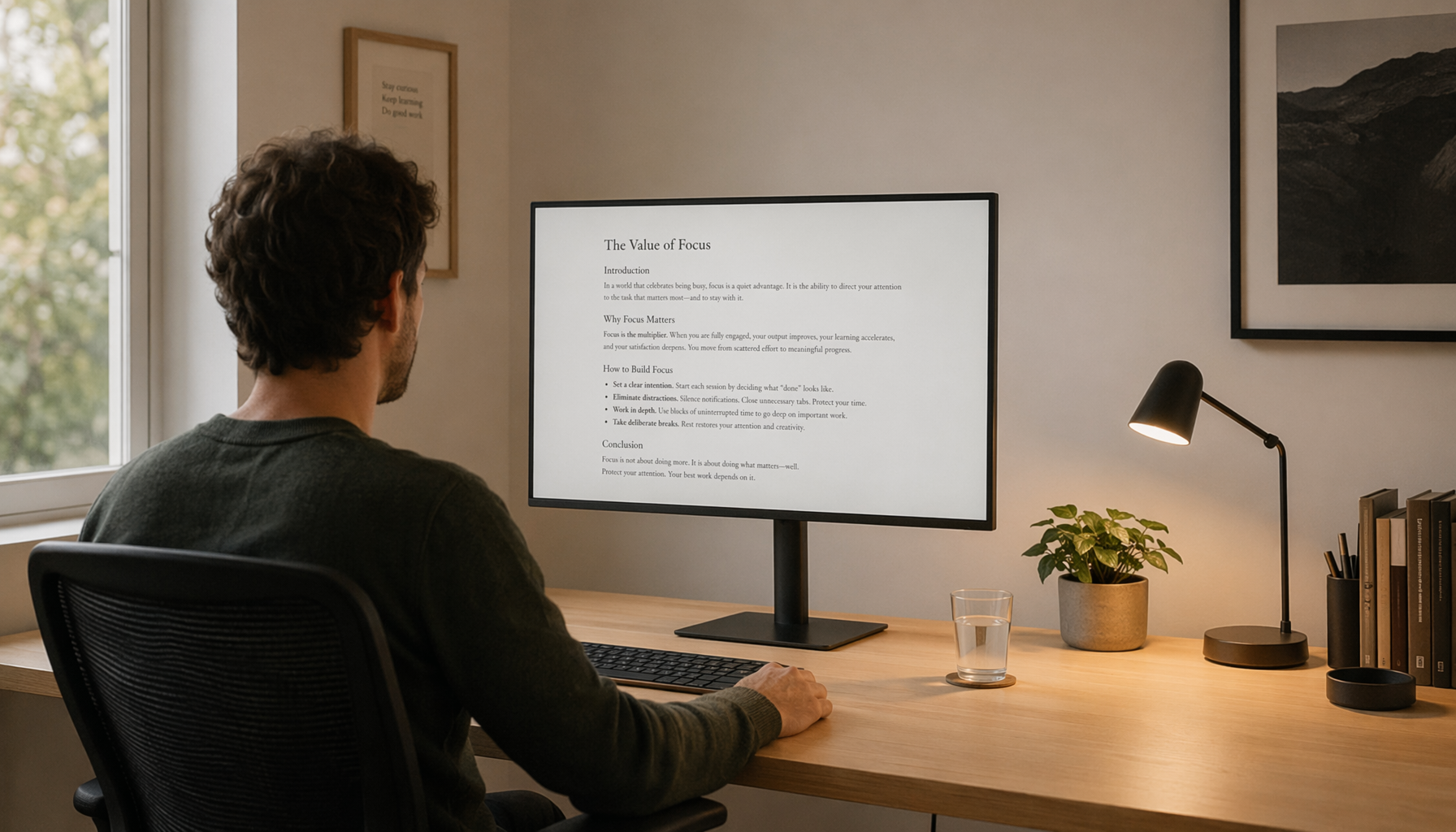
Start with moderate contrast, then adjust brightness until a white page on-screen looks close to a white sheet of paper under the same light. If the screen looks like a lamp, lower brightness. If it looks gray and dull, raise it slightly.
Position matters too. Keep the monitor about 20-26 inches from your face, with the center slightly below eye level. That supports a relaxed downward gaze and can reduce dry-eye exposure during long sessions.

Mayo Clinic notes that eyestrain care often starts with changing habits and environment, not just treating symptoms, so persistent discomfort should be checked through an eye exam.
Build a Display Setup Your Eyes Can Trust
Use high contrast as a tool, not a default. It should improve clarity without making every UI edge feel aggressive.
For all-day comfort, pair your monitor’s performance features with human-friendly habits: balanced brightness, readable scaling, low glare, proper distance, and the 20-20-20 rule. Every 20 minutes, look about 20 ft away for 20 seconds.

Dark mode is not automatically easier, and light mode is not automatically worse. The best mode is the one that keeps contrast readable while matching the light around you.