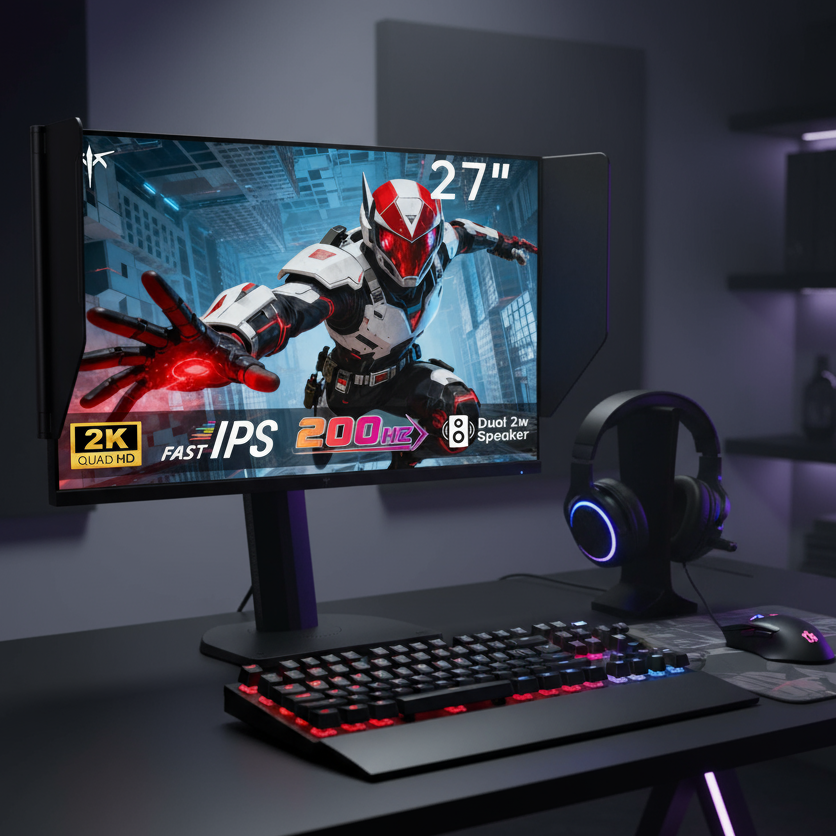


In high-level fighting games like Street Fighter 6 and Tekken 8, sub-millisecond pixel response times help deliver the sharp visual cues needed for frame-perfect reactions, hit confirms, and punishes, but they work alongside refresh rate, input lag, and player skill rather than replacing them. For most competitive players, prioritizing panels with fast GtG transitions (under 1 ms) and high refresh rates reduces motion blur and scan-out latency, giving clearer startup frames even in 60 FPS titles. OLED options often provide the cleanest motion clarity, while Fast IPS panels offer a strong budget alternative; VA panels typically introduce dark smearing that hurts readability in low-profile moves.

Why Fighting Games Demand Different Display Priorities
Fighting games place heavy emphasis on recognizing precise startup frames, hit sparks, and counter-hit animations rather than smooth tracking of distant targets like in many FPS titles. A single missed frame on a Drive Impact in Street Fighter 6 or a throw break in Tekken 8 can decide the round, and motion blur or ghosting can hide the critical first 2-3 frames of those tells.
This shifts priorities away from brand prestige toward spec-sheet performance. Players in the FGC increasingly focus on pixel response time and scan-out behavior over marketing claims. The result is a community that values measurable clarity for reaction-based defense over general “gaming monitor” features.
Slow pixel transitions create visible trails that mask subtle limb movements or flash effects, making whiff punishes and counter-hit timing harder to read consistently. For players upgrading for local tournaments or ranked sessions, the monitor becomes another link in the execution chain that can either support or hinder frame-perfect inputs.
Defining Sub-Millisecond Pixel Response vs. Input Lag
Pixel response time measures how quickly a display’s pixels can change from one color to another (gray-to-gray or GtG), directly affecting motion clarity during fast on-screen movement. Input lag, by contrast, is the total delay between pressing a button and seeing the corresponding action appear on screen. This distinction matters because a monitor advertised as “1 ms” can still feel unresponsive if its processing lag is high.
Marketing numbers often blend GtG with MPRT (moving picture response time), which includes sample-and-hold effects. VESA ClearMR provides a more standardized way to evaluate real motion blur, helping buyers move beyond headline figures. For fighting games, the practical takeaway is that sub-millisecond GtG reduces ghosting between frames, while low overall input lag keeps your actions feeling immediate.
Many players initially confuse the two metrics when shopping. Checking both separately prevents buying a fast-response panel that still feels sluggish due to high controller-to-screen delay.

The 60 FPS Paradox: Why 0.03ms Matters for a 60Hz Game
Most fighting games remain locked at 60 FPS on console and many PC setups, leading some players to assume high-refresh monitors provide no benefit. In reality, a higher refresh rate reduces scan-out latency—the time it takes for a new frame to begin appearing on screen—delivering a fresher image even when the game engine outputs only 60 frames per second.
Higher Refresh Rates Reduce Scan-Out Latency at 60 FPS
At a 60 FPS cap, faster panels refresh the screen sooner after a new frame is ready, cutting scan-out delay and making motion feel more current. The values below show the refresh interval a frame must wait for on each panel class.
View chart data
| Category | Scan-out latency per refresh cycle (ms) |
|---|---|
| 60Hz | 16.67 |
| 144Hz | 6.94 |
| 240Hz | 4.17 |
| 360Hz | 2.78 |
This chart shows why a high-refresh panel can still feel faster in a 60 FPS game: the display can begin showing a fresh frame much sooner. The comparison is about scan-out latency, not total input lag. A 240 Hz panel starts drawing the frame roughly 12 ms earlier than a 60 Hz panel, which helps visual cues feel more current for reactions.
Blur Busters explains that OLED’s 0.03 ms GtG response nearly eliminates transition ghosting, though sample-and-hold persistence blur remains present at 60 FPS because each frame is held for the full 16.7 ms. This combination makes OLED panels particularly effective for fighting games where sharp hit sparks and startup animations matter.
Motion Clarity in Action: Reacting to SF6 and Tekken 8 Visual Cues
In Street Fighter 6, the Drive Impact “paint splash” effect relies on the first few frames of animation for reliable reactions. Motion blur on slower panels can obscure these early frames, making it harder to distinguish between a successful counter and a whiffed punish. Community discussions on timing windows confirm that clearer visuals help players read these tells more consistently during high-stakes ranked play.
Tekken 8 throw breaks require spotting subtle left-versus-right hand differences within tight windows. Persistence smear on VA or slower IPS panels can blend limb extensions, delaying recognition by a frame or two that competitive players cannot afford. Faster panels make hit sparks and counter-hit flashes appear more distinct, giving quicker feedback on successful execution.
These advantages remain one link in the chain. Network rollback, controller polling rate, and personal execution still dominate overall performance. Sub-millisecond response improves the visual layer but does not guarantee better results if other parts of the setup lag behind.
Evaluating Specs for the FGC: GtG, MPRT, and Panel Types
GtG response time tells you how quickly pixels transition, while MPRT captures the full perceived blur including how long each frame is held. For fighting games, low GtG reduces ghosting between frames, and high refresh lowers the hold time, together improving clarity for frame-specific reads.
OLED panels like the KTC G27P6 reach 0.03 ms GtG and deliver near-zero transition ghosting, making them the reference standard for maximum motion clarity in reaction-heavy play. Fast IPS panels in the 1 ms range, such as those in the KTC H25X7 and H27E6, offer a practical middle ground with high refresh rates that cut scan-out latency while staying budget-friendly.
VA panels often suffer from dark-level smearing on low-contrast moves like Snake Edge in Tekken, which can hide critical animation details. Most competitive FGC players therefore avoid VA for tournament or ranked fighting game use. VESA ClearMR helps evaluate real-world motion performance beyond manufacturer GtG claims.
The friction of aggressive overdrive settings appears here too. Pushing Fast IPS panels to their “Fastest” preset can create inverse ghosting—bright halos around hit sparks and limb movements in SF6. Tuning overdrive per game, often to a middle “Advanced” setting on models like the H25X7, helps balance speed and cleanliness. Sensitivity to these artifacts varies; what one player sees as distracting may not bother another.
For a deeper look at related panel behavior, see our guides on What Is Pixel Overdrive, and When Does It Create Inverse Ghosting?, What Is Monitor Ghosting and How Do You Eliminate It?, and IPS vs VA Panels: Which is Right for Your Playing Style?.
Choosing Your Fighter: The Best KTC Monitors for Fighting Games
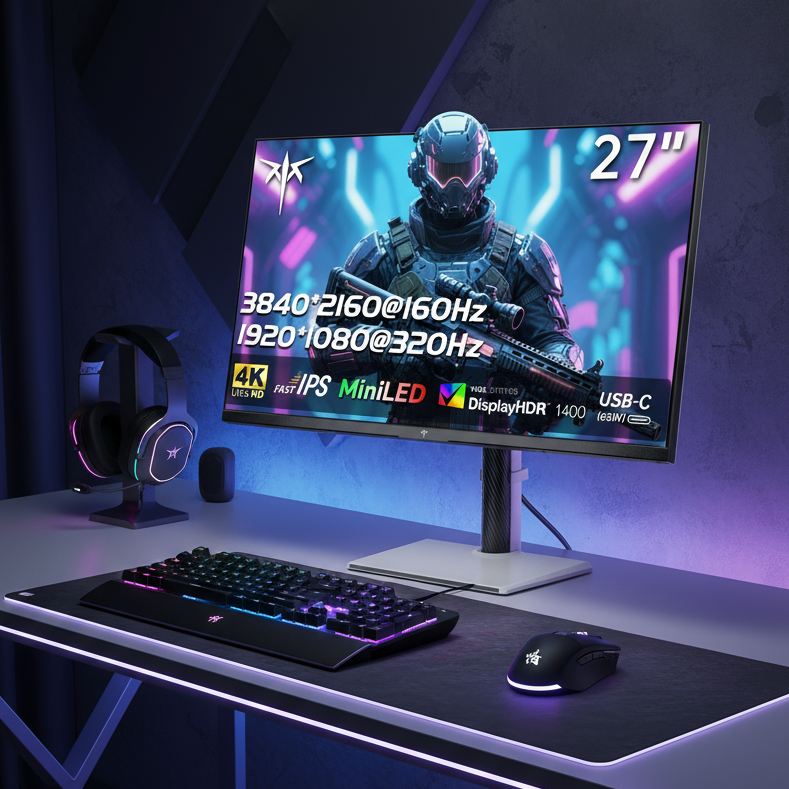
Your choice depends on budget, resolution preference, and whether you value absolute clarity or minimum scan-out latency. OLED remains the top pick for enthusiasts seeking the cleanest visual registration in titles like Street Fighter 6 and Tekken 8. The KTC OLED 27" 2K 240Hz/0.03ms USB-C Gaming Monitor | G27P6 provides 0.03 ms response and strong HDR, giving sharp hit sparks and startup frames with almost no ghosting.
For budget-conscious players who prioritize high refresh to reduce scan-out delay, the KTC 24.5 inch 360Hz/400Hz OC Fast IPS FHD Gaming Monitor HDR 400 | H25X7 delivers 1 ms performance at up to 400 Hz overclock. Its compact size and speed suit dedicated fighting game stations where low latency matters most.
Hybrid users who split time between fighting games and other tasks may prefer the KTC 27" 2K 300Hz/1ms Gaming Vertical Monitor | H27E6. The 1440p resolution and 300 Hz refresh balance clarity for SF6/Tekken with usability for everyday gaming. All three models avoid the dark smearing common in VA panels, aligning with FGC preferences.
Check your setup’s output capabilities first. Console players limited to 60 Hz will still benefit from the reduced scan-out of high-refresh panels, but PC players running unlocked frame rates gain the most from 240 Hz and above. Test overdrive settings in your specific game to avoid inverse ghosting that could distract during long sessions.
Do Sub-Millisecond Response Times Guarantee Better Combo Execution?
No. While sub-millisecond GtG reduces visual artifacts that can mask timing cues, combo execution still depends primarily on player skill, controller polling, game engine timing, and overall system latency. A fast monitor improves readability but cannot compensate for missed inputs or rollback netcode delays.
How Much Does Ghosting Affect Throw Breaks in Tekken 8?
Ghosting on slower panels can blend the first 1–2 frames of a throw animation, making left/right distinction harder in tight windows. Faster panels with sub-millisecond response make these differences more distinct, though individual visual sensitivity and room lighting also play roles.
Should Console Players Still Choose High-Refresh Monitors for Fighting Games?
Yes, when the monitor reduces scan-out latency. Even at a 60 FPS console output, a 240 Hz or 360 Hz panel can present each frame sooner than a 60 Hz display, improving perceived freshness of visual cues without requiring the game to run at higher frame rates.
Is VESA ClearMR More Useful Than GtG Specs for FGC Buyers?
ClearMR offers a standardized motion clarity rating that accounts for both transition speed and hold effects, making it more practical than manufacturer GtG numbers alone. It helps compare real-world blur performance across OLED, IPS, and VA panels for fighting game use cases.
When Does Inverse Ghosting Become a Problem in Fighting Games?
Inverse ghosting appears most noticeably around bright hit sparks and fast limb extensions when overdrive is set too aggressively. In Street Fighter 6, this can create distracting halos; testing middle overdrive modes per game usually resolves it without sacrificing too much response speed.