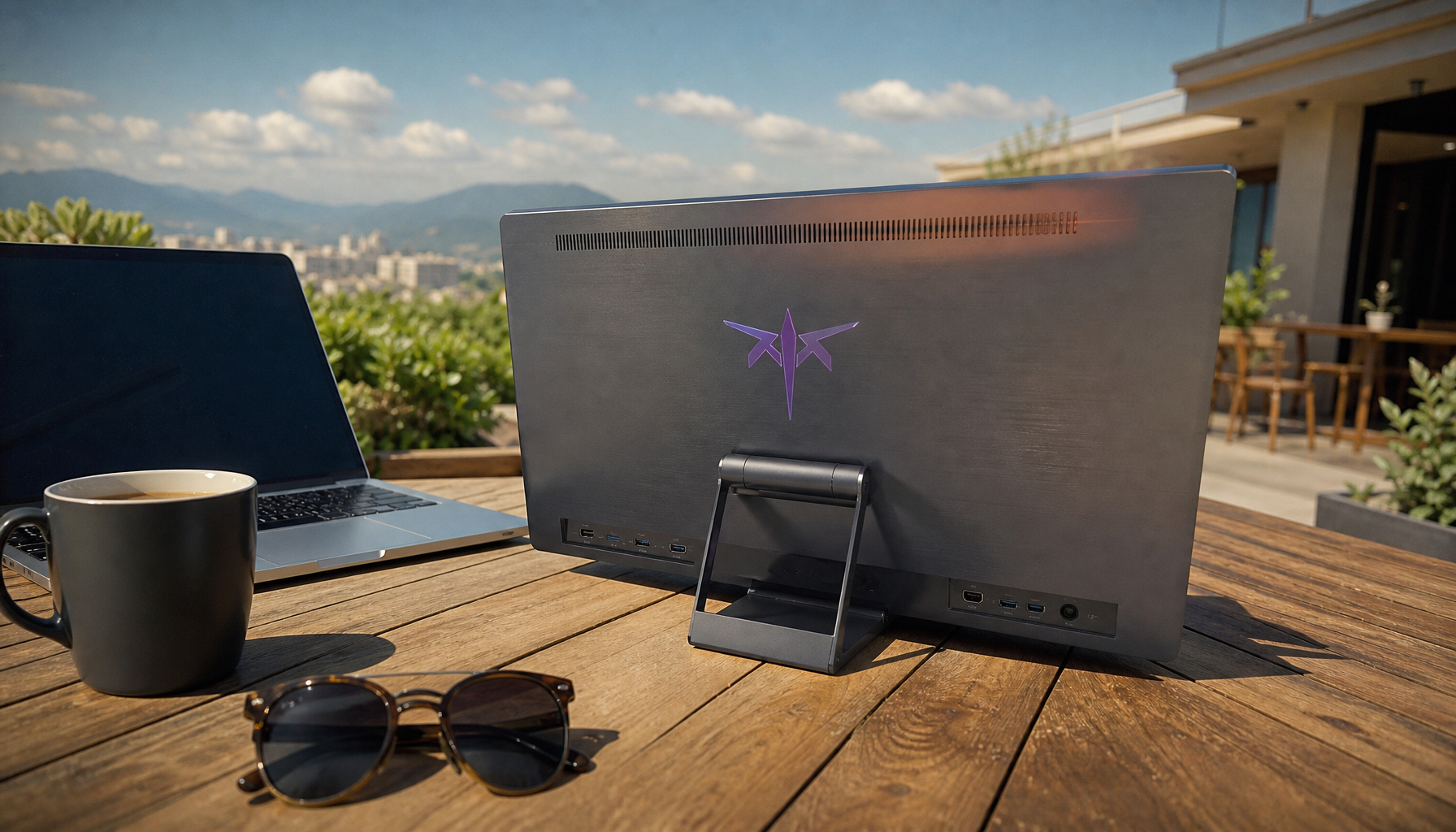
Curved ultrawide monitors often look dustier faster because they have more surface area, reveal particles more easily under angled light, and create more hard-to-reach spots around the back, stand, and cables. The fix is usually better setup and a simple cleaning routine, not giving up the immersive screen.
Does your curved ultrawide look spotless after dinner and dusty again by the next afternoon? A short reset with the right wipe path and a cleaner desk area is usually enough to keep the panel clear without turning maintenance into a chore.
Why Curved Ultrawides Seem Dustier Faster
A larger viewing area gives dust more screen edge, bezel, housing, and stand area to land on than a smaller flat display. When you move to a wide curved panel, you do not just add pixels; you add a longer top edge, a broader rear shell, and more places where lint can settle before you notice it. That alone makes a curved ultrawide feel like it gets dirty faster, even when the room itself has not changed.
The shape of a wide curved panel also changes how dust shows up to your eyes, which is not the same as how fast it physically lands. Because the outer zones angle toward you, side light from a window, desk lamp, or ambient lighting can catch fine particles and make them stand out sooner than they would on a flatter panel. On big curved screens, the first dirty zones are rarely the center; they usually show up on the top lip, the outer thirds of the display, and the rear edge you skip during a rushed wipe-down.

The overlooked areas around the monitor matter more than most owners expect. Wider screens usually bring a heavier stand or arm, extra power and video cables, and a larger shadow zone behind the display, so dust has more surfaces to collect on before it works back into view around the bezel and rear housing. If your setup sits near a doorway, a carpeted walkway, or moving air, buildup becomes even more noticeable.
It Is Usually the Setup, Not the Curve Alone
Curvature itself is probably not the main reason a monitor gets dusty. Curved ultrawides tend to look dustier sooner because they are bigger, harder to reach evenly, and better at revealing fine debris under angled light. That distinction matters because the solution is not switching panel styles; it is improving the cleaning path and the environment around the display.
Room conditions also affect where particles settle. In practical terms, airflow, surface layout, and clutter around a workstation can change what lands on your screen. That makes prevention a desk-system problem, not just a screen-surface problem.
What Dust Changes on a Wide Screen
A thin layer of dust on monitors and office equipment is easy to ignore until it starts softening contrast, making dark game scenes look hazy, or turning bright documents into a field of tiny sparkles. On an ultrawide, that distraction stretches across more of your field of view, so the visual penalty feels bigger than it does on a compact display. The wider the panel, the more obvious one missed swipe becomes.
Because ultrawide monitors improve workspace breadth and immersion, dust is not just a cosmetic annoyance; it chips away at the main reason people buy these displays. A screen that should disappear into your workflow starts calling attention to itself through edge haze, specks, and dirty side zones. For gaming, that weakens scene depth. For office work, it adds low-grade friction during long reading and multitasking sessions.
How to Prevent Fast Buildup Without Babying the Monitor
Start With the Room Around the Panel
Better ventilation and basic dust control usually help more than aggressive screen wiping. Dust, pollen, and stale air keep resettling on the panel, so lowering what circulates in the room reduces how often you need to touch the display at all. Keep the desk surface clear enough for air to move, and avoid boxing the monitor into piles of paper, fabric, or packaging that sheds lint.
Simple cable organization is one of the highest-value fixes for a curved setup. Bundled cords collect dust, make the rear housing harder to reach, and turn a two-minute wipe-down into a task you postpone. If you can easily see and access the stand, arm, power brick, and cable runs, you are far more likely to clean them before the buildup reaches the panel again.
Use a Short Rhythm Instead of Heroic Cleaning
A five-minute end-of-day reset beats an occasional deep-cleaning marathon. Clearing cups, moving loose papers, wiping the desk, and giving the bezel and stand a quick microfiber pass stops loose dust from turning into a visible layer. This is where curved ultrawides benefit most from routine: a small daily habit protects a premium screen without wasting your time.
Once a week, use a simple timed session. Spend 20 minutes dusting from high to low, clearing the top edge and rear housing, cleaning the cable path, and vacuuming or dusting the floor around the desk, then step away for 10 minutes instead of letting the job drag on. That rhythm works because the panel itself is only one part of the dust zone.
Clean in the Right Order
Cleaning from high to low keeps you from knocking fresh dust back onto a screen you already wiped. In practice, the best order is the top edge first, then the rear panel, then the stand or arm, then the cable area, and only then the display surface itself. That way, the last thing you touch is the part you actually look through.
Keeping a microfiber cloth at the workstation sounds basic, but it removes the main reason dust stays put: friction in the routine. When the cloth is within reach, you wipe the top edge or lower bezel the moment you notice it instead of promising to deal with it later. If a dry pass is not enough, follow the monitor maker’s cleaning instructions rather than improvising with household glass cleaners.

Do Not Ignore the Desk Ecosystem
Not eating at the desk helps more than many monitor owners realize. Crumbs, oily residue, and sticky splatter do not stay politely on the keyboard; they spread across the desk surface, pull in more dust, and make the lower bezel and stand dirtier than dry lint alone would. If your ultrawide sits above a busy keyboard, the dirt you see on the screen often started below it.

When personal spaces and shared touchpoints are cleaned on a consistent schedule, the monitor stops acting like the room’s dust billboard because the whole desk ecosystem is cleaner. Keyboards, mice, desk mats, speakers, and nearby shelves all hold particles that eventually find the panel. Treat the ultrawide as the center of a workspace zone, not a standalone object, and upkeep becomes much easier.
Curved Ultrawide or Flat? The Maintenance Tradeoff
The choice between ultrawide and flat displays is a tradeoff, not a verdict. A curved ultrawide usually asks for a bit more maintenance discipline because there is simply more monitor and more desk infrastructure to keep clean, but it still gives stronger immersion and broader multitasking space. If the single-screen cockpit feel matters to you, that extra upkeep is usually a fair exchange.
Display format |
What dust feels like in real use |
What you still gain |
Curved ultrawide |
More visible edge dust, a longer wipe path, and more rear housing and cable area to manage |
Strong immersion, broader workspace, one-screen simplicity |
Flat monitor |
Less exposed span and a simpler wipe-down |
Lower cost, easier compatibility, lower maintenance effort |
A curved ultrawide should make the screen disappear into the experience, not keep reminding you it needs cleaning. Keep the room calmer, the cable path cleaner, and the reset routine short, and dust stops being a constant tax on clarity. That is the practical value play: protect immersion, preserve performance, and let the display earn its space on your desk.