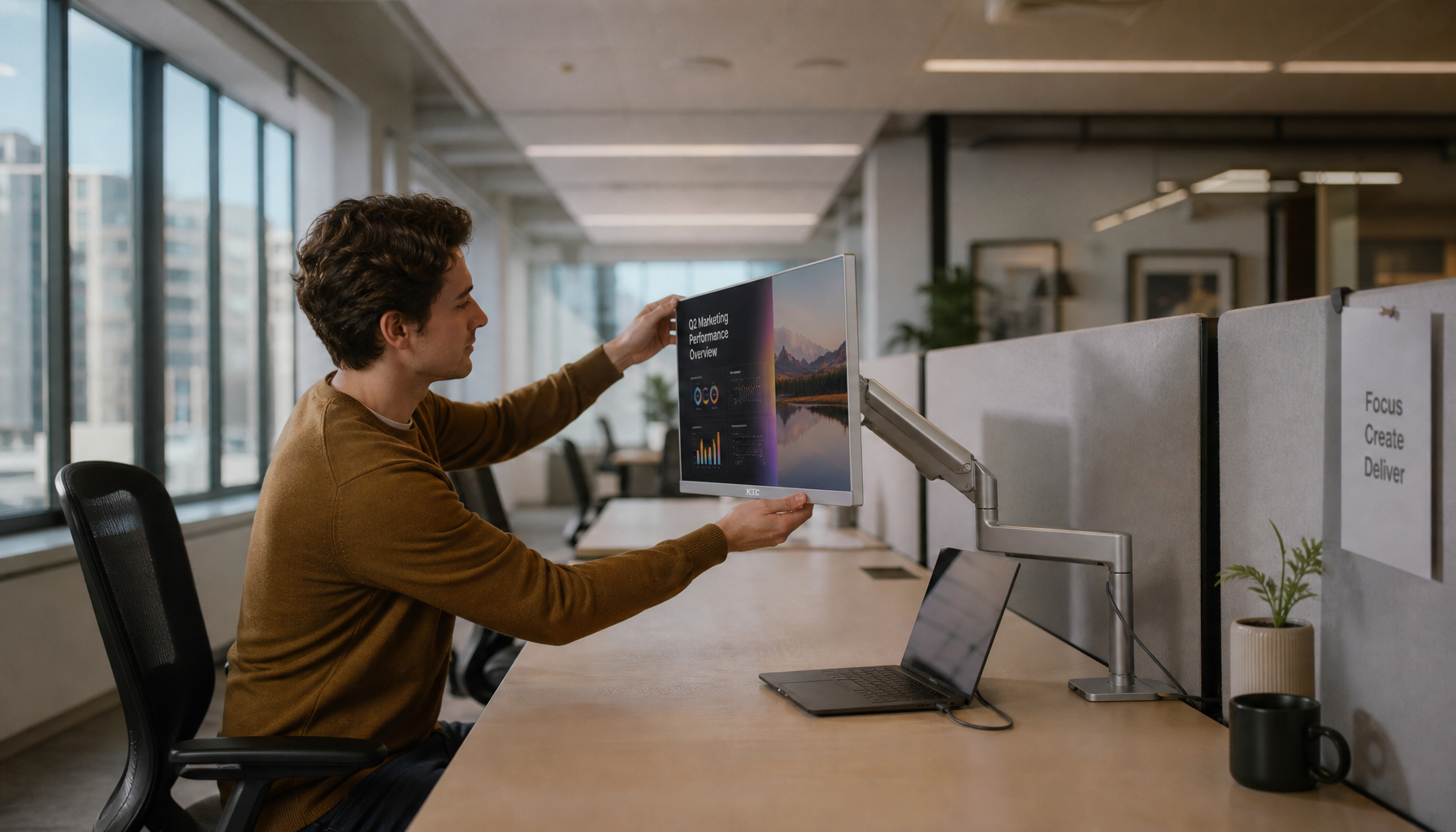
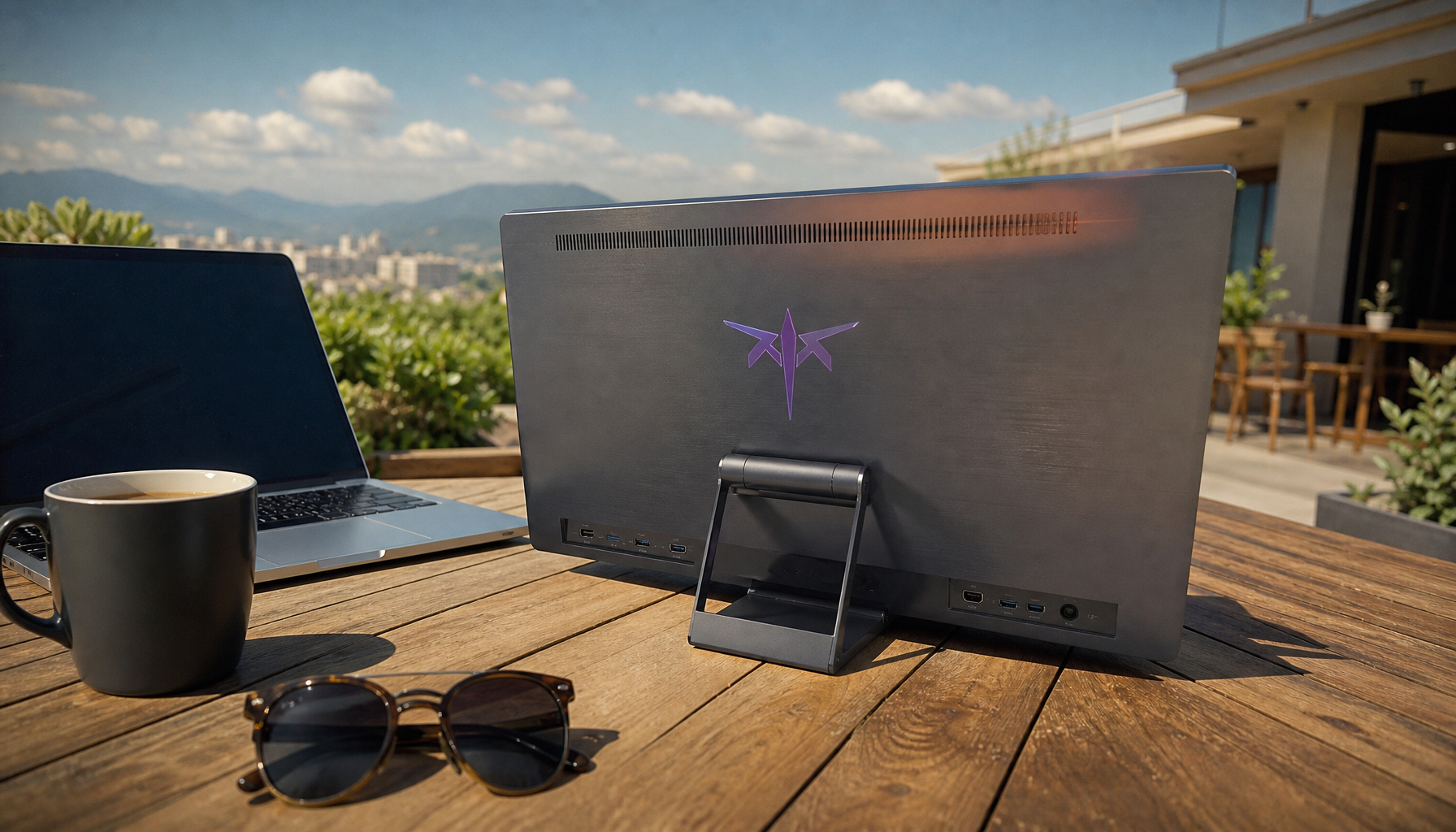
When your monitor with built-in speakers shows a perfect picture but remains silent, the issue is almost always in the audio routing, cable handshake, or default device selection rather than a hardware failure. Start by confirming your model actually includes speakers, then check whether Windows 11 or macOS is sending sound to the correct output. Most users resolve the problem within the first three steps below without needing returns or repairs.

Quick Diagnosis: Does Your Monitor Actually Have Speakers?
Before diving into software fixes, verify whether your specific monitor model is supposed to produce sound. Many budget monitors lack built-in speakers entirely, while others include them but ship with the volume muted in the on-screen display (OSD).
Look up your exact model number on the back of the monitor or in the user manual. For instance, certain KTC gaming monitors like the H27T6 include speakers, whereas some variants only offer an “Audio Out” jack. If the OSD menu contains a Volume or Mute option, speakers are present. If the monitor never appears in your operating system’s sound output list at all, the issue is usually a missing audio handshake rather than a mute setting.
This quick check separates “no sound” (device detected but silent) from “no device” (monitor absent from audio settings). It prevents hours of troubleshooting on hardware that cannot output sound.
Hardware First: Cables, Ports, and the Handshake Reset
HDMI and DisplayPort both carry digital audio along with video, but legacy DVI connections do not. As noted in technical comparisons of display interfaces, standard DVI requires a separate 3.5mm audio cable for sound.
The most common hardware fix is a simple hot-plug reset. Unplug the video cable from both the monitor and the computer, wait ten seconds, then reconnect firmly. This forces the devices to re-exchange EDID data and often restores the audio channel. Similarly, toggle the monitor’s input source in the OSD—from HDMI 1 to HDMI 2 and back—can reset a stuck handshake.
For USB-C or docking station setups, bandwidth “lane stealing” at high refresh rates (144 Hz or above) can drop the audio sub-channel. Use a high-quality, full-featured USB-C cable rated for video, data, and at least 10 Gbps. See our guide to DisplayPort Alternate Mode Over USB-C: How Video, Data, and Power Share the Same Lanes for details on lane allocation.
If you use a dock or adapter, power-cycle the entire chain. Many passive adapters fail to embed audio packets correctly, while active ones usually succeed.
Fixing Audio Output in Windows 11
Windows 11 often defaults to the laptop or motherboard speakers even when a monitor with audio is connected. Open Settings > System > Sound and look under Output. Select the entry labeled with your monitor name or “HDMI” / “DisplayPort.”
If the monitor does not appear, right-click the sound icon in the taskbar, choose “Open Sound settings,” then scroll to “Related settings” and click “Sound Control Panel.” In the classic view, right-click empty space and enable “Show Disabled Devices” and “Show Disconnected Devices.” This frequently reveals a grayed-out monitor entry that can be enabled.
Also check the per-app Volume Mixer. Some games or browsers lock output to a specific device. Microsoft’s official guidance on fixing missing audio devices confirms that manual selection and driver refresh resolve the majority of monitor audio problems in Windows 11.
Resolving Monitor Audio Conflicts on macOS
macOS treats HDMI and DisplayPort outputs as line-level devices and often disables keyboard volume control by default. Go to System Settings > Sound > Output and select the monitor from the list.
If the volume slider is grayed out, this is normal behavior for external displays on many Mac models. Third-party utilities such as BetterDisplay or MonitorControl can restore keyboard control, though results vary by monitor and macOS version. KTC monitors generally support DDC/CI for OSD volume, but software control can be inconsistent after sleep or power cycles.
Apple’s support article on audio device switching provides the exact navigation steps and explains why the Mac may automatically revert to internal speakers.
The Adapter & Docking Bottleneck: When the Path is the Problem
Docking stations, USB-C hubs, and cheap adapters frequently break the audio handshake even when video works perfectly. Passive DisplayPort-to-HDMI adapters often lack the chipset needed to carry audio. High-refresh-rate modes can also starve the audio bandwidth if the cable or dock is not rated for the full data load.
The practical fix is to test with a direct, high-quality cable first. If sound returns, the adapter or dock is the culprit. Power-cycling the dock after reconnecting the monitor often restores the EDID exchange. Our article on How a USB-C Monitor Can Streamline Your Workspace covers common one-cable pitfalls and recommended cable specifications.
Driver Management: GPU Audio and Handshakes
The graphics card handles audio encoding for HDMI, DisplayPort, and USB-C. Outdated or disabled GPU audio drivers are a frequent cause of sudden silence after driver updates or Windows feature updates.
Open Device Manager, expand “Sound, video and game controllers,” and locate entries such as NVIDIA High Definition Audio, AMD High Definition Audio, or Intel Display Audio. Right-click and choose “Update driver” or “Uninstall device” followed by a restart so Windows reinstalls them. Microsoft’s guide to updating audio drivers in Windows walks through the exact process.
For recurring wake-from-sleep audio drops, check the monitor manufacturer’s support page for firmware updates. These updates sometimes improve EDID stability and DDC/CI behavior.

When to Switch: Monitor Speakers vs. External Audio
Monitor speakers are convenient for casual listening, system alerts, and light media, but they cannot match the clarity, bass, or volume of dedicated external speakers or headphones. If you regularly watch movies, play competitive games, or need clear voice calls, external audio is the better long-term choice.
Many monitors include a 3.5 mm “Audio Out” jack that lets you pass the decoded HDMI audio to legacy wired speakers or headphones. This can be a practical middle ground. When testing, connect a different source (such as a game console) directly to the monitor to isolate whether the issue lies with your computer or the display itself.
Our guide to HDMI CEC Device Control on Monitors: Why Some Commands Work and Others Don’t explains why volume commands sometimes fail even when audio routing is correct.
Monitor Audio Troubleshooting FAQs
Why does my monitor show up in Display settings but not in Sound settings?
The monitor is being recognized only as a display, not an audio endpoint. This usually indicates a failed EDID handshake or disabled GPU audio driver. Perform the hot-plug reset, enable hidden devices in the legacy Sound Control Panel (Windows), or reinstall the display audio driver.
How do I get keyboard volume keys to control my monitor speakers on macOS?
macOS disables native volume control for most external HDMI/DisplayPort devices. Install a utility such as MonitorControl or BetterDisplay to regain keyboard functionality. If those tools fail, adjust volume directly through the monitor’s OSD menu.
Can a passive HDMI or DisplayPort adapter carry audio?
Many passive adapters cannot embed or pass audio packets reliably. An active adapter or direct cable connection is usually required, especially at higher resolutions or refresh rates.
Why does sound stop working after the monitor wakes from sleep?
Sleep cycles often interrupt the audio sub-channel handshake. Toggle the monitor input source or fully power-cycle the monitor, computer, and any dock to force a fresh EDID exchange.
Should I use my monitor’s built-in speakers or buy external ones?
For occasional use and system sounds, built-in speakers are adequate. For immersive gaming, music, or video calls, dedicated external speakers or a headset deliver noticeably better quality and volume. Use the monitor’s 3.5 mm audio-out jack to bridge to existing wired audio gear.
Does updating GPU drivers fix monitor audio problems?
Yes, in many cases. The GPU driver package includes the High Definition Audio component responsible for encoding sound over HDMI and DisplayPort. After a major Windows or driver update, reinstalling or updating this component often restores sound.
What should I do if nothing restores audio from the monitor?
Test the monitor with another device (console, different laptop) using the same cable. If sound works, the issue is with your primary computer’s configuration. If it remains silent, contact the monitor manufacturer for firmware support or consider whether the specific model includes functional speakers.