A larger monitor can make text easier to read, but it also expands the visual field your eyes must scan, focus across, and adapt to. Eye comfort depends less on size alone than on pixel density, viewing distance, glare control, and focus breaks.
Bigger Text Does Not Mean Lower Eye Work
Large screens feel like an obvious upgrade: more space, larger UI elements, and fewer cramped windows. For productivity and immersive gaming, that can be a real advantage.
The catch is that a bigger display often asks your eyes to travel farther across the screen. A 32-inch monitor gives you far more physical canvas than a 27-inch model, so your eyes may do more side-to-side scanning even when the text itself is larger.

Digital eye strain is not only “small text strain.” It includes dryness, blur, headaches, focusing fatigue, and neck or shoulder discomfort caused by prolonged screen use, posture, glare, and reduced blinking, according to a clinical review of digital eye strain.
Pixel Density Can Make a Big Screen Feel Blurry
A 32-inch 1080p monitor can show large letters, but those letters may look softer because the same pixel count is stretched across more screen area. Your brain reads the text; your eyes still have to resolve fuzzy edges.

That is why a 27-inch 1440p screen can feel sharper than a larger low-resolution panel. For big displays, matching size with resolution matters: 1440p is often the practical baseline for 27 to 32 inches, while 4K gives cleaner text if scaling is set well.
Display sharpness is strongly tied to pixel density, and low pixel density can make text and symbols look grainy, increasing reading effort on larger screens, as noted in this discussion of monitor resolution.
For a practical buying lens, 24-inch 1080p can be acceptable for basic office use, 27-inch 1440p is a strong balance for productivity and gaming, and 32-inch 4K is sharper for text-heavy work. Ultrawide monitors can feel immersive, but they need smart window layout so your eyes are not constantly sweeping across the full width.
Distance, Height, and Brightness Matter More Than Size
A larger monitor usually needs a slightly longer viewing distance. If you keep a 32-inch display at the same close distance as an old 24-inch monitor, your eyes may constantly sweep across a wider field.
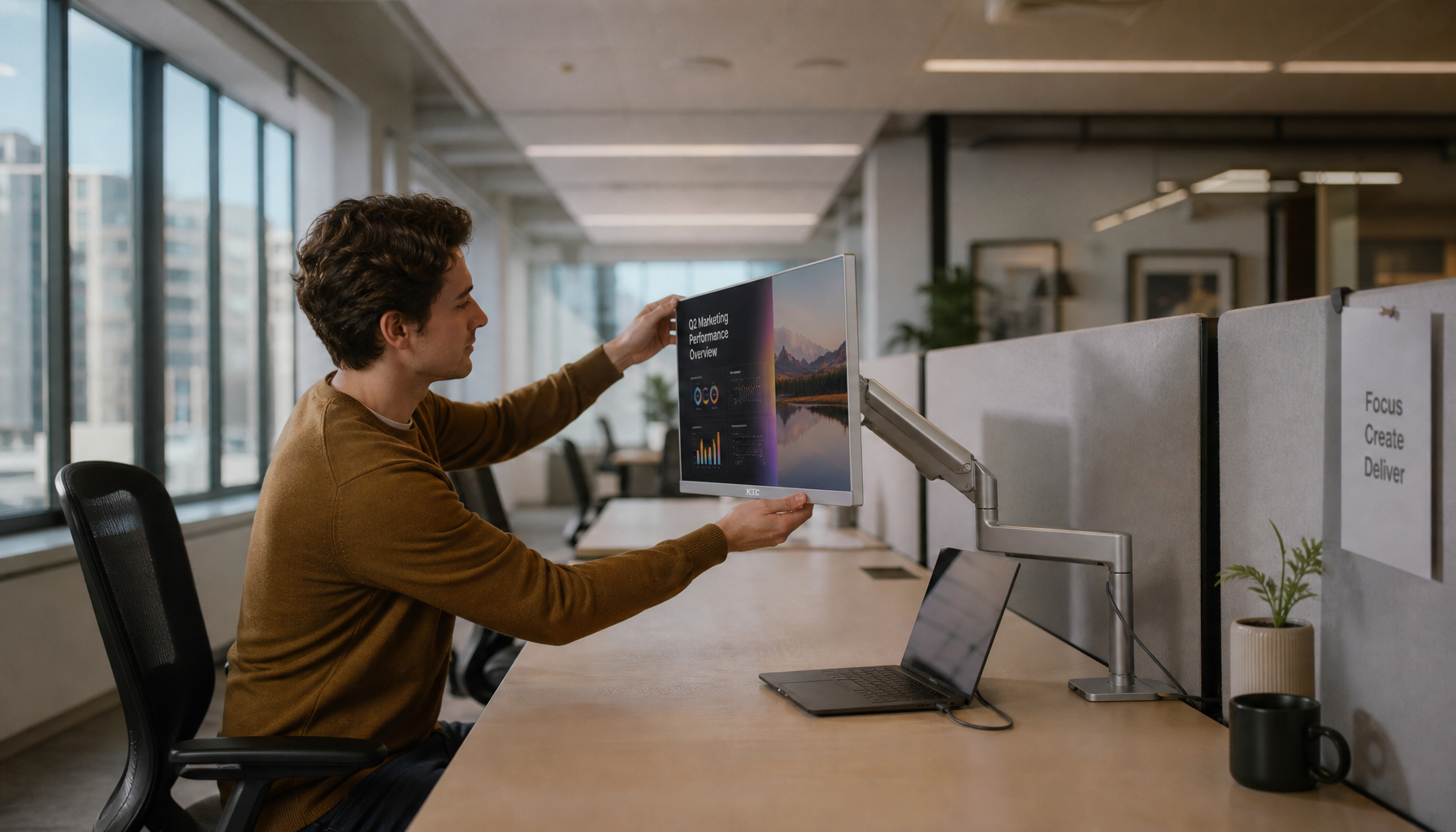
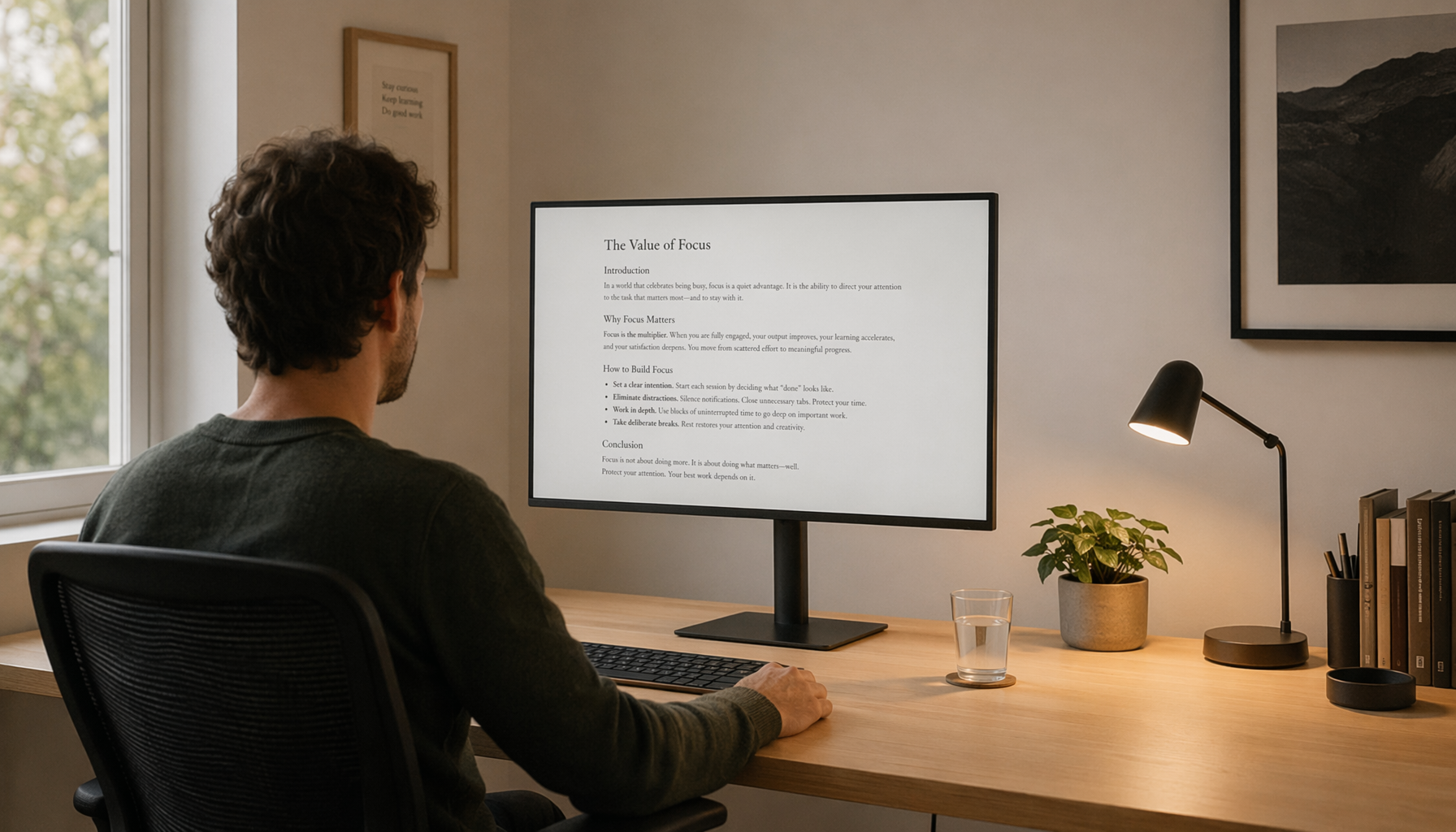
For most desk setups, keep the screen about 20 to 28 inches away and place the top of the display at or slightly below eye level. The American Optometric Association gives similar workstation guidance for computer vision syndrome, including proper distance, reduced glare, and the 20-20-20 rule.

Brightness is another hidden fatigue trigger. A big, bright panel in a dim room can force your pupils to keep adapting. Match screen brightness to the room, reduce reflections, and use soft bias lighting behind the monitor if the wall behind it is dark.
Blue-light settings may help at night, but for immediate eye fatigue, glare, contrast, flicker, posture, and blinking habits often matter more.
How to Make a Large Monitor Feel Comfortable
Treat a large display like performance hardware: tune it. Out-of-box settings are often too bright, too cool, and too sharp-looking for an eight-hour workday.
Start with the basics:
- Move the display back until you can see the full screen without turning your head
- Use native resolution, then adjust OS scaling for readable text
- Lower brightness until white pages stop glowing
- Keep the top edge slightly below eye level
- Take a 20-second distance-focus break every 20 minutes

Blinking matters, too. Screen focus can reduce blink rate, which dries the tear film and makes vision fluctuate. If your eyes feel gritty by late afternoon, the issue may be dryness rather than font size; frequent blinking and artificial tears can help, while persistent symptoms deserve an eye exam.
A larger monitor should feel expansive, not exhausting. When resolution, distance, lighting, and scaling are dialed in, bigger screens can deliver the payoff they promise: more usable workspace, stronger immersion, and less visual friction across the day.