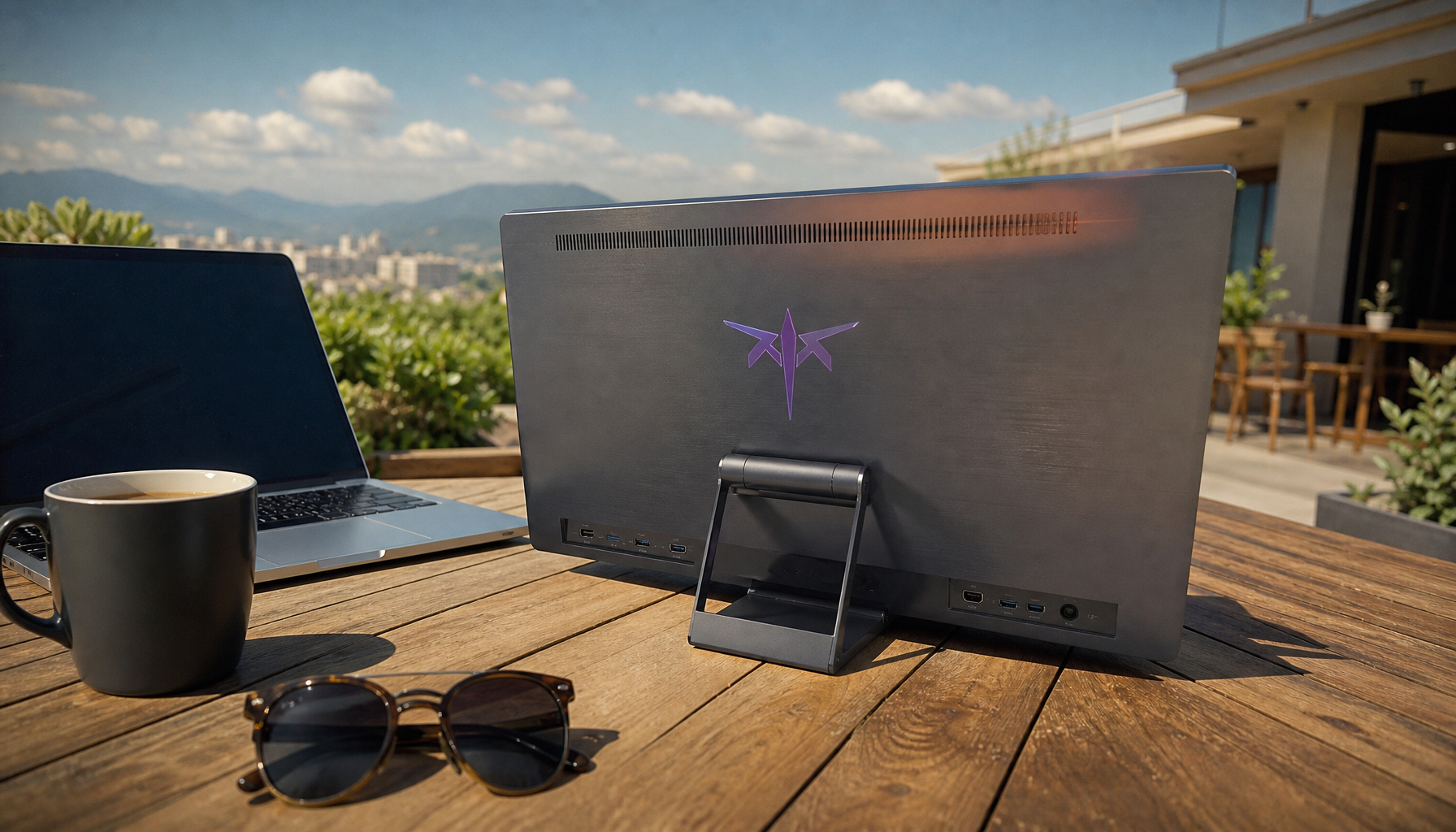
Your monitor’s USB-C hub is not slow by accident; it is sharing one upstream USB-C link with video, charging, and every connected accessory. When display bandwidth takes priority, the remaining data capacity can drop your “fast” hub ports to basic peripheral speeds.
USB-C Is a Connector, Not a Speed Promise
The oval USB-C plug looks modern, but the connector shape does not guarantee high-speed data, video output, or laptop charging. A monitor hub only performs as fast as the shared capabilities of the laptop port, cable, and monitor electronics.
That is why two USB-C monitors can behave very differently. Some support DisplayPort Alt Mode, Power Delivery, and faster USB data; others use USB-C mainly for video and light hub duties. Before expecting one-cable convenience, confirm that the laptop and display both support DisplayPort Alternate Mode, not just USB-C.
For office setups, this may be fine. A keyboard, mouse, webcam, and headset do not need massive bandwidth. But an external SSD, capture card, or high-resolution webcam can expose the limits quickly.

Video Can Use the Bandwidth First
A 4K monitor at 60 Hz needs serious bandwidth. If the same USB-C cable is also carrying hub data, the system may reduce USB speed to keep the image stable.
This is especially common on non-high-bandwidth USB-C displays. A monitor may deliver smooth 4K visuals while its hub ports behave more like USB 2.0, which is acceptable for input devices but painful for storage transfers.

High-refresh displays make the squeeze tighter. A 4K gaming or creator monitor at 120 Hz or higher may leave very little room for fast downstream USB, so the monitor hub becomes best for low-demand accessories.
The practical tradeoff is simple: sharper, smoother video often wins over hub speed. If you need both, look for a high-bandwidth connection or a dock-class monitor, since higher-bandwidth connections can provide far more total capacity than basic USB-C links.
Power Delivery Also Takes a Cut
Power Delivery is another place where expectations get ahead of reality. A monitor or hub labeled for high wattage may reserve power for its own electronics before passing the rest to the laptop.
Many USB-C hubs with 100 W input deliver less than that to the computer, with tested models commonly passing about 80 W to 90 W. That can be enough for a thin laptop, but a gaming laptop or workstation may still drain slowly under load.
This matters for speed because unstable power can trigger disconnects, drive dropouts, display flicker, or throttled performance. A monitor hub powering a laptop, webcam, SSD, Ethernet adapter, and cell phone is doing more than “just adding ports.”

For reliability, match the display’s Power Delivery rating to the laptop’s actual needs. For heavier systems, 90 W or higher is a smarter target than 60 W.
How to Tell What Is Actually Slowing You Down
Start with the weakest link. A high-end monitor cannot fix a low-speed cable, and a fast cable cannot upgrade a laptop port that lacks the right protocol.
Quick checks:
- Confirm the laptop USB-C port supports video, data, and charging.
- Use a full-featured USB-C cable, not a cell phone charging cable.
- Check whether the monitor hub ports are rated 5 Gbps, 10 Gbps, or USB 2.0.
- Move external SSDs directly to the laptop or a high-bandwidth dock.
- Keep keyboards, mice, webcams, and dongles on the monitor hub.
For buying, prioritize port quality over port count. A hub with one 10 Gbps USB-C data port can be more useful than a crowded hub full of slow ports; many tested USB-C hubs list common speeds of 5 Gbps or 10 Gbps.

The Smarter Setup
Use the monitor hub for desk convenience, not maximum throughput. It is excellent for clean cable management, stable office peripherals, Ethernet, and everyday productivity.
For pro workflows, split the load. Run the display over USB-C or DisplayPort, connect fast storage directly, and use a powered high-bandwidth dock when you need high-refresh video plus high-speed data.
Some premium USB-C monitors genuinely can replace a dock, but only when the specs clearly cover bandwidth, Power Delivery, refresh rate, and downstream USB speed.