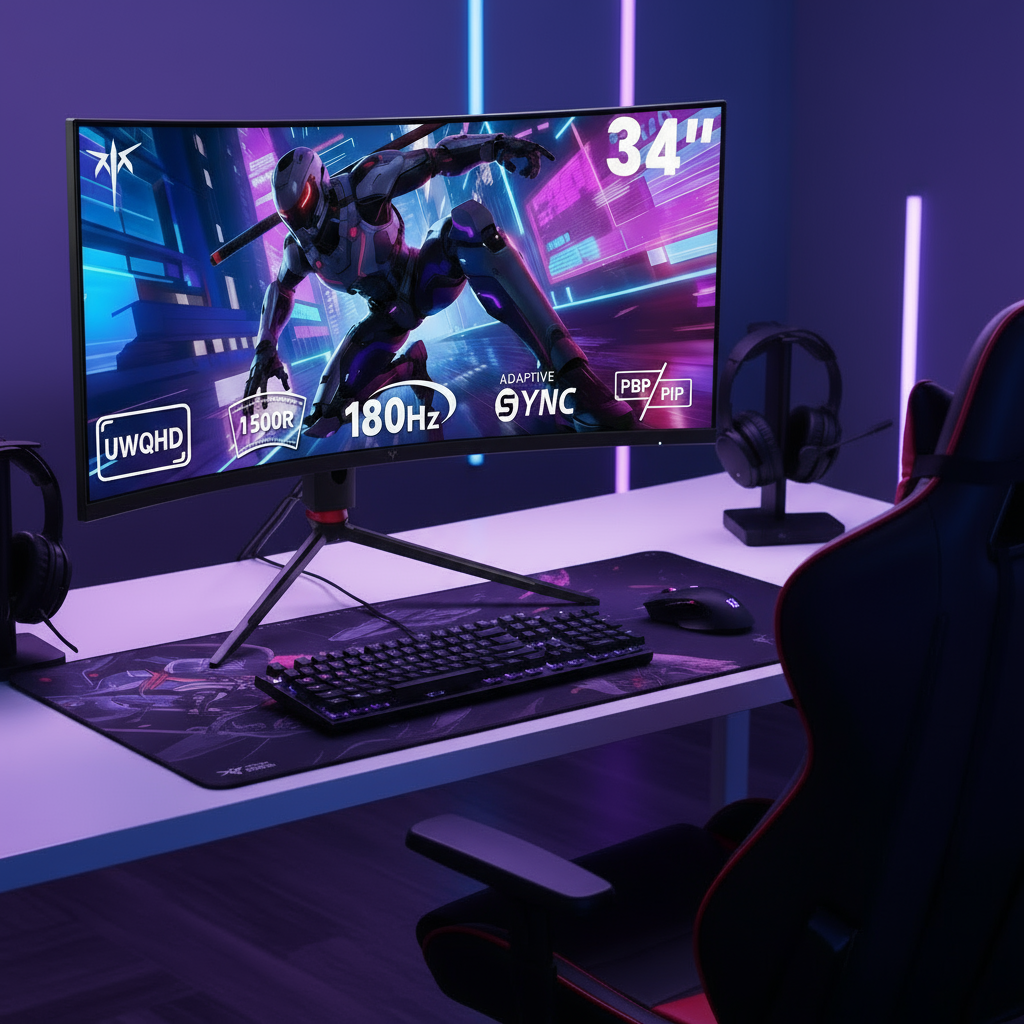


The fastest way to cut streaming data on a smart monitor or portable display is to lower playback resolution first, cap bitrate second, and avoid unnecessary 4K, HDR, and 60 fps modes when your screen size and internet connection do not justify them.
If your smart display keeps buffering right when the movie gets good, or your stream on a platform looks sharp for 10 minutes and then turns into a blur, the problem is usually not the panel itself. In real setups, dropping from 4K to 1080p or from 1080p to 720p often saves more data than any other single tweak, and it usually has a smaller visual penalty than people expect on 24-inch to 32-inch displays. You will get a practical way to choose the right stream quality, monitor settings, and connection habits for limited bandwidth.

What Actually Drives Data Usage on a Smart Display
Resolution and bitrate do most of the damage
On a smart monitor, higher video quality uses more bandwidth mainly because the stream is sending more pixels and more data per second. A source estimates up to about 1 GB per hour for 480p, 3 GB per hour for 1080p, and 7 GB per hour for 4K. That is the simplest reason a 27-inch 1080p monitor can be much cheaper to stream on than a 32-inch 4K smart display if you leave both on their highest default setting.
1080p contains 2.25 times as many pixels as 720p, and that pixel load matters more than most people realize. A company also notes that 720p often gives the best quality-to-bandwidth balance, while 1080p needs materially more bitrate to avoid looking soft or blocky. In practice, a clean 720p stream at a healthy bitrate can look better than a starved 1080p stream on many desktop monitors.
Refresh rate matters, but not in the way buyers assume
A higher refresh rate makes motion smoother, but the panel’s 144 Hz or 240 Hz capability does not automatically mean your stream uses more data. What matters is the frame rate of the stream itself and the bitrate needed to preserve that motion. A 60 fps stream usually needs more bandwidth than 30 fps, especially for sports, cloud gaming, or fast camera movement.
Higher frame rate raises bandwidth demand, but it is still usually a second-order control behind resolution and bitrate caps. If you are watching standard TV, news, or slower-paced video on a 27-inch QHD monitor, switching from 4K to 1080p typically saves more data than changing anything related to the monitor’s maximum refresh rate.
HDR, background apps, and multiple devices add hidden overhead
HDR and 60 fps can raise streaming requirements further, which is why a smart monitor with HDR support can quietly use more data when the app auto-selects a premium stream. If you are on capped home internet or a weak hotspot, turning off “best available” quality and choosing plain HD is often the smarter move.
Multiple streams and other device traffic also matter more than many monitor buyers plan for. If someone in the house is on a video call and another TV is running 4K, your portable monitor or ultrawide smart display may start buffering even though your own app settings have not changed.
Which Settings Save the Most Data First
Start with resolution, not your monitor’s native spec
A practical bandwidth-saving approach is lowering resolution to 720p or 1080p, even if your monitor is 1440p or 4K. On a 24-inch to 27-inch screen viewed from normal desk distance, 1080p often looks close enough to higher resolutions for casual streaming, especially once you account for compression. That is why buying a sharp gaming monitor does not mean every stream needs to run at the panel’s maximum capability.
480p uses about 800 to 1,200 kbps, 720p about 1,500 to 2,500 kbps, and 1080p about 3,000 to 5,000 kbps. Those ranges make the tradeoff clear: if your connection is inconsistent, 720p is often the safest target for a bedroom smart monitor, kitchen display, or portable monitor on hotel Wi‑Fi.

Then reduce frame rate for motion-heavy content
At 4,000 kbps, broadcasters may choose 1080p30 or 720p60 depending on the type of motion. For cloud gaming on a high-refresh-rate monitor, 720p60 can feel better than 1080p30 because motion stays smoother. For movies or talk-heavy content, 1080p30 may be the better compromise.
Watchable low-bandwidth streams are possible around 450 kbps, but quality falls fast at that level. The more realistic floor for a decent viewing experience on a monitor is to protect frame rate only when motion matters, and otherwise step down resolution before you let the stream become a blocky mess.
Use a sustainable bitrate cap instead of chasing “best quality”
Leaving 30% to 50% headroom between stream bitrate and available bandwidth is a practical rule that works well on smart monitors because it leaves room for Wi‑Fi fluctuation and other devices. If your measured connection is 20 Mbps but it drops during the evening, a 12 to 14 Mbps stream is much safer than letting the app push toward the ceiling.
Guidance from a software platform for constrained connections offers a useful mindset even for playback: lower audio bitrate when necessary, keep latency and packet loss in check, and treat bitrate as a hard budget. The same logic applies when choosing cloud gaming quality presets on a gaming monitor or portable display.
How Monitor and Display Choices Change the Right Tradeoff
Match stream quality to screen size and viewing distance
A 27-inch monitor is a strong all-around size, and that matters because moderate screen sizes are more forgiving when you drop from 4K to 1080p or from 1080p to 720p. On a smaller desktop display, the bandwidth savings can outweigh the sharpness loss unless you are sitting very close or reading fine text.
1080p often looks close to 1440p or 4K on smaller screens while using much less bandwidth. A 25-inch FHD smart display such as the a brand 25-inch FHD portable touch screen monitor with built-in camera is a practical example of a screen where 1080p streaming is usually enough at normal viewing distance. For buyers choosing between a 27-inch 1440p gaming monitor and a 32-inch 4K smart monitor in a limited-bandwidth apartment, the lower-resolution setup is often the more practical everyday streaming choice.
High refresh rate is great for games, not always worth paying for in streaming
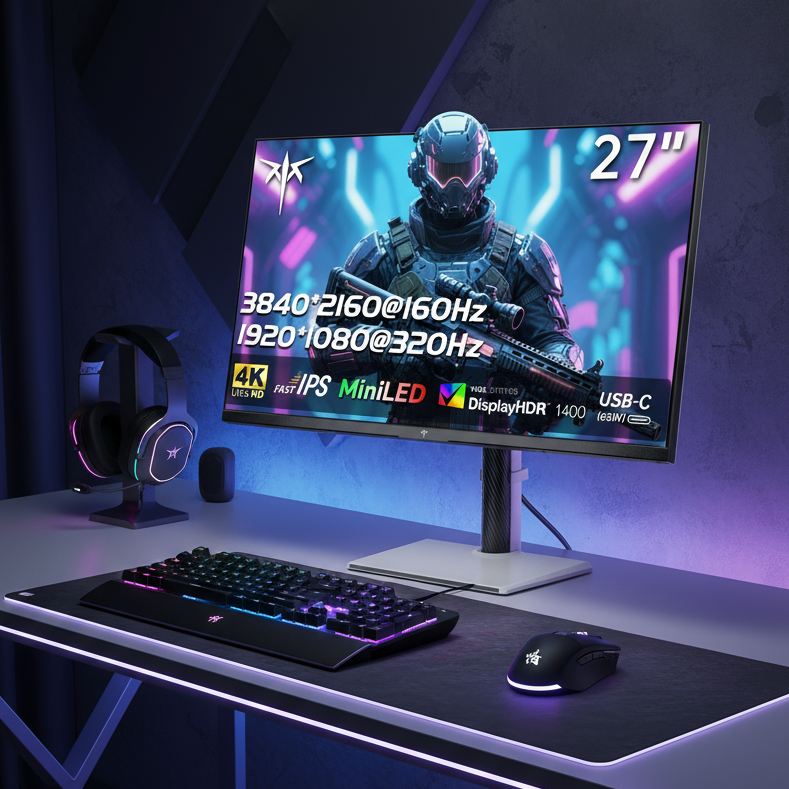
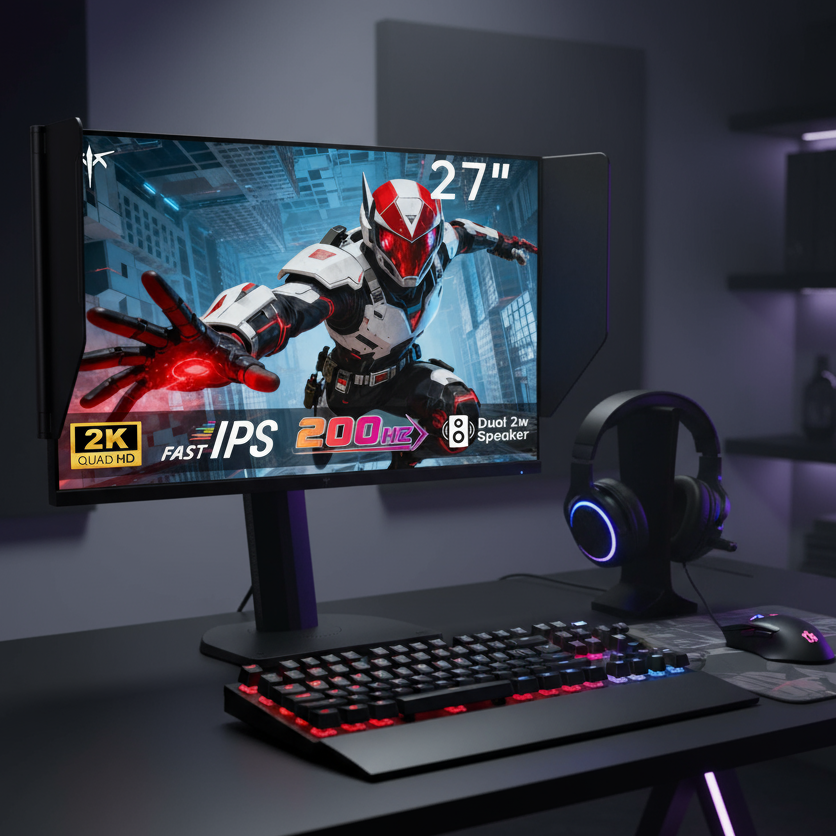
A 27-inch 1440p model may run anywhere from roughly 165 Hz to 540 Hz, but movies and most TV apps will not use that headroom. If your main concern is reducing data use, prioritize a display with reliable app support, strong Wi‑Fi behavior, and easy quality controls before you pay extra for extreme refresh rates.
A 1080p/60 fps stream in H.264 can need around 10 to 15 Mbps, while AV1 may need roughly 3 to 6 Mbps. That means codec support can matter more than whether the panel tops out at 100 Hz or 240 Hz when your goal is efficient streaming.
Smart monitor buyers should care about app behavior and audio
Older TVs or streaming sticks can be a bottleneck, and the same idea applies to smart monitors with built-in app platforms. A good display for limited-bandwidth use is not just a sharp panel. It should also let you force HD quality, avoid aggressive autoplay previews, and handle Wi‑Fi reliably without constantly jumping back to higher-bitrate modes.
Real-world quality benchmarking compares data consumed with startup time, buffering, and visible defects. That is the right lens for monitor buyers: the best setup is not the one with the highest spec sheet, but the one that preserves watchability while keeping data use predictable.
Network and Port Tweaks That Matter More Than People Expect
Fix the connection before blaming the display
Frequent buffering usually means inconsistent download speed or congestion, not that your monitor is too big or too advanced. If the same smart monitor behaves well in the morning and poorly at 8:00 PM, the issue is usually network variability, not the panel’s resolution.
Packet loss, jitter, and latency should be checked before deeper troubleshooting. For limited-bandwidth homes, moving the smart display closer to the router, switching from busy 2.4 GHz Wi‑Fi to cleaner 5 GHz when available, or using Ethernet on a docking monitor can do more for stability than any visual setting.

Use efficient codecs when the platform supports them
HEVC is about 50% more efficient than H.264, and AV1 is about 30% to 50% more efficient than H.264. If your smart monitor app, streaming stick, or cloud gaming service supports those codecs, they are one of the best ways to preserve image quality while lowering data use.
Lower resolutions are more resilient on weak networks even before codec gains are considered. In other words, the best low-bandwidth stack is usually efficient codec plus moderate resolution, not brute-force bitrate on a high-resolution stream.
Cable and port limits can force useful compromises
When display-link bandwidth is insufficient, systems often reduce refresh rate first, then color quality or HDR. That sounds like a downside, but it can be helpful on a limited connection. A docking setup that runs 4K at 60 Hz instead of pushing 120 Hz HDR may line up better with the quality level your internet can actually sustain.
Display Stream Compression enables high-resolution, high-refresh display modes with minimal added delay. DSC solves cable bottlenecks, not internet bottlenecks, but it is still useful to understand when you are building a monitor setup for cloud gaming or smart-display streaming.
Best Quality Settings by Bandwidth Budget
Quick comparison table
Setup goal |
Recommended stream setting |
Typical bandwidth range |
Approx. data use |
Best fit display scenario |
Main tradeoff |
Lowest data use |
480p at 30 fps |
0.8-1.2 Mbps |
Up to 1 GB/hour |
Portable monitor, travel hotspot, backup stream |
Soft image, weak text clarity |
Best balance |
720p at 30-60 fps |
1.5-4 Mbps |
Usually far below 1080p |
24-inch to 27-inch monitor, smart display on weak Wi‑Fi |
Less detail than 1080p |
Safe HD |
1080p at 30 fps |
3-5 Mbps |
About 3 GB/hour |
27-inch monitor, general streaming |
Needs stable connection |
Smooth motion HD |
1080p at 60 fps |
5-15 Mbps depending on codec |
Higher than standard HD |
Sports and cloud gaming on gaming monitors |
Much higher data demand |
Premium 4K |
4K at 30-60 fps |
15-25 Mbps or more |
About 7 GB/hour |
Large smart monitor close-up viewing |
Highest data use, most buffering risk |
Practical presets for common monitor setups
A 720p stream is often the best quality-to-bandwidth balance for a 24-inch portable monitor in a hotel, dorm, or secondary desk setup. If you are using a USB-C portable display with a laptop hotspot, 720p is usually the right default unless you know the connection is stable.
Platform examples for cloud gaming range from 5 Mbps for 720p to 25 Mbps for smoother 1080p/60 fps. That makes 1080p60 on a 27-inch gaming monitor realistic on decent home internet, but far less practical on a capped cellular plan or crowded apartment Wi‑Fi.
Action checklist
- Set your smart monitor or streaming app to 1080p or 720p instead of Auto or 4K.
- Keep 30% to 50% bandwidth headroom so the stream does not collapse during busy hours.
- Use 60 fps only for sports, cloud gaming, or fast gameplay on gaming monitors.
- Turn off HDR when you are on weak Wi‑Fi or a data-capped connection.
- Prefer HEVC or AV1 playback when your device and app support it.
- Pause background downloads, app updates, and other household streams before you start watching.
FAQ
Q: Does lowering a monitor from 144 Hz to 60 Hz reduce streaming data use?
A: Not by itself in most streaming apps. The bigger factor is whether the video stream is delivered at 30 fps, 60 fps, 1080p, or 4K. Your panel’s maximum refresh rate is separate from the bitrate the service sends.
Q: Is 720p still worth using on a modern gaming or ultrawide monitor?
A: Yes, especially when bandwidth is unstable. On smaller or mid-size monitors, a clean 720p stream can look better than a heavily compressed 1080p stream, and it is often the most reliable option for cloud gaming or casual viewing.
Q: What should I prioritize when buying a display for limited-bandwidth streaming?
A: Prioritize manageable screen size, easy quality controls, solid app support, efficient codec support, and reliable networking. For many buyers, a good 27-inch 1080p or 1440p monitor is a better match than a larger 4K smart display that constantly pushes more data than the connection can sustain.
Final Takeaway
The most effective way to reduce streaming data on smart displays is to think like a display buyer, not just a viewer. Resolution, bitrate, codec support, and network stability matter more than chasing every premium spec on the box.
If you want the safest setup, use 720p or 1080p on a 24-inch to 27-inch monitor, keep headroom in your connection, save 60 fps for motion-heavy content, and treat 4K HDR as an occasional luxury rather than the default. That approach keeps streaming watchable, protects your data budget, and usually makes better real-world sense than forcing a premium stream onto limited bandwidth.