For most gamers shopping for a 27-inch display in 2026, the real choice comes down to priorities: the faster motion clarity and wider viewing angles of a flat IPS panel versus the deeper blacks and immersive contrast of a curved VA panel. Your game genres, room lighting, and typical viewing distance usually determine which path delivers more value and fewer frustrations.

Why 27-Inch 1440p is the Gaming Sweet Spot in 2026
A 27-inch 1440p (QHD) monitor sits at the ideal balance of screen size, pixel density, and GPU demands for most desks. At roughly 109 PPI, text and details look sharp from typical 2–3 foot viewing distances without forcing you to sit unusually close or far.
This size has become the primary arena where flat IPS and curved VA technologies compete directly. The decision often feels like a dilemma because both panel types have clear strengths that map to different playing styles rather than one being universally superior.
The Motion Reality: Why Flat IPS Wins for Competitive FPS
Competitive FPS players generally benefit more from flat IPS panels because they deliver faster grey-to-grey (GtG) response times and superior motion clarity. In fast-paced titles like Valorant or Apex Legends, this reduces ghosting and helps you track targets more precisely.
The industry now uses the VESA ClearMR standard to benchmark motion blur performance. Higher ClearMR tiers indicate less blur, and high-performance IPS panels frequently land in stronger tiers than typical VA equivalents in the 27-inch segment.
Flat geometry also maintains consistent colors and straight-line tracking across the entire screen, which matters when you sit centered and need pixel-perfect accuracy at high refresh rates.
The Contrast King: Why Curved VA Dominates Dark-Room Immersion
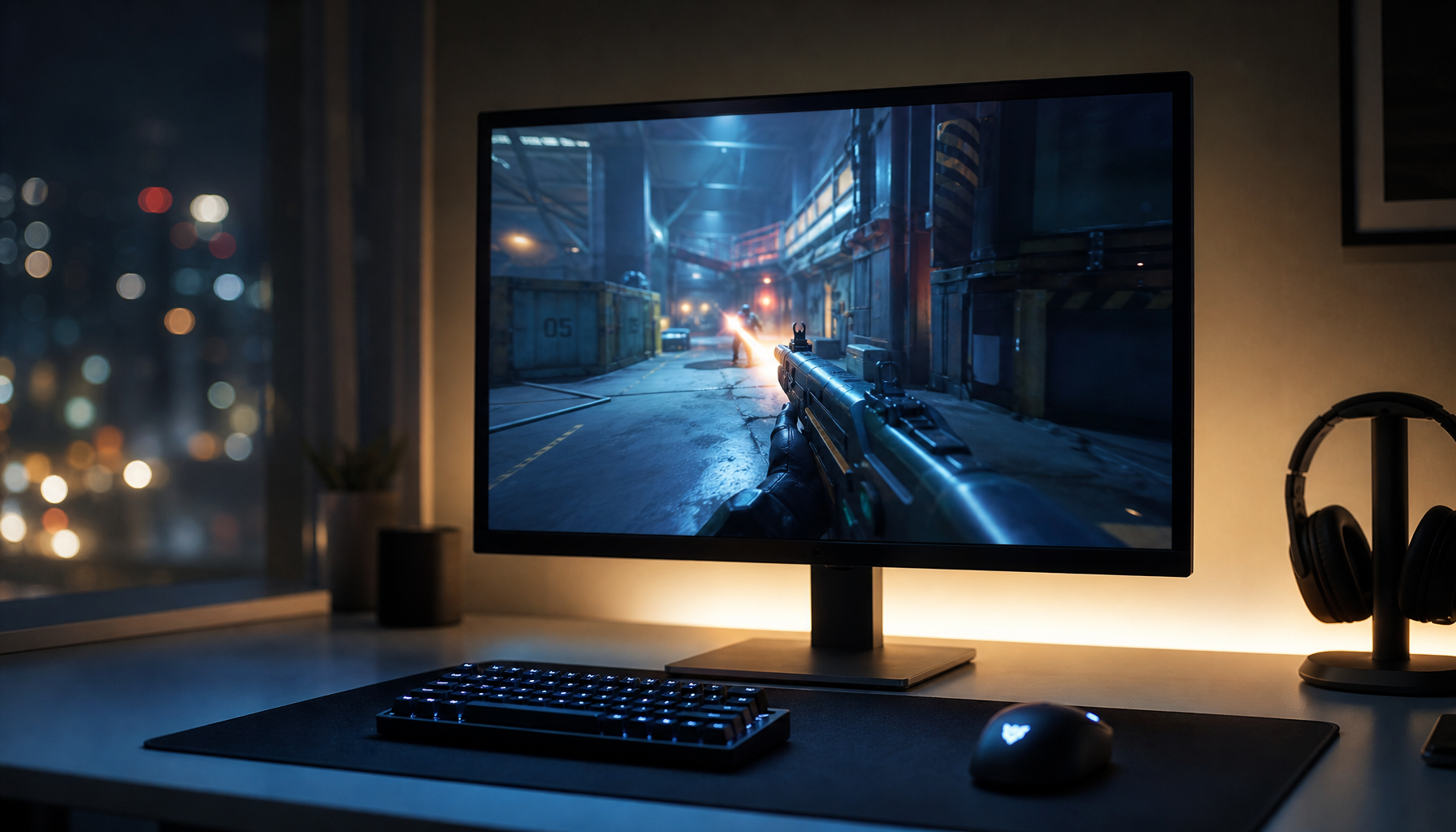
VA panels typically provide native contrast ratios of 3000:1 to 5000:1, compared with around 1000:1 on most IPS panels. This difference produces noticeably deeper blacks and richer shadow detail, making VA the stronger choice for horror games, space simulators, and cinematic RPGs played in dark rooms.
In low-light environments, the higher contrast helps preserve atmosphere and prevents scenes from looking washed out. Many players report that IPS glow—a hazy light visible in the corners during dark scenes—becomes a persistent distraction in these conditions, while VA avoids that specific issue.
Is a 27-Inch Curved Monitor Worth It or Just a Gimmick?
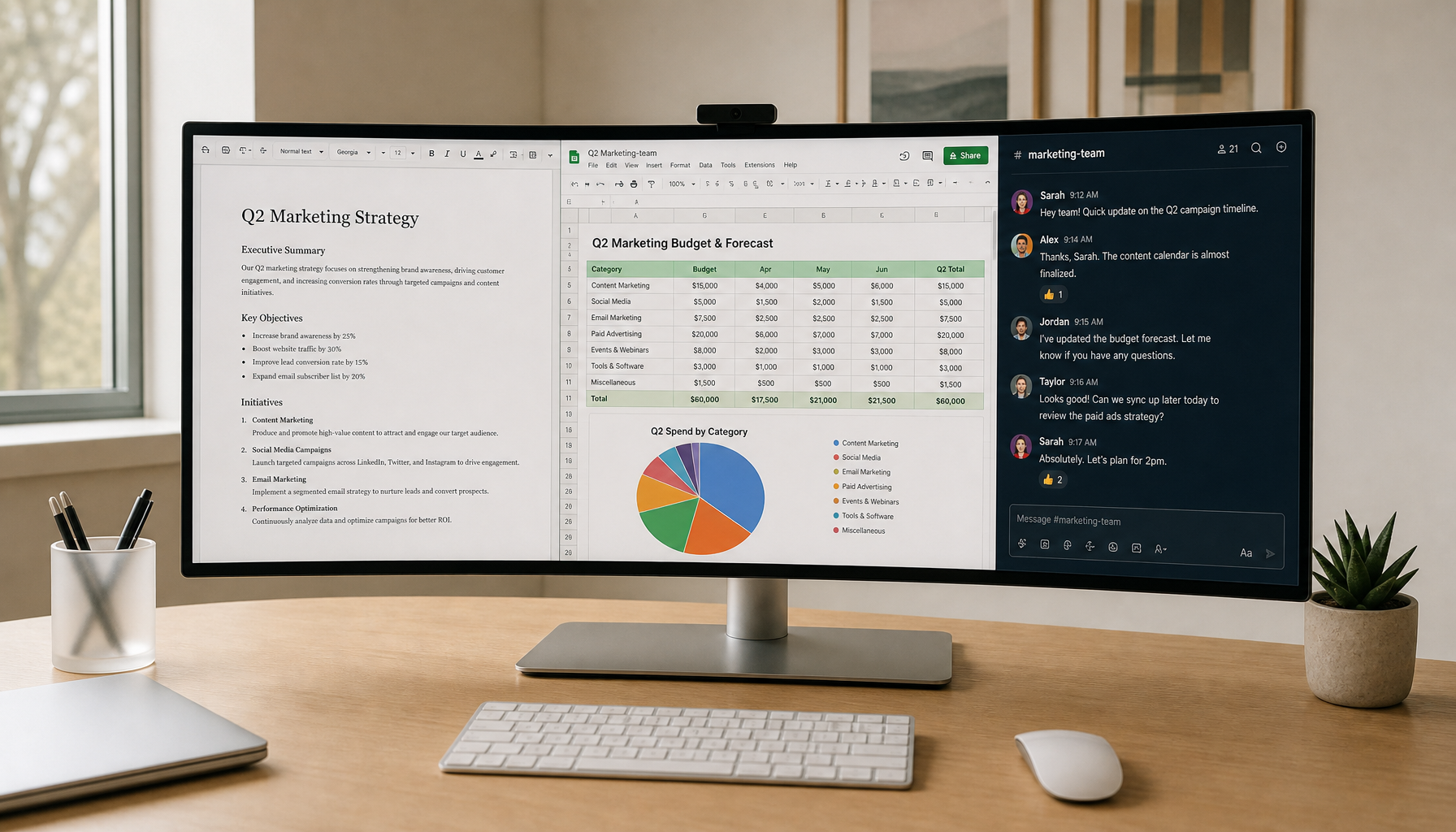
At 27 inches, curvature on VA panels primarily serves a functional purpose: it compensates for the panel's narrower viewing angles and helps prevent color shifting or gamma distortion at the screen edges. Without the curve, a flat VA would often show more obvious inconsistencies from a normal desk position.
Research published on PubMed suggests curved monitors can reduce eye strain and visual fatigue during long sessions by maintaining a more uniform focal distance across the screen. However, whether a 1500R curve actually feels meaningfully immersive at this size depends heavily on your seating distance and personal preference.
For many users sitting 2–3 feet away, the curve provides subtle ergonomic benefits without distortion. Others find it unnecessary or slightly distracting for competitive play or productivity. Test in person if possible, especially if your desk setup involves frequent head movement.
The Technical Trade-offs: IPS Glow vs. VA Smearing
Both technologies come with inherent limitations that can affect your experience depending on content and lighting.
IPS panels commonly exhibit IPS glow, a milky haze most noticeable in dark scenes and corners. This differs from backlight bleed and tends to be more apparent in completely dark rooms.
VA panels can show dark-level smearing, where fast-moving dark objects leave faint trails. This friction appears most often in high-motion shadow areas and can disrupt competitive tracking, though modern VA implementations have improved significantly.
These trade-offs rarely ruin the overall experience but become noticeable in specific scenarios. Bright-room competitive players often tolerate IPS glow easily, while dark-room cinematic gamers may find VA smearing less disruptive than washed-out blacks.
Flat IPS vs Curved VA for 27-inch Gaming
A decision matrix for choosing between competitive focus and immersion, with room lighting as the second filter.
View chart data
| Category | Flat IPS | Curved VA |
|---|---|---|
| Competitive / bright room | 3.0 | 2.0 |
| Competitive / dark room | 3.0 | 2.0 |
| Immersive / bright room | 2.0 | 3.0 |
| Immersive / dark room | 2.0 | 3.0 |

Choosing Your Path: Use Case Recommendations for 2026
Match your primary games and room conditions to the right panel type before focusing on specific models.
Competitive path: Choose flat IPS when you play fast-paced FPS titles in brighter rooms or use multiple monitors. The motion handling and consistent off-angle performance usually outweigh contrast differences. Models like the KTC H27T22C-3 or similar Fast IPS options deliver the speed and clarity many esports players prefer.
Immersive path: Opt for curved VA in dark-room setups focused on story-driven or cinematic games. The superior contrast creates deeper blacks that enhance atmosphere. The KTC H27S17 represents a strong curved VA option in this size.
Mixed-use hybrid: When you want both speed and better contrast without major compromises, consider a Mini-LED IPS like the KTC M27T6S. Local dimming helps close the contrast gap while retaining IPS advantages in motion and viewing angles.
Avoid buying purely for the curve if your games are competitive and your room is bright—the added shape may not deliver enough benefit to justify any minor drawbacks. Similarly, skip high-contrast VA if ghosting in dark scenes would frustrate your playstyle.
Explore more options in our 27 inch Monitors collection or compare panel technologies further in the IPS vs VA Panels: Which is Right for Your Playing Style? guide.
For deeper dives into related topics, check our articles on Curved vs. Flat Monitors: Which Is Better for Gaming Immersion?, Mini-LED IPS vs. Standard IPS: Is the Advanced Backlight Worth the Upgrade?, and What Is Monitor Ghosting and How Do You Eliminate It?.